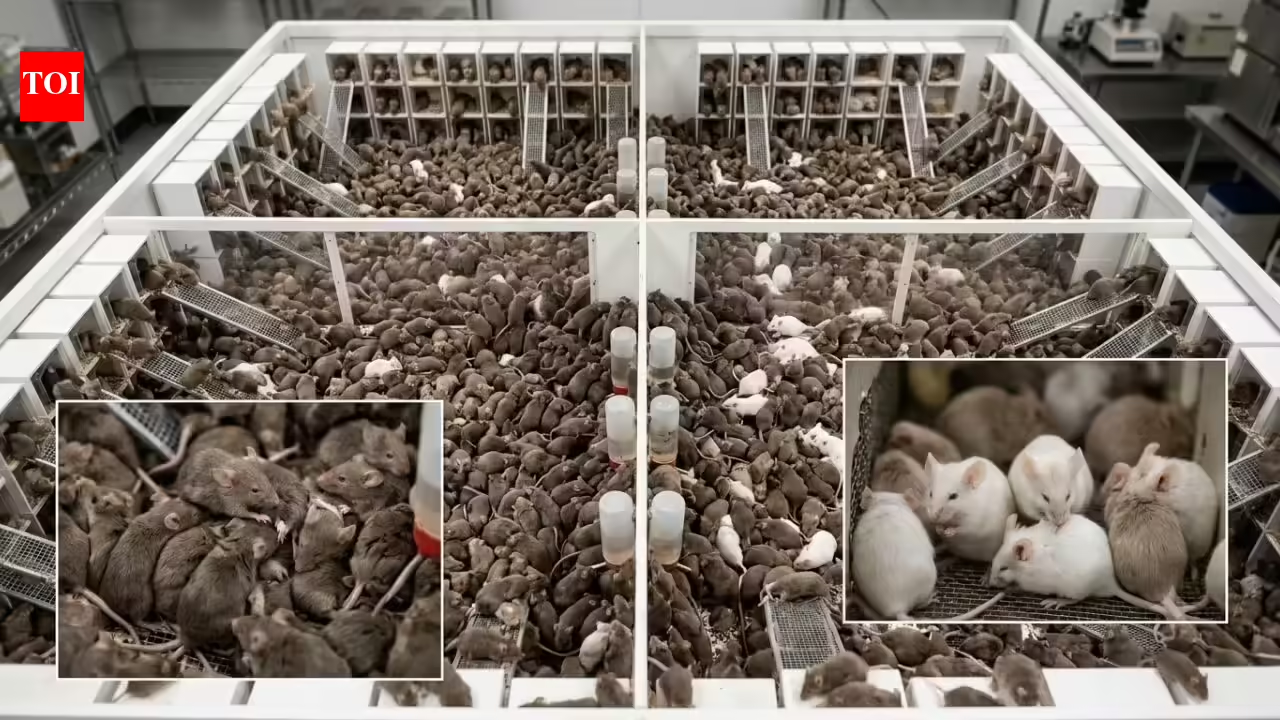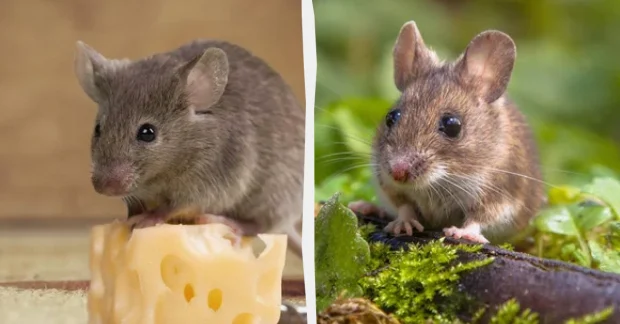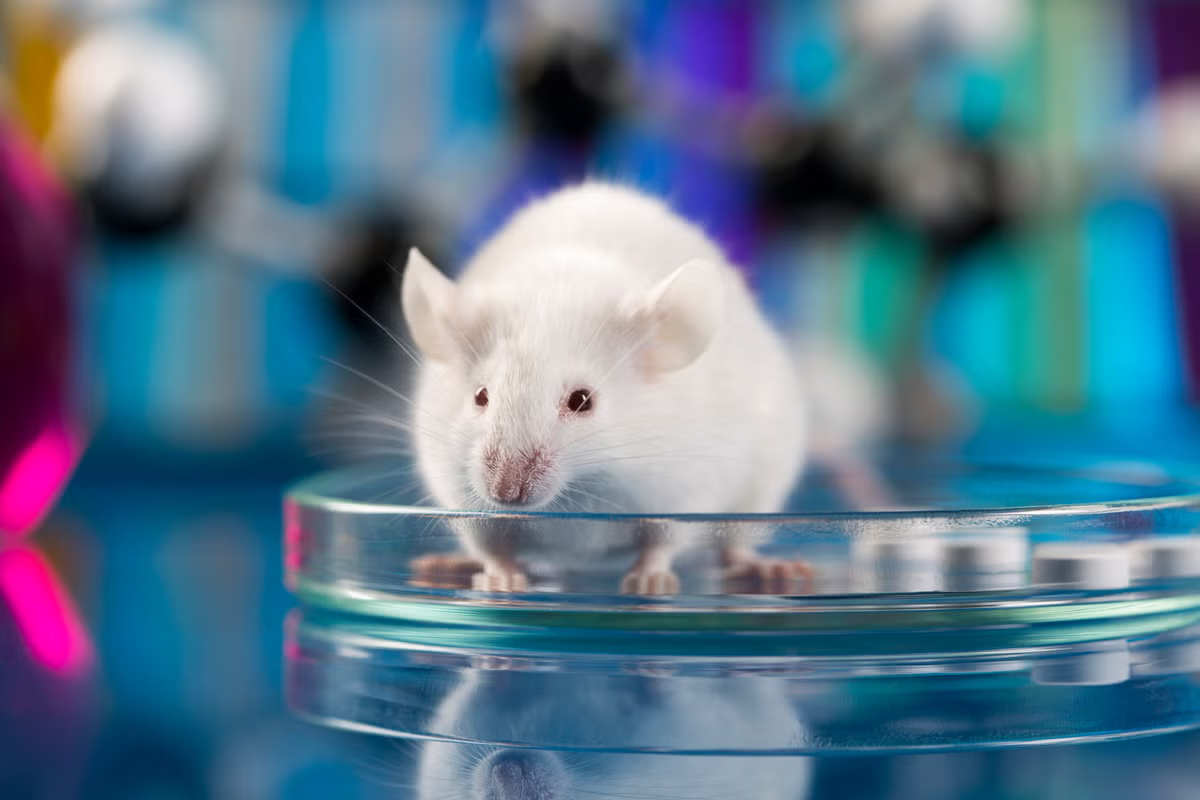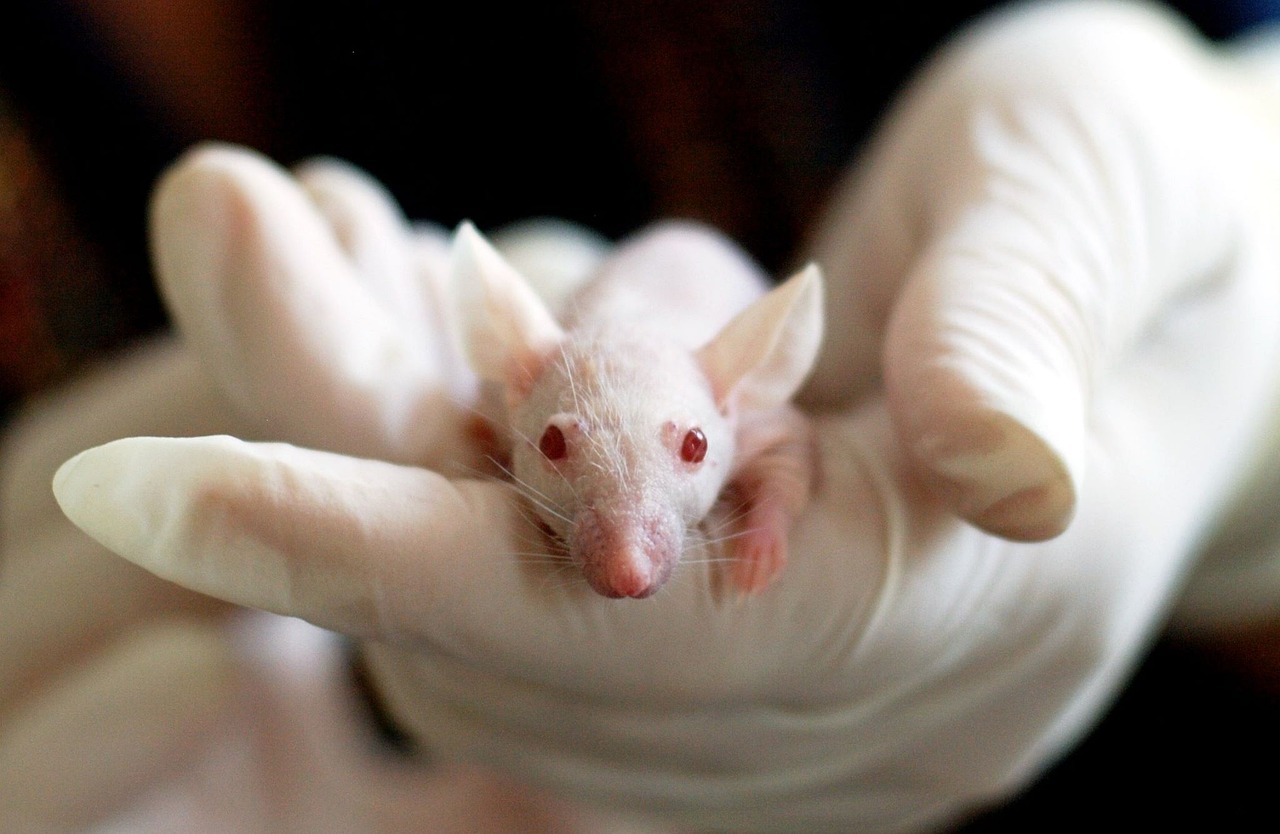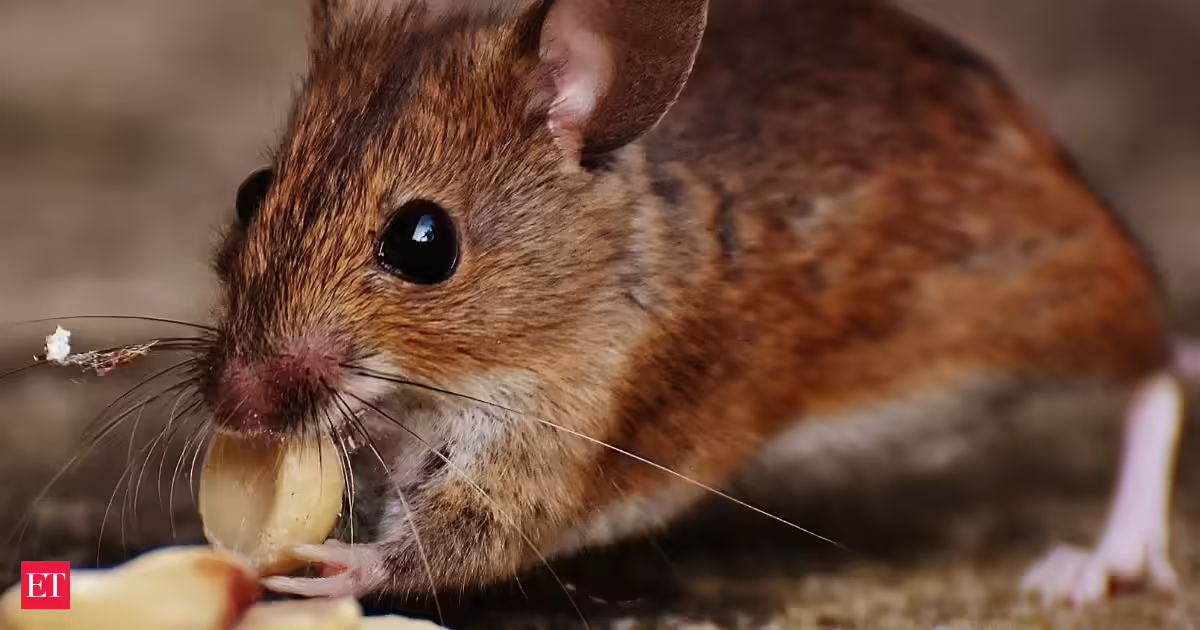
Imagine a world with infinite food, water, and shelter, no threat of death by hunger, disease, or predator. Sounds like paradise. In 1968, one scientist built exactly that but for a colony of mice. Within four years, they were all dead.In the summer of 1968, American scientist John B. Calhoun set out to create a controlled mouse habitat at the National Institute of Mental Health in Bethesda, Maryland. In a 1973 research paper, ‘Death Squared,’ published in the Proceedings of the Royal Society of Medicine, Calhoun detailed how he constructed a pen with four metal walls 54 inches (about 4.5 feet) high and a square with 101 inches (approximately 8.4 feet) sides. Inside were 256 mouse “apartments,” food hoppers that were always full, water that never ran out, and endless nesting material, with no predators, no bad weather, and mice screened for disease beforehand. Calhoun called it the "Mortality Inhibiting Environment for Mice," and this specific run was dubbed "Universe 25."The paper notes he brought eight mice, four males and four females, on July 9, 1968, and waited to see what would happen when survival was not a worry.The boom nobody could stop, at firstThe paper says the first 104 days were mainly spent with the mice getting to know each other. The population exploded when litters arrived, roughly doubling in number every 55 days, from about 20 mice to more than 600 in a year. Within the pen, small “neighborhoods” developed, each centered around a dominant male, his females and their young. The paper says the civilization seemed to be doing well until about day 315, when the growth suddenly slowed to a doubling time of about 145 days.As the colony grew, so did the competition for space, status, and belonging. Image Credits: PexelsWhen there's no room left to belongIt wasn’t hunger or thirst that caused the slowdown. At its peak of about 2,200 mice, about one in five nest boxes was empty, according to the study. The pen could have held thousands more mice before running out of resources. What actually ran out were social roles. Every territory was claimed, and when young mice grew up with nowhere to go, males who failed to get a role withdrew completely. They stopped fighting back and gathered into passive, wounded clusters near the pen's center. Overwhelmed mothers began abandoning or attacking their own pups, and more pregnancies ended before birth.Then a new kind of mouse showed up in droves. They were nicknamed "the beautiful ones" according to the study, because these mostly male mice never fought or approached females, so they had no wounds or scars. They spent their days eating, sleeping, grooming, and were not interested in mating.An ending that came anywayThe last litter to survive to weaning was born around day 600. By about day 920, conceptions stopped altogether. According to the study, the population peaked at about 2,200 mice around day 560, then shrank steadily until only 122 mice remained on June 22, 1972. When Calhoun finished his paper on 13 November 1972 (day 1,588), only 27 mice remained. Based on the ongoing rate of loss, he projected the last male would die around May 23, 1973. Later accounts confirm the population kept shrinking after that, with the isolated survivors eventually dying out entirely, according to Smithsonian Magazine.Calhoun notes that even before the end, reproductive failure had become obvious: by the final phase, infant survival had fallen so sharply that no new generation could replace the dying adults. He uses the experiment to argue that collapse can continue long after food, water, and shelter remain plentiful, once normal social organization has been lost.By the end, many mice had withdrawn from social life entirely; Calhoun's team called them the ‘beautiful ones.’ Image Credits: PexelsHisAmericanate, Dr. Halsey Marsden, then took small groups of these mice and moved them into large cages with eager mates reared in uncrowded quarters. It didn’t matter. They had lost the social skills to court, mate, or raise young.The paper frames this collapse as a social one as much as a biological one, arguing that once territorial space was fully occupied, surplus males were pushed into isolation and the whole colony began to lose its reproductive structure. Calhoun described the result as a “behavioral sink,” a pattern in which crowding, withdrawal and failed courtship fed on one another until normal social life broke down.Why a decades-old mouse study still comes up todayCalhoun was explicit that he was not talking just about rodents. He argued that removing the usual causes of death might ironically lead to a "death of the spirit" where people lose the ability to carry out behaviors required for species to survive. He suggested this pattern might also one day play out in crowded human societies.But there are real limits to that comparison. According to Smithsonian Magazine's reporting on the experiment, follow-up research on humans found that people generally cope with density far better than Calhoun's mice did.The real takeawayWhat still makes Universe 25 worth talking about is not a warning that crowding alone will doom us, especially for a generation navigating loneliness, remote work and fewer third places. It is a reminder that abundance alone does not make a healthy community. The mice in Calhoun’s experiments had all their physical needs met, but what broke down was something more difficult to stock in a food hopper: purpose, connection, and a meaningful role.
In 1968, an American scientist built a perfect "mouse utopia" with unlimited food, water, and shelter, but overcrowding shattered the mice's social bonds until the entire population died out
In 1968, scientist John B. Calhoun created Universe 25, a perfect mouse habitat with unlimited resources, but overcrowding led to the collapse of social structures and the eventual extinction of the population. Learn how this experiment reveals the complexities of community health and social bonds.
900 words~4 min read