It appears that the US-Iran situation cannot revert to the pre-war status quo ante. But can an inclusive regional order emerge in its place?
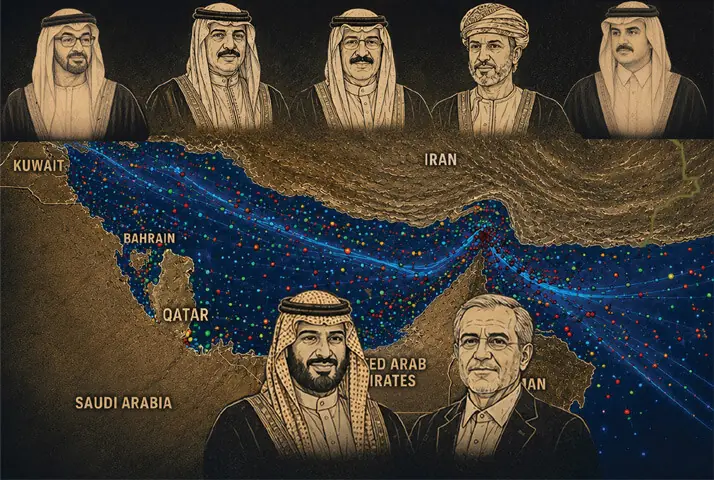
An illustration showing (top, left to right) the President of the United Arab Emirates (UAE) Sheikh Mohamed bin Zayed Al-Nahyan, Bahrain’s King Hamad bin Isa Al-Khalifa, Kuwait’s Emir Sheikh Mishal Al-Ahmad Al-Jaber Al-Sabah, the Sultan and Prime Minister of Oman Haitham bin Tariq Al-Said, Qatar’s Emir Tamim bin Hamad Al-Thani, (and bottom) the Crown Prince of Saudi Arabia Mohammed bin Salman and Iranian President Masoud Pezeshkian over a map of the Gulf with pre-war ship locator markings showing ships travelling via the Strait of Hormuz
The United States-Zionist war of aggression on Iran has been partially halted by a Memorandum of Understanding (MoU). Given the rising cost-exchange ratio because of Iran’s response, US President Donald Trump was looking for a deal.
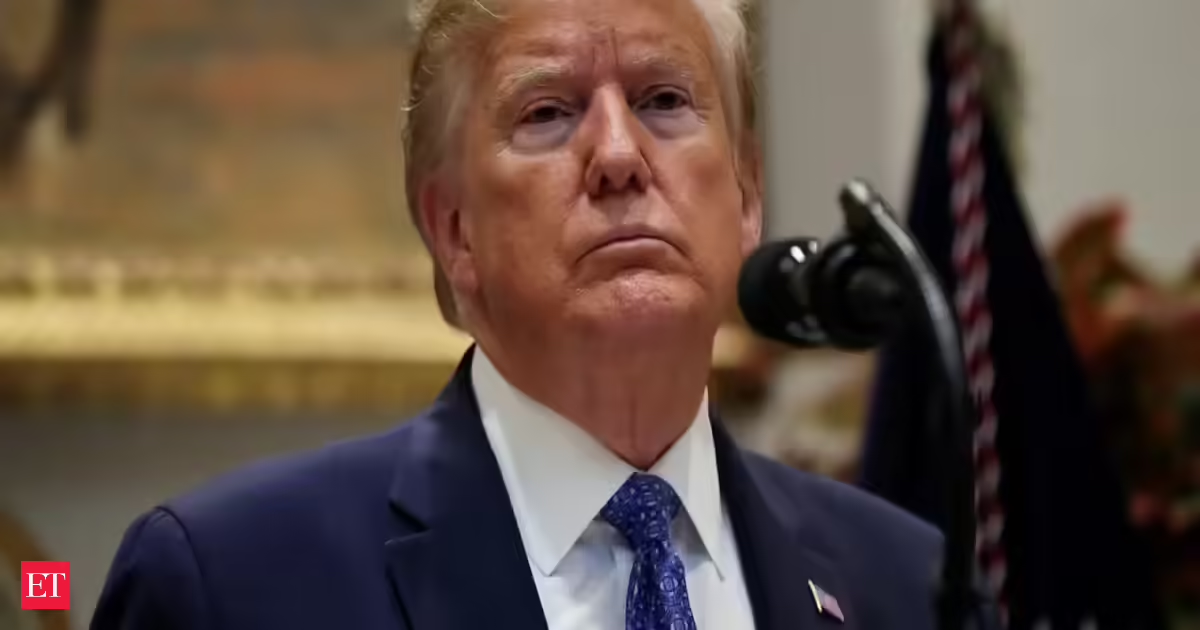
He admitted to the media at the G-7 summit that he “did not want to be the late, great Herbert Hoover”, the president historically blamed for the onset of the Great Depression. Trump also made plain that continuing the war meant global recession.
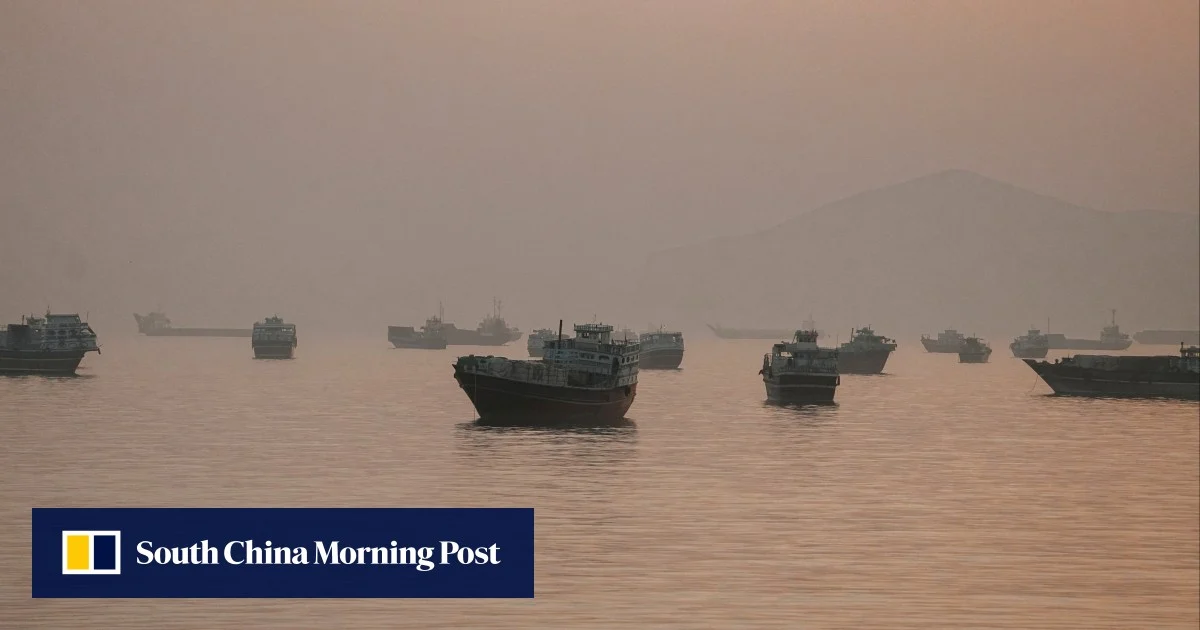
He started a wrong war. But he is right about ending it. The blockade of the Strait of Hormuz nearly paralysed a massive ecosystem of oil and gas and petroleum derivatives and byproducts. Food security was affected because fertiliser strangulation hit farming sectors in the region and beyond at several critical pressure points.