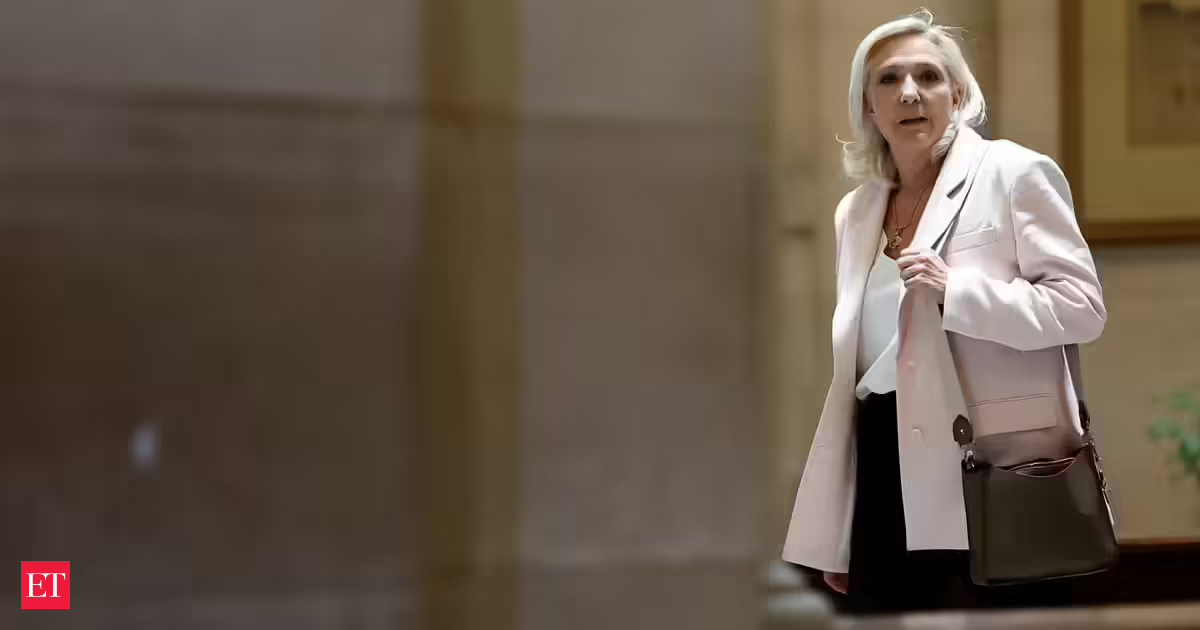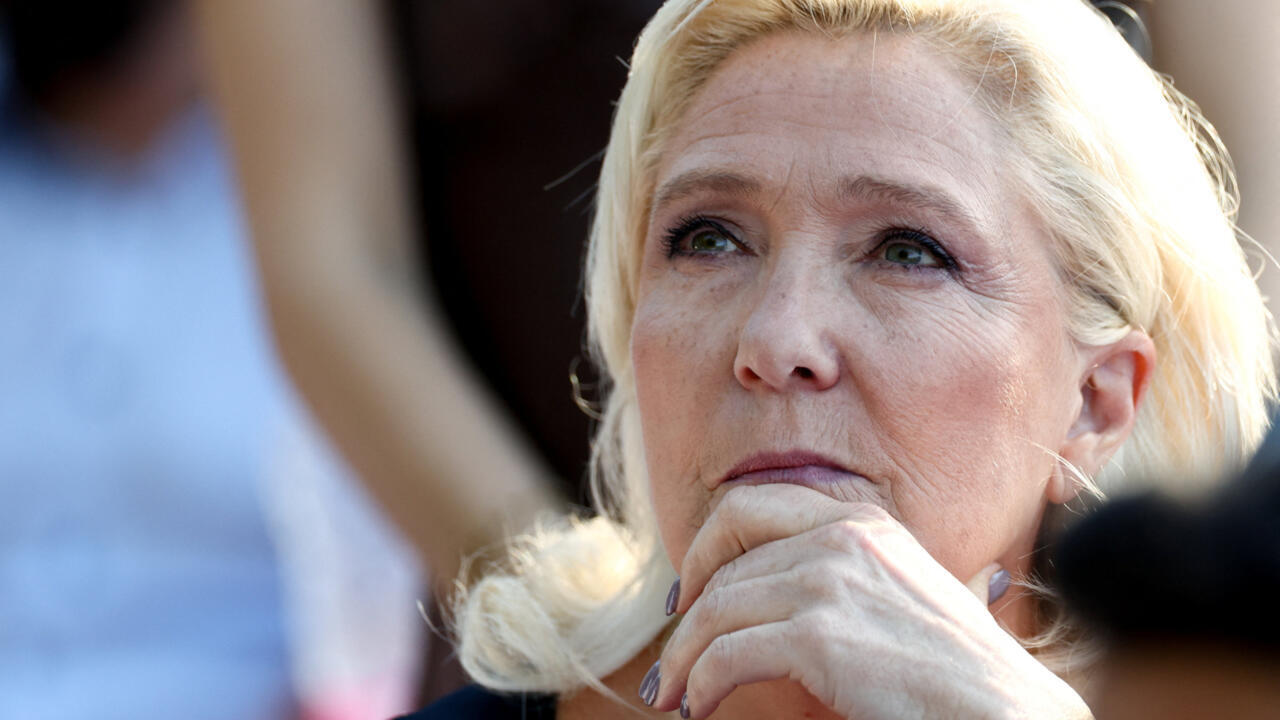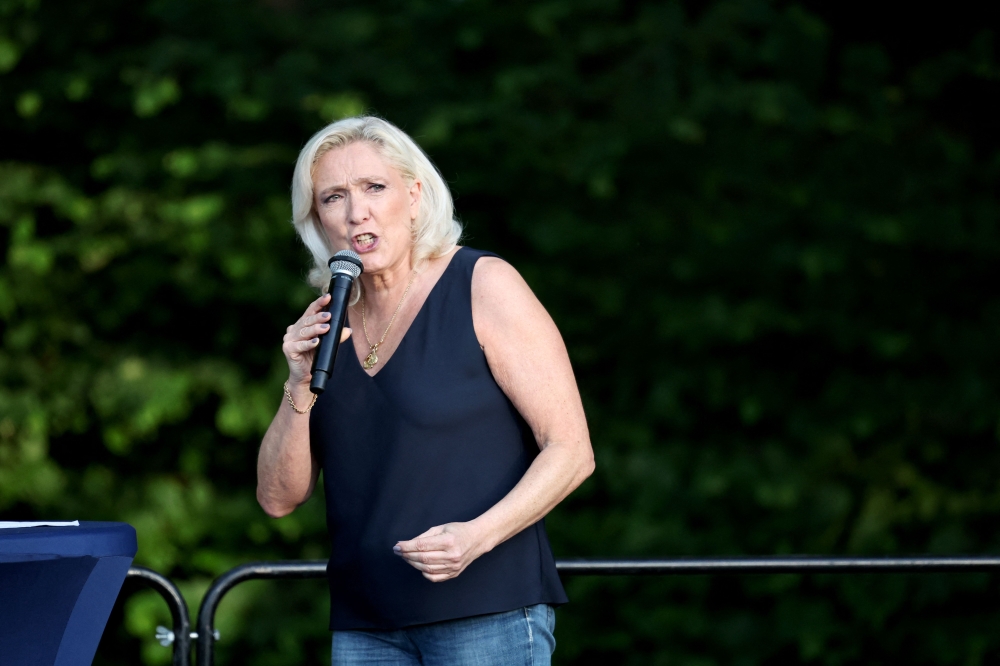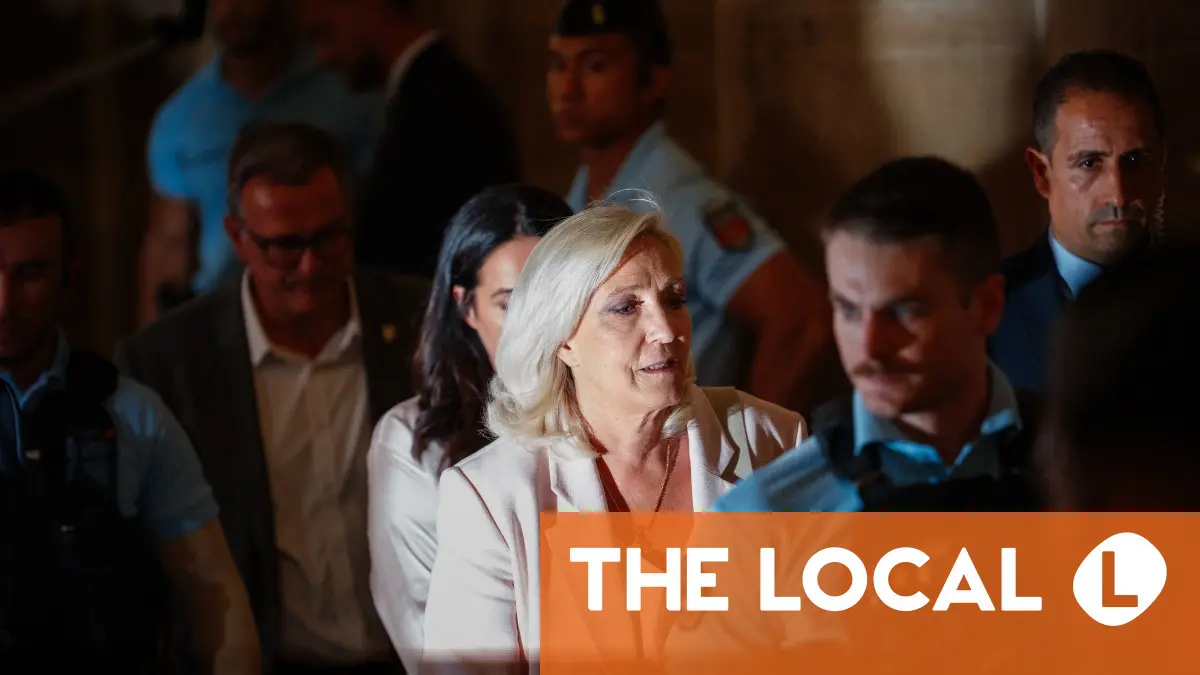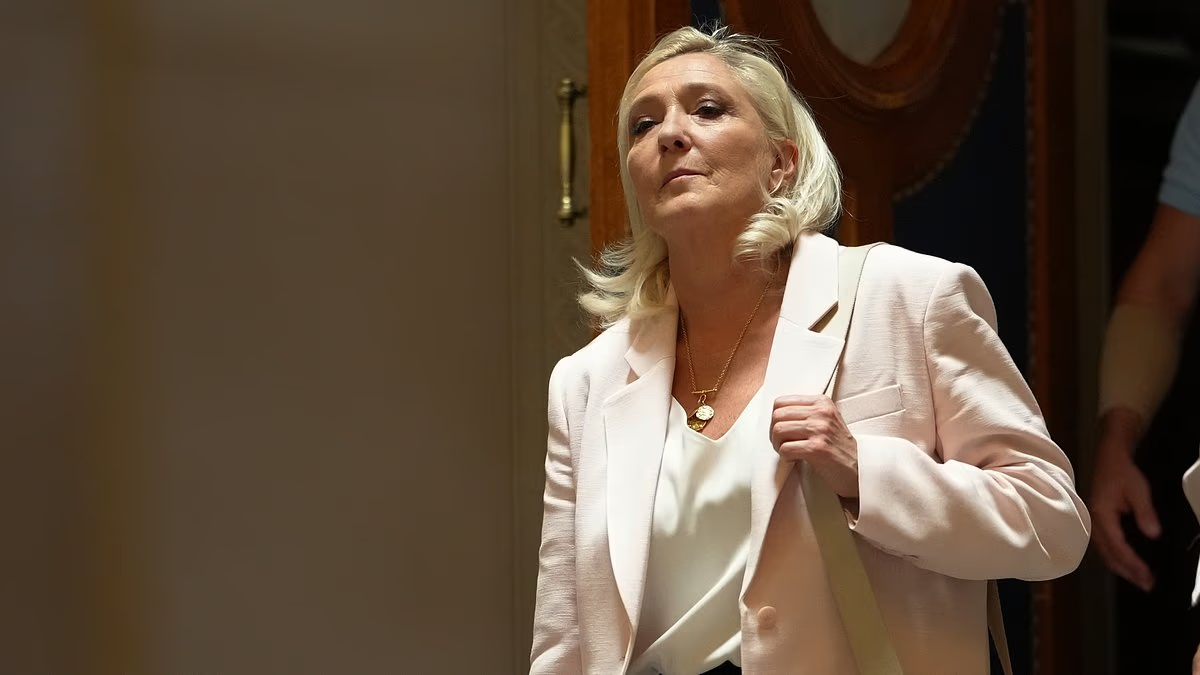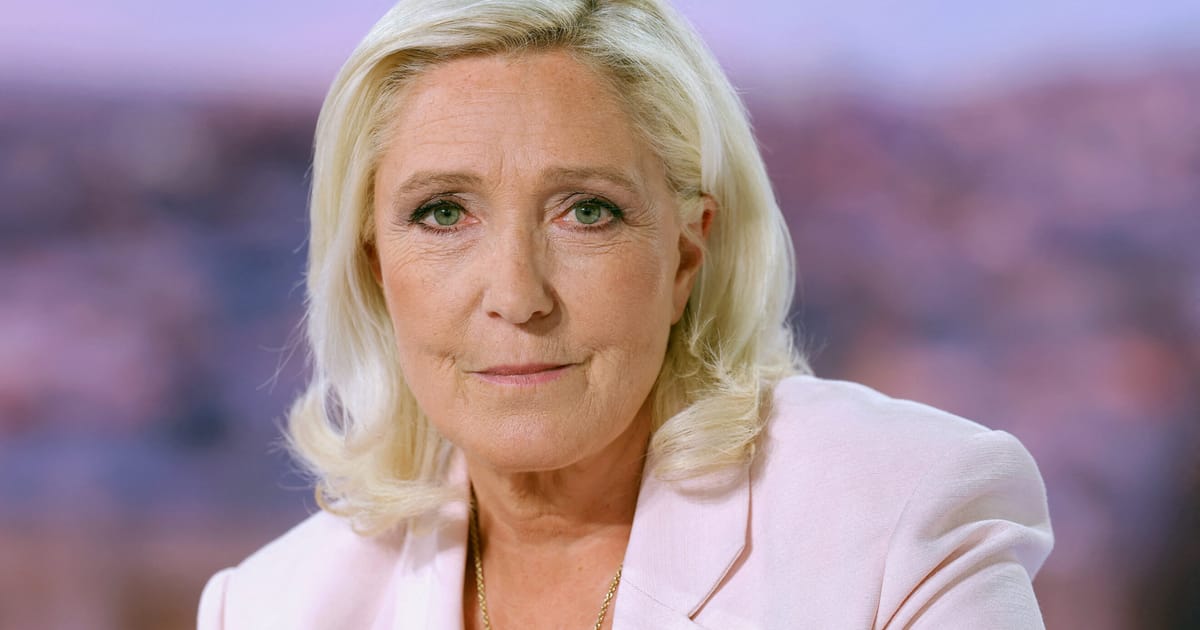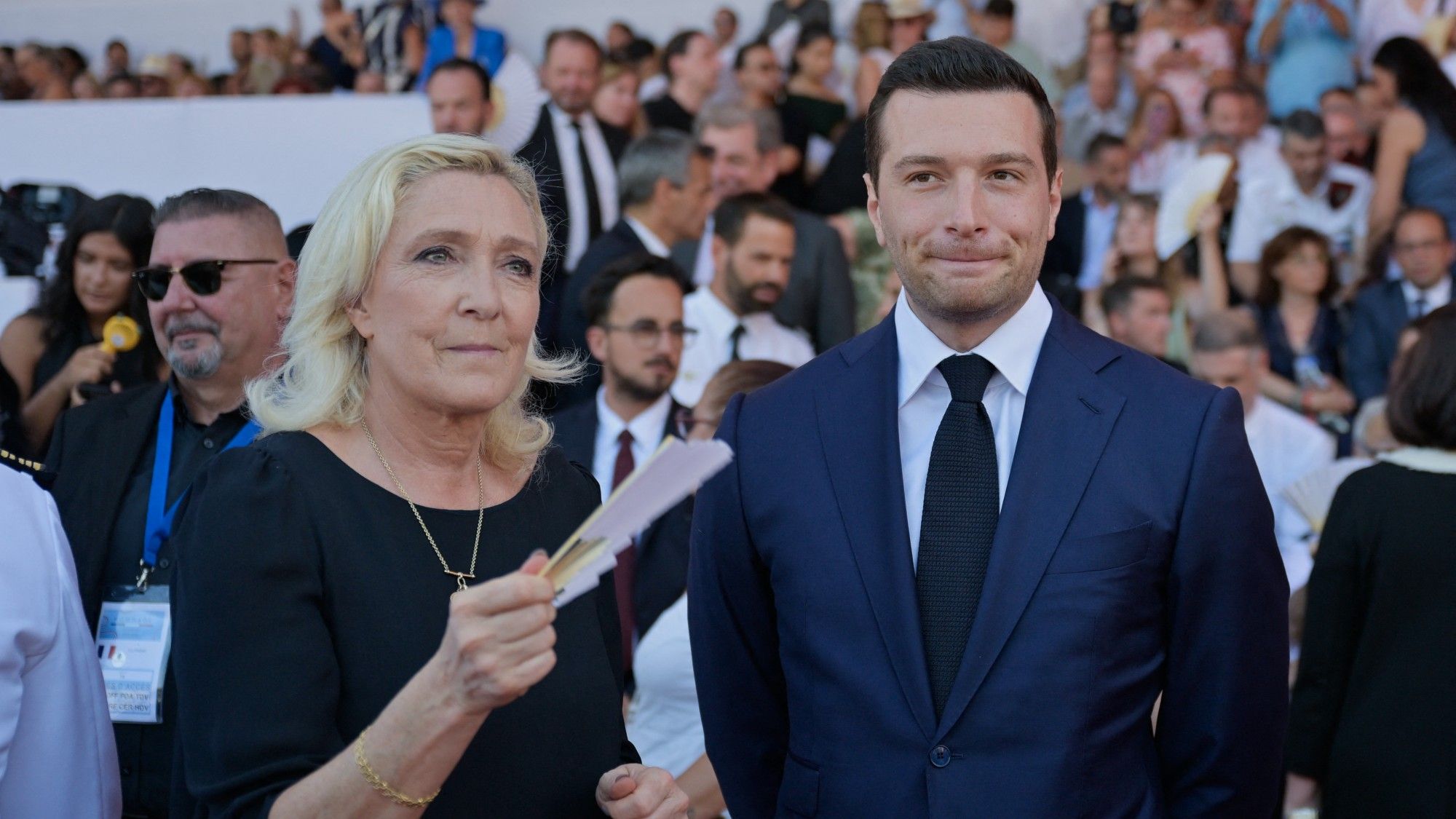
As the judge read out the verdict in Marine Le Pen’s appeal trial for embezzlement, the same conversation was playing out in living rooms and WhatsApp groups across France. What? Does this mean she can run for the Élysée after all? But what about the prison sentence? And the electronic tag (which Le Pen had promised she would not campaign wearing)? And what about her protege Jordan Bardella?For a few hours, it looked as though the court of appeal had unexpectedly played a masterful hand by unequivocally upholdingthe far-right National Rally (RN) figurehead’s conviction for misappropriation of public funds. It handed her a fine of €100,000 (£85,000) and a commuted prison sentence, the remaining year of which would be served by Le Pen being electronically tagged.The courts, accused by the RN and its supporters of meting out politically motivated verdicts after her original conviction in March 2025, seemed, crucially, to have found a way of confirming Le Pen’s guilt while protecting the judiciary from the charge of thwarting voters’ democratic rights. The court of appeal achieved this by shortening the original five-year ban on Le Pen running for electoral office, which would in effect have eliminated her from next year’s presidential race.The judges found that Le Pen was at the heart of an elaborate fake jobs scam, and sentenced her to prison. Yet in clearing the way for her to run, they also protected the right of voters to elect a convicted felon to the French presidency. The impartiality of the justice system and the rule of law were preserved; the ball was back in the political court, and in Le Pen’s hands. Yet here also was a verdict that would force her to wrestle with a profound dilemma: should she keep her promise not to campaign while under curfew with an ankle device (as her sentence requires), or stand aside and let her young, poll-busting lieutenant Bardella run in her place in 2027?Le Pen wrestled with this deep moral dilemma for all of a couple of hours and then turned up – pink-clad and fresh – on the evening news to announce that she would, after all, be standing as the RN candidate in the presidential election. She would be appealing to France’s highest court on a point of law so may not have to wear an electronic tag. Questions about the timing of this appeal were batted aside. In an ominous performance that blended the cold flash of political smiles and her trademark grinding of teeth, Le Pen was defiant: it would be up to French voters to choose.It was somehow fitting that Nigel Farage had almost simultaneously made an (almost) equally grotesque statement in response to a UK parliamentary investigation into alleged financial misconduct. Farage lashed out against a system in which he was supposedly being hounded for having done well for himself. In forcing what he called a “people versus the establishment” election, he too was turning to the voters, the holders of “common sense”. In both France and the UK, “the people” would know better than any institution of state. Note how Le Pen and Farage, as populists, derive confidence from weaponising democratic institutions (electoral systems, judiciaries, parliaments) as persecutors or bypassing them altogether.Marine Le Pen and Jordan Bardella on their last outing before the appeal verdict, at a fair in Lievin, northern France, July 4, 2026. Photograph: Tom Nicholson/ReutersThat Le Pen will be running for president rather than her presumed successor, Bardella, is a far greater risk both to France and to the rest of Europe for several reasons. Her experience as a campaigner compared with the 30-year-old Bardella’s total inexperience is one. She will be a much tougher opponent for other candidates to beat. And while Bardella has been riding high in the polls, he would have trouble surviving the forensic questioning of a French presidential campaign – never mind the infamous second-round TV debate that saw his boss trounced in the previous two elections. Second, should she win and become the next French president, she will be ruthless in her attempt to undermine, challenge or even dismantle France’s democratic institutions. Her decision to put herself up for election despite her conviction is a fine illustration of the regard in which she holds them.French democracy is mature but it is sclerotic and, more importantly, the presidential system of government concentrates too much power in the executive. For that reason, comparisons with Giorgia Meloni in Italy are ridiculous as the office of president in France is far more powerful than the Italian prime minister. And Le Pen would make the most of these powers. But most importantly, Le Pen’s attitude toward the EU is far more belligerent than Bardella’s – just as her relationship with Russia is far closer.A win for Le Pen would be an earthquake at the heart of Europe.Tuesday’s developments raise at least two further immediate questions. One seems like a sideshow but is no less interesting for that: what of Bardella? Will he really fall in line and accept his fate as a potential PM to Le Pen? Or is the verdict a prelude to yet another almighty succession battle or split in the party?skip past newsletter promotionafter newsletter promotionThe second question it is far more serious. In the 2017 presidential election, Le Pen was never close to winning – as I wrote in the Guardian. In 2022, Le Pen also lost out to Emmanuel Macron but the margin of defeat was narrower.Ten years on, after a decade of Macron, a gifted but arrogant president, after waves of Russian disinformation and an increasingly fragmented and polarised public, she is closer than ever.Her defeat depends on whether a capable, credible candidate can make it through to the second round to face off against her. For now, the left is nowhere near reaching consensus on a candidate – and neither is the mainstream right. The jockeying, bickering and backstabbing (egged on principally by radical left leader Jean-Luc Mélenchon) that has marked the political class since the 2024 crisis and Macron’s decision to call snap elections, look set to undermine any kind of orderly challenge to Le Pen. And yet everything is riding on the capacity of other political parties to rally to the challenge.
Populism unites Le Pen and Farage. But she is a step closer to power
Marine Le Pen is a convicted criminal. But now she’s running for office and there is still no credible candidate to oppose her, says the academic Catherine Fieschi
1,065 words~5 min read