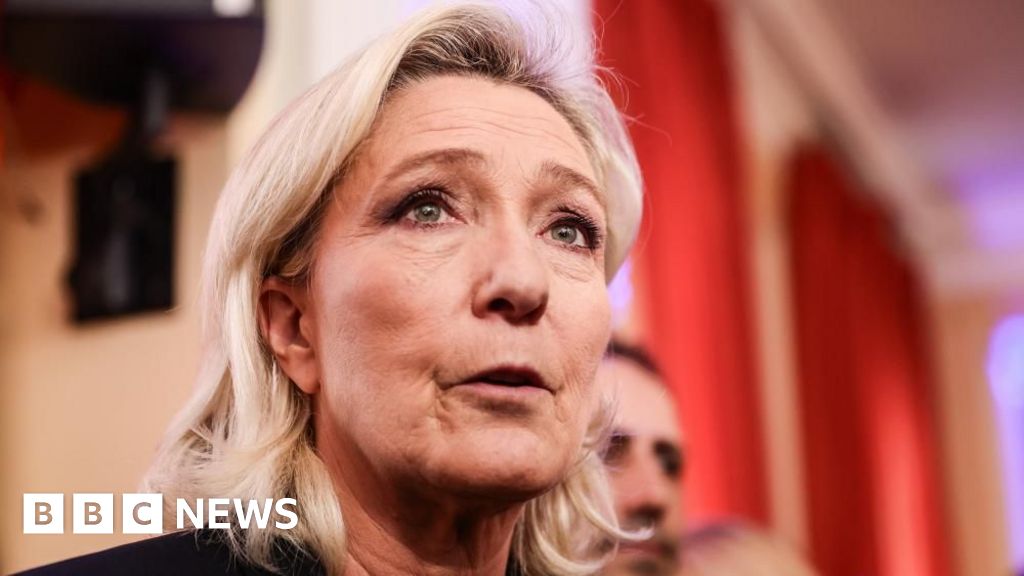
Marine Le Pen will soon learn her political fate: Her appeal at a Paris court on Tuesday could dash her hopes of standing in the 2027 French presidential election, in which her party is currently the front-runner. Le Pen has already run for the French presidency three times (in 2012, 2017 and 2022). She first won a seat at the European Parliament in 2004, and the current case centres on accusations over payments made to National Rally (RN) party assistants. Le Pen, the RN party and others are accused of using European Parliament money to pay those working for the party in France. The co-defendants say the money was used legitimately for EU parliamentary work; Le Pen has said she believes part of the work of a member of the European Parliament is to advance the party's agenda in France and beyond. In March 2025, Le Pen was sentenced to four years in prison – including two years in custody – for embezzlement, fined €100,000 and given a five-year ban from public office with immediate effect. If the Paris appeal court upholds the ruling, it would send shockwaves through the far-right RN party, which has led opinion polls for several months. Financial damage to the European Parliament Judges in the first ruling found Le Pen guilty along with 24 former MEPs, parliamentary assistants, an accountant and the National Rally party of using European Parliament funds to pay party employees between 2004 and 2016. Judges ruled that the case did not stem from “administrative errors” or confusion over European rules but amounted to “embezzlement as part of a system designed to reduce the party’s operating costs”. The Paris criminal court assessed the financial damage to the European Parliament at €3.2 million, after deducting €1.1 million that had already been reimbursed by some of the defendants. Read moreWhat does the EU embezzlement trial mean for Le Pen and the French far right? Only 12 of those convicted in March 2025, along with the party itself, have appealed. They include Perpignan Mayor Louis Aliot, MP Julien Odoul, MEP Nicolas Bay, and senior party figures Wallerand de Saint-Just and Bruno Gollnisch. Renewed attacks on the judiciary As in the first trial, Le Pen plans to plead her innocence and to argue that the case is politically motivated, aimed at preventing her from running for president. “The trial judge wrote that the goal was not only to stop me from running but also from being elected,” Le Pen told the economic weekly La Tribune Dimanche on December 28. “There was a time when people were shot. Today, you are shot judicially. It means political death.” Since the verdict was handed down, Presiding Judge Bénédicte de Perthuis has received death threats and been placed under police protection. In its ruling, the court cited Le Pen’s refusal to acknowledge the facts, the seriousness of the offences and the risk of reoffending to justify the sentence's severity. The judges also defended the immediate enforcement of her ban from office, saying it was necessary to ensure that elected officials “do not benefit from preferential treatment incompatible with public trust in political life”.
What to know about French far-right leader Marine Le Pen's graft appeal
French far-right leader Marine Le Pen is back in court on Tuesday to appeal her embezzlement conviction, with the verdict to determine whether she is eligible to run in the 2027 presidential election.…
949 words~4 min read