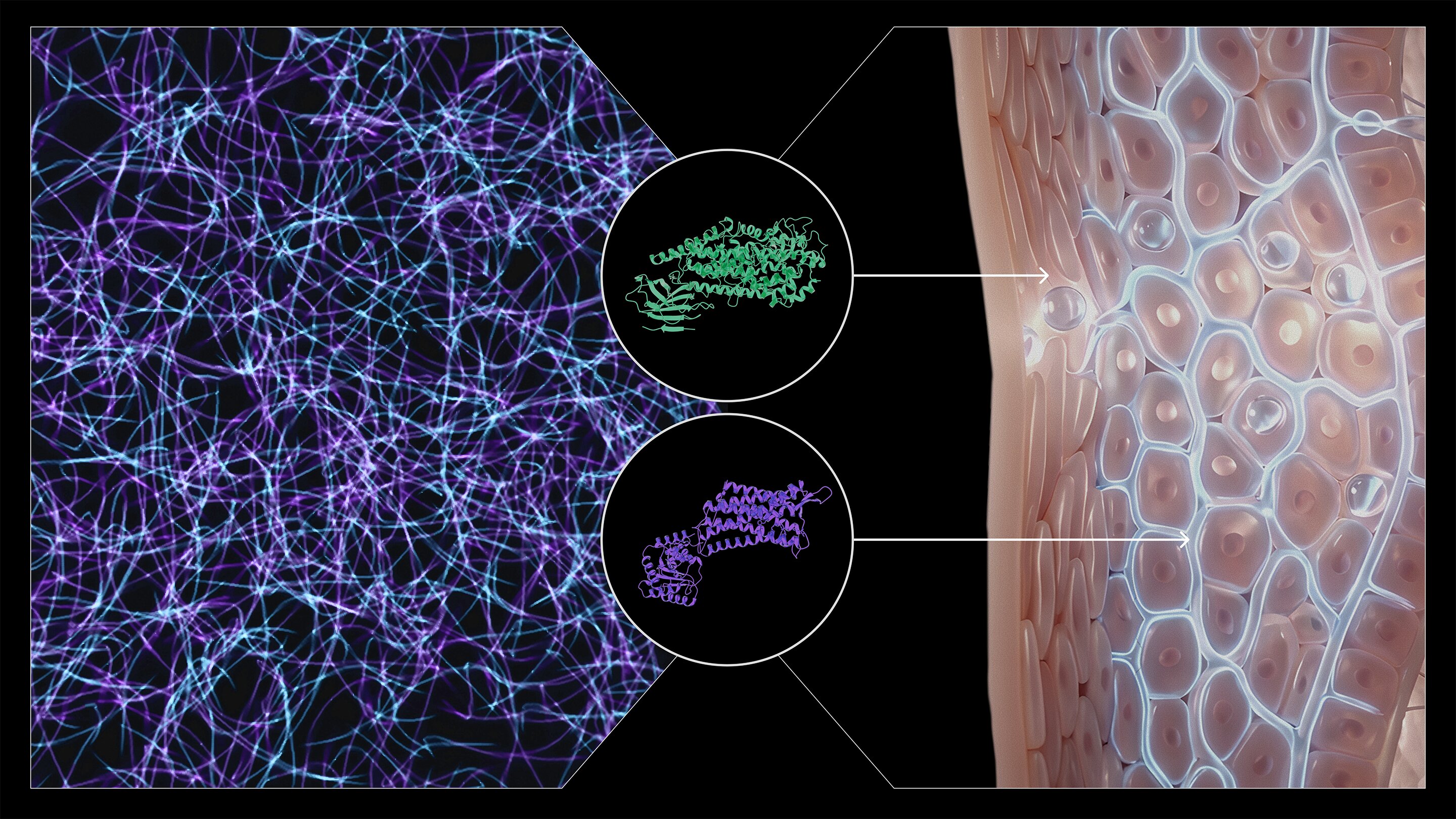
An AI-guided network analysis of genomic data (left) highlights two protein targets, including the oxytocin receptor, identified through Biohub's CRISPR screen in primary human skin cells (right). Credit: Biohub
Biohub researchers have performed what they believe is the first genome-wide CRISPR study of primary human adult skin cells, then used an AI model to mine the results for overlooked drug targets for psoriasis. They found an unlikely candidate: the receptor for oxytocin, a hormone involved in childbirth and sometimes called the "love hormone" for its additional role in social bonding.
As reported in Nature Communications, when the team formulated topical gels containing compounds that would inhibit the oxytocin receptor, as well as another promising target, both gels reduced psoriasis inflammation in mice as effectively as an injected drug used by many patients.
"A CRISPR screen at this scale, guided by AI, gave us answers the field has never had access to before, as well as a surprisingly effective potential treatment," said Shana O. Kelley, president of bioengineering and head of Biohub in Chicago, where scientists are decoding the inflammatory processes that drive a wide range of diseases. Kelley co-led the study with Abdalla M. Abdrabou, lead scientist for Biohub's Functional Immunogenomics group.