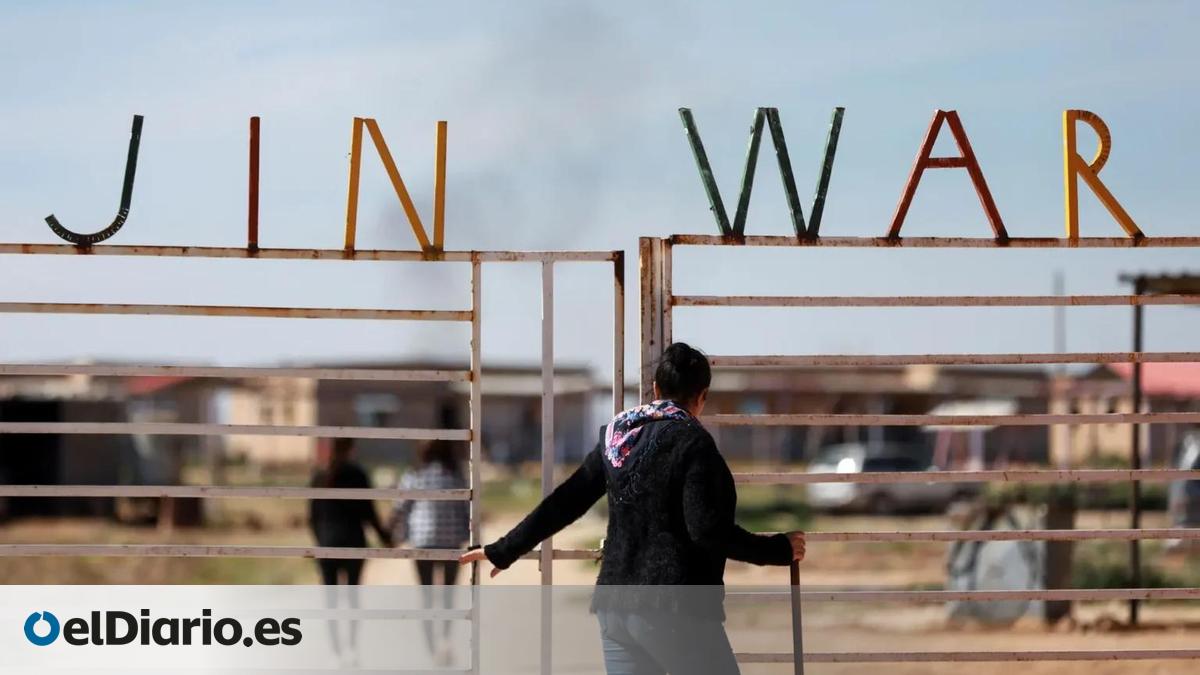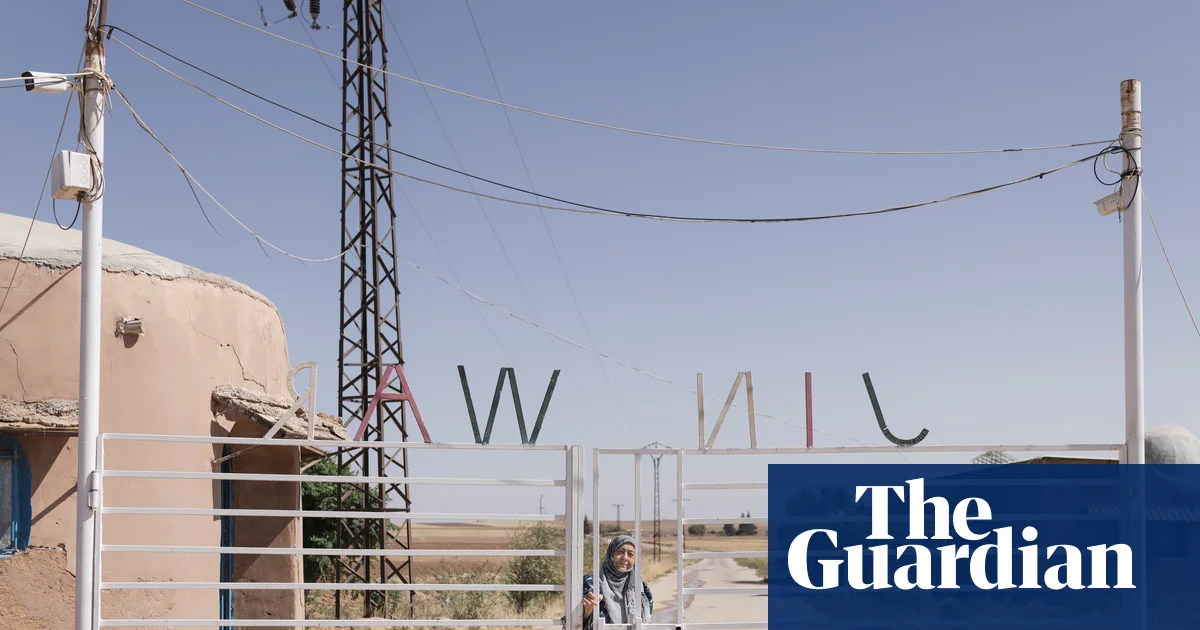
A mother carrying a rifle on her shoulder and gripping a walkie-talkie stands guard at the entrance to Jinwar, a women-only commune in Syria. Beyond the gate, about 30 mud-brick houses dot the desert landscape, their gardens filled with flowers, vegetables and fruit trees.The village, just outside the city of Qamishli in Syria’s predominantly Kurdish north-east, is a burst of colour amid the dust. Opened in 2018, Jinwar has become a refuge for women from across the region – Kurds, Arabs and Yazidis among them. Some residents arrived after losing husbands to Islamic State (IS); others left abusive marriages in search of safety and independence. It describes itself as “a place for women who want to live a free life with other women and children, women who do not want to get married, women who lost their husbands in war or who were facing violence in their families”.
Vegetable harvest in Jinwar, where the women cultivate much of their own food, growing aubergines, tomatoes, peppers, cucumbers, onions and garlic
About 25 women live in the commune, alongside their children and animals, including cows, sheep, chickens and peacocks. They run their own school, have built many of their own homes using bricks formed of earth, water and straw, and cultivate much of their own food, growing aubergines, tomatoes, peppers, cucumbers, onions and garlic. Men from the outside can visit, but cannot live there or stay overnight.Jinwar was built during the Syrian civil war in response to violence, discrimination and the many challenges faced by women in the region. The name combines the Kurdish words jin (woman) and war (home, land or place), meaning “women’s space”.