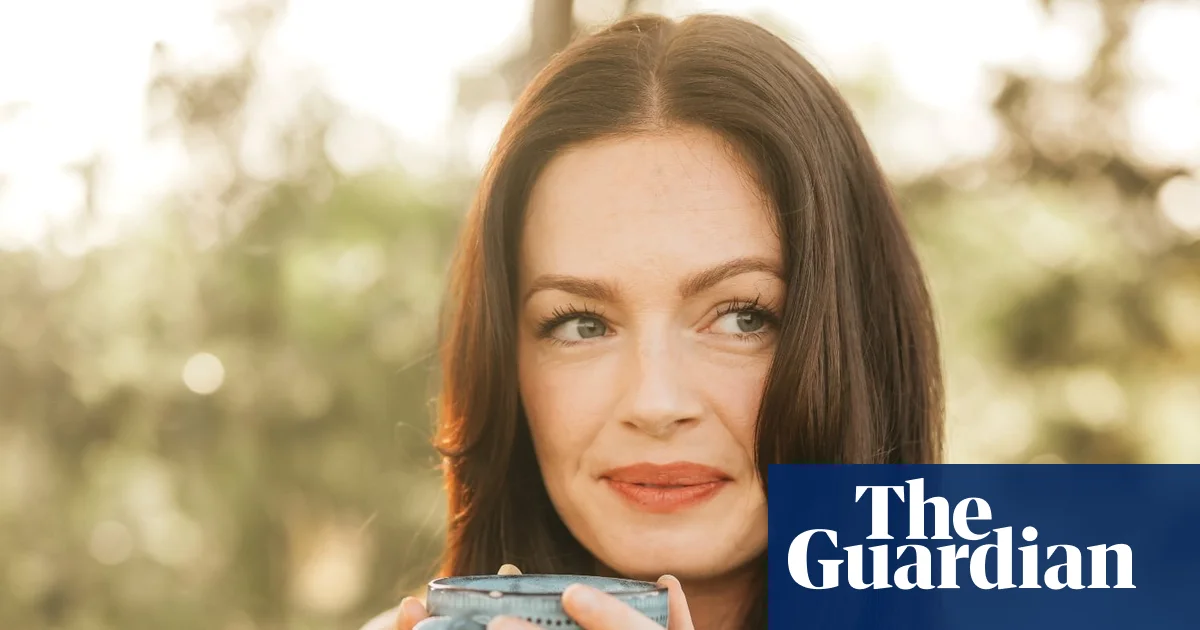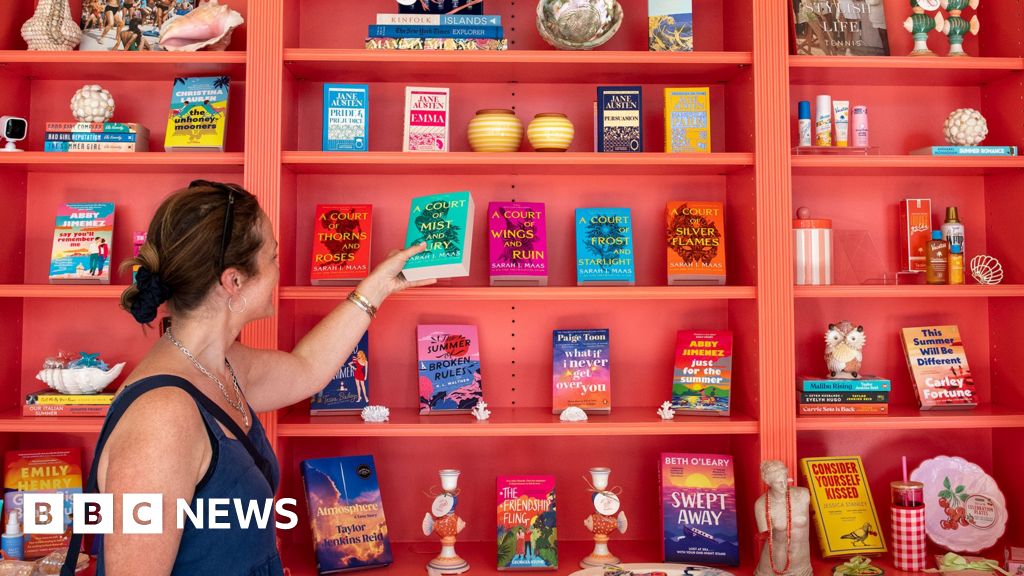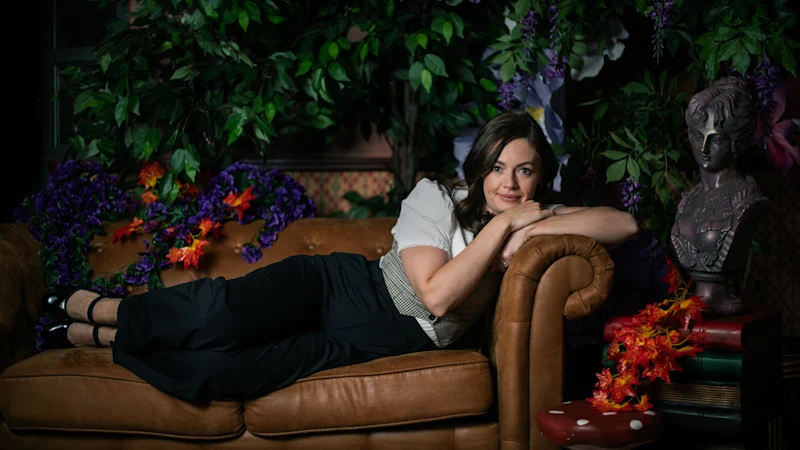
An author? That usually elicits raised eyebrows. A romantasy novelist? That’s when people start rolling their eyes.“If you’re not a reader of this genre, what comes to mind when you hear fantasy romance? It’s usually like whips and chains,” Stacey McEwan says, laughing. “So watching their reaction turn from, ‘Oh, that’s interesting,’ to, ‘Oh, I need to go,’ is also really fun.”McEwan has heard it all before. But these days, the sceptics aren’t the ones getting the happy ending. The rise of the romantasy genre may attract eye rolls, but it also lets people quit their day jobs to become full-time writers. Not that long ago, McEwan was a primary school teacher on the Gold Coast who had spent years writing around her high school education, university studies and work, sending nearly a dozen manuscripts to publishers and collecting dozens more rejection letters. Five years on, she’s a New York Times bestselling author with an international Big Five publishing deal lucrative enough to leave the classroom behind. How’s that for fantasy?Though when we meet, no explanation is necessary. McEwan is something of a celebrity inside Books Ever After, the romance-only bookshop owned by author Kat T. Masen, tucked into South Eveleigh’s old railway workshops in Sydney. Fake flowers and potted trees are scattered throughout the store, enough to have you instinctively reaching for the antihistamines. Pillows saying “once upon a time” decorate vintage-style leather couches. A life-sized cardboard cut-out of a chiselled hero stands guard while a glowing faux fireplace explains why he has his shirt off. It’s the sort of place where no one bats an eyelid at a cover featuring a set of wings and abs. Whether you’re after dragons, hockey players, fae princes or cowboys (or all four, at once), there’s a love story waiting for you.Author Stacey McEwan set her mind to becoming a writer after she won a high school poetry competition. Fittingly, McEwan has just returned from the United States, where she played a role in a real-life romance, officiating a friend’s wedding after discovering it takes about half an hour online to become a minister. In a corner of the store, I spot what I think to be cheery, pink soft toys forming a kind of cumulus cloud. “They’re penises, right?” McEwan says. I can’t unsee them.The book world, too, has been looking at things differently. The success of McEwan – who is about to publish her fifth novel, A Forsaken Prophecy, the second in her breakthrough Artisan series – embodies one of the biggest upheavals in publishing in decades. The phenomenon of BookTok and romantasy – Rebecca Yarros’ Onyx Storm was the highest-selling novel in Australia in 2025 – has reordered who gets discovered, who gets published, and who gets to decide what becomes a bestseller. For better or for worse.So where does McEwan’s story begin? In the early months of 2020, when the world was baking sourdough, arguing about Tiger King and wrestling with the trauma of the sheer number of colleagues who don’t wear pants on video calls. We were searching for something, anything, to fill the endless expanse of hours. For many, that something became TikTok.Friends kept sending McEwan videos until she finally gave in and downloaded the app herself. Somewhere between Fleetwood Mac’s Dreams and the Dalgona Coffee Challenge, she landed among the fledgling BookTok (there are now 81 million #BookTok posts globally). She started reading the books users recommended, then wondered whether she might have something to add herself. One of her earliest ideas was a skit about an Alcoholics Anonymous-style meeting where the attendees were trope romance characters confessing to their flaws.“I made that skit and posted it, thinking it doesn’t matter, no one’s going to see it, especially no one that I know. It accidentally got like 100,000 views overnight,” she says.Her first reaction wasn’t excitement. It was sheer panic at the thought that someone from school would see it. Luckily, a teacher talking about books passed the test, so she kept posting. She became the funny book girl, parodying romance tropes, roasting problematic alpha heroes who clearly needed therapy. It’s high-level textual analysis put through a rapid-fire standup routine. Her content is smart, self-aware and ultimately affirming of her readers’ passion for the genre.In hindsight, McEwan had been accidentally preparing to be an internet influencer her entire life. She sums up her personality with a phrase: “musical theatre kid energy”. She’s charismatic and assured in person, and films a TikTok for me with the casual ease of a pro mixed with the patience of a former school teacher.“Shockingly, she was very loud,” she says of young Stacey. “She had a lot to say. She had a lot of big dreams. She was going to achieve everything. She was a big people pleaser and she was a big performer as well.”The middle of three daughters, McEwan grew up on the Gold Coast, where her father was a police officer and her mother worked a string of jobs, from cleaner and florist to supermarket worker and teacher’s aide. In year 10, McEwan’s English teacher encouraged her to enter a poetry competition with a piece she had written from the perspective of the untouched plate of cold fried chicken sitting on the table between Daisy and Tom in The Great Gatsby.“I think that was the first little, ‘Am I good at this?’ – and that’s a dangerous thing to tell me because I will run with it.”She had never met a writer, but she decided she wanted to be one. By the end of the year, McEwan had written her very first full-length book, inspired by the popular trends of the era – Twilight and The Hunger Games. Her parents had no idea what she was up to each night in her room, but they met the revelation that she’d written a book with a sighed, “Of course you did.”“I think there’s like 20 unfinished manuscripts sitting on my desktop still.”“It was nothing new and brilliant. It was the most terrible book you’ve ever seen in your life, but it didn’t matter. It made me very, very happy that I’d written it,” she says.Driven by her self-described teenage overconfidence, she borrowed $50 to start pitching to publishers and agents, to no luck. But she kept writing romance novels, kept sending them, and kept being rejected for more than a decade. How many rejection letters? “God, I don’t know,” McEwan says.“I think there’s like 20 unfinished manuscripts sitting on my desktop still,” she says. “I just really enjoyed it. I really hoped to be published. I developed a healthy sense of realism that it was probably not going to happen, just statistically, but that I would always try,” she says.For McEwan, romantasy wasn’t a market to chase. They were the type of books that she devoured from front to back, drawn to the complexity of the world-building as much as the love story. Some of her confidence from childhood wore off, but the creative outlet never stopped bringing her joy.“Whatever book I’m writing right now, I’m always like, this is the best book I’ve ever written, and everything else sucks,” she says.So, when McEwan found herself with access to hundreds of thousands of readers who were watching her online videos, she did what any sensible aspiring novelist would do: she sold them a book. Skipping the traditional publishing playbook she’d tried so many times before, she decided to self-publish Ledge, the first in the Glacian trilogy, about a young woman trapped in a frozen mountain settlement who strikes a bargain with one of the winged enemies her people have been taught to fear. She treated her followers less like customers than collaborators, letting them watch her business plan, writing process, and career take shape.Stacey McEwan with her latest novel, A Forsaken Prophecy, the sequel to her breakthrough A Forbidden Alchemy. Steven Siewert“I’d completely put that traditional publishing dream in a drawer and just thought that’s not my way in, this is my way in. But then, the inbox started filling up,” McEwan says.Ledge had already attracted almost 2000 pre-orders when the agents who had once seemed unreachable were suddenly circling, followed by publishers. McEwan signed with the British independent press Angry Robot Books, which went on to publish the whole trilogy.Then, in 2024, came the big one. Major publishing firm Simon & Schuster acquired what would become McEwan’s real breakthrough series, the Artisan trilogy, in a pre-emptive deal across Australia, Britain and the United States that was substantial enough for McEwan to leave the classroom after 11 years. Set in a world where people are either “Artisans” or “Craftsmen”, the series wraps a slow-burn romance around a story of class conflict, privilege and rebellion. The first book – A Forbidden Alchemy – debuted on the New York Times and the local top 10 bestsellers list, and she’s now sold more than 30,000 copies across all her books in Australia, making her one of the leaders in the romantasy genre.“It was insane. It was not the calibre of deal that I ever expected to get,” McEwan says. “I had the security of knowing that I’d be OK for at least the next few years while I was writing these books, and I didn’t really know if I was going to get the opportunity again to feel that way, so I thought I’d better take it and just see what I can do. I’m going to devote all of my efforts into trying to make this book a big success and to get traction, and so that’s what I did.”Where once novelists had to convince traditional gatekeepers, agents and publishers to take a chance on their work before readers ever saw a page, BookTok has flipped that order. In an industry increasingly reluctant to gamble on an unknown debut, a ready-made audience, as McEwan has shown, is now one of the most persuasive pitches of all. Publishers, in turn, have begun reshaping their own ranks, recruiting younger commissioning editors and social-media-savvy staff to find the next online phenomenon and take them beyond BookTok. Sometimes they’re self-published authors with devoted followings. Sometimes they’re creators documenting the novel they’re still writing. And sometimes, as with former NRL player turned BookToker Luke Bateman, they’re not even writers ... yet.“I do feel responsible to it. I do feel like it’s just something that I’ve taken on as part of my job now. This is what I do full-time. I don’t resent it.”But success has brought another kind of expectation. McEwan never set out to become a content creator. (In fact, she now wishes she had used a pseudonym to separate her life online from her real life with her husband and two children, and to provide a level of distance from her fans). Yet, she’s well aware that maintaining the audience that helped to launch her career has become part of her job description (today, almost 385,000 people follow her on TikTok).“I think [BookTok] is helpful, and I think it’s done a lot for my career and my sales, and for growing that readership and expanding it. I think it’s done wonders for me. I don’t think I’d be published without that online community, so I don’t feel chained to it,” she says. “I do feel responsible to it. I do feel like it’s just something that I’ve taken on as part of my job now. This is what I do full-time. I don’t resent it. I choose not to resent it.”She’s candid that her relationship with the platform has become more complicated. There’s a corner of the community, she says, that’s more comfortable cheering on the struggling artist than the successful one, particularly when a self-published author signs with a major publisher. Some of the same readers who championed her early work see success as coming at the expense of authenticity.“When I left teaching to stay home and to write full-time, I definitely noticed a bit of a shift in people’s perception of me. The energy shifted suddenly. It wasn’t a cute hobby that I was doing alongside my real job. Suddenly, it was this, ‘she’s calling herself a professional author now’,” McEwan says.“I think that’s a very small minority of people who think and feel and act that way, and mostly the community is positive and supportive and encouraging. The naysayers can be loud. It’s like that across the board in any industry, I think. The naysayers can be very loud, but they’re usually small. They’re usually a minority group.”Along the way, McEwan has formed close friendships with fellow authors who have shared a similar journey, including Hannah Nicole Maehrer, Amber V. Nicole and Maggie Siciliano. They call themselves The Found Family and host a podcast of the same name.“TikTok can be very harmful. I think there’s a really good school of thought that I’ve learnt through authors who have been in the game for a much longer time than me, and that school of thought is: Don’t play in that darkness, in the chaos of it,” she says.“You have a choice to remove yourself and to put yourself into greener pastures, and online is not a real place. It’s like this metaphorical, strange place that you can withdraw from at any time. All you need to do is turn off your phone and surround yourself with good people who want to see you be successful and happy and who are proud of you for that.”And part of her online content now is ensuring that readers are proud of their passion for the genre, too.“I think there’s, like, this outdated misogynistic view that anything that girls or women really love and that brings them a lot of joy, anything that bands women and girls together, seems to be scorned quite widely.”In her latest videos, McEwan begins talking about her 17-step eye-brightening process, repurposing old scarves or using heatless curls before whispering: “Have the men scrolled?” and launching into a speech worthy of Elizabeth I addressing the troops at Tilbury. A recent one compares the mania of the World Cup with that of romantasy readers.“Are we afforded the same leniency in our interest? No. We are not basic. Sir, we are basically wearing the same thing, only yours says Mbappé, and mine says [Off-Campus protagonist] Garrett Graham, and only one of us is crying.“We must wave our banners more exuberantly. Therefore, I propose that we buy more books and we hold our own World Cup ... Go, gather your arms.”Look who is doing the eye rolling now.A Forsaken Prophecy (Book 2 of The Artisan Trilogy) is published on July 14 (Atria, $35).
The Australian author who went from rejection letters to global bestseller
For years publishers and agents said no to Stacey McEwan. Then readers said yes.
2,439 words~11 min read