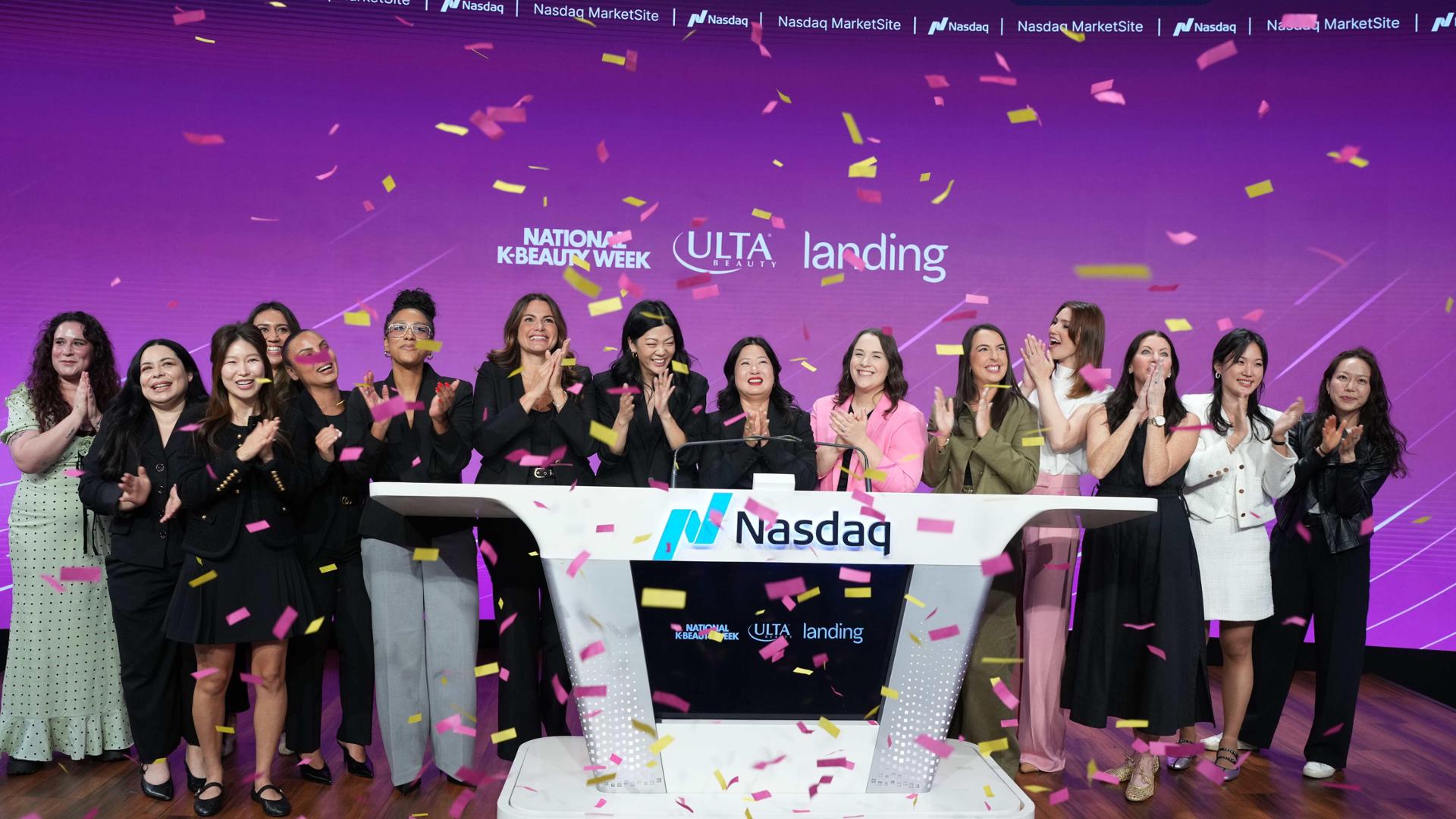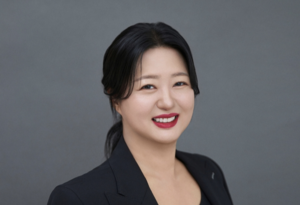
Best is yet to come for K-beauty as new markets, categories widen path for industry-wide growth, says Landing International CEO Landing International CEO Sarah Chung Park (Landing International) Korean beauty recently earned a place on the US National Day Calendar with the inaugural National K-Beauty Week, held May 11 to 17, a fitting tribute to what is now one of the most powerful forces in the world's largest beauty market.Organized by Landing International and Ulta Beauty, the week featured promotions across major US cities before culminating in a Nasdaq Closing Bell ceremony in Times Square led by Landing International founder and CEO Sarah Chung Park.For Park, the week signaled K-beauty's coming of age on American soil and the start of a new phase."We wanted to create an event that could benefit the entire K-beauty industry, almost like Amazon Prime Day, a week where all K-beauty brands could gain attention," Park said in an interview with The Korea Herald. "We are preparing to bring in more retailers next year so that K-beauty promotions can happen across different retail channels."Second act of K-beautyPark entered the beauty business in the late 2000s and founded Landing International in 2014, though the company began as a platform matching global brands with retailers."We built a platform to help brands communicate more efficiently with retailers. But for the platform to have value, there had to be transactions, so we moved into distribution," Park explained.The timing worked in Landing's favor, meeting the first wave of K-beauty in the US around 2015, when Korean skincare began capturing the attention of beauty editors and early adopters.The company went on to help introduce brands such as Cosrx into American retail, and has since placed more than 225 Korean brands on the shelves of major American retailers, including Ulta Beauty, Target, Walmart and even Military Prestige Marketing, which supplies the US military resale system.K-beauty is now, in Park's words, in the middle of a second wave, one that shifts the focus away from products and toward the consumers themselves"During the first wave, editors and the media were interested in K-beauty, but consumer demand was not as strong," she said. "Today, consumers are actively looking for Korean beauty."Social media and e-commerce have fed a global appetite for Korean culture, sending the category into overdrive and accelerating K-beauty's American expansion, Park explained. The US now claims the largest share of overseas cosmetics sales, just over one-fifth, out of Korea's record $7 billion in exports in the first half of 2026.While K-beauty's edge lies in innovation consumers can immediately grasp, whether through proprietary ingredients, patented formulations or distinctive design, the industry's next phase will be defined as much by breadth as by novelty."We started with skincare, added color cosmetics last year, launched haircare this year, and wellness is next," she said. Wellness has become something of an obsession among American consumers that Korean brands are only just beginning to court, she added. Landing International CEO Sarah Chung Park participates in the Nasdaq Closing Bell ceremony in May to mark the inaugural National K-Beauty Week. (Landing International) Room for everyonePark believes the US market has yet to catch up to its full potential, a conviction reinforced earlier this year when top Ulta Beauty executives, including CEO Kecia Steelman, traveled to Seoul for strategy discussions with Korean beauty brands hosted by Landing International."I think the market is still moving slowly relative to its potential," she said.In that regard, Park refuses to treat the K-beauty market as a fight over a fixed pie, even as competition seems to be heating up."Each distributor has its own area of expertise," she said. "Some specialize in offline retail, like we do, while others focus on different channels."What she would rather see is less energy spent on Korean brands undercutting each other and more spent widening the category itself. Park summed up that mindset with a familiar proverb, that a rising tide lifts all ships, meaning industry-wide growth benefits everyone."The real competition is convincing consumers who already use Western beauty brands to choose K-beauty," she said.That optimism comes with a caveat, though. Korean companies, Park argues, often misread overseas markets, conditioned by a fast-churning product cycle at odds with slower-moving markets like the US."In Korea, trends change very quickly, while in the US, hero products stay hero products," she said, cautioning that constantly replacing bestselling products can come at the expense of lasting brand equity.She points to Cosrx's snail mucin essence as an example. Korean consumers have largely moved on to newer ingredients, yet it remains one of the company's strongest US sellers years after launch.Taking that philosophy abroad, the company is eyeing Latin America and the Middle East as its next opportunities, with Mexico especially promising, buoyed by Ulta's regional expansion. Europe has opened up too, following Ulta's acquisition of British retailer Space NK, Park noted. Landing International's K-Beauty World booth at the Ulta Beauty Field Leadership Conference in Orlando, Florida, in April (Landing International) The Top 100 Global Innovators series spotlights the trailblazers shaping Korea’s future across a range of industries — from bold entrepreneurs and tech pioneers to research leaders — whose innovations are making a global impact beyond Korea. More than a celebration of success, the series offers a deeper exploration of the ideas, breakthroughs and strategies driving their achievements. — Ed.
Meet the architect behind K-beauty's first US national week
Korean beauty recently earned a place on the US National Day Calendar with the inaugural National K-Beauty Week, held May 11 to 17, a fitting tribute to what is
885 words~4 min read