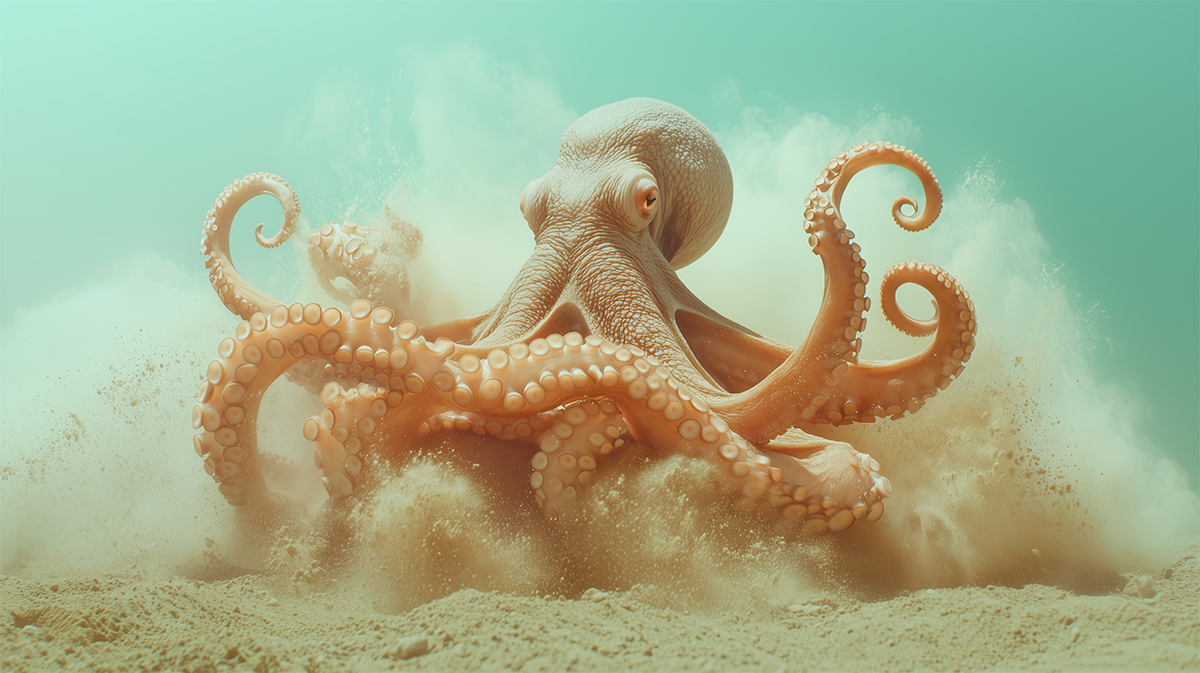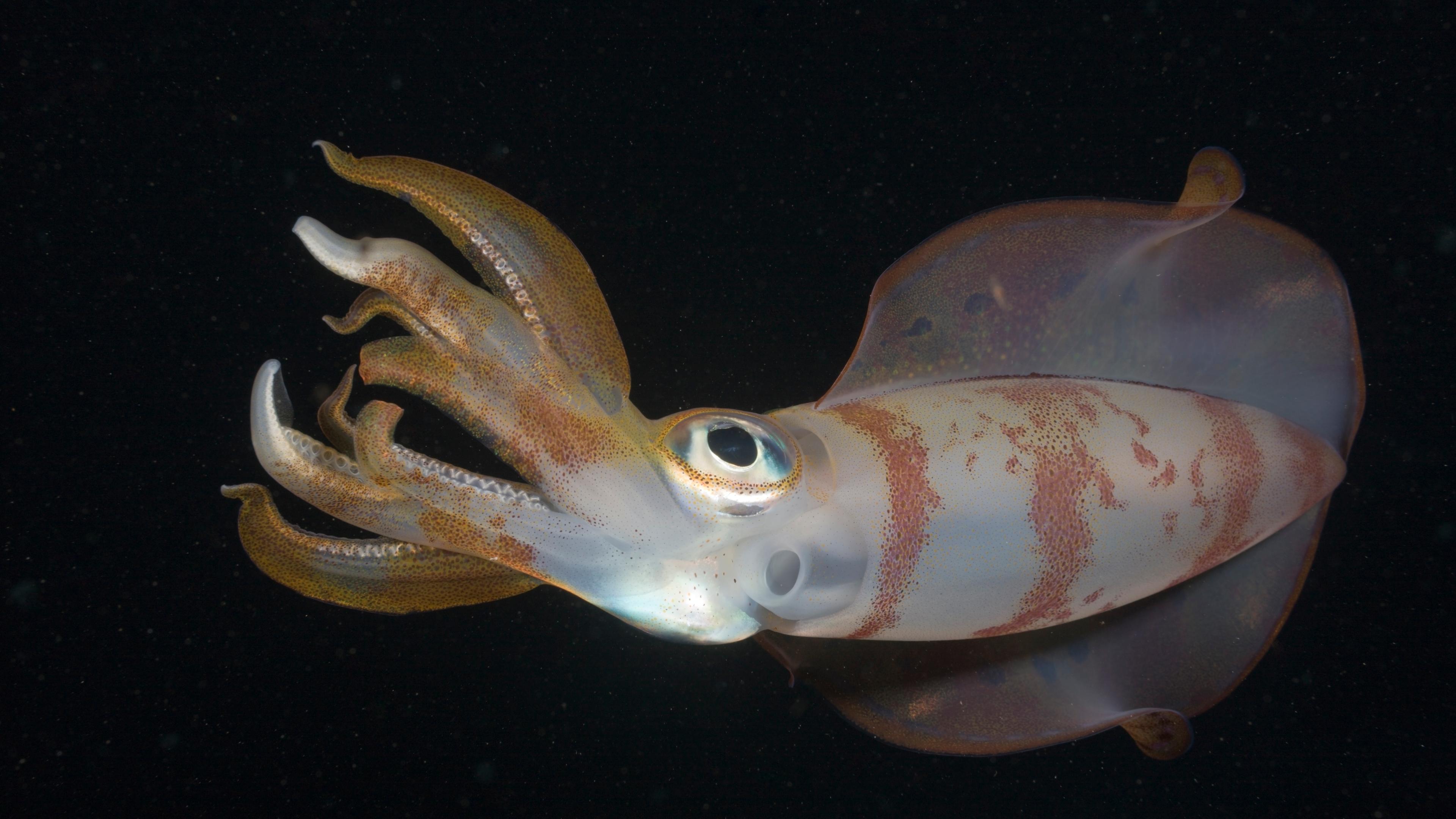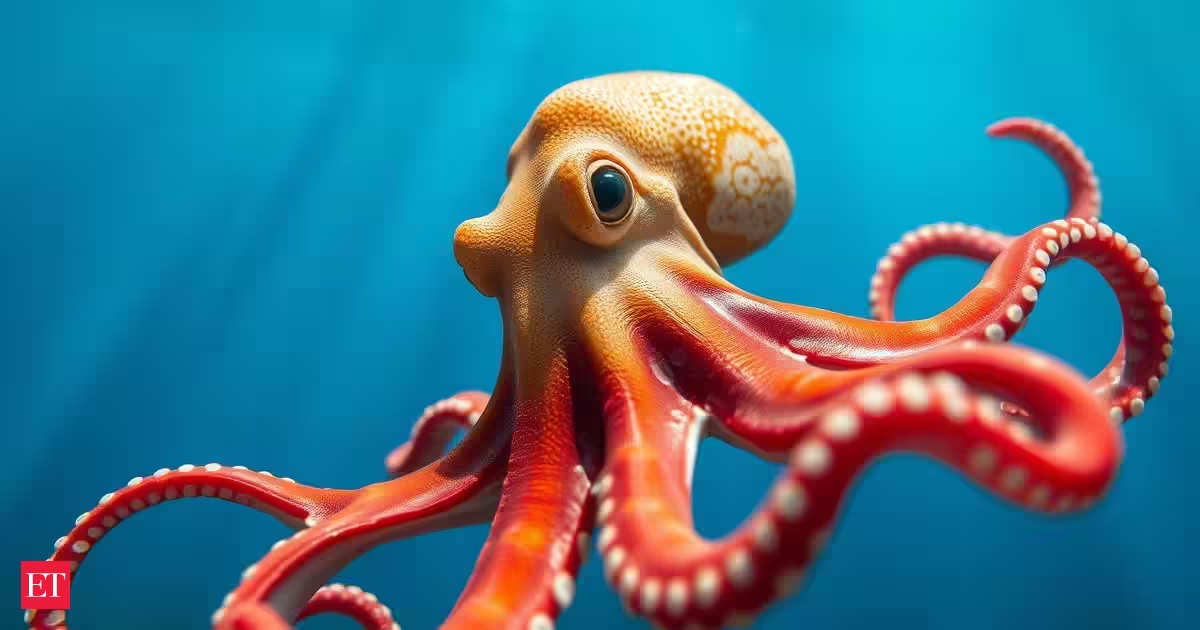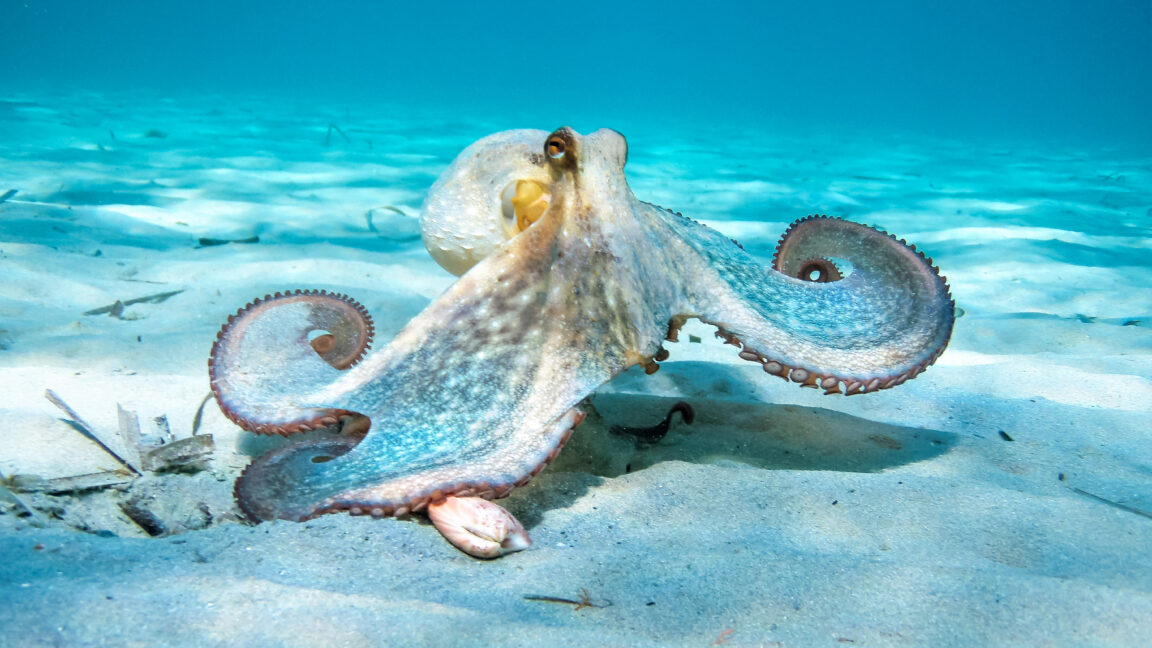
A two-spot octopus photographed at Catalina Island, California. (Brent Durand/Moment/Getty Images)
Biologists have long believed that having a large brain, relative to your body, might go hand-in-hand with being part of a particularly social species.This is called the social brain hypothesis, and it holds up pretty well for a particular branch of the animal family tree: ours. We share this branch with a number of other social animals: hoofed herd animals like sheep and goats; pack carnivores, like wolves and lions; whales; dolphins; bats; primates; and possibly birds too.All of these animals tend to follow the relationship described in the social brain hypothesis: Bigger social circles correlate with bigger brains, specifically with the mammalian neocortex.But a few other, very different kinds of animals, on a very different branch of the tree, are also known for the size of their brains, and the complexity of their behaviors: cephalopods.
These include squids, octopuses, and cuttlefish, none of which are particularly known for their social skills.In fact, many cephalopods are actively hostile towards other members of their group, and only a few (mainly squid) are known to gather in larger groups at all. Even then, it's sometimes a bit of a bloodbath. Cephalopods also die shortly after laying eggs, which means they don't even have the kinds of parenting behaviors that underlie the most basic of social structures.In which case, why are their brains so darn big? The authors of a new study published in iScience propose that cephalopods may be evidence that something else is the dominant driver of brain size.They refer to the cultural brain hypothesis, first introduced in a 2018 paper by economic psychologist Michael Muthukrishna and colleagues.Muthukrishna, who is based at the London School of Economics and Political Science, is also a principal investigator on this new research.The giant cuttlefish that aggregate for breeding in the Spencer Gulf in Australia are some of the only cephalopods known to have large social gatherings. Here, one male fights off another. (wildestanimal/Moment/Getty Images)In the new study, the researchers point out that the social brain hypothesis is held up only by correlation, which doesn't necessarily explain the mechanisms behind it."Correlations suggest possible factors in brain evolution, but by themselves they cannot tell us how or why brains evolved, nor disentangle cause from consequence among multiple confounding variables," first author and anthropologist Kiran Basava and team write in the new paper.In other words, there are limits to what the social brain hypothesis can tell us."For decades the main story of why brains got big has been a social one where bigger brains evolve to manage bigger, more complex groups," Muthukrishna says."Cephalopods reveal that there's another path to bigger brains. They're often solitary, short-lived, sometimes even cannibalistic, and yet have large brains and intelligent behavior."The cultural brain hypothesis proposes that "brains have been selected for their ability to store and manage information, acquired through asocial or social learning".In other words, large social groups may indeed be one of the pressures that favor a larger brain in animal evolution.But it's not necessarily the only one.