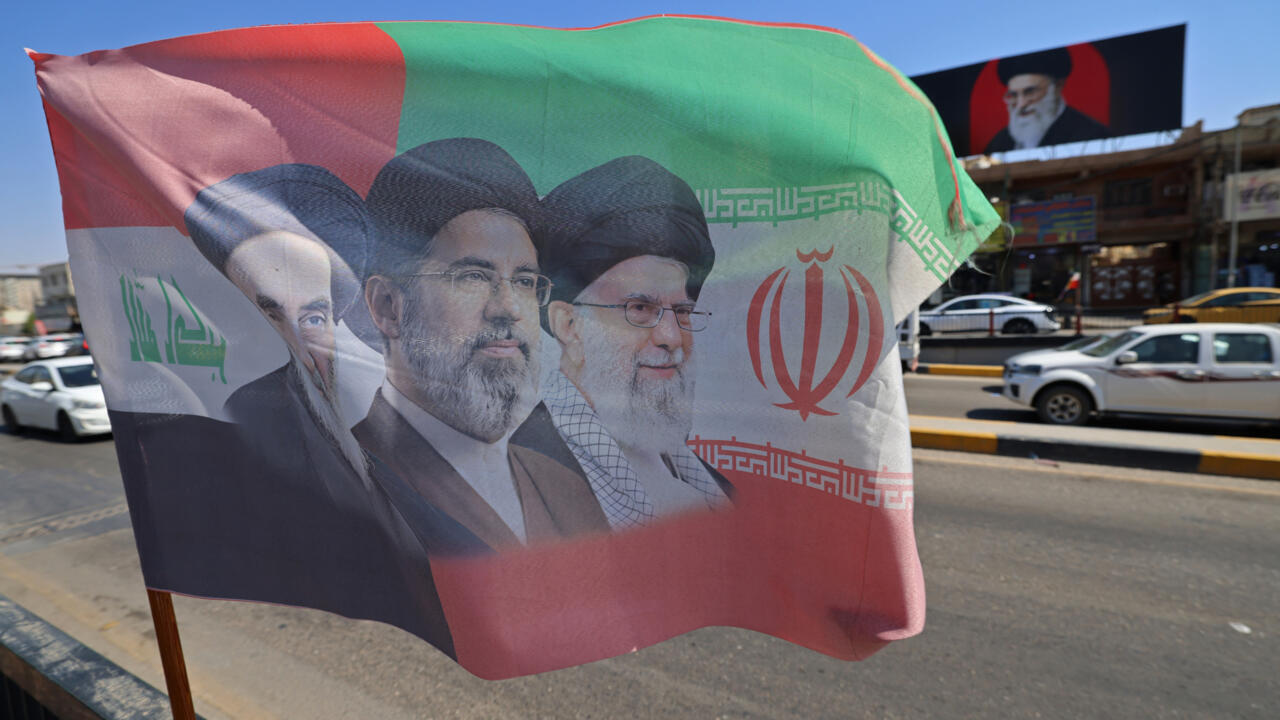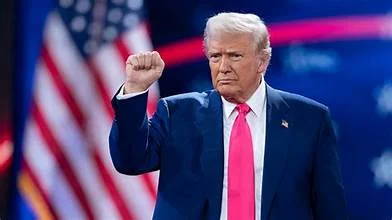
After President Trump declared the ceasfire with Iran “over” on Wednesday morning, oil prices spiked and stocks slipped. Markets evened out somewhat over the course of the day, but with the U.S. also ordering a new round of strikes, what does this all mean for oil markets beyond a single day of wild fluctuations? “Marketplace” host Kai Ryssdal sat down with Robin Brooks, senior fellow at the Brookings Institution, for insight. “This [conflict] is basically about cash and about control of the Strait of Hormuz,” Brooks said. “I think we are on the verge of going back to a hot war, and that will push oil prices up.”Click the audio player above to hear their conversation.Kai Ryssdal: Last time we had you on, talking about the subject at hand, you said at one point in that conversation, “I think traders have to get their risk premium realigned. They're not, they're not pricing in the eventualities, as it were.” And congratulations, I guess.Robin Brooks: Yeah, you know, when you and I last spoke a couple weeks ago, I think we said oil needs to trade in a range of $80 to $90 a barrel, and of course it fell quite a bit below that before the most recent flare up. We were all the way down to $70, $72 a barrel, and I think the reality is the world is a complicated place. This peace deal is a complicated peace deal, and so, yeah, better to be cautious.Ryssdal: Crude today — either one of your main benchmarks, Brent, or West Texas, up six and a half, seven-ish percent, gonna go up a little more. Crystal ball this for me.Brooks: So, the big issue is that we don't really know when we are negotiating with Iran, who we are negotiating with, and the big problem is that there are hardliners in Iran who think that they can extort more from the United States, and so this is basically about cash and about control of the Strait of Hormuz and the most recent rockets or drones or what have you that were launched at oil tankers trying to transit the Strait, that's basically about exacting leverage. So I think we are on the verge of going back to a hot war and that obviously will push oil prices up.Ryssdal: Let's go to the offhand-ish remark I made up in the open: The economy would like a word. Obviously, oil prices will trickle out through this economy. Consumer spending will be hit by it. I mean, you know, play it out for me.Brooks: When we started all this oil prices, or rather, prices at the pump for drivers in the United States, we were around $3 a gallon on average. In the United States, we went all the way up to $4.50. We've been at $3.80 roughly on average in the United States, and obviously this is going to push the price at the pump back up, right? So it's not good for the U.S. consumer, and it's going to feed resentment and fears over affordability. So that's not good. I think there's going to be a lot of pressure to try and cobble a deal back together. My recommendation to the U.S. is the blockade that we did on Iran was highly effective. I've written about that a bunch on my Substack, and there's many ways to show that it did work. And in the end, if the problem is that there's hardliners in Iran who think they have a ton of leverage, well, it's time to hit them back again. And I think there is a way to make the blockade even harsher and tougher, and I think you just got to go that route if these guys don't stick with a peace deal.Ryssdal: Let me just ask you, though. We talked last time about how you had great perspicacity in your prediction that oil was not going to go to $200 a barrel, for reasons that you laid out in your Substack. Are you still then sanguine? You got, like, 30 seconds.Brooks: Yeah, I think the shock is basically the same. So, if you think back to the worst moments that we've had, oil basically topped out around $125, $126 a barrel. I think that's the top that we'll see now too, if we really go back to a bad conflict again.Ryssdal: Super quick, and this time I really mean it. 30 seconds. Fed minutes today, some insights into what happened behind closed doors at that last meeting. Very interesting to me that there were some people on that committee who said, “Yeah, you know what, maybe we ought to raise rates now.” This was like a couple of weeks ago. Make sense of that for me again. 30 seconds.Brooks: So someone really famous I know, named Kai Ryssdal tweeted after the Fed decision on June 17, “hey, wait a minute, this hold was unanimous.” And so actually it wasn't as hawkish as people thought or have thought since then. And I think the minutes kind of lean in that direction, Kai. So you win this one. I don't think the minutes were that hawkish either.
Trump calls off Iran ceasefire, a move that "obviously will push oil prices up"
As Trump has declares the truce “over” and aggression ramps back up, Robin Brooks of the Brookings institution walks us through what this all might mean for the global oil market.
865 words~4 min read