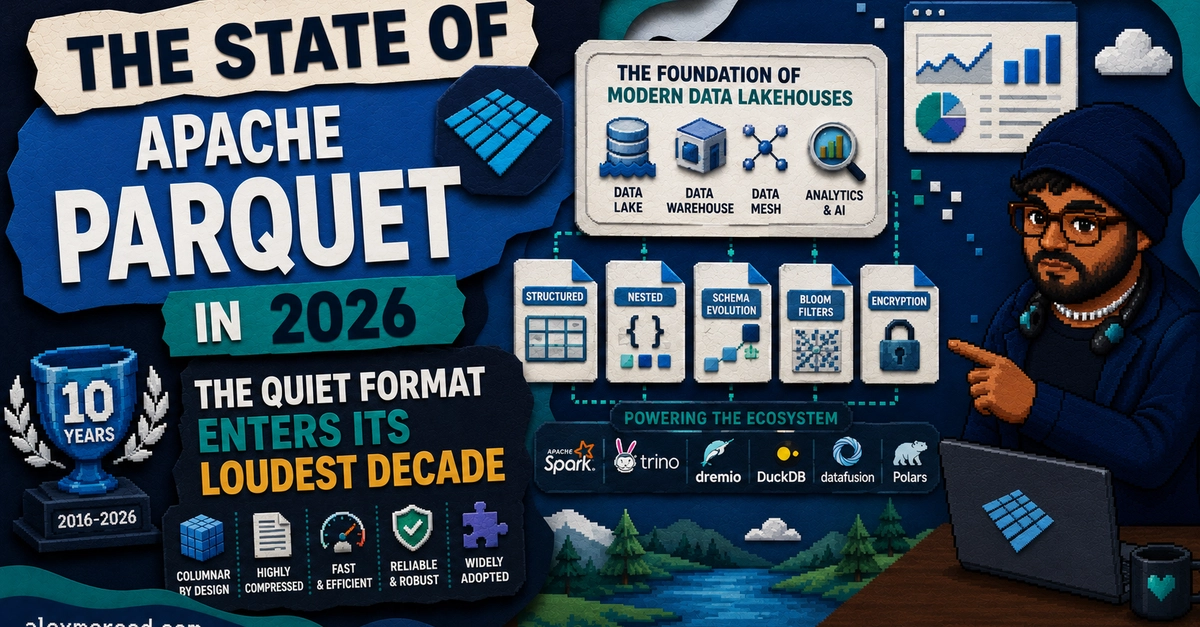
Apache Parquet is thirteen years old, holds more of the world's analytical data than any other format, and, for most of its life, has been the least dramatic project in the data stack. It sat at the bottom, it worked, and the interesting arguments happened in the layers above it.
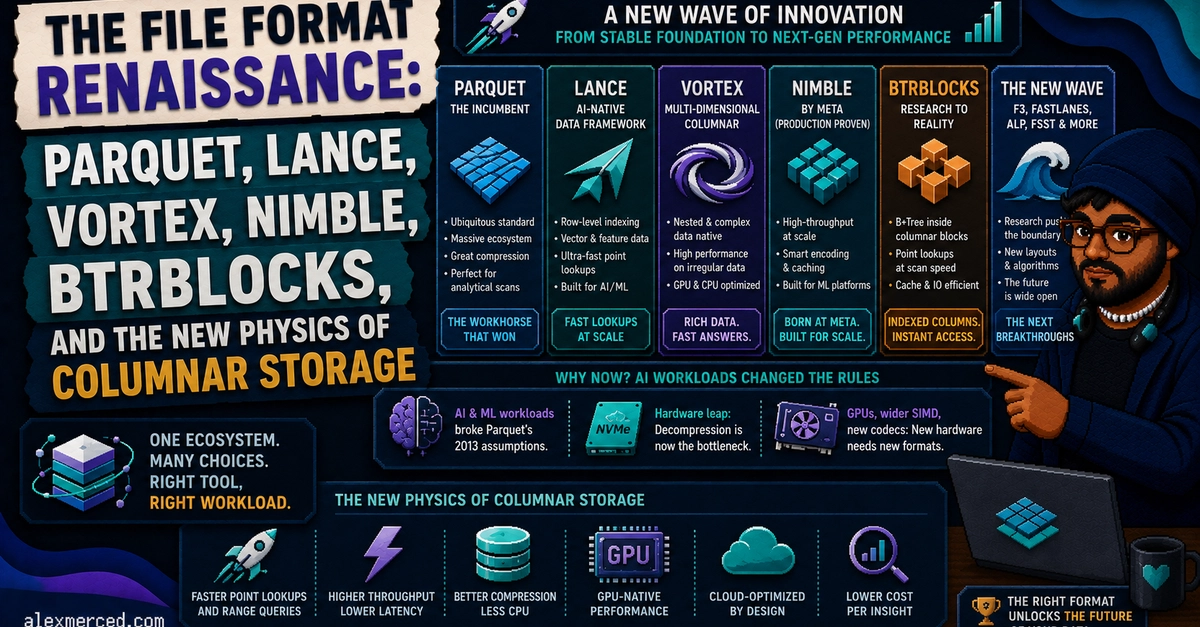
That era is over. As someone who reads the Parquet dev mailing list every week for my newsletter, I can report that 2026 is the busiest, most consequential stretch of Parquet development in a decade. The past year alone brought a native variant type for semi-structured data, first-class geospatial types, a new format release, an active redesign effort for the file footer, proposed types for embeddings and unstructured blobs, a new floating-point encoding, and the single longest discussion thread I have seen on that list: eighty-plus messages debating nothing less than the future of Parquet versioning itself.
Why is the quiet format suddenly loud? Two forces converged. The lakehouse era made Parquet the shared substrate under every table format, so every ambition of Iceberg and Delta eventually becomes a demand on Parquet. And the AI era arrived with workloads, embeddings, semi-structured context, wide feature tables, unstructured payloads, that the format's 2013 assumptions never anticipated. Parquet is being renovated while fully occupied, which is the hardest kind of engineering and the most interesting kind to watch.