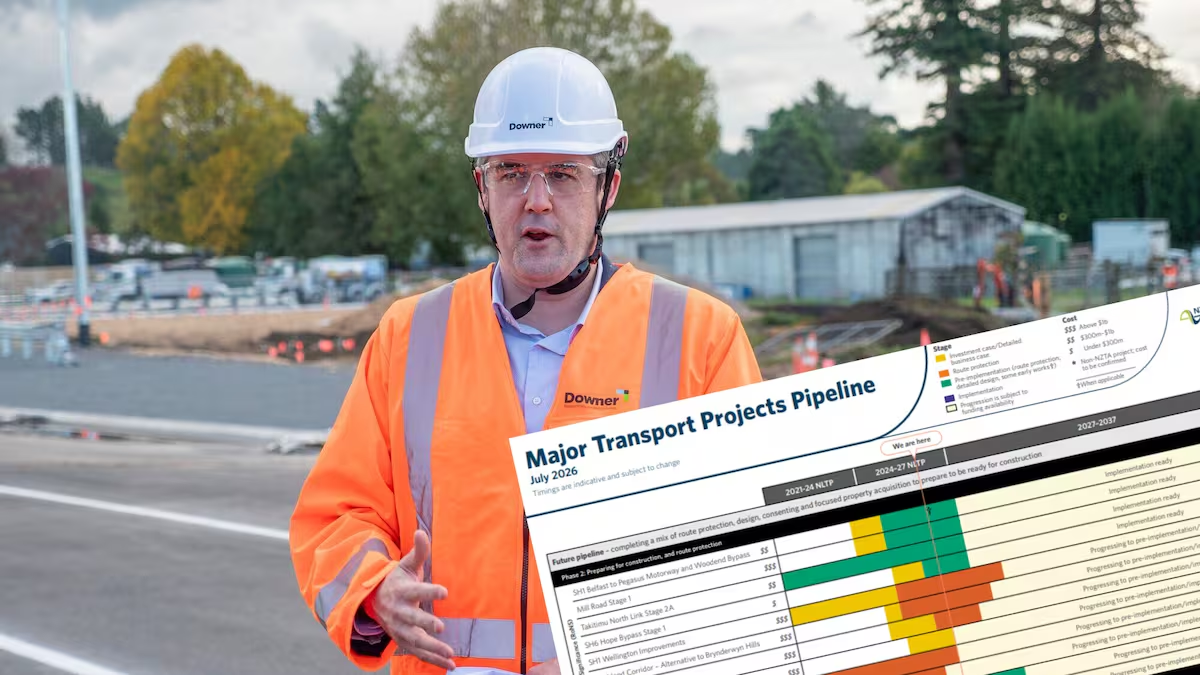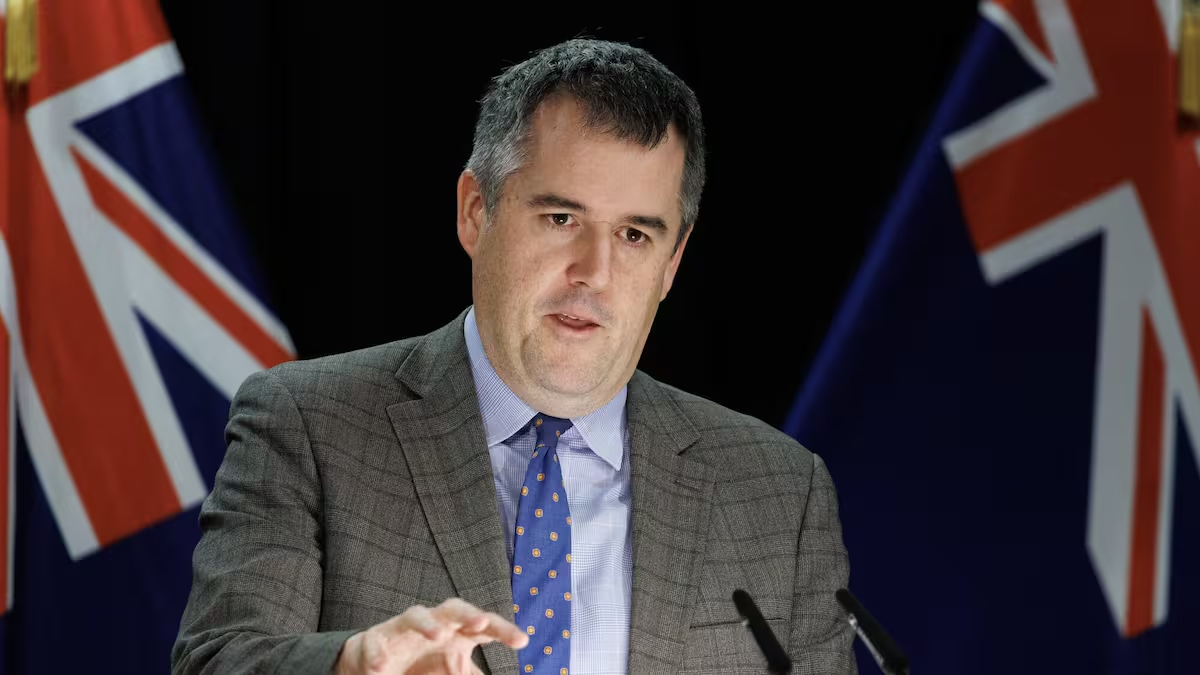
The timeframe for several of the Government’s proposed Roads of National Significance (Rons) is unclear under a new phased pipeline revealed today for transport projects, with five being placed on a slow track. Pressure on the Government to reveal how it would handle the funding and sequencing of its proposed roading projects has been building throughout the parliamentary term. It’s been magnified in recent months by the war in the Middle East leading to concerns about higher construction costs due to fuel price increases and impacts on bitumen supply. Lower petrol consumption due to high prices would also lead to less tax revenue. On Thursday, Transport Minister Chris Bishop said, “fuel excise duty has fallen in real terms by 21 per cent since 2020 when it was last increased, while construction costs have risen significantly over the same period, with the recent conflict in the Middle East contributing to that challenge”. The sequencing of projects unveiled by Bishop provides little detail about when New Zealanders can expect to see construction begin on several Rons including the Northland Corridor - Te Hana to Whangārei (excluding Alternative to Brynderwyn Hills), the East-West Link, and SH6 Hope Bypass Stage 2. The investment case for these roads has been completed, but no timeframe has been given for when they may progress further. An infographic provided by the Government says their “progression is subject to funding availability”, like various other listed projects. Phase one of the Government's Major Transport Projects Pipeline. Photo / NZTAPhase 2 and 3 of the Government's Major Transport Projects Pipeline. Photo / NZTAThose Rons, as well as the Mill Road – Alfriston to Drury and Petone to Grenada projects, have been placed on a slow track as part of the phased pipeline. “The pipeline shows why a phased approach to delivering the Roads of National Significance is important,” said Bishop. “As I’ve said many times, not all projects can start immediately. It takes time to get projects ready for construction, with route protection (designations and consenting), detailed design, and property acquisition all needing to be completed before main construction works can begin.” What is in each phase?The Government has broken the transport projects up into three phases, the first being those currently under construction and procurement. “The Ōtaki to north of Levin Road of National Significance, the Hawke’s Bay Expressway, Takitimu North Link Stage 1, and SH29 Tauriko West (Omanawa Bridge) are all under construction,” said Bishop. “The first stage of the Northland Expressway is in the final stages of procurement and due to start construction before the end of the year, while procurement is also underway for the Cambridge to Piarere Road of National Significance. “Cambridge to Piarere will extend the Waikato Expressway, with construction of Stage 1 due to start in early 2027 and Stage 2 later in 2027.” Bishop highlighted that other regional projects including the Melling Interchange, Brougham Street and the second Ashburton Bridge, are also underway. Phase two are those projects that are in preparation for construction and route protection. Bishop said provisional consent had been granted “for the Belfast to Pegasus Road of National Significance and early works are underway. “Takitimu North Link (Stage 2) also recently received consent through the Fast Track Approvals Act. “NZTA will continue to progress planning work for Mill Road (Stage One), the Northwest Busway (Stages 1B and 2), and the Hope Bypass (Stage 1) with intersection improvements prioritised at Lower Queen St. “As funding becomes available, these projects can progress to construction. “NZTA will also progress route protection for the SH1 Wellington Improvements project, the Brynderwyns project as part of the Northland Expressway, SH29 Tauriko (Wider Scope), and Northwest Busway Stage 3. “The Northwest Alternative State Highway and Hamilton Southern Links are already designated.” Then there are those in phase three – or “contuining more slowly”. “NZTA will continue work on the Hope Bypass Stage 2, Sections 2 and 3 of the Northland Expressway (excluding the Brynderwyns), Auckland’s East West Link, Mill Road (Alfriston to Drury), and Petone to Grenada,” said Bishop. “Work on these projects will progress at a slower pace than those in Phase Two, with some projects continuing preparation for future route protection.” Why the new pipeline was neededA re-sequencing of projects has not come out of the blue, as the Herald has been reporting on for months. Bishop in November delivered a significant speech in which he said the Government faced “challenges” in delivering “big new roading projects”, hinting that “hard choices lie ahead” and that many roads “won’t be starting for many years”. The Rons programme was estimated at the time to cost $56 billion and described in an MoT paper as the “most complex and expensive infrastructure programme in New Zealand’s recent history”. During the 2023 election campaign, National promised 13 new Rons. The Government has expanded this to 17, including SH1 Whangārei to Port Marsden, the East-West Link in Auckland, Hamilton Southern Links, Ōtaki to north of Levin, the SH1 Second Mt Victoria Tunnel and Basin Reserve upgrades, and the Hope Bypass. The party said work would begin on the 13 roads within one to 10 years of taking office. Investment cases have been endorsed by the New Zealand Transport Agency (NZTA) board for all of them, while construction is underway on some, such as Takitimu North Link Stage 1. Transport Minister Chris Bishop has been discussing a new pipeline for many months. Photo / Mark Mitchell
New pipeline of roading projects revealed – but timeframe for many unclear
The Government has warned of "hard choices" with respect to its roading projects.
1,287 words~6 min read