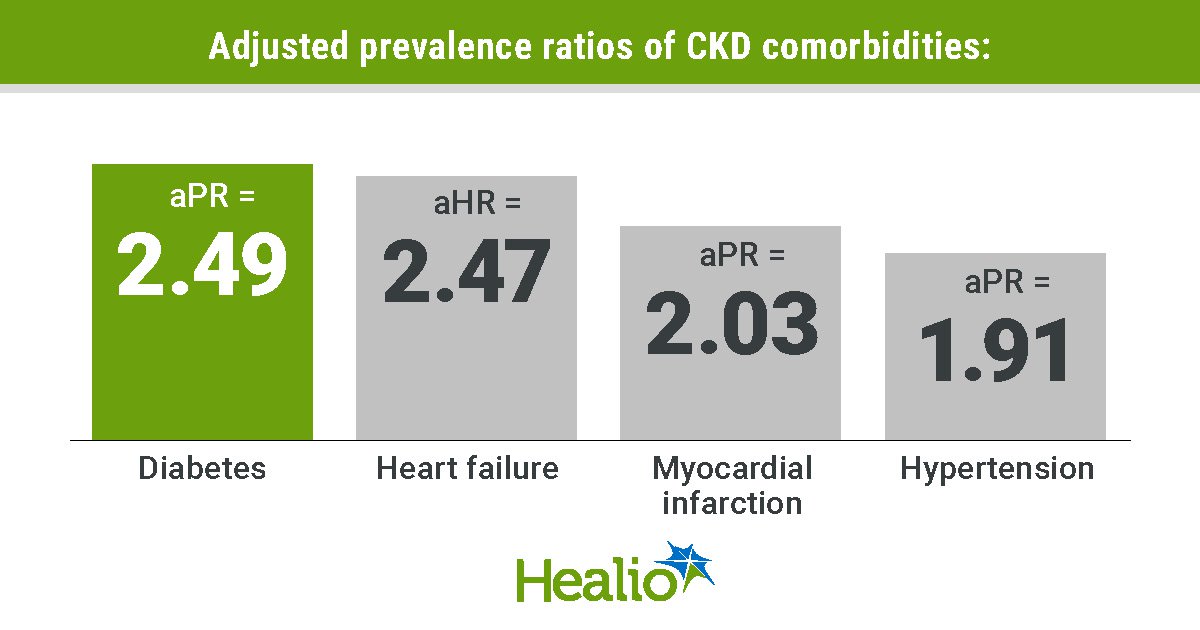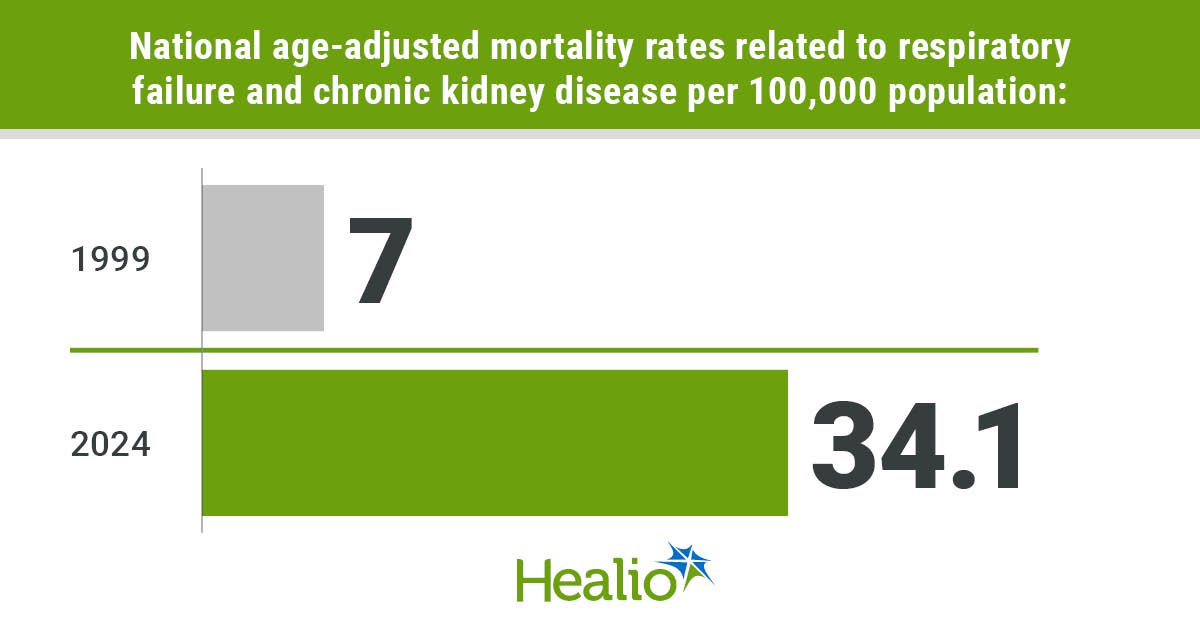
Chronic kidney disease prevalence held steady at around 14.8% over the last decade, despite treatment advances.This translated to an estimated 36 million affected U.S. adults, based on national health survey data.The prevalence of diabetes-related chronic kidney disease increased during the period spanning 2013-2014 to 2021-2023.
The prevalence of chronic kidney disease (CKD) in the U.S. was generally stable over the past decade, but the underlying diagnoses driving the condition changed over time, according to National Health and Nutrition Examination Survey data.
During the 2013-2014 survey cycle, 14.5% of U.S. adults had CKD. That figure crept up slightly to 14.8% during the 2021-2023 cycle, corresponding to an estimated 36 million adults, reported Ashish Verma, MBBS, and Sophie Claudel, MD, both of the Boston University Chobanian & Avedisian School of Medicine, in the New England Journal of Medicine.
"This is the first CKD study to utilize recently released survey data spanning a decade, encompassing the period during which the first therapies specifically approved to protect the kidneys ... were introduced into the market," Verma said in a statement, pointing to SGLT2 inhibitors and the nonsteroidal mineralocorticoid receptor antagonist finerenone (Kerendia).