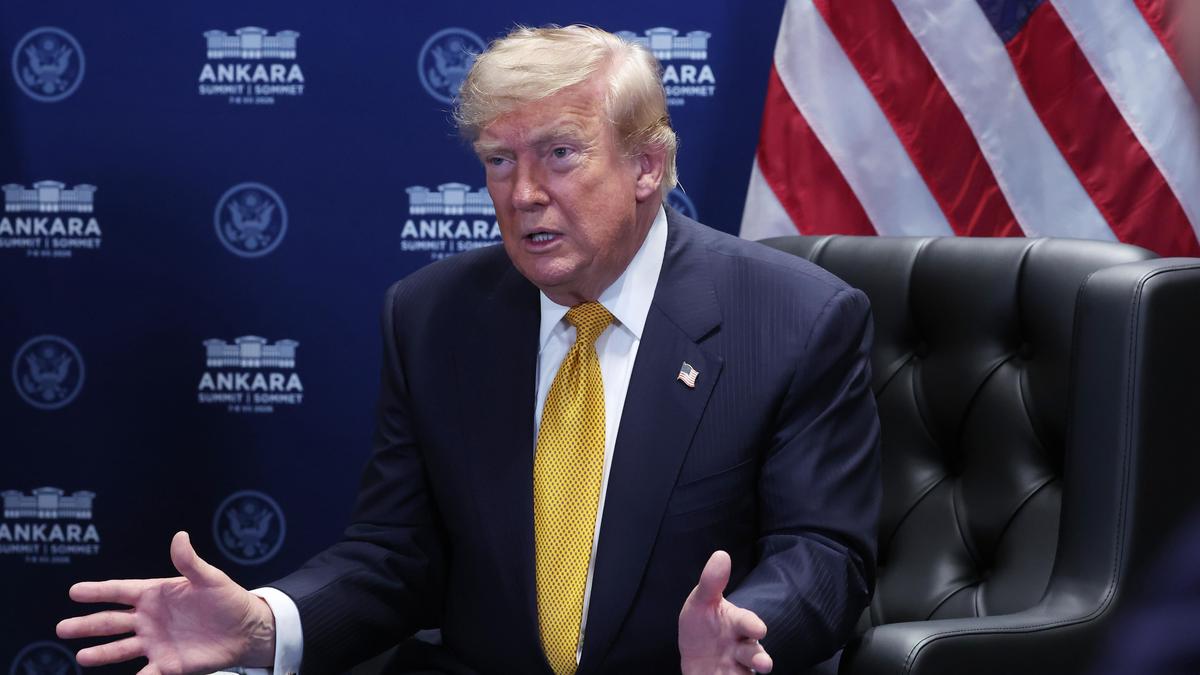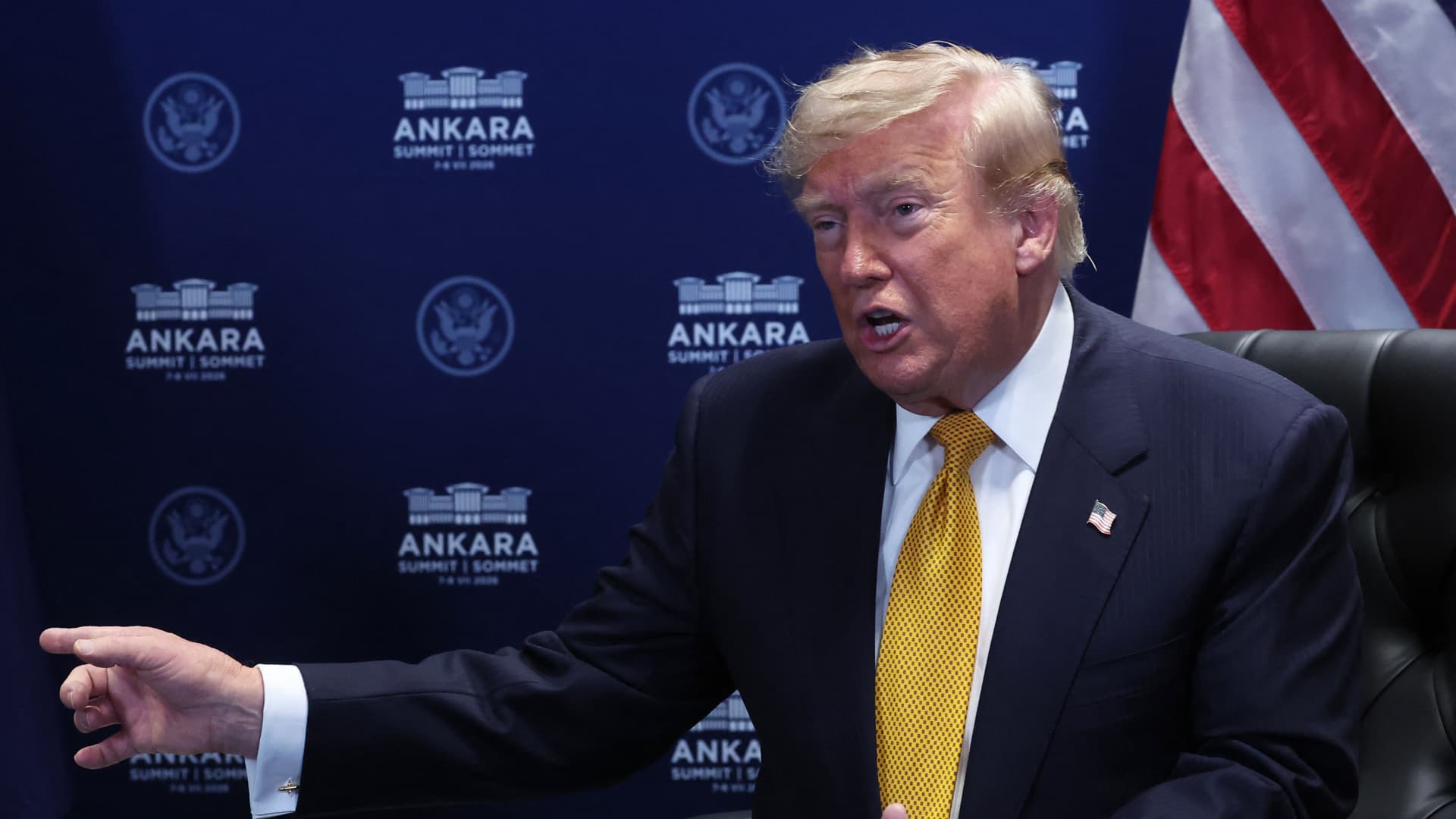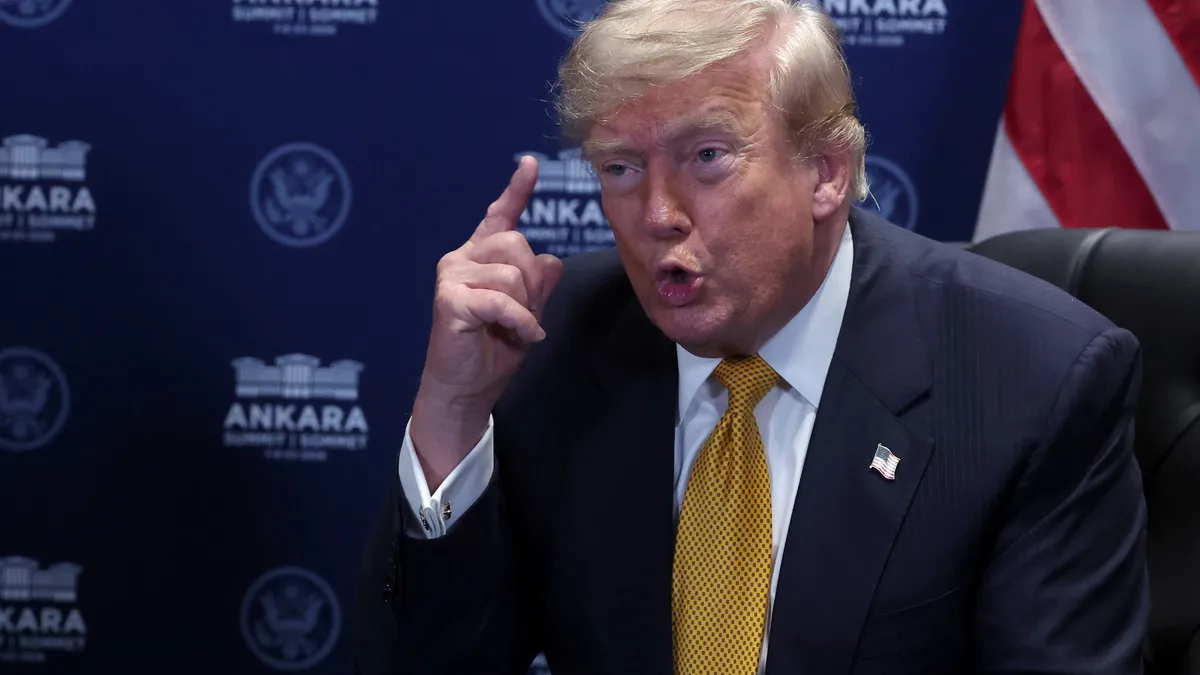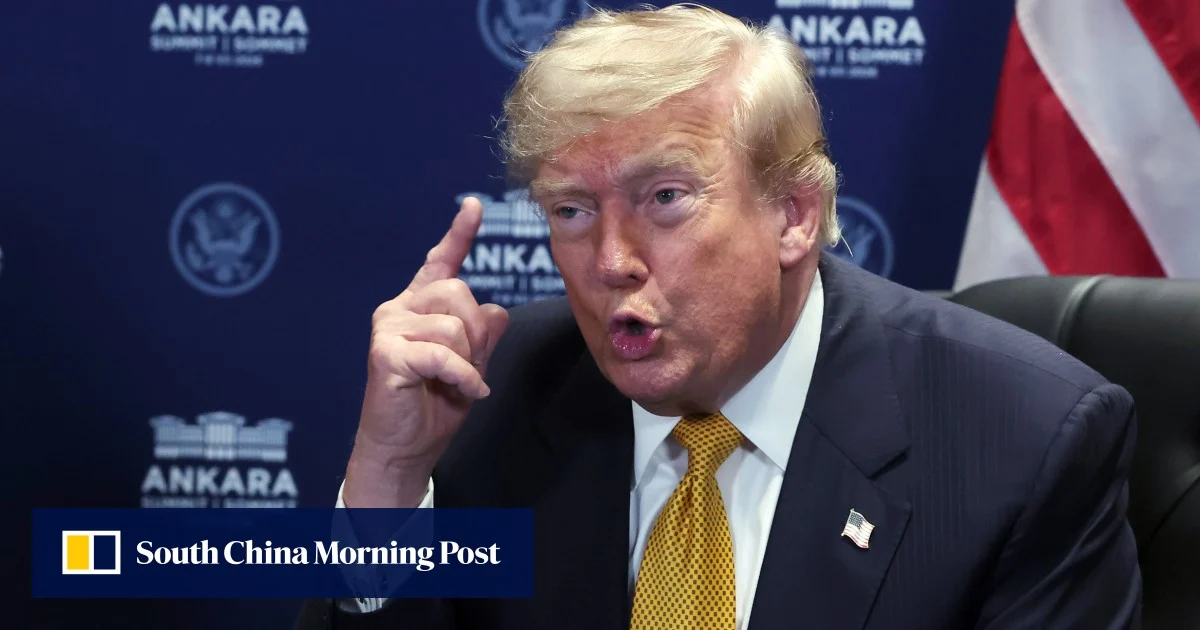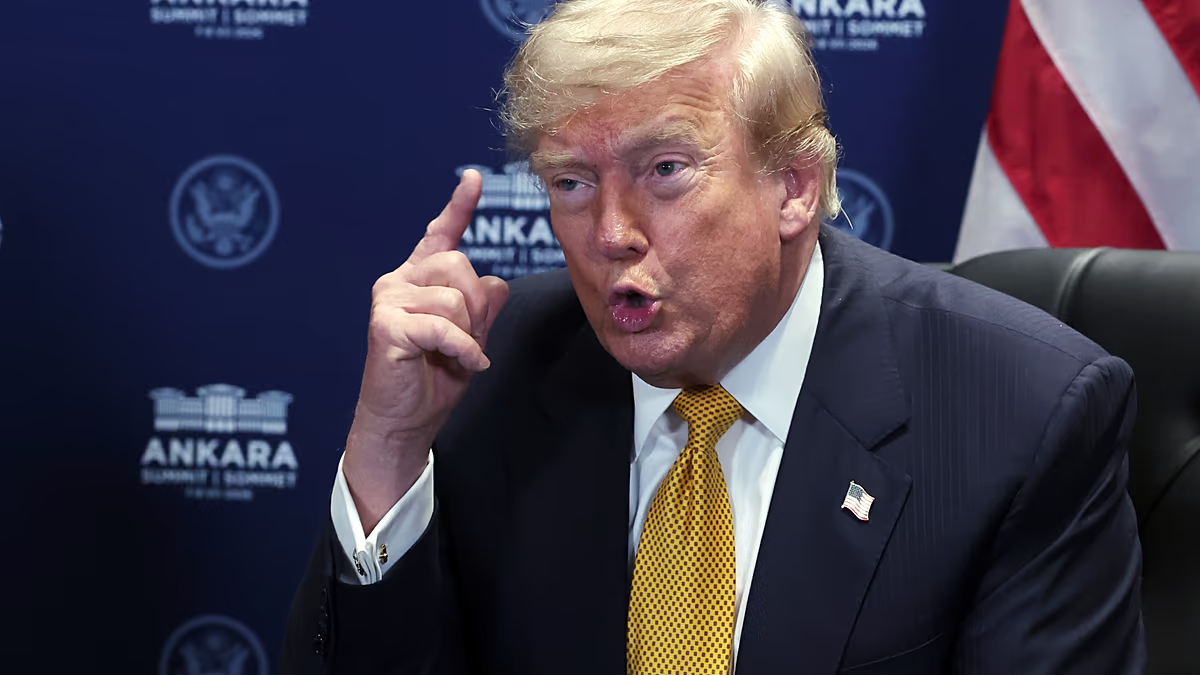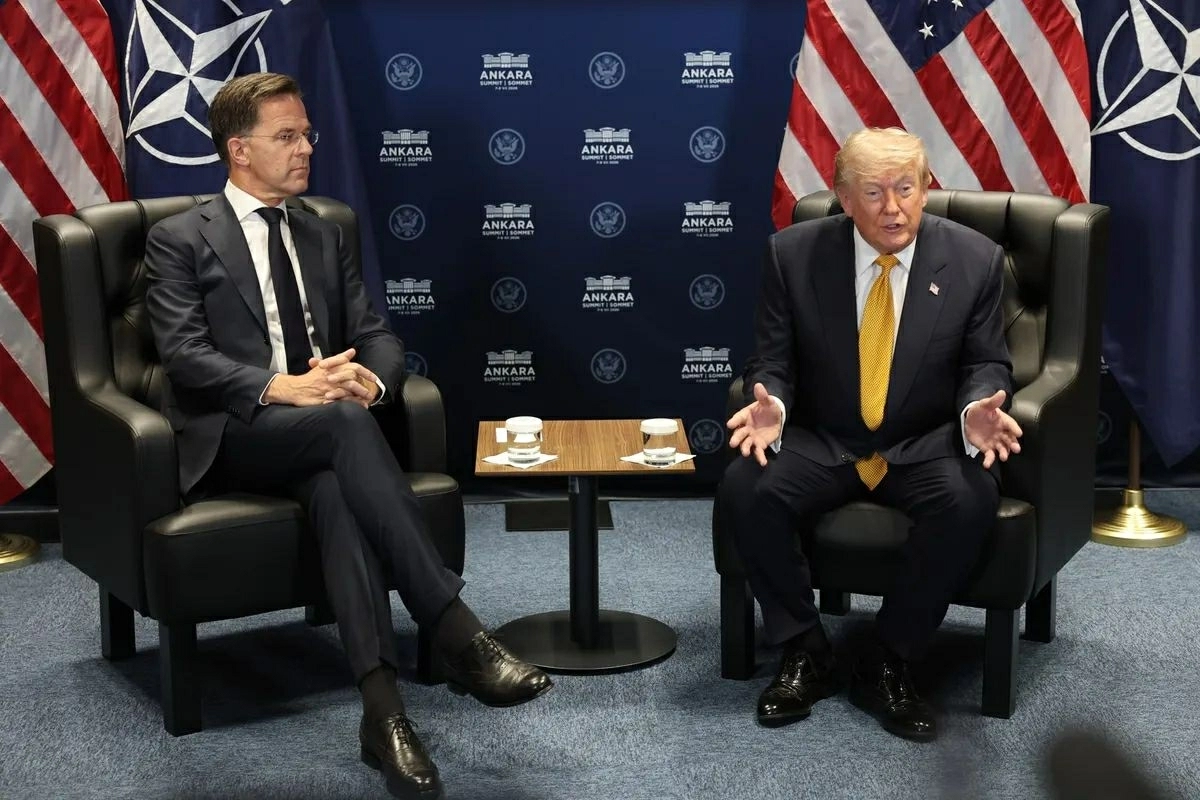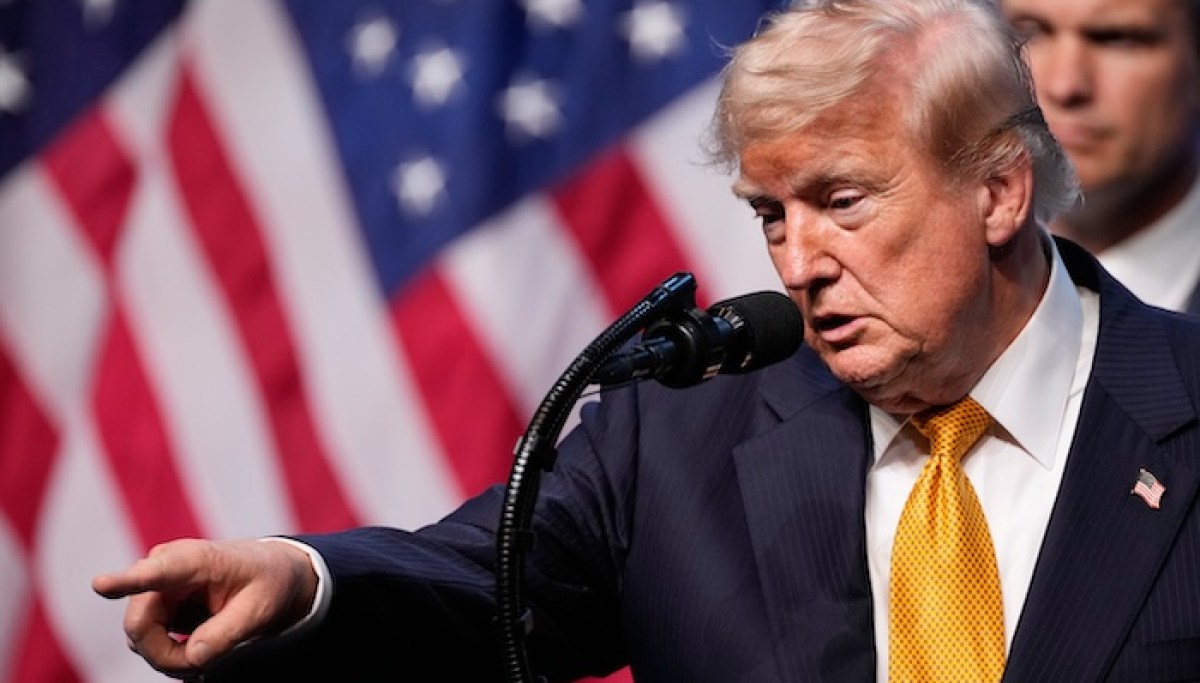
President Donald Trump, in a marathon of media engagements on Wednesday at the NATO summit, declared the U.S.-Iran ceasefire “over,” warned that the United States could carry out additional strikes on them that night, but also downplayed the possibility of an escalation, which he’s long threatened.Trump’s about-face on the memorandum of understanding, which the two sides signed last month, came in the aftermath of a significant U.S. retaliatory operation on Tuesday after Iranian forces targeted three commercial vessels off its coast.“We attacked Kharg Island last night, knocked out a piece,” the president said, later adding that the U.S. “may hit it again tonight.”
U.S. Central Command announced several hours later that they began a new round of strikes targeting Iran’s ability to threaten ships nearby.Trump also explained earlier on Wednesday that the U.S. is “not attacking at the highest level,” noting that U.S. forces haven’t targeted infrastructure such as bridges, electrical facilities, and desalination plants. He left open the possibility that it could change, however.“We’re not attacking at the highest level,” Trump said. “The highest level are the bridges … their electric plants, where they make their electricity. If we have to, we’ll take them out. I don’t want to do that, but if we have to, we’ll take them out. They have desalination plants; we’ll take them out if we have to. I hate to do that, that’s probably the one I would like not to do least.”The question is whether he will approve additional U.S. military operations that go beyond what has already occurred and are primarily contained to targeting the equipment and systems Iran is using to target vessels nearby, such as the intensive bombing campaign that marked the early months of the war.If he were to authorize such a mission now, it would presumably incur a strong Iranian response against other Gulf countries that host U.S. military bases, which have repeatedly come under Iranian attack. An escalation would also likely result in Iran trying to exert additional control over the Strait of Hormuz with attacks on ships trying to transit the waterway.Retired Gen. Joseph Votel, the former commander of U.S. Central Command, described the current tension as “controlled escalation,” designed to “degrade the regime’s ability to have influence over the Strait of Hormuz,” during an interview with the Washington Examiner.“This is the most acute flare-up since the signing of the MOU on June 17th, and it highlights the fragility of this agreement,” he added. “I don’t know if it’s in our interests or if it’s the president’s desire to go back to a much broader campaign, like you saw back at the beginning of this, in late February, early March. I don’t know that that will get us where we need to get, but I think we have to get back to some type of political process here, negotiation process that begins to address these issues, and I think it’s clear that what we had in the MOU was not sufficient to move this forward in a meaningful way.”Trump’s threats to go after Iranian infrastructure date back to early April. The initial ceasefire agreement, which Trump announced on April 7, preempted the president from giving the go-ahead for such an attack.“I think it has the potential to be an inflection point, but I don’t think either the U.S. or Iran really wants it to be a major inflection point. I think they both have an interest in keeping lower intensity conflict, and I think both would prefer to come to a political agreement than resort to more major operations, but there is also the risk of miscalculation, and President Trump likes being unpredictable,” Will Todman, an expert with the Center for Strategic and International Studies, told the Washington Examiner.Iran has been able to damage more than 40 U.S. aircraft during the conflict, while the U.S. also used countless critical munitions during the war, both of which could factor into the president’s decision-making.Much of the current situation revolves around the Strait of Hormuz, the narrow waterway off Iran’s coast that connects the Persian Gulf and the Gulf of Oman. Vessels from the Gulf countries have to pass through the strait, and roughly 20% of the globe’s oil transited the waterway prior to the start of the war.Iran maintains that it should be allowed to charge vessels and countries for transiting the strait, which the U.S. vehemently refuses to accept, as it goes against international maritime law and the principles underpinning freedom of navigation.The U.S. Treasury Department rescinded temporary sanctions waivers that permitted Iran to export oil on Tuesday, after the Iranians targeted three commercial vessels. The Treasury’s Office of Foreign Assets Control’s decision ends a 60-day general license issued on June 21 that permitted the production, sale, delivery, and transport of Iranian crude oil and petroleum products.The memorandum of understanding was largely shaped in a way that would allow for the removal of the U.S. military blockade of Iranian ports in exchange for Iran agreeing not to threaten ships in the area, and it left many of the other, more technical issues to be determined in the following 60-day period, which will expire in mid-August. The U.S. has retaliated with force when Iran has not lived up to its end of the bargain.US SAYS IT DESTROYED OVER 60 IRANIAN BOATS AFTER COMMERCIAL SHIPS TARGETED IN STRAIT OF HORMUZU.S. officials maintained that the MOU would offer some relief to the Iranians but noted it would only happen if they met U.S. benchmarks.While getting the MOU signed was designed to reopen the strait, it was also meant to get both sides to agree to more complex issues regarding Iran’s nuclear program and its existing stockpile of highly enriched uranium, which is believed to be buried beneath the rubble of one of, if not more, of the three nuclear facilities the U.S. bombed last year. Trump said on Wednesday the U.S. has “cameras” from Space Force trained on the facilities to ensure the Iranians cannot dig it out without the U.S.’s knowledge.