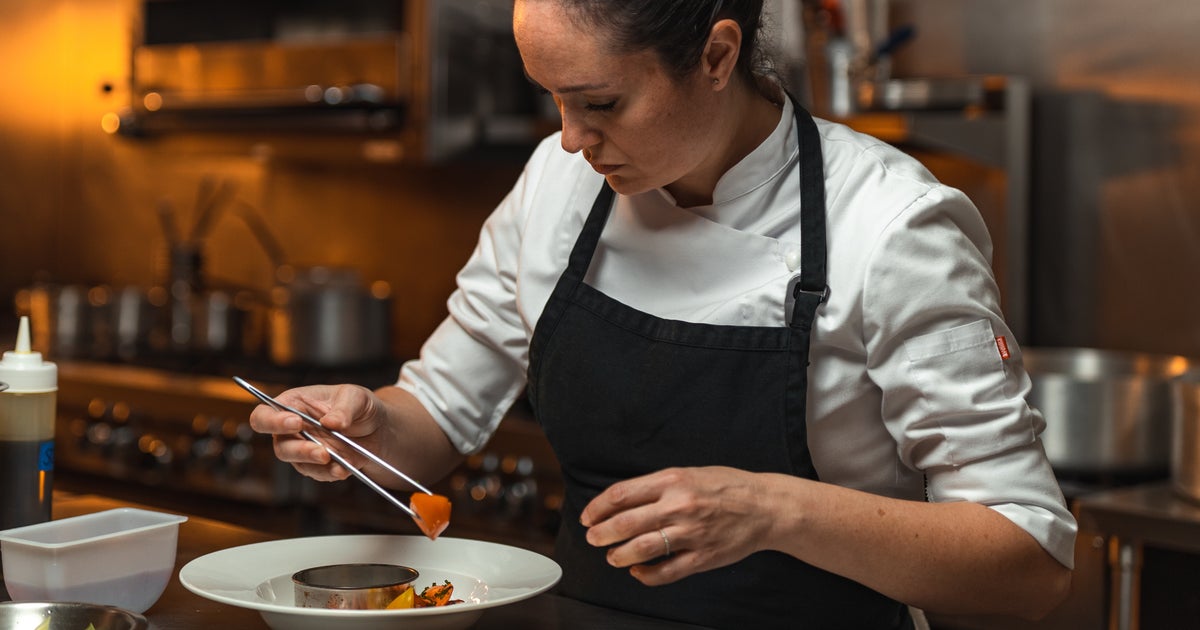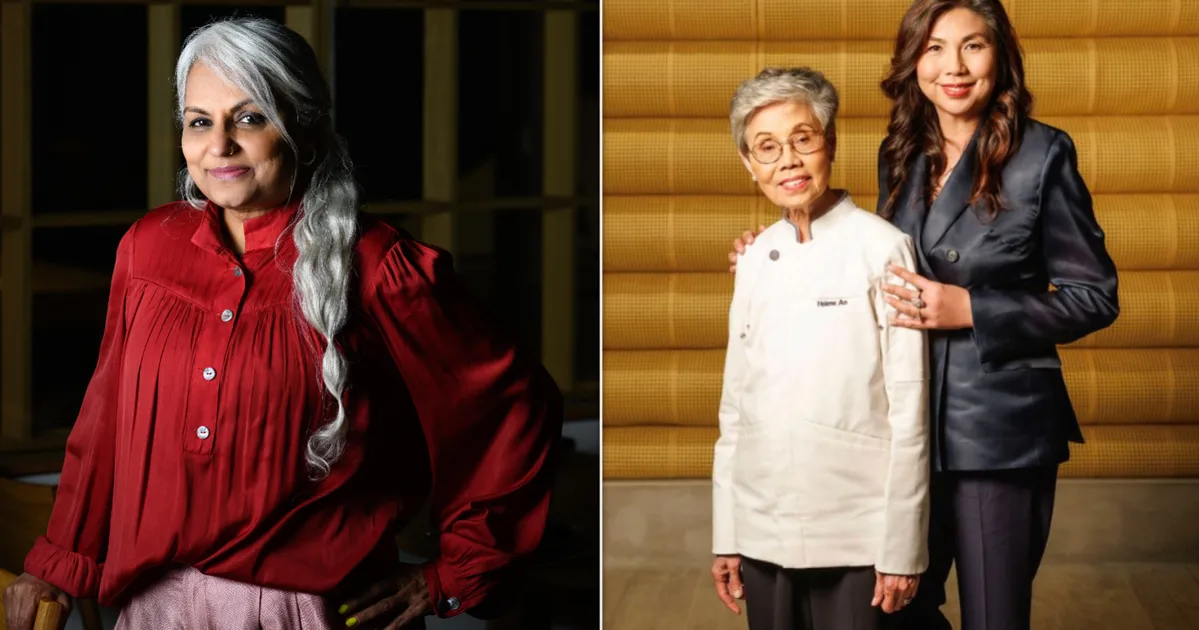
This story is part of Seasoned, a HuffPost Voices series that celebrates 250 years of immigrants’ invaluable contributions to American culture.Tennessee Williams once famously said, “America has only three cities: New York, San Francisco and New Orleans. Everywhere else is Cleveland.” No shade to the city of Cleveland, but I couldn’t agree more. As someone who bases her vacation plans exclusively on food, I argue that these culinary hubs are unmatched — largely because of the people who brought their flavors there. New Orleans interwove West African, French, Spanish, Caribbean and Black American, and the cooking traditions that resulted in an incomparable food culture, from tiny kitchens in Treme to Michelin-recognized eateries. And in both New York and the Bay, waves of immigrants at the end of the 19th century into the 20th, many who came through Ellis and Angel Island respectively, tweaked their favorite dishes from home with local ingredients to create an unintentional fusion for their new communities.These cities are not melting pots; the idea that we all come here and happily blend into each other to form one vaguely beige culture has always rubbed me the wrong way. Culinary traditions in these cities persist, evolve and continue to thrill and delight because they honor individual traditions, tastes and cooking styles. And instead of evaporating or fading, immigrants and their descendants who cook from memory are proud to translate their most authentic identities to the plate.“My entire menu is very autobiographical. It brings out a lot of emotions,” said chef Heena Patel, co-owner and head chef at Besharam, an Indian restaurant in San Francisco. “For example, the pakoras are my dad’s favorite. I remember him asking my mom to make them as a late-night snack or when he had a beer. And I love these memories, especially since I miss my parents so much.”Pakoras, which are a sort of vegetable fritter made with chickpea flour, are a staple street food in Gujarat, where my mother grew up. They’re fried to lacy perfection and served with cilantro mint chutney alongside a cup of masala chai on rainy days. When I bite into one at Besharam, I find myself tearing up a bit, memories of my summer at my maternal grandmother’s home effervescing in my mind.Pakoras, which are a sort of vegetable fritter made with chickpea flour, are a staple street food in Gujarat (and other regions in South Asia).Courtesy of BesharamIt’s a story as old as time: Children of immigrants like myself encounter a culinary deep cut from our childhoods that’s not widely accessible in the States (South Asian food offerings largely consist of meat-based curries, butter chicken and tandoori; Gujarati food is a little more esoteric and largely vegetarian), and the endorphins go wild. “I’m glad I’m cooking Gujarati food because it isn’t often showcased. It requires so many layers of traditional cooking techniques,” Patel says. “It’s more than food. It’s a conversation.”Patel, I learn, doesn’t care to assimilate to the cooking style most palatable to gen pop. She’s doing it for the culture, which is likely one of the motivations behind the name of her restaurant — Besharam, in hindi, literally means “shameless.” Inside the restaurant, the vibe is airy, warm, with a vibrant edge: The back wall of the restaurant is adorned with a mural by pop artist HateCopy, also known as Maria Qamar. In it, the distinctive Desi villainess grins, clearly on the verge of one of her signature one-liners.“My entire menu is very autobiographical. It brings out a lot of emotions,” chef Heena Patel says.Courtesy of BesharamPatel’s audacity is also about trying her luck in a field that is particularly challenging for women of color without any formal training. She credits being able to execute her dream of launching a restaurant ― the business model, the marketing and refining of the original menu — to a nonprofit called La Cocina, which provides free advice and training for women chefs of color looking to break into the industry. Now, several years later, she’s paying forward by sitting on their board of directors.Like so many hustles that involve launching a restaurant, hers was born of necessity. How would her and her partner send their kids to college? Patel wondered. But after several years and moving into a new space in 2018, creating and executing recipes has been about thriving, rather than surviving. “There’s a message I want to convey, creating these niche dishes that celebrate tradition, but also so many women’s legacies,” she tells me. “My grandmother, my masis ― they cooked amazing food, but they never called themselves ‘chefs.’ They did it without any recognition or recipes. It was practice and intuition.”The unsung culinary legacies of our women ancestors was also the driving force for another San Francisco restauranteur, Monique An, who was 5 when her family moved from Vietnam to the States as refugees in the ’70s. An’s grandmother and mother both brought their recipes to life first at Thanh Long, which opened in 1971 and is still beloved to this day, and then at Crustacean, which Monique runs with her husband, Kenneth Lew.“My mother, she was thrown into this position where she had to survive. She had three kids, and we had to make the restaurant work,” An tells me, of Helene An, who was instrumental in bringing Vietnamese flavors to the city. “She was fearless. She cooked without worrying about whether people are going to like it or not. She was true to her roots — but also innovative.”That very innovation is why San Francisco is worthy of examination as a cultural culinary hub that’s evolved over the decades while still tethered to its commitment to elevating voices from immigrant communities. An’s story falls into an illuminating motif I’ve noticed there: There is no “right” way to cook the food we grew up eating. Each culture’s culinary traditions have layers of nuance that reflect our individual experiences, our specific tweaks to the recipes and our family’s stories. “My mother taught us that it was important to showcase our culture but to also be creative to not let the ‘rules’ of what Vietnamese should be, confine us. It’s important to know that Vietnamese food can be so many different things,” An says. “By introducing our friends and patrons to our version of it, we’re telling the story of our family.”And as those stories persist through the recipes, so do our beautiful, sometimes complicated pasts. The melting pot narrative doesn’t account for how powerful it is to go beyond the most basic presentations of “ethnic food” in the U.S. and explore how unique all of our diasporic journeys have been. That’s the American food dream, to me — not catering to mainstream palates but throwing our version of spaghetti to the wall and seeing what sticks."My mother taught us to showcasing our culture but to also not let the ‘rules’ of Vietnamese food confine us," says Monique An.Raj Punjabi-Johnson/HuffPostFor An’s mother, Helene, that spaghetti was actually garlic noodles — a now renowned fusion dish incorporating Vietnamese, Chinese, French and Italian flavors. The noodles were often served alongside roasted crab, another dish she conceptualized for Thanh Long in the ’70s, and is now at Crustacean, its more upscale sister restaurant, also in San Francisco. What I’m told is a simple recipe for these garlic noodles is guarded fiercely by the matriarch — and for good reason. “You could lose everything in the blink of an eye,” An tells me, recalling how her family was forced to leave home without much and start over in the U.S. “What you can’t lose is your knowledge, your culture, what’s in your head and heart. It’s a gift to pass on to your children.”Their signature recipes have entranced foodies all over the country, inspiring both copycats and culinary scholars who attempt to capture their buttery, aromatic, essence for their own variation. Monique An with her husband, Kenneth Lew, and her mother, Helene An.Courtesy of CrustaceanOutside of their staples, An tells me, there’s a lot of riffing on their menus that reflect various ways of cooking and serving Vietnamese favorites; the playfulness and intention of their approach comes from generations of big family dinners. “When you’re a little kid, when you’re out, you’re trying to eat hamburgers. You’re trying to be an American,” she tells me. “I remember always coming back home and having the comfort of my grandmother and mother’s cooking — and that grounded me.” I’ve heard some version of this musing from so many chefs and restaurateurs who’ve folded their most tender memories of home into their work, about their journey of translating a feeling of belonging to the plate. For them, specificity is sacred. The pakoras at Besharam might as well have been a therapy tool because they dug up some beautiful and complicated feelings about how I express my own South Asian American identity — how every day, I sit somewhere different on the spectrum of my brownness. They reminded me of an unvarnished version of myself, just a girl who loved fritters and the women who fried them for me in an airy, sun-filled kitchen in Gujarat. While New York, New Orleans and San Francisco might indeed be portals for cultural nirvana, there are kitchens in every nook of this country that might help remind you of your most authentic self. And toiling away in them are the cooks who’ve insisted on doing things exactly their way.
The Melting Pot Is A Myth — And Reality Is Much More Delicious
For chefs who translate a feeling of belonging to the plate, specificity is sacred.
1,573 words~7 min read