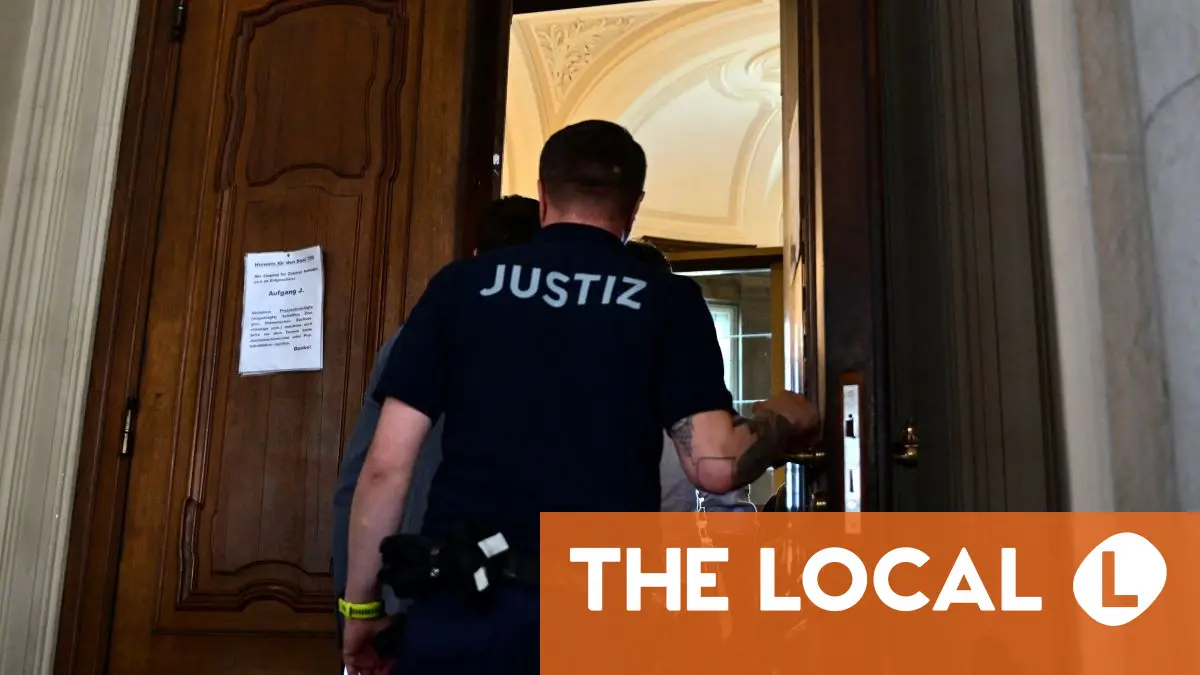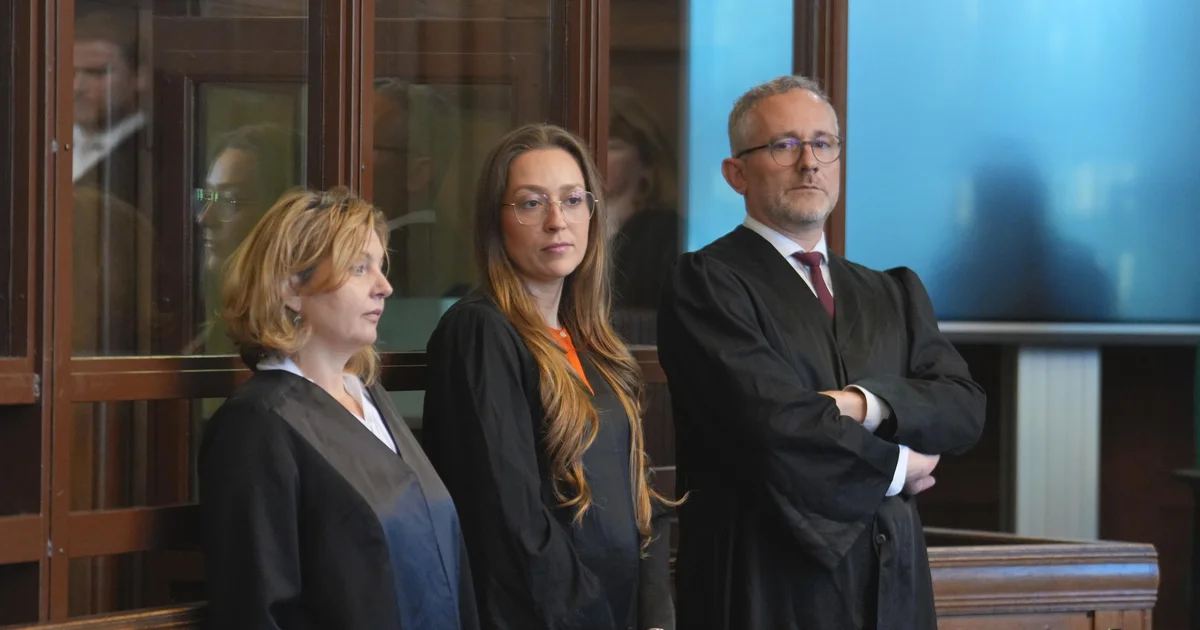
German court sentences palliative care doctor Johannes M. to life in prison for murdering at least 15 patients with lethal drug injections; He admitted some killings, saying he believed he was sparing them sufferingA Berlin court on Wednesday sentenced a palliative care physician to life in prison after convicting him of murdering at least 15 of his patients. Johannes M., 41, whose full name has not been released due to Germany’s strict privacy laws, was convicted of injecting his patients with a lethal combination of drugs. He remains under investigation on suspicion of involvement in 76 additional cases in which his patients died and suspicions were raised.Palliative care is intended to ease the suffering of seriously ill or terminally ill patients, but prosecutors said that while the victims in this case were in serious condition, they were not facing imminent death. In the yearlong trial, the doctor was convicted of murdering 12 women and three men, aged 25 to 94, betweenJohannes M. was sentenced to life in prison after murdering at least 15 of his patients September 2021 and July 2024.According to the indictment, Johannes injected the patients, without their knowledge or consent, with a lethal combination of anesthetics and a muscle relaxant during home visits. In July 2024, shortly before his arrest, prosecutors said he killed two patients in a single day: a 75-year-old man at his home in central Berlin and several hours later a 76-year-old woman in a nearby neighborhood. In at least four of the murder cases, he was also accused of attempting to set fire to the victims’ apartments in order to conceal his actions. The investigation into him began following those arson attempts.Throughout the trial, the doctor remained silent, but last month he admitted to killing at least 12 of his patients. In testimony before the court, he said he had convinced himself that he was doing the right thing and sparing the patients suffering.“Throughout it all, I thought it was the best thing for everyone,” he said, apologizing to the victims’ families. In its sentencing, the court ruled that the doctor was guilty of murder under aggravated circumstances, a designation expected to prevent the possibility of early release. His medical license was permanently revoked.Several relatives of the victims testified during the trial. The mother of the youngest victim, a 25-year-old woman killed in 2021, broke down in tears on the witness stand.“She never said she didn’t want to live anymore,” the mother said.The son of a 72-year-old woman killed in 2024 said his mother had plans to travel to the Baltic Sea with her sister.“My mother wanted to keep living,” he said.The investigation into the case is still ongoing, and the doctor could be charged with additional murders. According to reports in Germany, a special team of police investigators and prosecutors reviewed 395 cases in total, with suspicions arising in 95 of them. The doctor has now been convicted in 15 cases, while investigations continue into 76 others.The case is not the first time that health care workers in Germany have been accused of serial killings. Seven years ago, a German court sentenced nurse Niels Högel to two life terms after he was convicted of murdering at least 85 patients, aged 34 to 96. He was believed to be the deadliest serial killer in Germany since World War II. Högel was charged with 100 murders but was acquitted in 15 cases.Högel carried out the killings at hospitals where he worked in the northern German cities of Oldenburg and Delmenhorst. He injected victims with medications without medical justification in order to push them to the brink of death and then attempt to save them, seeking to demonstrate his skills to colleagues around him. He repeatedly gambled with the lives of randomly selected victims, most of whom died. Investigators believe his killing spree began in 2000, and police said at the time they suspected he may have murdered more than 200 people. However, they said the full extent may never be known because he does not remember all the details and because the bodies of many victims had been cremated, preventing autopsies.
German doctor suspected of killing up to 91 patients gets life sentence
German court sentences palliative care doctor Johannes M. to life in prison for murdering at least 15 patients with lethal drug injections; He admitted some killings, saying he believed he was sparing them suffering
687 words~3 min read