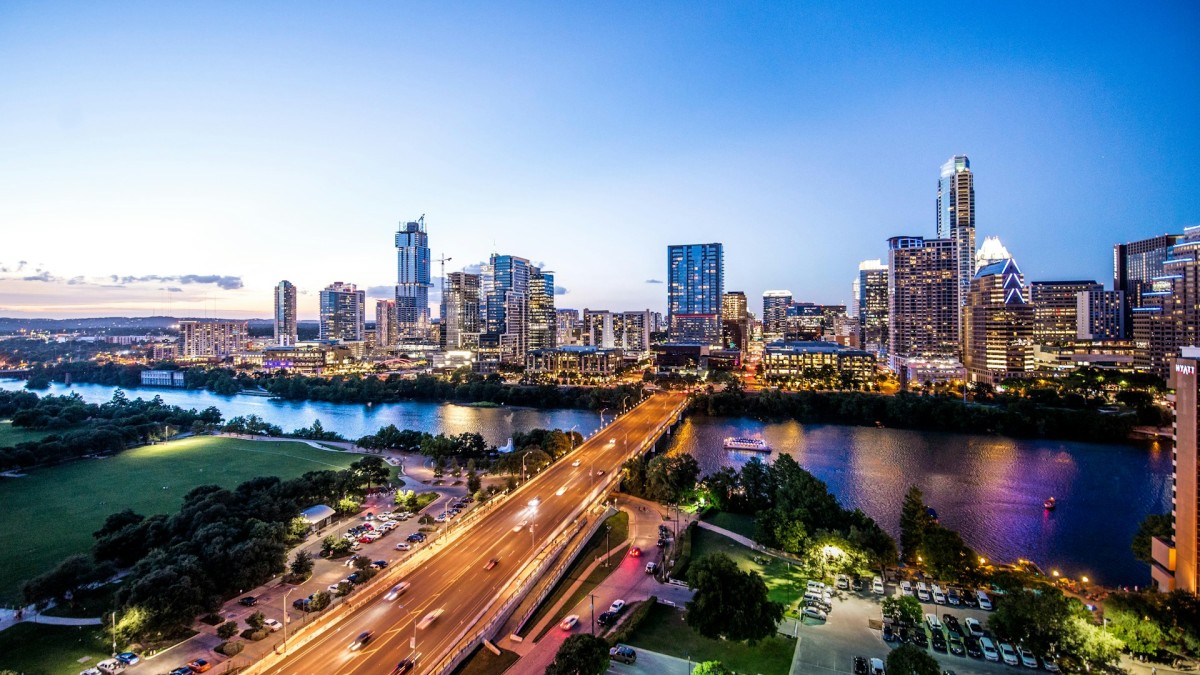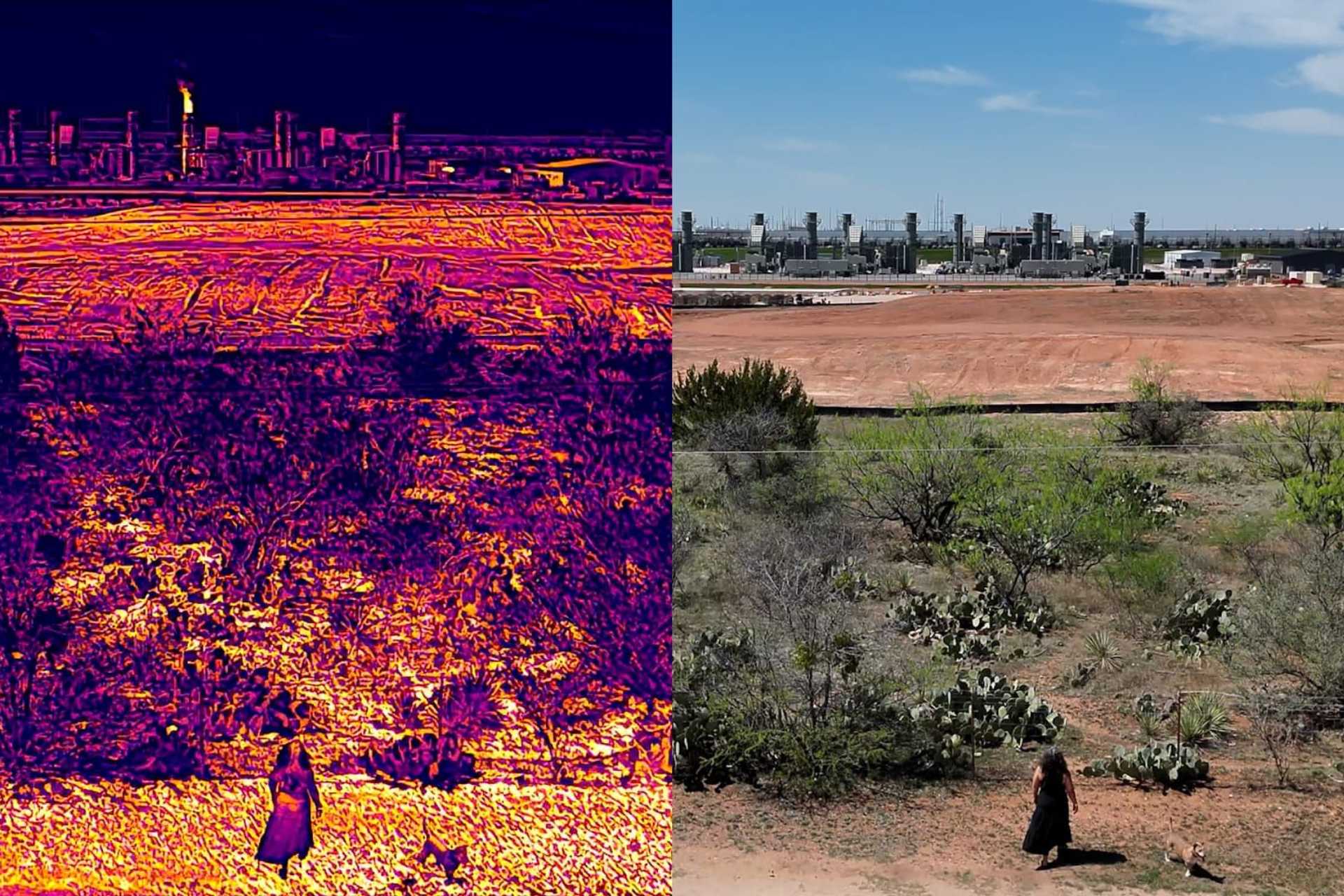
Forty miles outside Abilene, in the highlands between Taylor and Nolan counties, 421 wind turbines have spun since 2006. Horse Hollow was the largest wind farm on earth when it went up…nearly 47,000 acres of cattle country and mesquite scrub, leased from ranch families who mostly kept running cattle underneath the blades. West Texas doing what West Texas does best…selling the wind nobody else wanted.Twenty years later, the same stretch of the state is selling something else nobody has enough of…land with power still attached to it. On the edge of Abilene, in what used to be a mesquite thicket somebody once eyed for a crypto mine, OpenAI, Oracle and SoftBank have built the flagship of a $500 billion nationwide AI buildout called Stargate. And Microsoft broke ground on another massive project right next door. Between the two campuses, they are likely to consume roughly 2.1 gigawatts, more power than most American cities pull at peak, on ground that was mesquite shrubland six years ago.None of that happened overnight, though. It took twenty years of cheap land and paid-down power lines to set this up, not the two years everyone's been watching. The power behind it holds up better in some places than others. And this corridor has already lived through one boom and bust…it might be worth asking if it's signing up for a second.Twenty years of cheap land, then five years of something elseFor most of the 2000s and 2010s, land in this stretch of West Texas stayed exactly what it looked like… grazing country. Wind developers leased tens of thousands of acres in the mid-2000s for pennies against what irrigated cropland or suburban fringe land was fetching elsewhere, because turbines don't need good soil. They need wind and a transmission line. That arrangement held for the better part of two decades. Recent bitcoin-to-data-center land conversions in the region still closed as low as $2,200 an acre, a fraction of what comparable land near Austin or Houston has fetched for years.Set OilPrice.com as a preferred source in Google here.Then 2020 hit... Texas rural land more than doubled statewide over the next five years, on a pandemic-era migration wave that had nothing to do with computing. Abilene's corridor rode that wave too. But 2025 stacked something sharper on top of it. The Texas Real Estate Research Center named Taylor and Jones counties specifically as a market where data center demand, not migration, is now moving prices on its own. Region 3, the broader West Texas market that includes Abilene, posted the sharpest price jump of any region in the state that year.Laid out by the numbers, the last twenty years look like this:PeriodPrice per acreWhat was driving itMid-2000s wind boomLeased for pennies on the dollarWind leases only; land still valued for grazingRecent West Texas land comps~$2,200Bare land value before power access was priced inStatewide rural, 2020 to 2025More than doubledPandemic-era migration, unrelated to computingWest Texas (Region 3), large tracts, Q3 2025$2,787Sharpest YoY jump of any Texas region, up 15.8%West Texas (Region 3), small tracts, Q4 2025$8,330Up 8.5% YoYTaylor County, median asking price, 2026$10,825More than double the statewide rural averageSources: Texas Real Estate Research Center land market reports; Land.com Taylor County listings.Listings in Taylor County now market proximity to a data center the way a broker once advertised a stock tank or highway frontage. What happens next depends entirely on whether the pipeline behind those prices gets built.Texas currently has 140 planned data center projects representing more than 75,000 additional megawatts, on top of roughly 6,300 megawatts already running. Build even a meaningful slice of that, and land in this corridor keeps climbing, because every new project makes the next rancher's tract worth more before a single shovel touches it.But a lot of that pipeline may never show up. OpenAI already walked back a planned 600-megawatt expansion at this exact Abilene site earlier this year. Vistra's chief strategy officer told regulators flatly there's no way anywhere close to the queued capacity gets built in Texas, and industry estimates elsewhere put the national no-show rate for proposed data centers as high as 80 to 90 percent. Land here is, right now, priced substantially on announcements and interconnection requests, not completed megawatts. Texas has lived through a land bust tied to a single industry before, when oil prices collapsed in the mid-1980s and rural values fell hard alongside them. TRERC's own analysts think a repeat of that scale is unlikely under today's conditions. Fair enough. But the risk they're waving off has the same basic mechanics: land priced for a boom is only worth that price once the boom actually shows up.The money that's already movingStargate's Abilene campus alone is expected to anchor more than 5.5 gigawatts of combined capacity across its own and neighboring sites, spread over more than 4,800 acres, with Oracle projecting more than 25,000 onsite construction jobs at peak. Zoom out and the numbers get stranger. Amazon just closed on 1,300 acres in nearby Bastrop County, part of a Central Texas pipeline now representing at least $50 billion in projected investment.On the Gulf Coast, Hut 8 signed a $9.8 billion, 15-year lease for a single campus near Corpus Christi. None of that is Abilene's money directly. It's the scale of capital now circling every county in Texas with land, power and a friendly zoning board.Abilene is already feeling its own slice of it, and it shows up on a city ledger, not just a satellite photo. Through May, sales tax revenue tied largely to data center construction was running 34 percent ahead of last year, putting the city $13 million over budget with potential for $21 million in one-time revenue by fiscal year-end. Property values are moving even harder. Taylor County's appraisal district produced preliminary commercial values so high the city had to knock $1 billion off them, and even after that haircut, Abilene still expects a 26 percent jump in taxable value for fiscal 2027, more than $2 billion, with over $1 billion of that tied directly to data center construction. That's money landing in a city budget that didn't exist three years ago.Who actually gets paidA data center land deal typically starts as an option, small payments while the developer studies power and water access, then converts to a lease or sale once site control is confirmed, with payments escalating through construction. For a rancher sitting on a few thousand acres that's been in the family since the 1800s, that can be transformative money. Agricultural attorneys describe it as a once-in-a-generation chance to retire debt or fund a succession plan. But the same advisors keep warning that a lot of these deals get signed before the landowner understands what the power and water clauses actually commit them to, and that early option pricing rarely reflects what the land turns out to be worth once a developer confirms real megawatt capacity on it.Not every windfall even reaches a private landowner. In Williamson County, Texas, a farmer donated 87 acres to the city in 1999 with a deed restricting it to parkland, permanently. That land passed through two nonprofits and a city economic development corporation before selling for $10 million to a data center developer this year, with neighbors now suing to enforce a deed the family thought would keep it public forever. That shows you that the gold rush has become so frantic that even historic deed restrictions are being stress-tested in court.The jobs case is thinner than the dollar figures suggest, too. Stargate's Abilene site needed roughly 1,500 workers to build. It needs about 100 to run it. A fraction of what a similarly sized factory or warehouse would employ long-term. The payout here isn't payroll. It's land value, lease income and property tax revenue, three things that flow to whoever already owns the ground, not to the people who might otherwise have worked there or taken care of that land for ages.Wind built the grid here. Solar might finish itThe reason any of this pencils out in Abilene faster than in most of the country traces straight back to the wind boom. Horse Hollow, Roscoe, and Capricorn Ridge turned Taylor and Nolan counties into one of the densest wind corridors on the continent two decades ago, and the transmission lines built to move that power out are still standing, still paid down, still carrying electrons. Oracle says the Abilene campus draws power partly from that existing wind capacity, backstopped by an on-site gas plant for reliability. That's a very different starting position than a greenfield site with no grid history at all.The newest energy coming online nearby, though, is solar, not wind, for a reason oddly specific to Abilene itself. Enbridge is building one of America’s largest solar farms, an 8,000-acre, $1.1 billion endeavor about 35 miles from town that was originally planned as a wind project, until developers realized its proximity to Dyess Air Force Base created airspace conflicts for turbines. Solar panels don't have that problem. So the project pivoted. It's a small case study in why the next wave of West Texas power is more likely to be panels than blades...turbines need airspace and distance from flight paths, and a town with an active Air Force base inside city limits has less of both to offer than it did in 2006.The power math, and where it stopsTexas throws away a startling share of its own wind and solar power… Because transmission out of West Texas can't carry everything the region generates east to Dallas and Houston, roughly 22 percent of all renewable generation in ERCOT gets curtailed, turned down or simply wasted, concentrated heavily in the spring shoulder season when demand is low and maintenance outages are high. That's gigawatt-hours of power West Texas already built and already owns, with nowhere to send it. It's the actual basis for the claim that this corridor has more energy abundance than the rest of the state.Curtailed power isn't a standing reserve a data center can draw on whenever it wants. It's seasonal, intermittent, tied to specific transmission nodes, which is exactly why Abilene's campus still needs an on-site gas plant and a firm grid connection rather than running on curtailed wind alone. Soaking up surplus power at the margins lowers costs at specific hours. It doesn't replace the need to build or buy firm, dispatchable capacity the rest of the time.Texas's new rules make the relationship less one-directional than "data centers eat free power," too. Under Senate Bill 6, any large load over 75 megawatts connecting after the end of 2025 can be ordered by ERCOT to curtail its own operations or switch to backup generation during a grid emergency, once market options run out. Analysts at Aurora think as much as half of Texas's data center capacity could function as a genuine reliability resource for the wider grid by 2030, cutting its own draw when Dallas or Houston need the electrons more. A real upside for the rest of the state, not just a cost. Meanwhile ERCOT is sitting on roughly 410 gigawatts of large-load interconnection requests against a current statewide peak demand of only 85 to 90 gigawatts, and ERCOT's own officials expect a large share of that queue to evaporate once new financial-commitment rules weed out the speculative filings. Here's the math laid out plainly:MetricFigureRenewable generation curtailed in ERCOT (average)~22%Large-load interconnection requests in ERCOT's queue~410 GWTexas's current statewide peak demand~85 to 90 GWShare of that queue industry expects to actually get builtas little as 10 to 20%Potential ERCOT North Hub price increase by 2027 (high-demand case)up to +79%Load size that triggers mandatory curtailment eligibility under SB675 MW and upSources: ModoEnergy ERCOT curtailment research; ERCOT/PUCT SB6 filings; U.S. Energy Information Administration.Whether any of this helps Texas overall, or the country, is a separate question from whether it helps Abilene. The EIA has modeled a scenario where high demand growth pushes wholesale prices at ERCOT's North Hub, the zone serving Dallas-Fort Worth, up nearly 79 percent by 2027. Governor Abbott has already ordered regulators to keep those costs off residential ratepayers. West Texas's local abundance doesn't automatically fix that. ERCOT is one interconnected market, and prices move together more than people assume.There's a longer trade-off baked into the state's own infrastructure plans, too. Part of why West Texas curtails so much power today is that the transmission needed to move it east hasn't been built yet. Texas is building it anyway, a new 765-kilovolt backbone tied to the Permian Basin Reliability Plan, aimed at relieving exactly the congestion that currently produces this region's cheap, wasted electrons. Finish that transmission on schedule, and some of the power a data center could absorb for free today has somewhere else to go tomorrow. Good news for Dallas and Houston ratepayers, a quiet erosion of Abilene's edge, though. And nationally, plenty of the power actually keeping these campuses running comes from gas, not wind or sun. Natural gas remains ERCOT's largest fuel source, and rising Henry Hub prices, driven partly by that same AI-and-LNG-export demand wave, show up on power bills well outside Texas. The wind-powered story is true. It just isn't the whole story.What happens if this actually takes offTake the optimistic case. The pipeline holds, more of those 140 planned projects get built, and Taylor, Nolan and the surrounding counties become to AI compute what they once were to wind: a genuine national hub. What does that town look like in ten years?It's worth asking, because people who've lived through a version of this are already asking it out loud.In Pennsylvania's coal country, residents fighting new data center projects keep describing them in almost identical language…another capital-intensive industry parachuting into a rural area, taking the land and the water, employing relatively few people permanently, and shipping the actual output, coal then, computing power now, somewhere else entirely. Luzerne County, Pennsylvania, carries three Superfund sites from its coal era and is now one of the loudest opponents of new data center construction in the state.Nobody is claiming West Texas is headed for Superfund sites, though. Abilene's water numbers look genuinely better than the Panhandle's, and the CBS and Texas Tribune reporting on the subject backs that up. But strip away the specific resource, and the underlying arrangement doesn't change much: one volatile industry, concentrated capital, thin permanent payroll, profits and product both leaving the region. Taylor and Nolan counties have already lived through a version of it, with oil. The wind boom was the gentler draft of the same idea. Cattle stayed on the land, lease income was modest but durable, nobody had to choose between the industry and the ranch. Data centers ask more of the land itself and hand back a less certain trade.There's a real counterargument to the coal comparison, and it deserves more than a dismissal... Wind and sun don't run out the way a coal seam does, and a rancher who leases land for solar keeps that income whether or not any particular data center next door succeeds or fails. The infrastructure going up now, transmission lines, substations, water systems, tends to outlive any single tenant, the same way the CREZ transmission lines built for 2006-era wind turbines are the reason a 2026-era AI campus could get built here cheaper and faster than almost anywhere else in the country.If that pattern holds, this boom leaves behind more than a played-out coal seam or a dry oil well ever did. That's the bet actually worth watching. Not whether West Texas becomes a boomtown. It already knows how to be one. The open question is whether the next bust, if it comes, leaves something behind this time.Who wins, who doesn'tStrip away the megawatts and the acreage, and people sort into two columns fairly fast…The likely winners: Ranchers with well-negotiated leases and intact water and mineral rightsAbilene's city budget, via sales and property tax revenueThe state's AI-hub branding and investment pipelinePossibly the wider ERCOT grid, if data centers act as flexible loadAnd the likely exposed: Landowners who signed early option deals without legal reviewFamilies whose deeded land got monetized by a city or nonprofit instead of themNeighbors near construction sites, with the traffic and noise but no lease checkDallas-Fort Worth ratepayers, if the EIA's high-demand price scenario hitsThe region's long-term economic diversity, if it leans on one volatile industryNobody in Taylor or Nolan County has to answer any of this today. The checks are clearing. The substations are going up. The land is worth more than it's ever been. Whether that turns out to be the start of something durable, or the newest chapter in a much older Texas habit, land priced high on an industry that may or may not stick around, is still being written in real time, forty miles outside Abilene. My guess is it ends up somewhere in between. I'd rather be the rancher who got a lawyer before signing than the one who didn't.By Michael Kern for Oilprice.comMore Top Reads From Oilprice.comColombia's Oil and Gas Reserves Keep ShrinkingLargest Data Center Project Ever Proposed Is Officially DeadVitol Eyes Venezuela Expansion as Oil Industry Returns
West Texas Cowboys Are Cashing In on the AI Land Rush | OilPrice.com
How Abilene's wind boom quietly set up a bigger AI land rush, and who's actually cashing in on Texas's data center gold rush.
2,844 words~13 min read