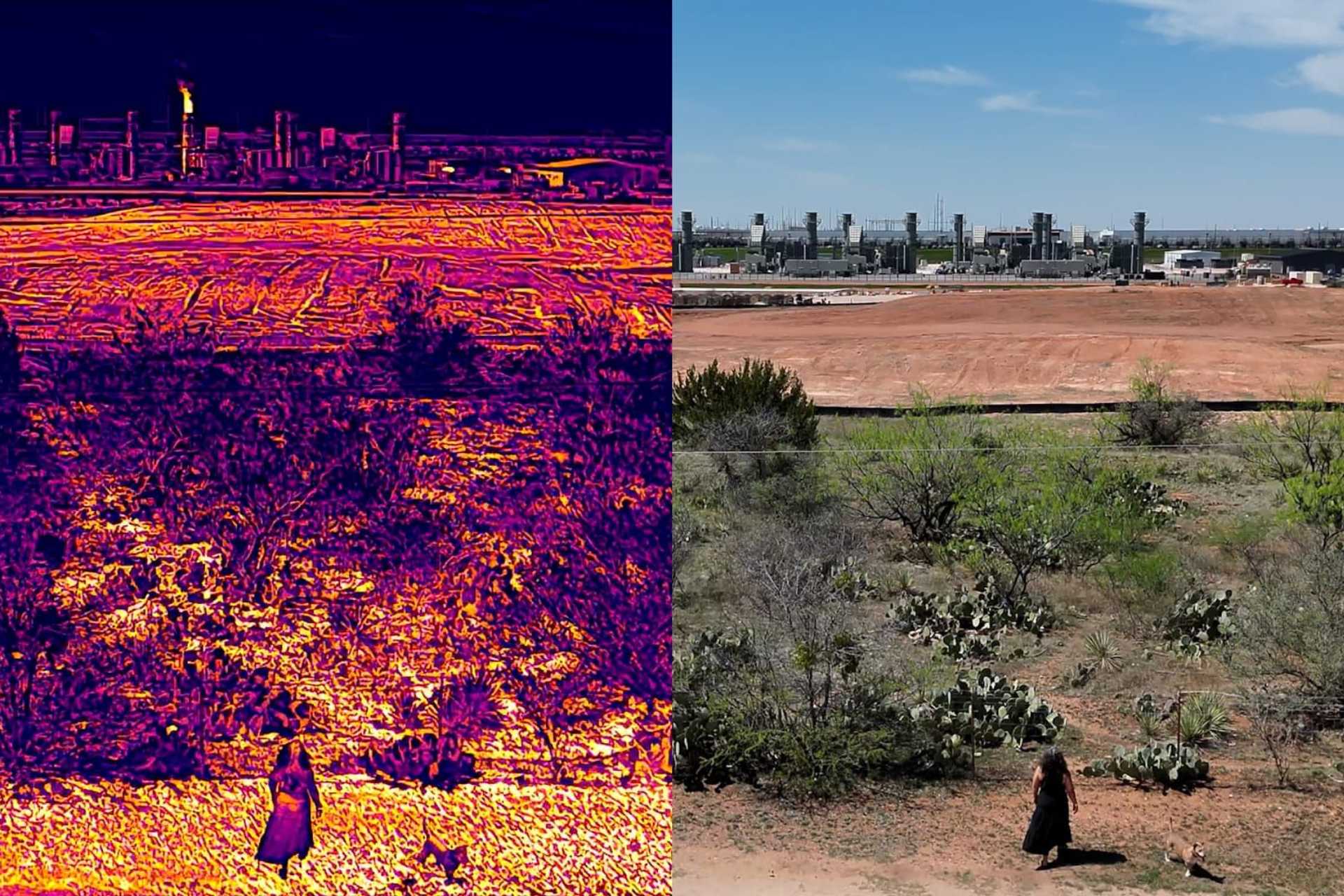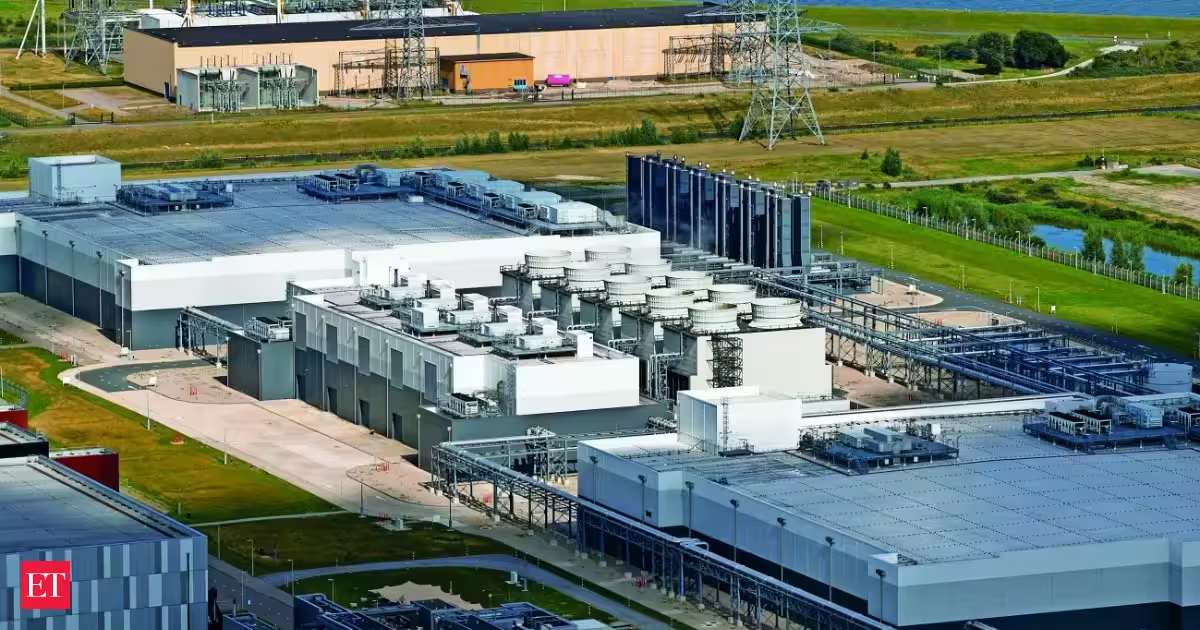
Jul 9, 2026 7:00 AMA regulatory loophole has let in thousands of new fossil-fuel-burning power sources across the state. The AI business is booming—but residents feel blindsided.Photo-Illustration: WIRED Staff; Evan Simon/Floodlight; Getty ImagesOmaira Garcia didn’t realize life on her small ranch in Abilene, Texas, was about to change until clouds of dust—kicked up by a mysterious project next door—began to engulf her home.The Air Force veteran says she found out about OpenAI’s plans to build its flagship Stargate data center directly beside her property only after construction began in the summer of 2024. Today, the site’s natural-gas-powered electrical plant sits roughly 500 yards from her house, the exhaust stacks clearly visible from her kitchen window.“We weren’t given any time to understand what this impact was going to be on us,” the mother of two says through tears. “We’re trapped here.”Omaira Garcia’s home in Abilene, Texas, sits directly beside OpenAI’s flagship “Stargate” data center and its accompanying gas plant.
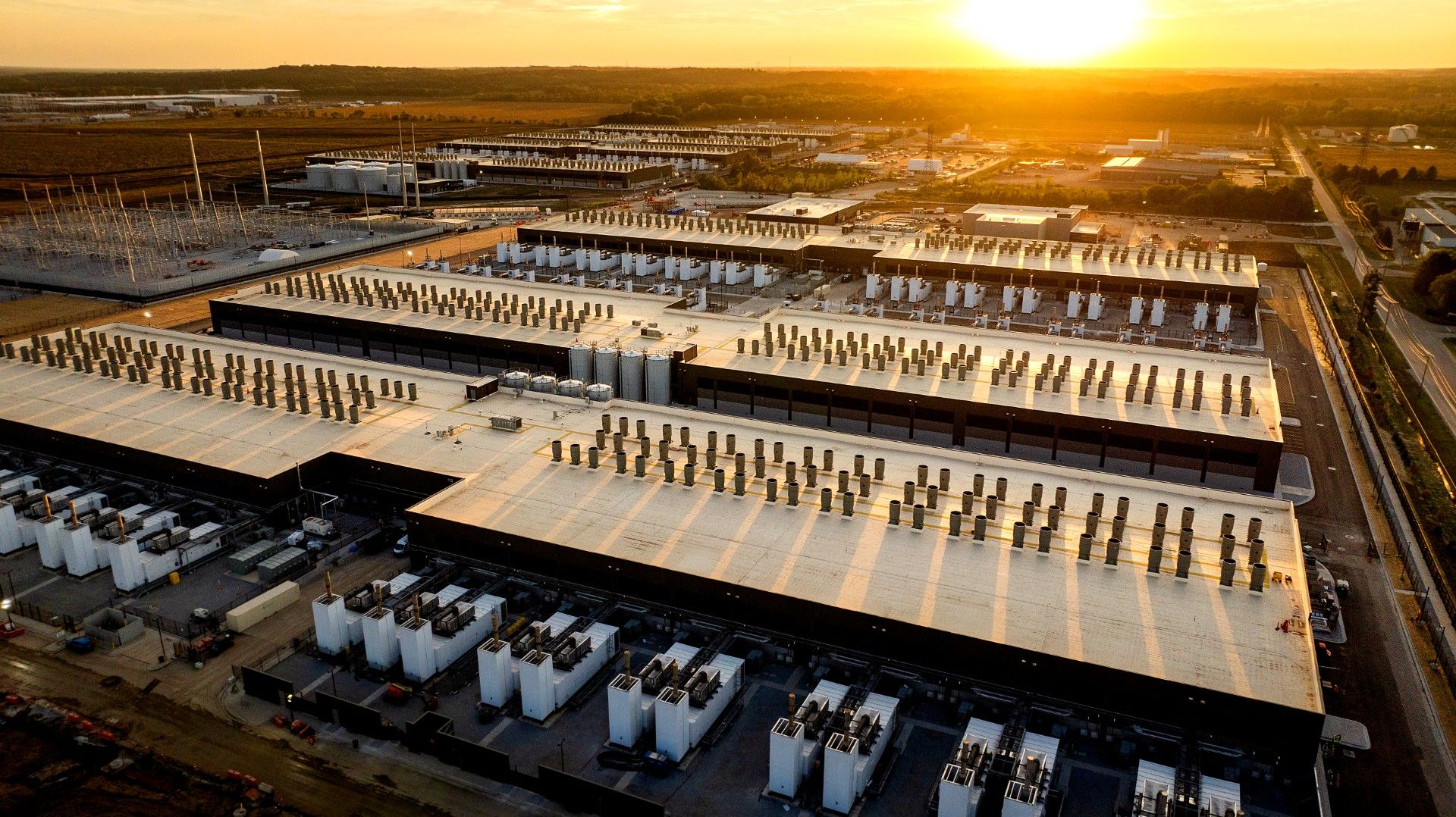
Photograph: Evan Simon/FloodlightOpenAI did not respond to multiple requests for comment.A spokesperson for Stargate’s developer, Crusoe, says that the data center has “contributed meaningfully to the economic development” of Abilene, and its investments are “funding new fire trucks, school expansions, and road improvements across the city.”As President Trump seeks to fast-track AI development across the country, he has found a willing ally in Texas governor Greg Abbott, who has previously referred to the industry as the state’s “gold rush”—though his enthusiasm has recently dampened in the face of widespread opposition.With some 300 data centers already in operation and 200 more in development, Texas could surpass Virginia as the nation’s leading data center market by 2030. Amidst the frenzy to capitalize on the AI boom, a regulatory loophole has allowed dozens of data centers like Stargate to quietly construct massive power sources that emit harmful pollutants with little to no public notice, a Floodlight investigation has found.Typically, before you can build a major source of new emissions, you have to get a major air permit, which includes extensive environmental reviews and engagement with the local community. But in Texas, regulators have allowed some data centers like Stargate to avoid that process by first obtaining so-called minor air permits—the kind more commonly associated with dry cleaners and autobody shops and rubber-stamped with minimal review.“Those lower-level permits get granted very quickly and often without the public knowing,” says Kathryn Guerra, who spent nearly four years at the Texas Commission on Environmental Quality (TCEQ) before joining the watchdog group Public Citizen. “That feels pretty intentional.”These minor permits—as well as the nondisclosure agreements many developers require in their dealings with local governments and residents—are how communities like Garcia’s are left stunned when exhaust stacks pop up in their backyards.Stargate was first announced in January 2025 as part of a $500 billion joint venture between OpenAI, SoftBank, and Oracle to construct hyperscale AI data centers across the country.Construction was already well underway in Abilene. The 1,100-acre campus, along with its 360-megawatt onsite gas plant, were among the first hyperscale AI data centers to break ground in Texas. A wave of similar proposals has since made the state ground zero for the AI-driven build-out of fossil-fuel power plants across the US.The dramatic impact OpenAI’s flagship data center has had on Abilene, Texas, from 2024 and 2026.