
Training an AI model across dozens of mismatched GPUs scattered around the globe, without ever hitting pause, sounds like a problem you solve in a decade, not a Tuesday. Chutes AI says it did it on July 8, 2026.
The decentralized compute provider, which operates as subnet 64 on the Bittensor network, announced that it completed fully non-blocking decentralized training of a recurrent AI model, landing within 0.6% of the quality achieved by traditional centralized training. The company is calling it a world first.
Why recurrent models make this hard
Most modern large language models use transformer architectures that are relatively friendly to parallelization. Recurrent models are different. They process sequences step by step, where each computation depends on the one before it. That sequential dependency is a nightmare for distributed systems. When your GPUs are sitting in different cities, waiting for network messages to synchronize before each training step, those pauses stack up fast. The result is either a catastrophically slow training run or a model that degrades in quality because the synchronization is skipped entirely.
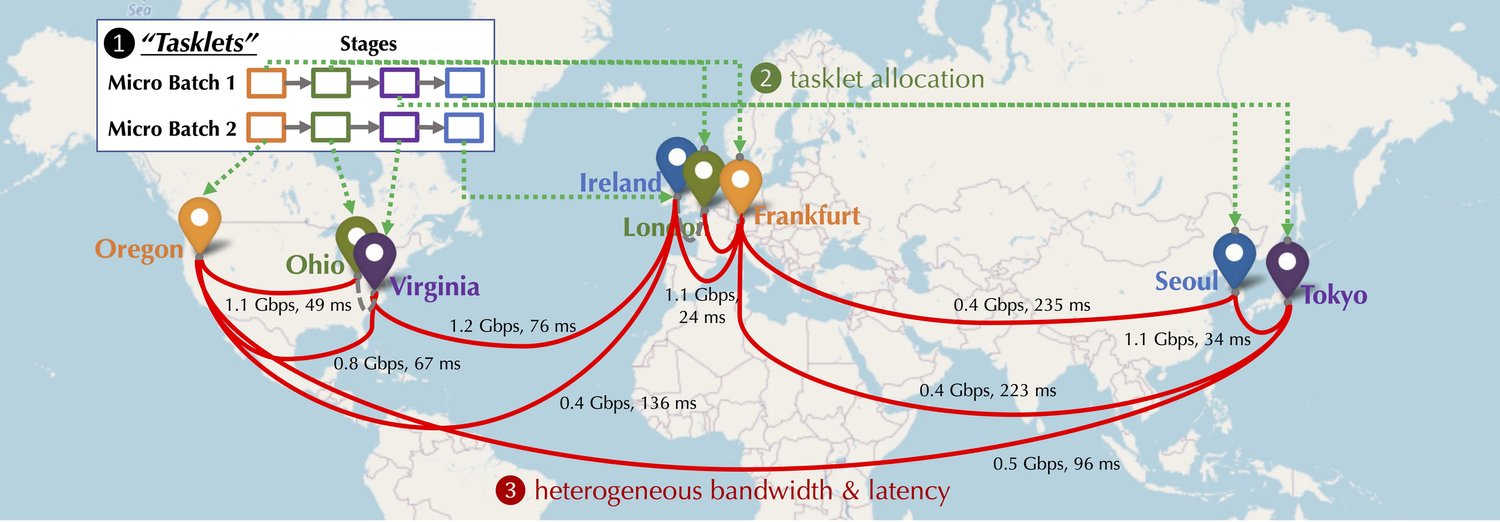
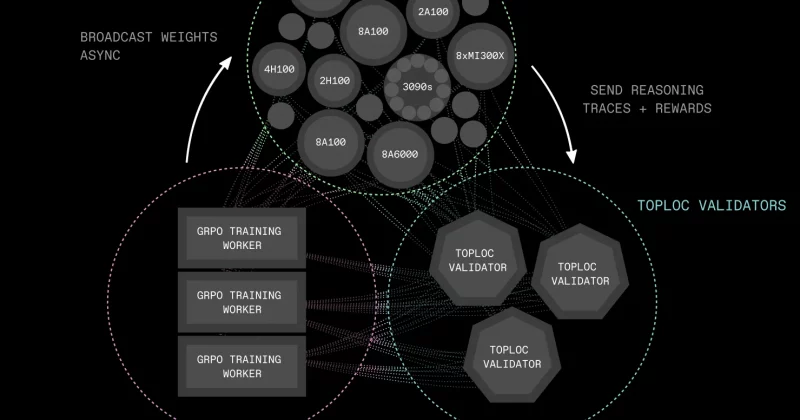
Chutes says its Parallax framework solves this by enabling distributed GPU resources to keep training without those synchronization pauses. The framework is specifically designed for sparse Mixture-of-Experts models running across geographically dispersed, heterogeneous GPU hardware.



 aboutamazon.com