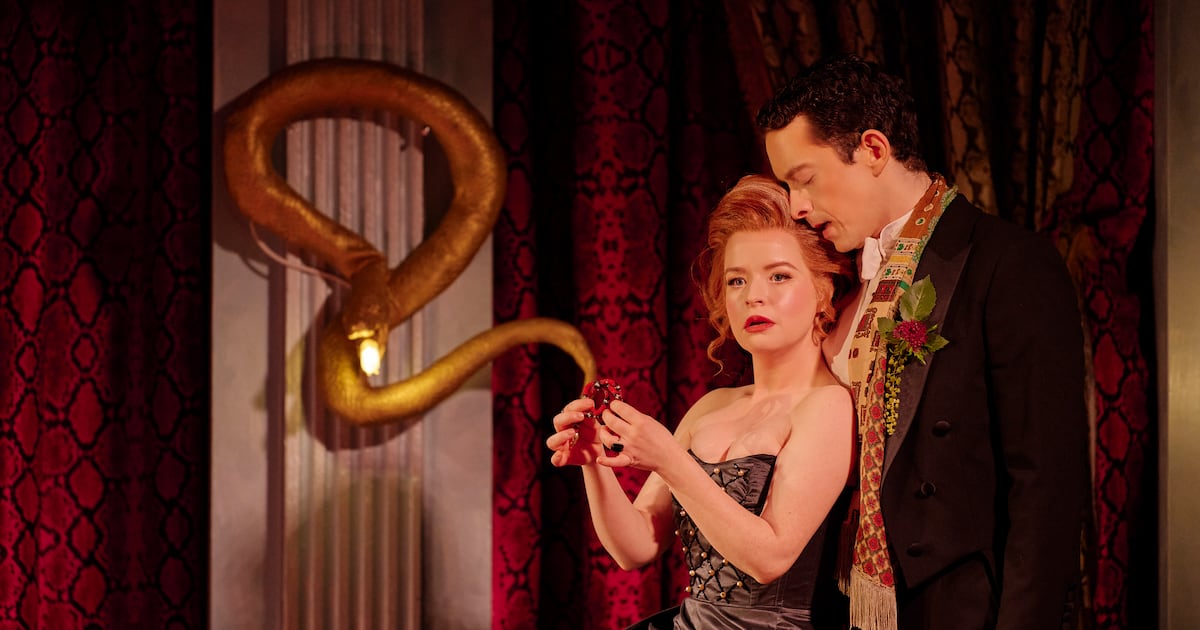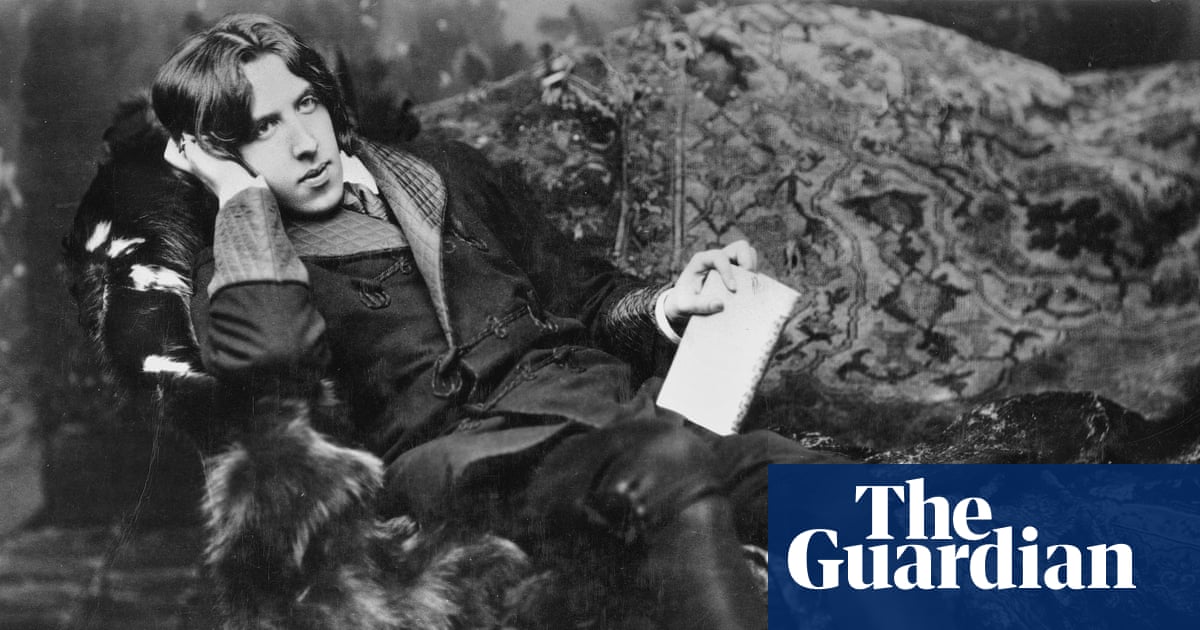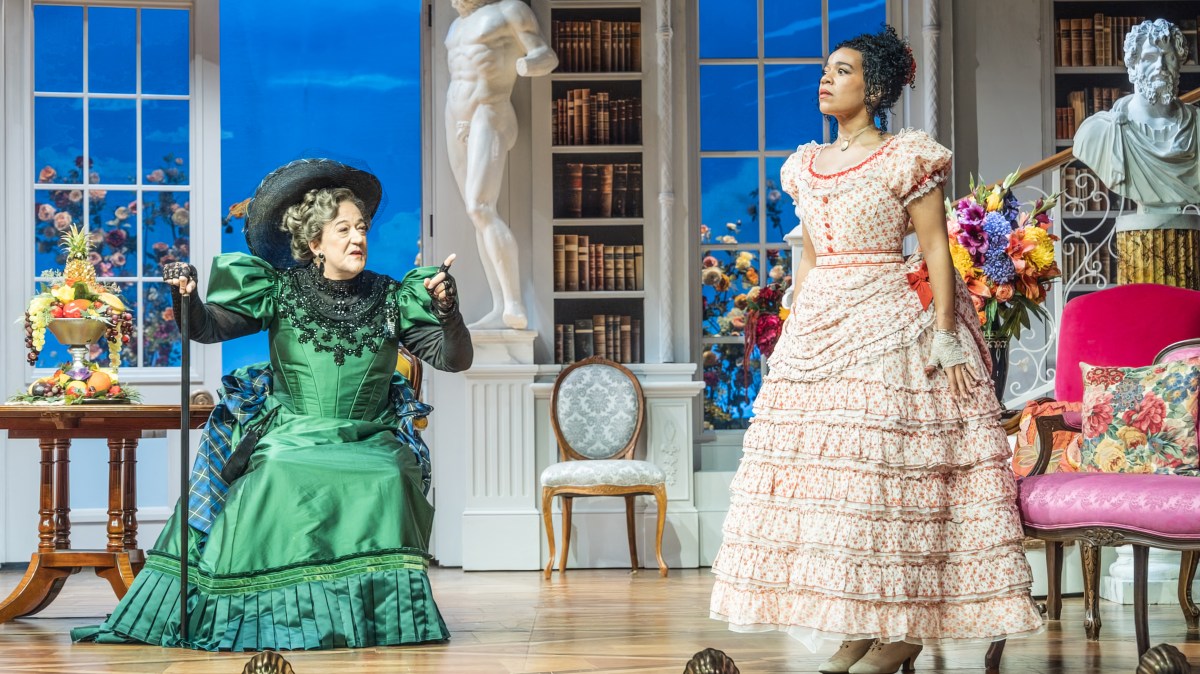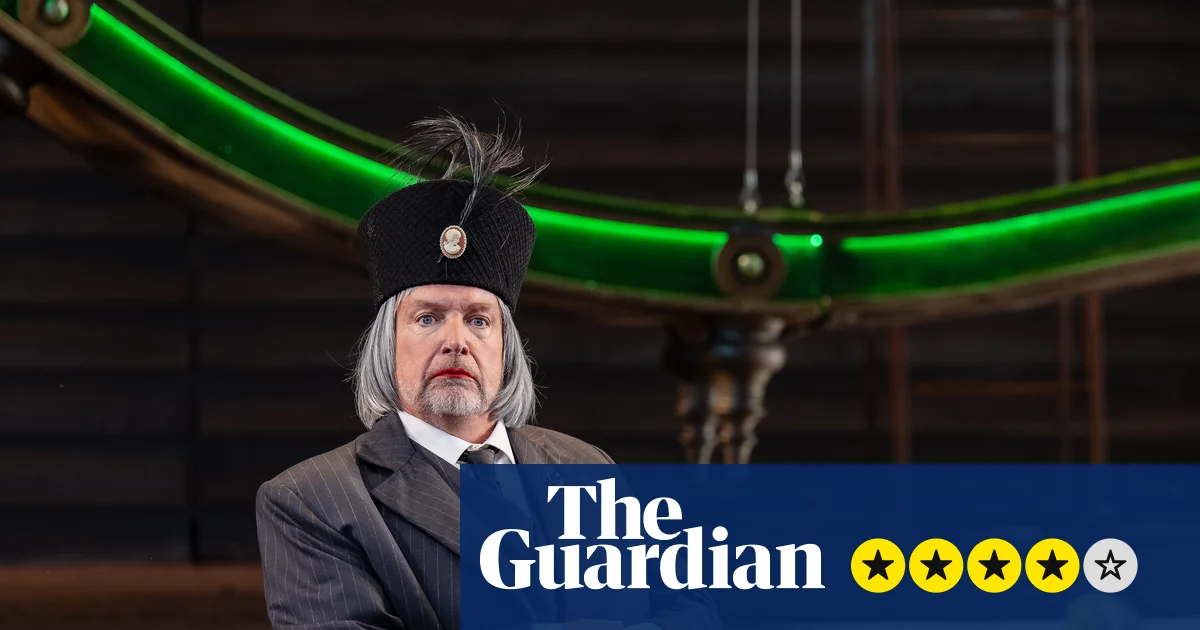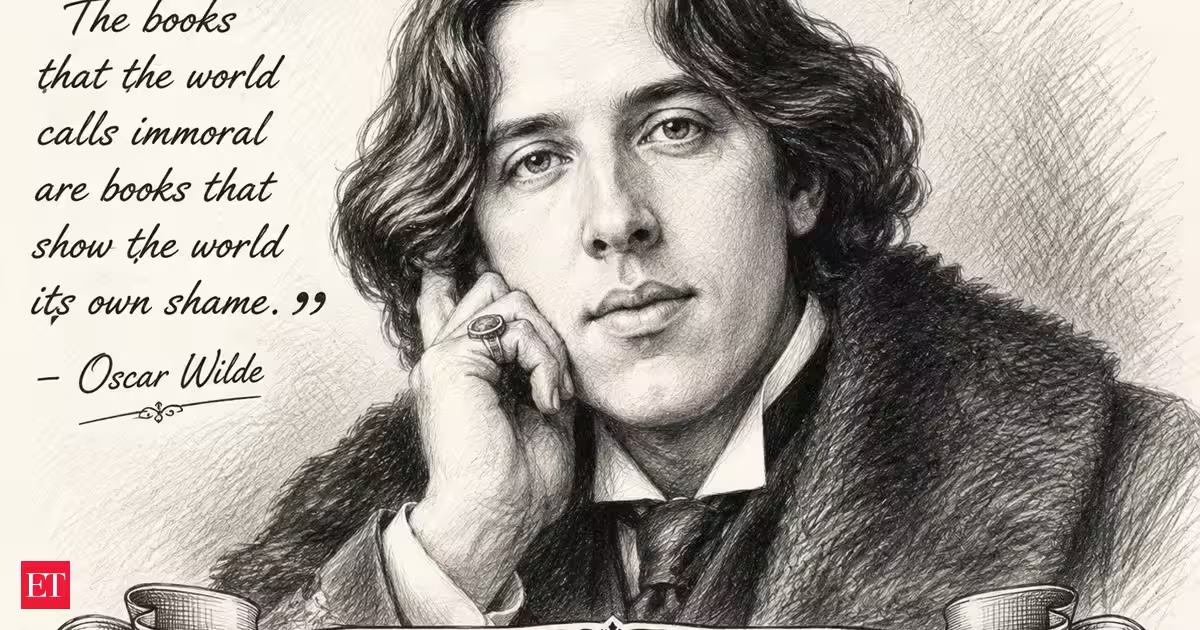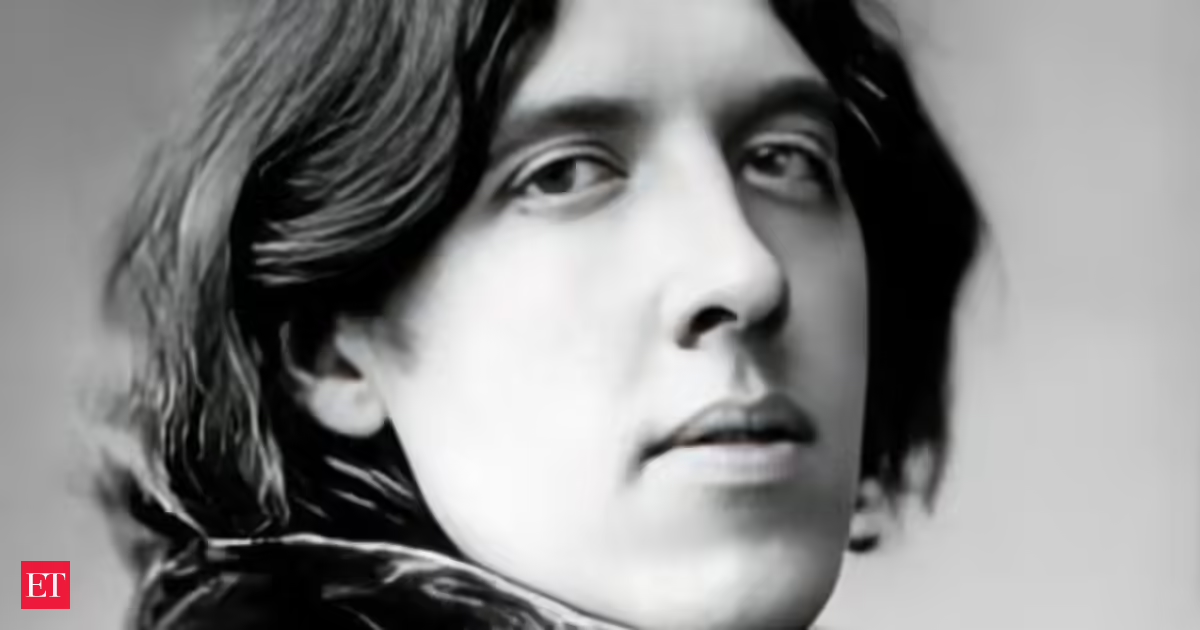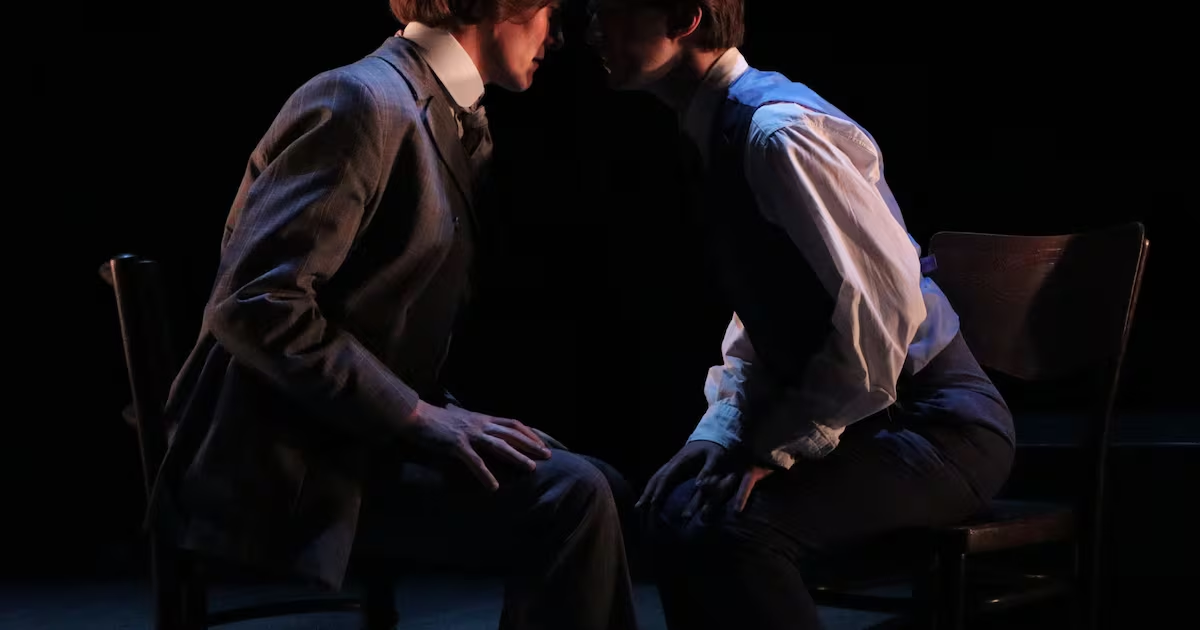
Oscar UnwrittenSamuel Beckett Theatre, Trinity College Dublin★★★☆☆Dublin theatre has gone Wilde. There’s his own play An Ideal Husband – an eyesore of bright pastel colours – which is coming to the end of its run at the Gate, alongside two plays about his life: Work Is the Curse of the Drinking Classes, Neil Titley’s superb one-man portrait, performed on summer Sundays by Will Govan, at MoLI; and now Oscar Unwritten, by Tim Scott, the Samuel Beckett Theatre’s first in-house professional production. Of the three, Oscar Unwritten, which is directed by Sarah Jane Scaife, is easily the most visually accomplished. Alyson Cummins’s elegant, stylised and highly symbolic set forms an intricate mirrored box with dark gauze partitions where memory and dream play out. Figures materialise from the darkness like hallucinations. Salome dances in glittering veils while Dorian Gray glides past carrying a candlestick. The lush soundscape, together with the careful layering of projections, reflections and shifting light, creates a magical atmosphere.Scott’s premise imagines a visitation by Oscar Wilde’s ghost, played by Lórcan Strain, to his devoted friend and literary executor, Robbie Ross, played by Eoin Fullston. As Ross struggles to write Wilde’s life story after his death, the dramatist rises from his bier to ironise his friend’s attempts at hagiography.What follows is a canter through Wilde’s life, from his childhood in Dublin and his heady Oxford debating days to the glittering drawing rooms of London’s high society and, ultimately, the writer’s imprisonment and wretched final years in Paris.The play is well researched and cleverly written, but it doesn’t necessarily give a very fair picture of Wilde. In part that’s an accident of casting. Strain is obviously talented but lacks gravitas, being perhaps too young and physically slight to convincingly inhabit the role. More important are the direction and the script, which ultimately make Wilde out to be thoroughly unlikable – not because of any moral failings, whatever they might have been, but because they tend to flatten his intelligence into something so tinselly and uninteresting.Wilde’s wit was a high-wire act. He was always on the side of beauty, and that’s a fundamentally radical, even tragic position. His whimsy was a deliberate refusal to concede that life is ugly or painful, while his epigrams could be lethal.It’s extraordinarily difficult to capture that balance of pathos, self-awareness and intellectual depth. Without it, Wilde’s charm curdles into something obnoxious, a tedious university debater high on his verbal dexterity.As a play, Oscar Unwritten is a success: tightly scripted, well acted, visually impressive and consistently entertaining. As a portrait of Wilde himself, however, it’s something of a failure.Oscar Unwritten is at the Samuel Beckett Theatre until Sunday, July 26th
Oscar Unwritten review: A consistently entertaining, if misleading, portrait of Oscar Wilde
Theatre: Tim Scott’s tightly scripted, visually impressive, well-acted play struggles to match its subject’s self-awareness and intellectual depth
443 words~2 min read