Skip to Content Subscribe Our Offers My Account Manage My Subscriptions FAQ Newsletters Canada Canadian True Crime Canadian Politics Health World Israel & Middle East Financial Post NP Comment Longreads Puzzmo Diversions Comics NP News Quiz New York Times Crossword Horoscopes Life Eating & Drinking Style Sponsored Play for Ontario Travel Travel Canada Travel USA Travel International Cruises Travel Essentials Culture Books Celebrity Movies Music Theatre Television Business Essentials Advice Lives Told Tails Told Shopping Buy Canadian Home Living Outdoor Living Kitchen & Dining Tech Style & Beauty Personal Care Entertainment & Hobbies Gift Guide Travel Guide Amazon Prime Day Deals Savings National Post Store More Sports Hockey Baseball Basketball Football Soccer Golf Tennis Driving Vehicle Research Reviews News Gear Guide Obituaries Place an Obituary Place an In Memoriam Classifieds Place an Ad Celebrations Working Business Ads Archives Healthing Epaper Manage Print Subscription Profile Settings My Subscriptions Saved Articles My Offers Newsletters Customer Service FAQ Newsletters Canada World Financial Post NP Comment Longreads Puzzmo Diversions Life Shopping Epaper Manage Print Subscription HomeNewsCanadaFour in 10 Canadian manufacturers plan to move production to the U.S.: KPMG pollSurvey data shows many firms are delaying capital investment in Canada amid an increasingly uncertain trade environmentLast updated Jul 08, 2026 You can save this article by registering for free here. Or sign-in if you have an account.Trade uncertainty is prompting more Canadian manufacturers to shift production to the U.S. and delay investments in Canada, a new survey finds. Photo by Peter Power /Peter PowerThe ongoing and intensifying trade uncertainty with the U.S. is leading a growing number of Canadian manufacturers to move or plan to move some of their production south and a majority are holding back on investing in Canada, according to a new survey.Enjoy the latest local, national and international news.Exclusive articles by Conrad Black, Barbara Kay and others. Plus, special edition NP Platformed and First Reading newsletters and virtual events.Unlimited online access to National Post.National Post ePaper, an electronic replica of the print edition to view on any device, share and comment on.Daily puzzles including the New York Times Crossword.Support local journalism.Enjoy the latest local, national and international news.Exclusive articles by Conrad Black, Barbara Kay and others. Plus, special edition NP Platformed and First Reading newsletters and virtual events.Unlimited online access to National Post.National Post ePaper, an electronic replica of the print edition to view on any device, share and comment on.Daily puzzles including the New York Times Crossword.Support local journalism.Create an account or sign in to continue with your reading experience.Access articles from across Canada with one account.Share your thoughts and join the conversation in the comments.Enjoy additional articles per month.Get email updates from your favourite authors.Create an account or sign in to continue with your reading experience.Access articles from across Canada with one accountShare your thoughts and join the conversation in the commentsEnjoy additional articles per monthGet email updates from your favourite authorsSign In or Create an AccountorThe 2026 KPMG Canada manufacturing poll found that four in 10 (42 per cent) firms have shifted or are planning to shift production to the U.S., 29 per cent of which have already done so with some or all of it.The other 13 per cent are planning to and 77 per cent of those anticipate pulling the trigger within two years under the current operating environment.Get a dash of perspective along with the trending news of the day in a very readable format.By signing up you consent to receive the above newsletter from Postmedia Network Inc.A welcome email is on its way. If you don't see it, please check your junk folder.The next issue of NP Posted will soon be in your inbox.We encountered an issue signing you up. Please try againAnamika Gadia, KPMG Canada partner and national leader of industrial markets, said while Canadian manufacturing still has a part to play in North America, “the question is how strong that position will be.“While most manufacturers are staying, many are reassessing where future investment, growth and production will occur,” she said in a press release. “The decisions made today will shape Canada’s manufacturing sector for years to come.”Of the businesses on the move or preparing for it, the majority (49 per cent) are businesses with annual gross revenue of more than $300 million, most of which (38 per cent) have already made the move in full or in part. A third (34 per cent) of companies generating under $300 million in revenue have moved or are planning to, only a fifth (20 per cent) of which have taken any action.“Taken together, size does not change the direction of travel, but it does influence the pace,” KMPG noted.“Larger, more globally integrated firms are responding earlier and at greater scale, while smaller firms remain earlier in the cycle. This highlights both the potential scale of the shift and the likelihood that similar patterns may emerge across other sectors.” Workers assemble a Bombardier Challenger aircraft under construction at the Bombardier manufacturing facility in Montreal. Photo by GRAHAM HUGHES /AFP via Getty ImagesA third (32 per cent) of respondents reported “higher margins when producing and selling within the U.S. than when exporting from Canada” and slightly more still (35 per cent) attested to “stronger margins on international sales from the U.S.”Outside of the tariffs, other reasons firms are choosing to migrate south are lower operating costs in some states, a more favourable tax environment and easier supply chains if their customers are already in the U.S.Asked what would make them stay, the owners, corporate executives and decision makers of 275 companies polled said certainty around free trade, continued tariff relief, lower corporate taxes, cheaper energy, better access to skilled workers and lower housing costs for workers.The survey also revealed that capital investment projects have been “paused, reduced or cancelled” by 57 per cent of firms, and 42 per cent are doing the same with their research and development.About half (52 per cent) said they were just trying to weather the economic tempests largely precipitated by U.S. President Donald Trump and his administration’s trade policies.Gadia said that whereas the first year of trade uncertainty brought on by Trump’s tariffs had companies focused on survival, “businesses can only operate in endurance mode for so long.”“At some point, uncertainty begins to shape long-term decisions about where investment, production and growth will occur.”According to the survey, 61 per cent said they couldn’t stay in business without access to the U.S. market and while most export internationally, almost all of them (96 per cent) say their products qualify for tariff-free treatment under the Canada-U.S.-Mexico Agreement.The deadline to renew the deal passed on July 1 as the Trump administration opted for an annual review instead of a 16-year extension.Regardless, they’re still worried about the long-term business environment.“While tariffs are an obvious factor, Canadian manufacturers are making long-term decisions about where to locate based on a broader assessment of where they are most likely to have a competitive advantage,” said Joy Nott, KPMG Canada partner in trade and customs.She highlighted an executive order from the White House in June that could require foreign companies to own a certain amount of physical assets in the U.S. in order to import goods under their own name.“Otherwise, Canadian exporters may have to depend on U.S. customers to act as importer of record, potentially straining key commercial relationships,” she wrote.Canadian firms aren’t abandoning the country entirely — 80 per cent said they’ll maintain headquarters in Canada and 60 per cent “report significant spending on advanced manufacturing and robotics.”Moreover, a majority (55 per cent) are committed to the “Buy Canadian” movement, which has reportedly been linked to sales increases (47 per cent) and improved employee morale (50 per cent).The survey, for which no margin of error was provided, was conducted May 11-29, using the Angus Reid Group’s premier business research panel.Our website is the place for the latest breaking news, exclusive scoops, longreads and provocative commentary. Please bookmark nationalpost.com and sign up for our daily newsletter, Posted, here. Join the Conversation This website uses cookies to personalize your content (including ads), and allows us to analyze our traffic. Read more about cookies here. By continuing to use our site, you agree to our Terms of Use and Privacy Policy.
Four in 10 Canadian manufacturers plan to move production to the U.S.: KPMG poll
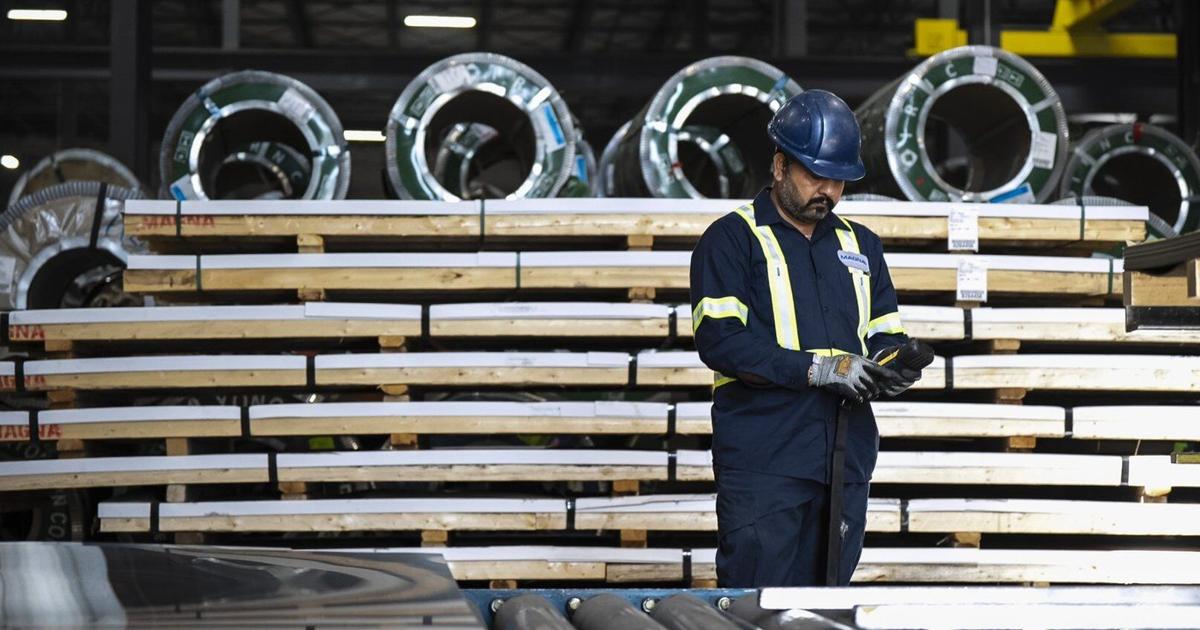
Trade uncertainty is prompting more Canadian manufacturers to shift production to the U.S. and delay investments in Canada, a new survey finds.
1,370 words~6 min read