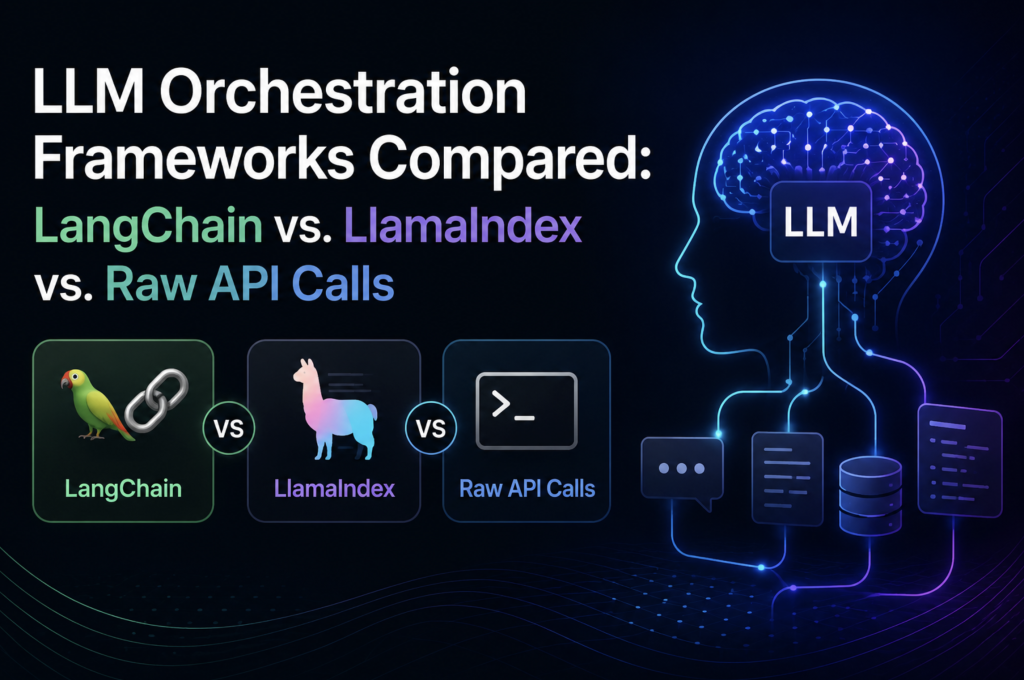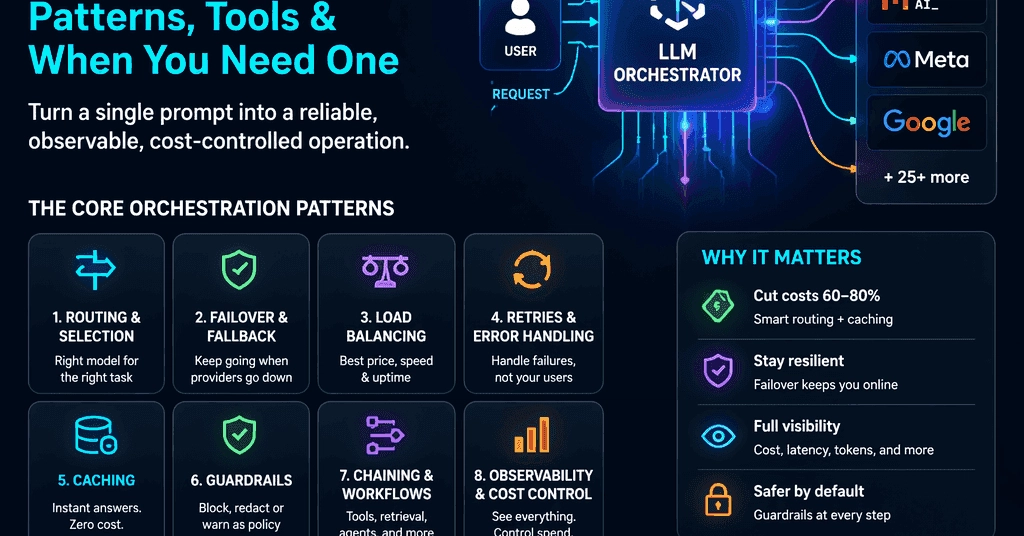
The first version of an AI feature is usually one prompt to one model. The production version almost never is. It's a model choice that depends on the task, a fallback when the provider is down, a retry when the JSON comes back malformed, a cache for repeated questions, and a budget guardrail so a runaway loop doesn't cost a fortune. The discipline of coordinating all of that into one reliable flow is LLM orchestration — and the layer that does it is an LLM orchestrator.
This guide explains what LLM orchestration actually means, the patterns it covers, the tools that handle it, and how to tell when you need a dedicated orchestrator versus a single API call.
What LLM Orchestration Means
LLM orchestration is the coordination of models, providers, and steps so that a single user request becomes a dependable, observable, cost-controlled operation.
It sits between your application and the model providers, and it answers questions a raw API call can't: