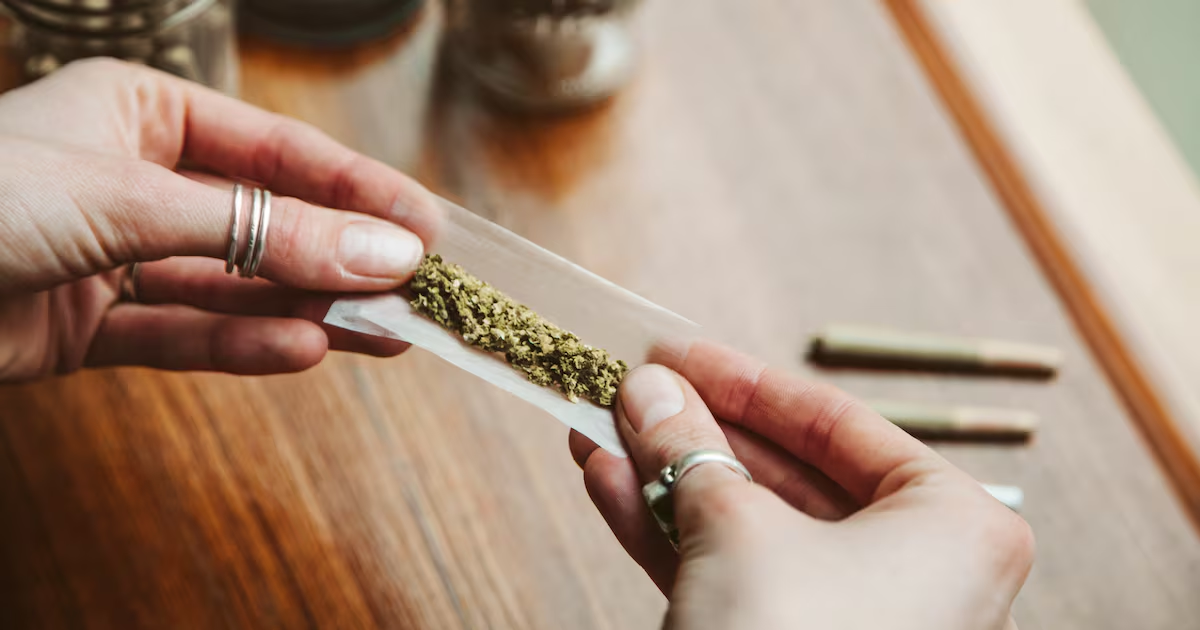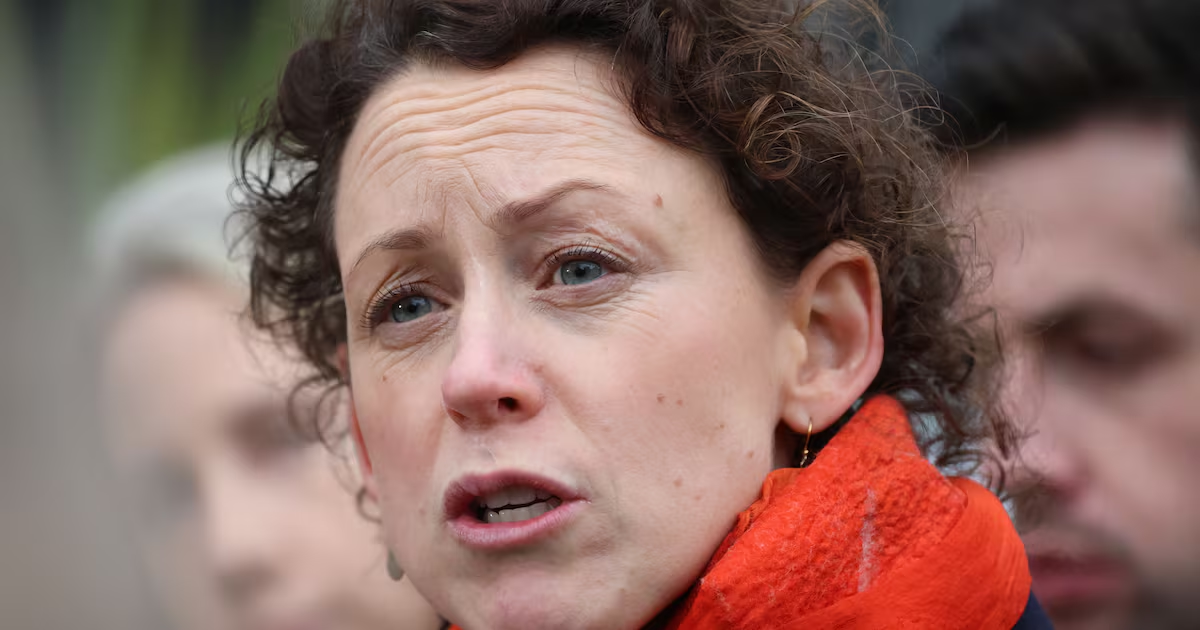
Decriminalising drugs for personal use would “undoubtedly” result in more people presenting with psychosis, a psychiatrist has said. Prof Siobhán MacHale from the College of Psychiatrists of Ireland (CPI) said Irish and international research showed cannabis can trigger psychosis “in people who are vulnerable”.Speaking at the Oireachtas Committee on Health on Wednesday, MacHale said it was “a very complicated area” and a middle ground needed to be found.“There are so many levels between the everything and nothing aspect of decriminalisation, in terms of soft redirection,” she said, referring to those using small amounts of a substance going to healthcare rather than through the criminal justice process. Dr Karen O’Connor, CPI vice-president and national clinical lead for the Early Intervention in Psychosis programme, told the committee cannabis was “by far and away the most common” drug used by young people who present with their first episode of psychosis. O’Connor said hexahydrocannabinol (HHC) vapes are still widely available, despite the fact the semi-synthetic cannabinoid was made illegal last year after being linked with psychosis.The main symptoms associated with a psychotic episode are hallucinations and disturbed thoughts.The Oireachtas Committee on Drugs Use last month recommended that possession of all drugs for personal use be decriminalised, saying people should be referred to health and addiction services as needed, rather than taken to court.In its report, the committee made 161 recommendations including the introduction of more family and community supports, although many of the proposals are unlikely to be implemented by the Government, several senior figures have indicated.With decriminalisation, drugs would remain illegal but a person found in possession for personal use would not receive a criminal sanction.Labour TD Marie Sherlock on Wednesday said that decriminalisation should “should not be seen as a black-or-white issue”. If drugs were decriminalised in the Republic, she said, additional services would need to be put in place, as set out in the report last month.Sherlock said the Government often referenced a “health diversion” approach – where people found in possession of small amounts of drugs were referred to health services rather than An Garda Síochána – already in place on a case-by-case basis. However, she said, “There is a gap between what is being said publicly and what’s happening on the ground.”She said she “very much” regretted that some psychiatrists “have publicly said they’re absolutely opposed to decriminalisation”, describing this as “a failure to engage” with the potential benefits.MacHale said she agreed with Sherlock on the need for healthcare interventions for people with addiction problems.Social Democrats TD Pádraig Rice, the committee chair, said being criminalised for possession of small amounts of drugs had “devastating impacts” on many people’s lives. Dr Louise Rooney, policy and research manager at Mental Health Reform, told the committee the current model was “institutionalising people unnecessarily”.“We’ve got prisons full of people who are non-violent, ‘revolving-door offenders’ in there on minor drug charges,” she said.Rooney said it was important to point out that decriminalisation was not the same as legalisation, whereby the importation and sale of drugs would be regulated by the State in the same way as alcohol and tobacco.The committee also discussed how hospital emergency departments respond to people presenting with mental health issues.Dr Lorcan Malone, president of the CPI, said the increase in such presentations highlighted “a much wider societal issue” related to “housing and homelessness, substance misuse, loneliness, lack of other community services supports, poverty and many other factors”.Malone said the percentage of the health budget allocated to mental health “remains approximately half what it needs to be” and should be increased to improve service provision and staffing levels.“Teams without a full complement of clinicians will inevitably lead to longer waiting lists. As a consequence, patients become more unwell and are far more likely to resort to the emergency department for help.”
Decriminalisation would spark increase in drug-induced psychosis, committee told
Oireachtas Committee on Health hears submissions from College of Psychiatrists in Ireland and Government TDs
630 words~3 min read