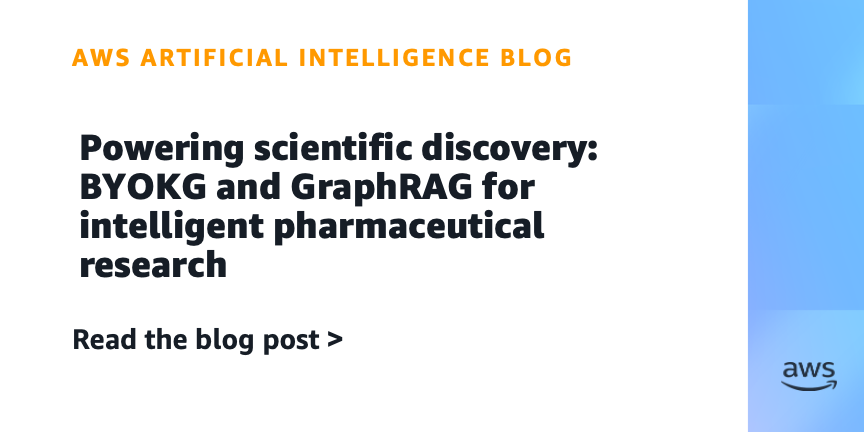
In pharmaceutical research, scientists face a fundamental challenge: accessing and connecting the vast amount of scientific knowledge scattered across disparate systems. From published literature and internal lab notes to genomics databases, critical insights remain trapped in silos, making it difficult for researchers to form comprehensive connections and generate promising hypotheses. This fragmentation slows down the drug discovery process. It also risks valuable institutional knowledge being lost as researchers transition, ultimately affecting the industry’s ability to research and develop efficiently. The need for a solution that can intelligently bridge these knowledge gaps while maintaining scientific integrity has become increasingly important.
The challenge: Scattered data across fragmented systems
At leading pharmaceutical companies, researchers face a critical challenge in early-stage drug discovery, where traditional methods yield only a 5 percent success rate and initial screening takes over six months. Scientists struggle to connect insights buried across fragmented systems such as PubMed, internal lab notes, and genomics databases, all while racing against competitors and time constraints. The scattered nature of data leads to redundant work and missed opportunities. It also makes it difficult to trace the evidence trail needed for regulatory approval. When researchers depart, they often take valuable tacit knowledge with them, further compromising the institutional memory needed for breakthrough discoveries.
 aws.amazon.com