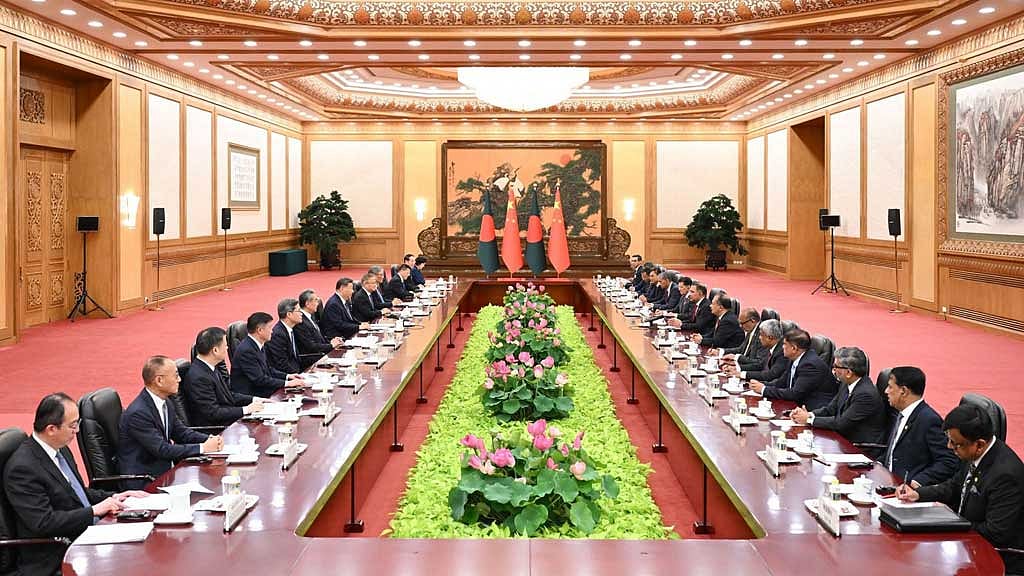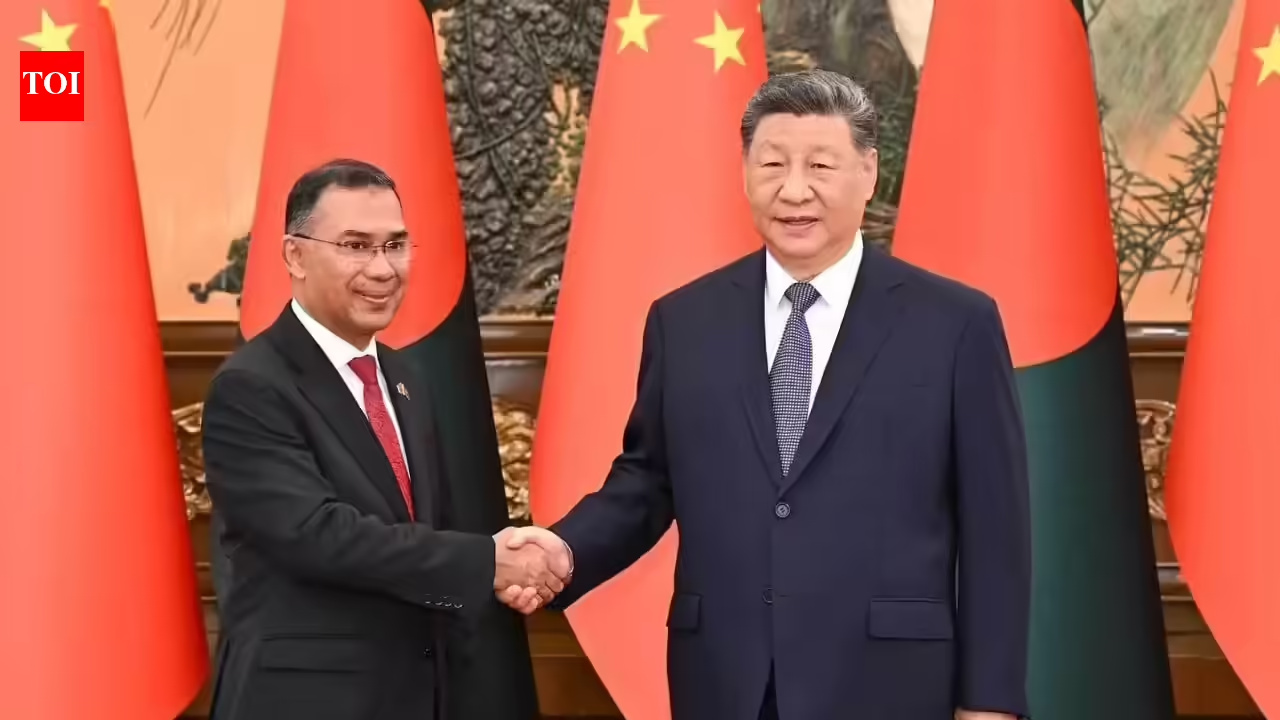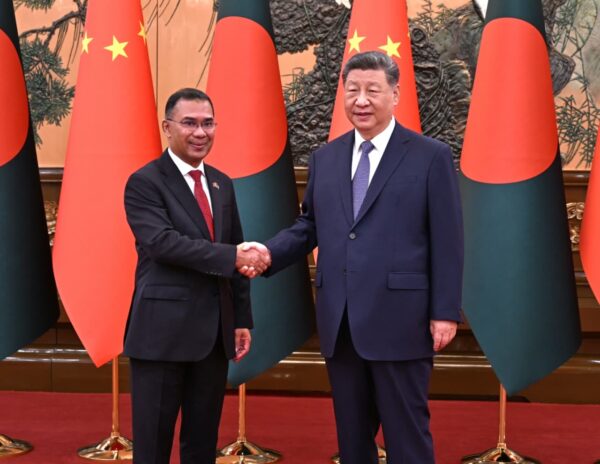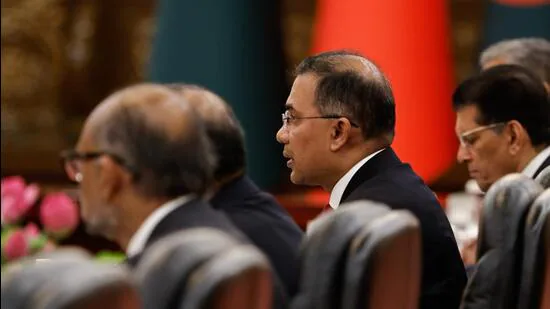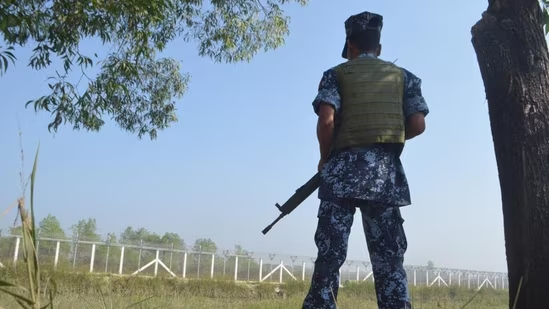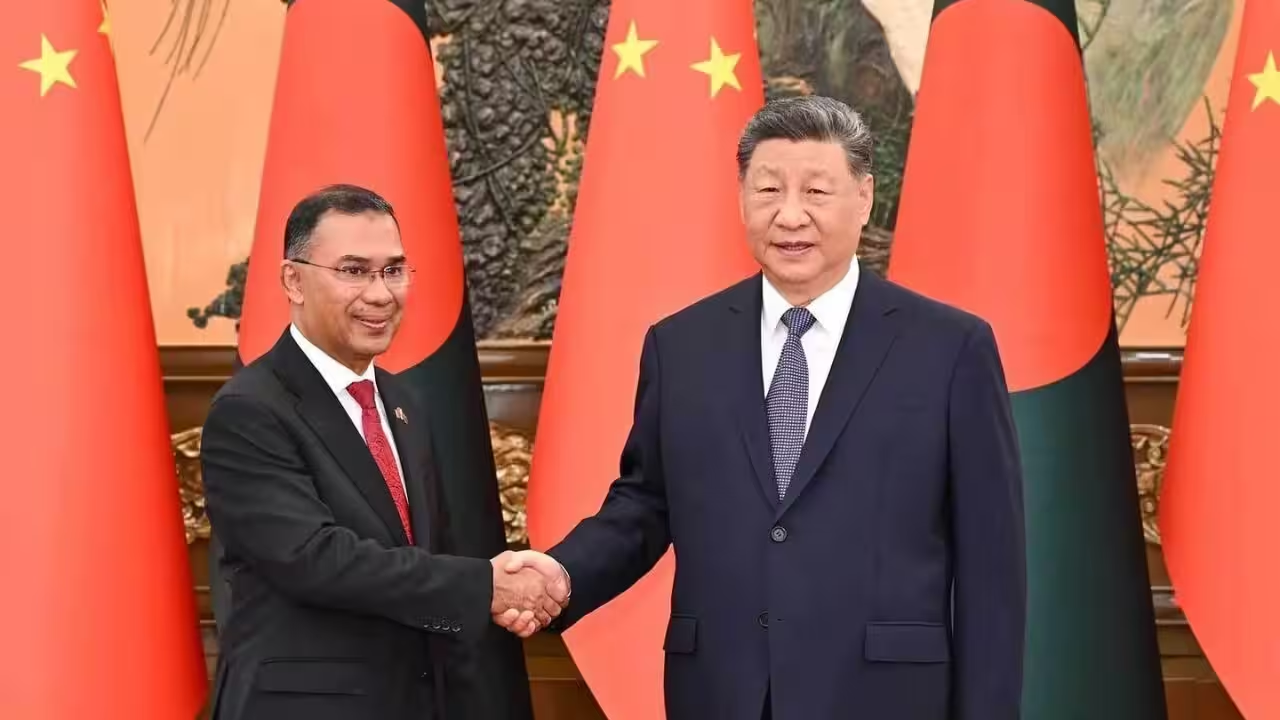
Bangladesh PM Tarique Rahman and Chinese President Xi Jinping in BeijingChina has revived a decades-old connectivity idea in a new form, proposing a China-Bangladesh-Myanmar Economic Corridor (CBMEC).Also Read: Beijing pushes for a China-Pakistan-style economic corridor with Bangladesh and MyanmarThe proposal, discussed during Bangladesh Prime Minister Tarique Rahman’s recent state visit to Beijing, is a reworked version of an earlier plan that ultimately failed to materialise — a four-country economic corridor linking Bangladesh, China, India and Myanmar.For India, the significance of CBMEC lies in the project’s strategic geography. If realised, the corridor would give China overland access to the Bay of Bengal through Myanmar and Bangladesh, expanding Beijing’s presence in India’s eastern neighbourhood.China’s renewed push also comes at a time when New Delhi is trying to rebuild ties with Dhaka following political changes in Bangladesh. It also follows Myanmar’s military-backed President Min Aung Hlaing’s visit to India, underscoring the renewed diplomatic focus on the region.The proposal has, therefore, revived debate over China’s regional connectivity ambitions and what they could mean for India’s strategic interests.A revived corridor, without IndiaThe proposed CBMEC builds on the existing China-Myanmar Economic Corridor, which stretches around 1,700 kilometres from Kunming in China’s Yunnan province to the Kyaukphyu Special Economic Zone in Myanmar’s Rakhine state.CBMEC itself is envisaged to begin in Kunming and run to Mandalay in Myanmar. From there, it would split into two branches — one heading to Yangon, Myanmar’s former capital and commercial hub, and the other to Kyaukphyu, a deep-sea port in Rakhine state. The route would then extend from Rakhine towards Bangladesh’s Chattogram and Mongla ports on the Bay of Bengal.Route of proposed China-Bangladesh-Myanmar Economic CorridorIf built, the project would give China direct overland access to Bangladesh's Chattogram and Mongla ports on the Bay of Bengal.According to Antara Ghosal Singh, a China Fellow at the Observer Research Foundation (ORF), Beijing is “re-upping its BCIM minus India plan” at a time when its China-Pakistan Economic Corridor (CPEC) has stalled. The more immediate triggers, she noted, are the changing dynamics between New Delhi and Dhaka and the continuing uncertainty in Myanmar.“China has long proposed the BCIM. India initially showed interest in it but later declined. Now that CPEC is stalled, China is re-upping its BCIM minus India plan,” Singh, a specialist in Chinese foreign policy, told The Times of India.BCIM refers to the Bangladesh-China-India-Myanmar Economic Corridor. The precursor to the proposed CBMEC, this unrealised four-nation trade corridor traces its origins to 1999. The idea gained momentum in 2013, when Beijing and New Delhi agreed to study a corridor linking Kunming with Kolkata via Mandalay and Dhaka, following which China hosted the first meeting of the BCIM Joint Study Group.Bangladesh-China-India-Myanmar corridorHowever, the project gradually stalled as India grew increasingly wary of China’s expanding strategic footprint and opposed Beijing’s attempt to bring the corridor under the Belt and Road Initiative (BRI). Relations between the two countries deteriorated further amid border tensions, and by 2019 the BCIM corridor had been removed from the BRI umbrella.Why CBMEC matters to India For India, the project carries implications that go beyond economics.Through CPEC, which New Delhi strongly opposes because it passes through Pakistan-occupied Kashmir (PoK), China already enjoys access to the Arabian Sea on India’s western flank. A successful CBMEC would give Beijing greater access to the Bay of Bengal on India’s eastern flank as well.Satyendra Pradhan, a former deputy national security advisor, called it part of China’s policy of creating a "string of pearls".“China has followed systematically the policy of creating a string of pearls around India. It considers India its strategic rival in South Asia,” Pradhan said.We closely follow all such developments in our neighbourhood and take appropriate measures as requiredMinistry of External AffairsHe listed three key concerns for India: expanding Chinese influence in Bangladesh and Myanmar, a possible increase in the inflow of smuggled Chinese goods into India, and a greater presence of the People’s Liberation Army Navy near India’s maritime boundaries.Pradhan argued that these developments underscore the need for India to closely monitor the proposed corridor and its strategic implications.China’s push for Bay of Bengal accessChina has presented the corridor as part of a broader push for regional connectivity. Its foreign ministry has said Beijing is willing to support Bangladesh in advancing the development of the China-Myanmar-Bangladesh Economic Corridor, while the joint communiqué issued during Rahman’s visit referred to exploring “newer options for regional connectivity”, including direct connectivity between China and Bangladesh.Separately, Beijing’s ambassador to Bangladesh, Yao Wen, said the proposed route was aimed at strengthening regional connectivity and economic cooperation. He also said China remained open to other countries, including India, joining the project if they wished to do so.We are open to other countries joining it if they are ready. But it is up to them to decideYao Wen. China's ambassador to BangladeshHowever, Singh, the ORF Fellow, said China’s interest in the corridor is also linked to its broader effort to develop its landlocked western provinces.“China is keen to explore this possibility. Access to the Bay of Bengal is crucial to developing landlocked western Chinese provinces. But it still remains a risky proposition for China,” she added.Pradhan also pointed to China’s access to Gwadar Port in Pakistan’s Balochistan province, saying that if CBMEC materialises, it could open the door to a greater Chinese naval presence in the Bay of Bengal, just as Gwadar has strengthened China’s access to the Arabian Sea. According to him, Beijing’s larger aim is to increase pressure on India in the Indian Ocean region.Gwadar Port, PakistanThe corridor could also help China reduce some of its dependence on the Malacca Strait, a key choke point through which a significant share of its energy imports and trade passes.With access to the Arabian Sea already available through Gwadar and CPEC, access to the Bay of Bengal would further extend Beijing’s strategic reach into a region where India has traditionally been the dominant power.How India-Bangladesh and India-Myanmar ties could shape CBMEC project Despite China’s push, whether the project takes shape will depend largely on Bangladesh and Myanmar.Bangladesh has witnessed significant political upheaval over the past two years, while Myanmar continues to grapple with the fallout of the 2021 coup, in which Min Aung Hlaing overthrew the civilian government and seized power.Singh noted that given the political situation in Bangladesh and Myanmar, China’s experience is unlikely to be very different from India’s. New Delhi, too, has infrastructure and connectivity projects with both countries that have been affected by political turbulence.“Stability is yet to return to Myanmar and the Bangladesh government is still very new. India has its own infrastructure development plans with both countries. But these projects have been impacted by the ongoing political turbulence. Chinese experience will also not be any different,” she observed.The proposed corridor also faces a major hurdle in Myanmar’s Rakhine state, through which much of the route would pass.The Myanmar government has lost control of much of Rakhine to the rebel Arakan Army, which now controls most of the state’s townships, including large areas along the Bangladesh border. However, the government continues to hold Sittwe, the state capital, and the port town of Kyaukphyu, home to the proposed deep-sea port that is central to the corridor.Myanmar ethnic violenceTaken together, these challenges mean it remains to be seen how quickly China can push the project forward.The road aheadAccording to experts, Bangladesh is poised to emerge as a regional transit hub if the project moves forward, with investments expected in its port and transport infrastructure.Yet, for now, Dhaka has adopted a cautious approach to China’s proposal. Foreign minister Khalilur Rahman has said the government is still examining the plan and has not taken a position on it. He added that any overland route through Myanmar would depend on the restoration of peace in Rakhine, which has been ravaged by armed conflict and civil unrest.India’s position, meanwhile, has already been made clear by the Ministry of External Affairs (MEA): New Delhi will closely monitor developments in its neighbourhood and take appropriate measures as required.Whether the plan eventually moves forward will depend not only on Beijing’s investment plans, but also on regional geopolitics, security conditions on the ground, and the future course of India’s ties with its two eastern neighbours.
China eyes new corridor near India: How Bangladesh, Myanmar fit into Beijing’s plan
China has revived a decades-old connectivity idea in a new form, proposing a China-Bangladesh-Myanmar Economic Corridor (CBMEC).
1,365 words~6 min read