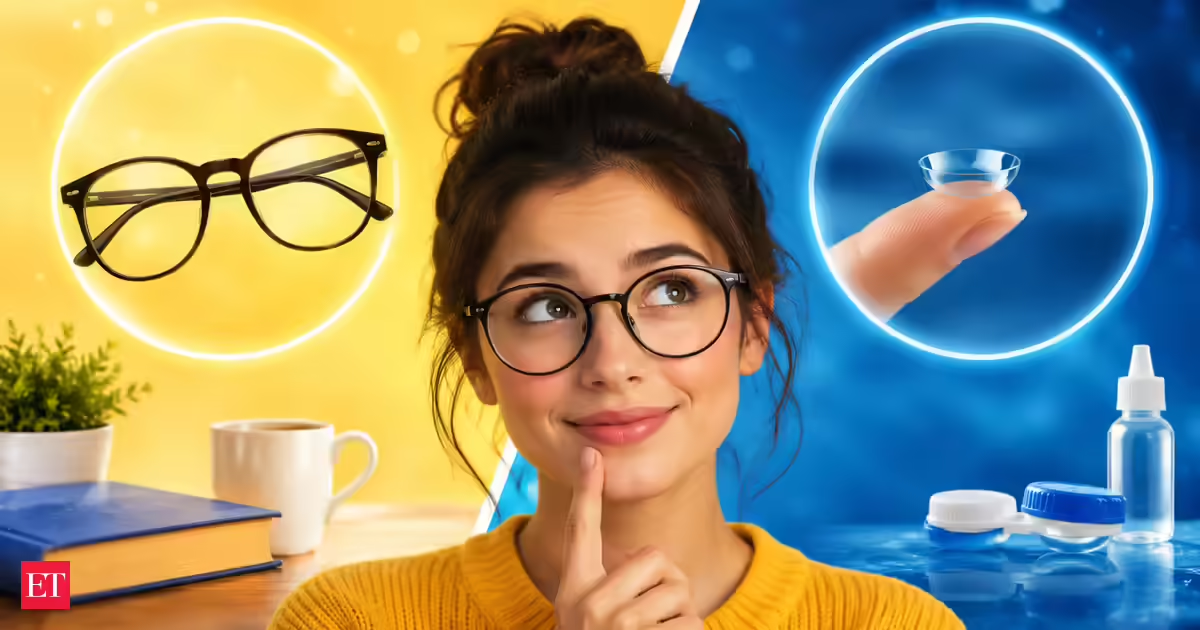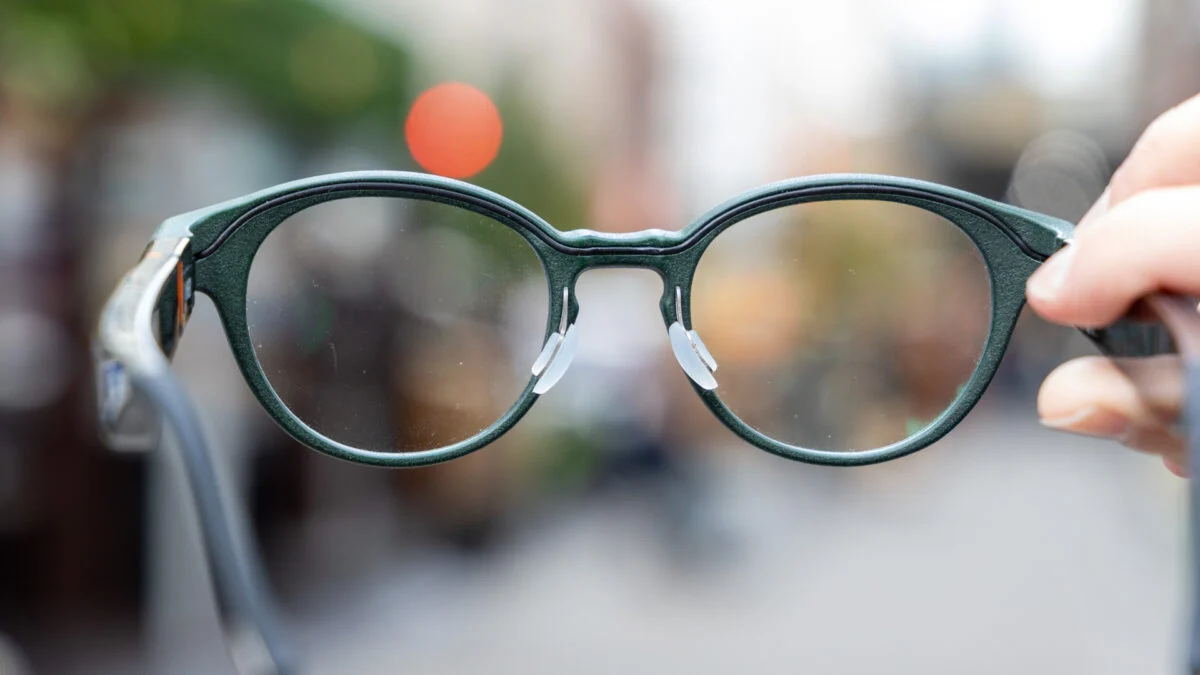
Remember the last time you went from contact lenses to glasses before a job interview or a first date? Maybe it gave you some confidence, or maybe you worried that it made you less approachable. According to Leder, Forster, and Gerger, psychologists at the University of Vienna, glasses can change how a face is perceived, and the type of frame matters more than you'd expect. Their study, ‘The Glasses Stereotype Revisited,’ published in the Swiss Journal of Psychology in 2011, ran four different experiments to test how eyewear changes first impressions.What the researchers actually didLeder and the team showed participants photos of the same faces in three versions: no glasses, full-rim glasses, and rimless glasses, then used eye-tracking equipment to see where people's eyes went, while separately asking participants to rate the faces on traits like attractiveness, intelligence, and trustworthiness. The researchers said glasses pulled viewers' attention toward the eye region of the face, regardless of frame style. That’s a subtle but interesting finding, given that we tend to read emotion and honesty from the eyes.The old stereotype, partly confirmedThis is where it gets more complicated than the usual “nerdy but smart” trope. According to Leder and colleagues, the stereotype is held, but only in part. The data did show that rimless glasses made people seem more trustworthy, but did not make faces less attractive. In other words, their findings didn’t support the “glasses make you unattractive” half of the old stereotype, but did support the intelligence and trustworthiness part.Rimless frames were found to draw more attention to the eyes. Image Credits: ChatGPTThey also discovered something unexpected about memory: faces with rimless glasses were harder to recognize and were matched less accurately in recognition tasks, which means rimless frames made people blend in more and become less distinctive to observers, the researchers note.Why this matters more now than in 2011Leder and team point out that the study was performed on a specific set of faces and a European pool of participants, and thus cannot be assumed to be a universal law of perception. But its main finding that small accessories influence snap judgements lines up with later research on first impressions.According to CNBC's coverage of the study, ‘You Can Leave Your Glasses on,’ by researchers at the University of Cologne in Germany and the University of Groningen in the Netherlands, published in the journal Social Psychology, political candidates wearing glasses were rated as more competent by voters, even when they had zero information about the candidate’s actual record. According to lead author Alexandra Fleischmann, the team had expected this, as previous research had tied perceived competence to actual success in House and Senate races. Economist Olga Shurchkov of Wellesley College cautioned that this kind of snap judgment works when voters know almost nothing else about a person, because real behavior and performance quickly override any first impression based on glasses.One accessory, a different first impression. Image Credits: ChatGPTNot every study lands the same way, either. In March 2022, AlRyalat and colleagues reported in the journal Cureus that when researchers showed 517 college students at five universities in Jordan photos of four people with and without glasses, images without glasses actually scored significantly higher across attractiveness, confidence, and intelligence ratings than the same people wearing glasses. They found that among this Jordanian, Arab-ethnicity sample, eyeglasses had a negative and not a positive effect on the perception of the wearers. This is a reminder that culture, region, and the faces used in a study can change these results. The ‘glasses mean smart’ effect is not a hard-and-fast rule of human psychology, but rather a tendency, which is more evident in some instances than others.What this means for how you show upThis doesn't mean you should run out and buy a certain frame shape to trick people into thinking you are a genius. What it does suggest, according to Leder and colleagues, is that eyewear does more communicative work than most of us give it credit for, drawing attention to the eyes and shaping snap judgements about trustworthiness.The bigger takeaway, especially for anyone navigating dating apps, LinkedIn headshots, or video interviews where a first impression takes seconds to make, is that small visual details can influence first impressions, sometimes without people noticing. Just don't expect a pair of frames to compensate for how you actually show up in the conversation that follows. According to CNBC's reporting on the election study, that illusion doesn't survive contact with real behavior. Glasses might get you a slightly kinder first impression, but what you do with it is still all up to you.
Psychology of wearing glasses: Psychology says wearing glasses changes how people see you; a 2011 study found that glasses genuinely shift how intelligent and trustworthy a face appears
Discover how wearing glasses can influence first impressions, alter perceptions of attractiveness and intelligence, and impact social interactions, according to recent psychological studies.
766 words~3 min read