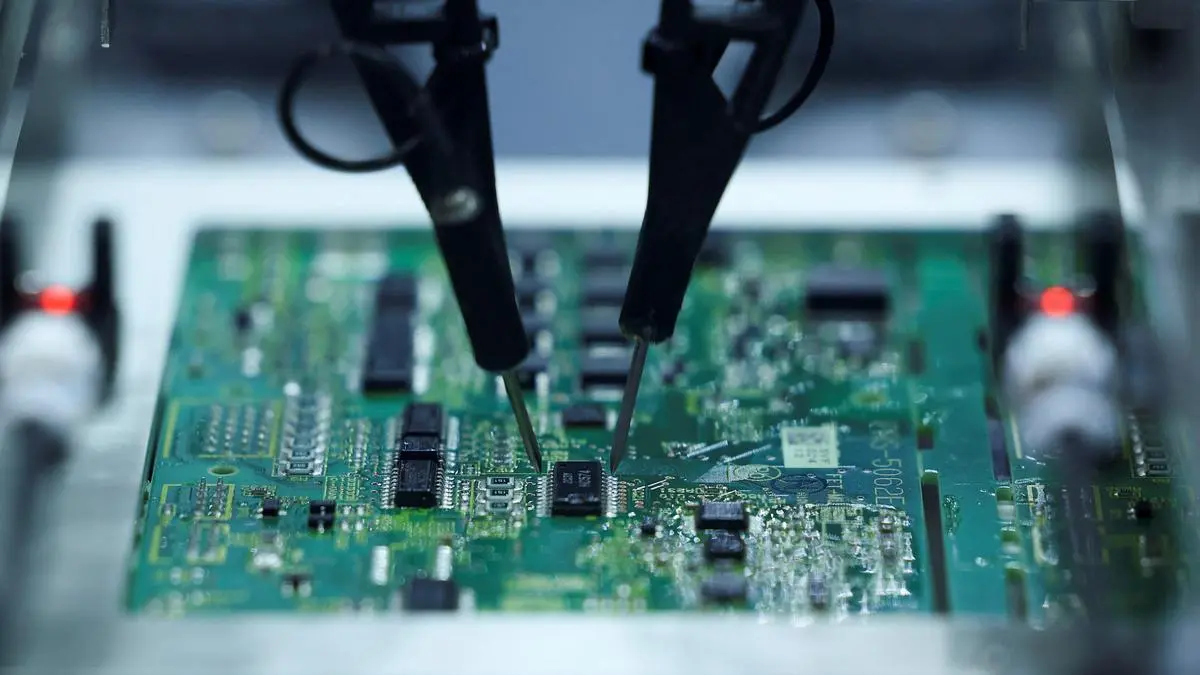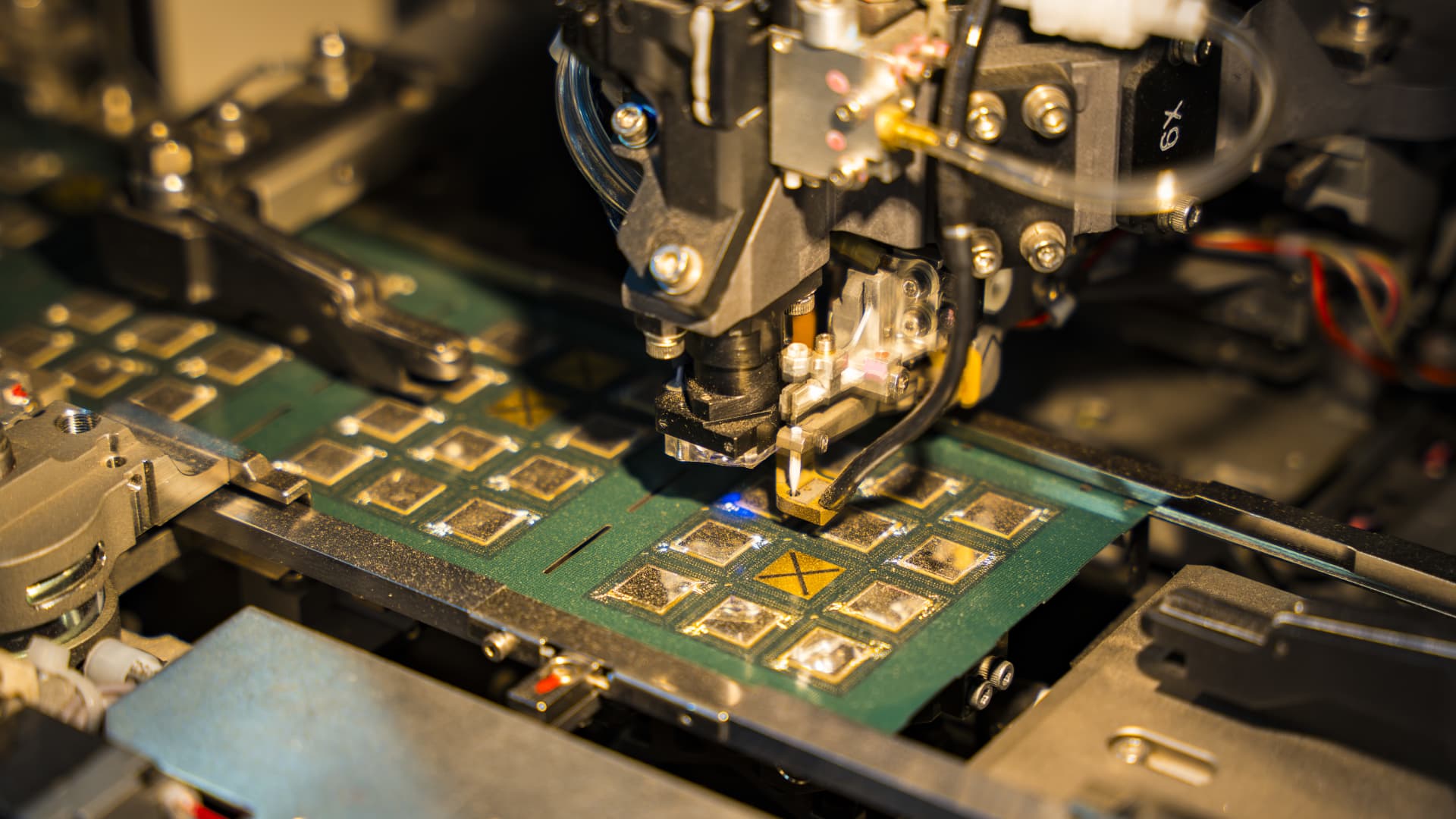
As India seeks to establish itself in the global semiconductor supply chain, industry executives are betting on Outsourced Semiconductor Assembly and Test (OSAT) facilities as the country’s most practical entry point, citing government support, rising domestic demand and supply chain diversification as key growth drivers.India has attracted around ₹64,000 crore in announced investments in OSAT and ATMP facilities under the India Semiconductor Mission (ISM). Major projects include Tata Electronics’ ₹27,000-crore assembly and test plant in Assam, CG Semi’s ₹7,600-crore OSAT unit, Kaynes Semicon’s ₹3,300-crore facility, the HCL Group–Foxconn joint venture’s ₹3,700-crore OSAT plant in Uttar Pradesh, and Suchi Semicon’s $100-million OSAT facility in Gujarat.Government push and lower investment barriers fuel OSAT growth“The OSAT momentum is the result of a convergence of government policy, industry participation, growing domestic demand, and global supply chain diversification. ISM has reduced investment risk and created confidence among global investors, while the need for resilient supply chains has encouraged companies to expand their manufacturing footprint,” Ashok Chandak, President of IESA and SEMI India, highlighted.He added that OSAT is a strategic starting point for building a globally competitive semiconductor ecosystem. It enables India to build capabilities, credibility, and ecosystem depth before moving up the value chain further.Moreover, a typical OSAT facility requires an investment of $300-$2 billion, whereas a leading-edge semiconductor fab can cost $10–$25 billion or more. OSATs also have a shorter gestation period, lower execution risk, and can reach commercial production much faster, making them an ideal entry point.“India already contributes over 20% of the world’s semiconductor design talent. By adding OSAT capabilities, India can offer a stronger end-to-end value proposition—from chip design and validation to packaging and testing,” Chandak observed.Domestic demand and supply chain shifts create new opportunitiesWhile Government incentives have accelerated investments, India’s long-term competitiveness as an OSAT destination goes beyond financial support.Ashok Mehta, Chairman of Suchi Semicon, noted that India’s electronics manufacturing sector is growing rapidly, creating strong domestic demand for semiconductors across smartphones, consumer electronics, automotive, industrial equipment and telecom. This gives OSAT players the advantage of being closer to both customers and manufacturing partners.Indian OSAT plants can also become a trusted manufacturing partner as global companies diversify their supply chains.“Businesses are looking for resilience alongside cost competitiveness, and India is well-positioned to serve as an alternative manufacturing destination. The country’s focus on developing a complete semiconductor ecosystem, including design, fabrication, packaging, testing, and supporting industries, is supporting this proposition,” Mehta emphasised.Suchi Semicon is focused on workhorse packages that power everyday electronics and automotive systems. These are high-volume, high-reliability formats that form the backbone of consumer, industrial, and automotive electronics, as India has zero domestic capacity today and 100% import dependence.Alongside assembly, it offers final test capabilities to ensure every packaged device meets electrical and reliability specifications before it ships. “We’re not just an assembly house, we’re a full OSAT partner from wafer to tested, shippable product. begin in August, shipment in September, and mass production is targeted for May 2027.”Challenges remain in building a competitive OSAT ecosystemHowever, setting up an OSAT facility requires precision manufacturing, advanced equipment, and strict quality standards. Building a globally competitive OSAT ecosystem will take sustained effort.“A big challenge is developing a robust local supply chain. Today, many critical materials, equipment, and components used in semiconductor packaging and testing are sourced globally. As the industry grows, building a stronger domestic ecosystem of suppliers will be important for improving efficiency and resilience,” Mehta observed.Another key focus area is talent development since semiconductor assembly and testing require specialised manufacturing skills. Continued collaboration between industry, academia, and skill development institutions will be essential to build this talent pipeline.OSAT is only the beginning of India’s semiconductor journeyMeanwhile, Omprakash Subbarao, CEO of CORE Labs, FSID, argued that India will not achieve a durable advantage over low-cost rivals with more than a decade of experience in high-volume packaging for semiconductor components through cost-cutting alone. Instead, the country should build capacity in assembly and testing in conjunction with power electronics.“OSAT is the most appropriate first step -- fast to carry out, and develops the worker discipline that all dependent work downstream. But neither should it be the goal. The real measure of success will be whether India can also develop capabilities in semiconductor materials, manufacturing equipment, chip design IP, and fabrication, reducing its reliance on imported technologies and components,” according to Subbarao.Chandak echoed this, adding that an OSAT is not the final destination.India should strengthen the entire semiconductor value chain by developing advanced packaging technologies, semiconductor materials, specialty chemicals, substrates, equipment manufacturing, precision engineering, EDA tools, IP development, R&D, talent development, and eventually selective wafer fabrication, he said.Published on July 8, 2026
India bets on OSAT to accelerate semiconductor manufacturing as investments reach ₹64,000 crore
India's OSAT investments top ₹64,000 crore as industry leaders back assembly and testing as the fastest route to a globally competitive chip ecosystem.
769 words~3 min read