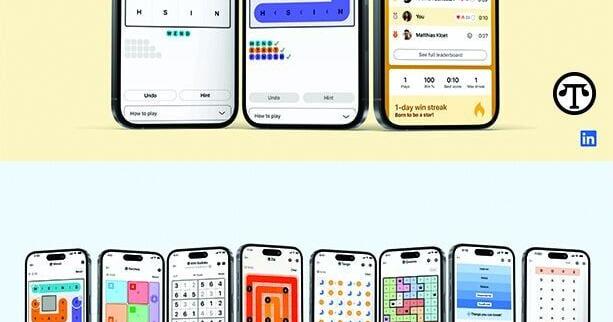
(NAPSI)—You probably know the feeling: you’ve been staring at your screen for hours, your inbox keeps growing, and your next meeting starts in five minutes.Sometimes, the best way to reset is to take a quick moment to focus on something completely different.Where to Find ItDaily puzzle games have become a popular way to take those quick mental breaks, and platforms like LinkedIn are leaning into that trend. LinkedIn’s newest game, Wend, blends word finding with logic-based problem solving. “Wend is a word-finding game where players connect letters in a grid to uncover hidden words, using every letter exactly once,” says Helen Smith, Group Product Manager at LinkedIn. “While it may seem like a traditional word game, it adds a logic twist, as players also have to figure out how the entire board fits together.”In addition to Wend, the LinkedIn games lineup includes word-based puzzles like Pinpoint and Crossclimb, alongside logic challenges like Queens, Tango, Mini Sudoku, Zip, and Patches, each offering a different way to exercise your brain throughout the day.1. Why your brain needs a recharge Stepping away from a task for even a minute or two can sometimes be exactly what’s needed to return with fresh eyes.Unlike checking email again or scrolling through your phone, a quick puzzle gives your attention something entirely different to focus on. The result is a short reset with a clear beginning and end, making it easy to fit between meetings, projects, and other responsibilities.“That’s part of the appeal of LinkedIn’s games, which can often be completed in just a few minutes,” says Thomas Snyder, LinkedIn’s Principal Puzzlemaster and 3-time World Sudoku Champion. “It’s a quick mental break that feels especially satisfying when everything clicks into place.”2. The social side of puzzle games While LinkedIn games are played individually, they can create a great opportunity for connection with others.Players often share scores with colleagues, discuss strategies, send puzzles to friends, or spark friendly competition through posts and messages. After you play a game, you’ll see how you stack up against other players you know on a leaderboard. “For people working across teams, offices, and time zones, games can provide an easy reason to reconnect,” says Lakshman Somasundaram, Senior Director of Product at LinkedIn. “A shared puzzle score, a little friendly rivalry, or a quick discussion about strategy can turn into a meaningful conversation that can open the door to new professional opportunities.”And sometimes, according to Somasundaram, that conversation can start with something as simple as, “Did you play today’s puzzle?”3. A win before the workday startsThere’s something satisfying about solving a challenge before your day fully gets underway.Completing a puzzle may not clear your inbox or finish your project plan, but it can provide a small sense of accomplishment early in the day. For many players, solving a puzzle becomes part of a daily routine—a quick challenge that helps them ease into work mode before tackling larger tasks.Learn MoreIn a workday filled with constant notifications and multitasking, a quick puzzle may be one of the simplest ways to pause, refresh, and reconnect. To try Wend and LinkedIn’s other games, visit linkedin.com/games. Word Count: 514 "“For people working across teams, offices, and time zones, games can provide an easy reason to reconnect,” says Lakshman Somasundaram, Senior Director of Product at LinkedIn."
How Playing A Quick Puzzle Can Improve Your Workday
(NAPSI)—You probably know the feeling: you’ve been staring at your screen for hours, your inbox keeps growing, and your next meeting starts in five minutes.
547 words~2 min read