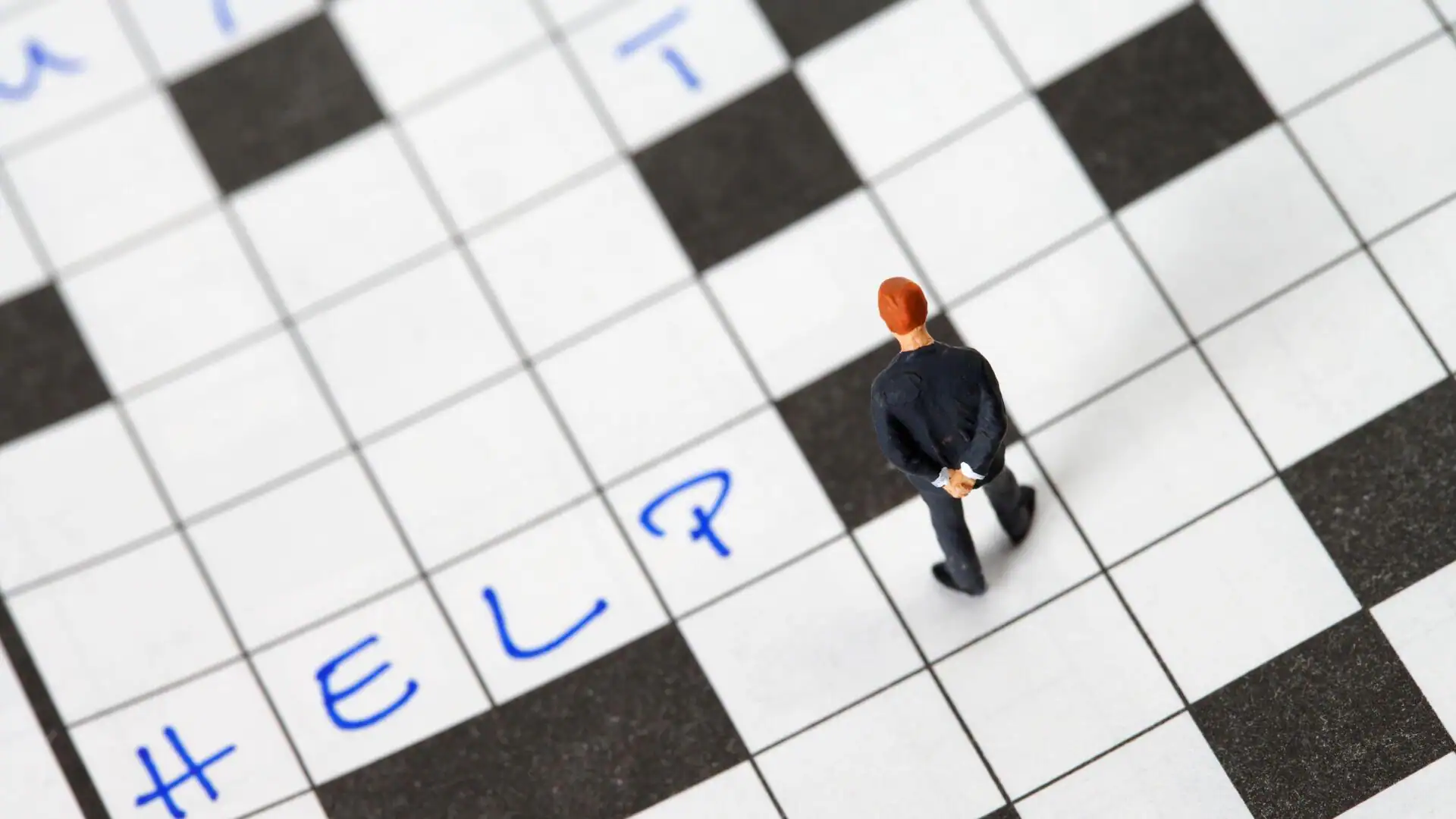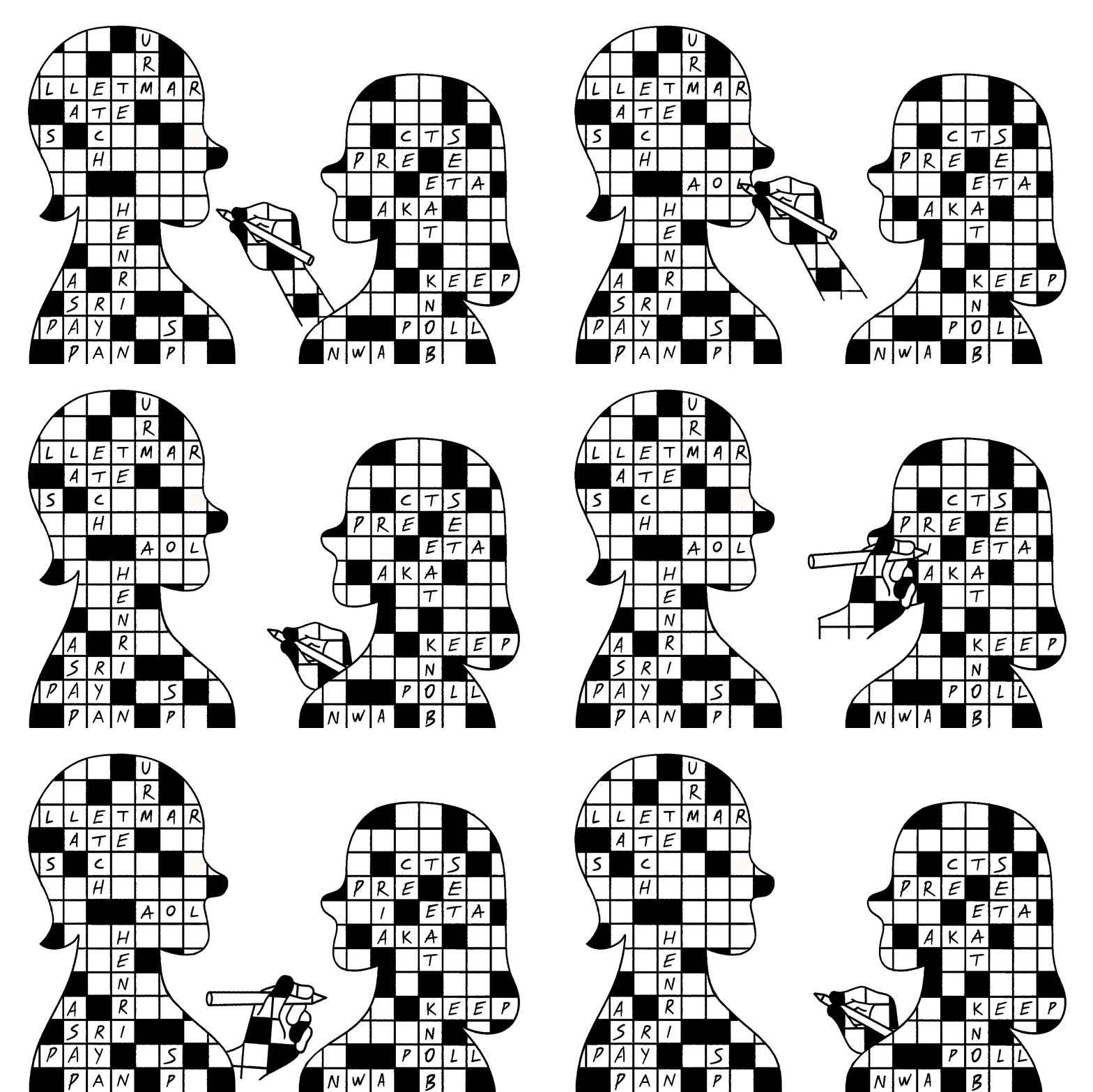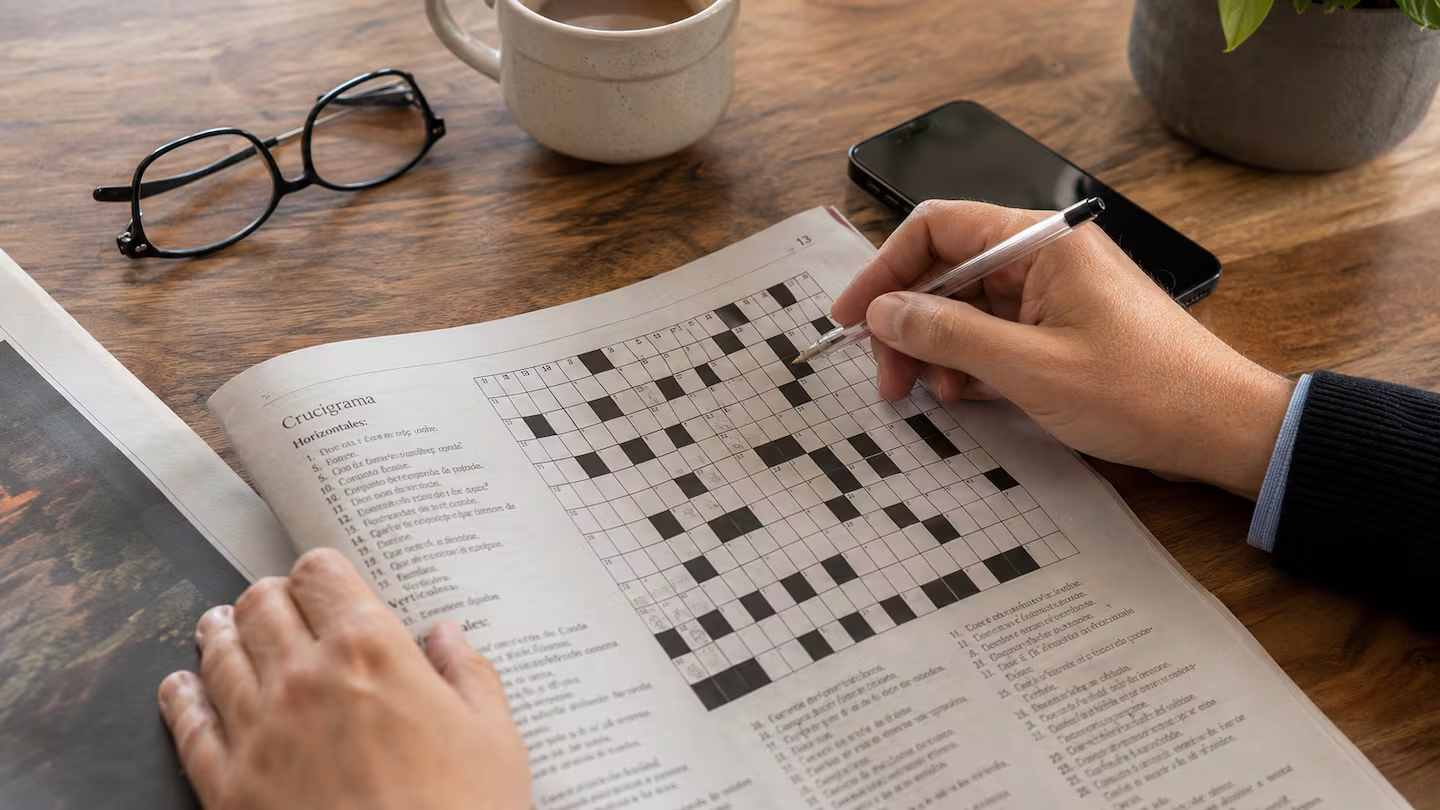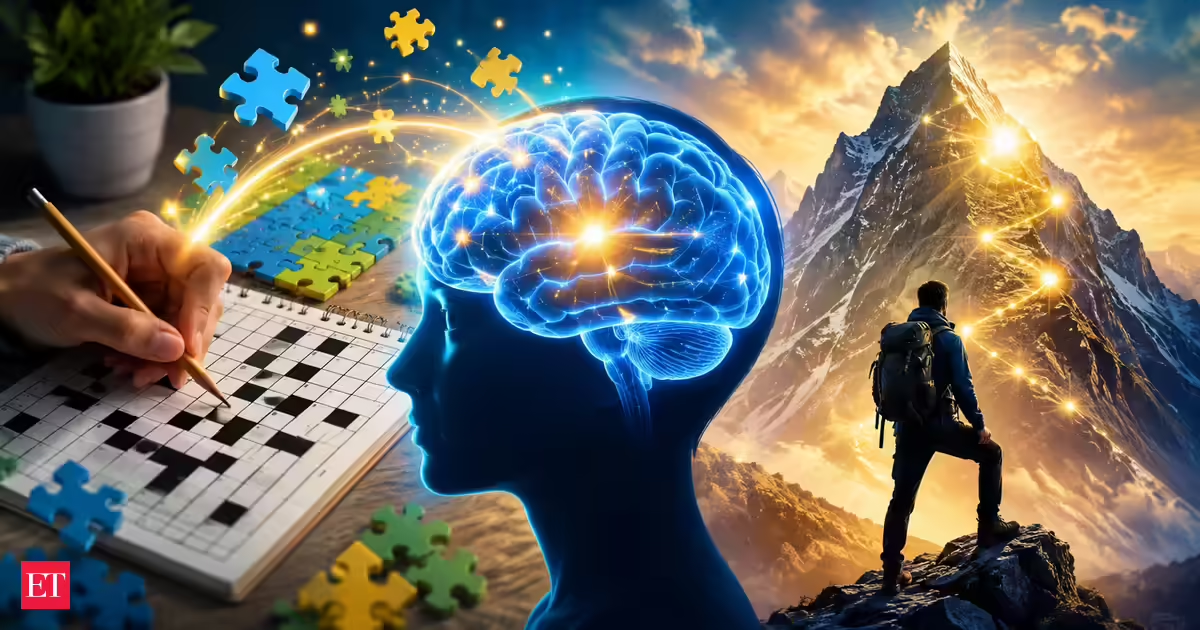
Every morning, millions of people begin their day with a crossword, Sudoku or word puzzle. Some solve them while drinking coffee. Others do them during their commute or before going to bed. To outsiders, it may look like a simple hobby. But psychology suggests something much deeper is happening. People who regularly solve puzzles are often engaging multiple systems of the brain at the same time. They are practicing attention, memory, problem-solving and mental flexibility. More importantly, they are participating in a behavior psychologists have long associated with healthy cognitive engagement. The puzzle itself may not be the story. The repeated act of challenging the brain is.Here is what psychology says may actually be happening.Psychology says people who solve puzzles are strengthening their cognitive reserveOne of the most well-researched concepts linked to lifelong learning is Cognitive Reserve Theory. Psychologist Yaakov Stern has extensively studied this idea. Cognitive reserve refers to the brain's ability to adapt and compensate as people age.Researchers believe mentally stimulating activities may help build stronger networks that make the brain more resilient over time. Crosswords, Sudoku and logic games constantly ask the brain to retrieve information, identify patterns and create connections.Think of it like building alternative roads inside a city. The more connections that exist, the more flexible the system becomes. Many older adults intentionally incorporate daily puzzles into their routines alongside reading and social activities. The goal is not to become a genius. The goal is to keep the brain active.You Might Also Like:The Theory of Deliberate Practice explains why repetition mattersAnother explanation comes from Deliberate Practice Theory, developed by psychologist K. Anders Ericsson. The theory suggests that repeated, focused practice improves performance over time. Unlike passive entertainment, puzzles require active participation. The brain cannot simply scroll and consume information. It must work. Each clue becomes a problem to solve. Each answer becomes feedback.Over time, this repeated effort strengthens problem-solving habits. This may explain why people who enjoy puzzles often appreciate intellectual challenges in other areas of life too.Psychology says puzzles train cognitive flexibilityPsychologists frequently discuss Cognitive Flexibility, the brain's ability to shift between ideas and adapt to new information. Crossword puzzles are excellent examples of this process. One clue may require historical knowledge. Another may require language skills. A third may involve abstract thinking.The brain constantly changes strategies. This flexibility is increasingly important in today's world, where people switch between tasks all day long. Researchers from the American Psychological Association have frequently highlighted cognitive flexibility as an important skill for learning, adaptation and problem-solving.You Might Also Like:The brain also enjoys small winsAnother explanation comes from Self-Determination Theory, developed by psychologists Edward Deci and Richard Ryan. The theory suggests humans are motivated by three core needs:CompetenceAutonomyConnectionPuzzles directly satisfy competence. Every solved clue creates a small sense of accomplishment. The brain receives immediate feedback. That tiny reward can become surprisingly satisfying. Many people maintain Wordle streaks, solve mini crosswords or complete brain-training apps before starting work. These small victories create momentum for the day.The Flow Theory may explain why puzzle lovers lose track of timePsychologist Mihaly Csikszentmihalyi developed Flow Theory, one of the most influential concepts in positive psychology. Flow describes a mental state where people become fully immersed in an activity. Time seems to disappear. Attention narrows. The task becomes enjoyable for its own sake. Crosswords naturally encourage flow because they balance challenge and skill.If the puzzle is too easy, people become bored. If it is too difficult, they become frustrated. The ideal puzzle sits in the middle. This balance keeps people coming back.Daily puzzles may also reduce mental clutterModern life constantly competes for attention. Phones buzz every few minutes. Emails never stop arriving. Social media rewards distraction. This is where puzzles offer something unique. Psychologists often discuss Attentional Control Theory, developed by researchers Michael Eysenck and Nazanin Derakshan.The theory explains that focused activities can strengthen attention systems by reducing interference from distractions. Puzzles demand concentration. For a brief period, the brain focuses on one thing. That can feel refreshing in a world filled with constant interruptions.Psychology says the puzzle is not the story, mental curiosity isPsychology teaches us that everyday habits often reveal deeper motivations. The crossword is not the story; it is about curiosity, consistency and mental engagement. People who solve puzzles every day are often permitting themselves to stay intellectually active. They are choosing challenge over passive consumption. That does not mean puzzle lovers are smarter than everyone else.It simply means they have developed a habit that encourages the brain to keep working. And perhaps that is why this simple activity has survived for generations. Because humans do not just enjoy finding answers. They enjoy discovering that they are still capable of learning something new every single day.FAQsIs solving crosswords every day good for the brain?Research suggests mentally stimulating activities may help support attention, memory and cognitive resilience.Do puzzles increase intelligence?There is no strong evidence that puzzles directly increase overall intelligence, but they can strengthen specific cognitive skills.
Psychology says people who solve crosswords and puzzles every day aren't just passing time, they may be training their brains to handle bigger challenges
Psychology teaches us that everyday habits often reveal deeper motivations. The crossword puzzle itself is rarely the real story. More often, it is about satisfying a need for curiosity, creating a sense of consistency, and keeping the mind actively engaged.
825 words~4 min read