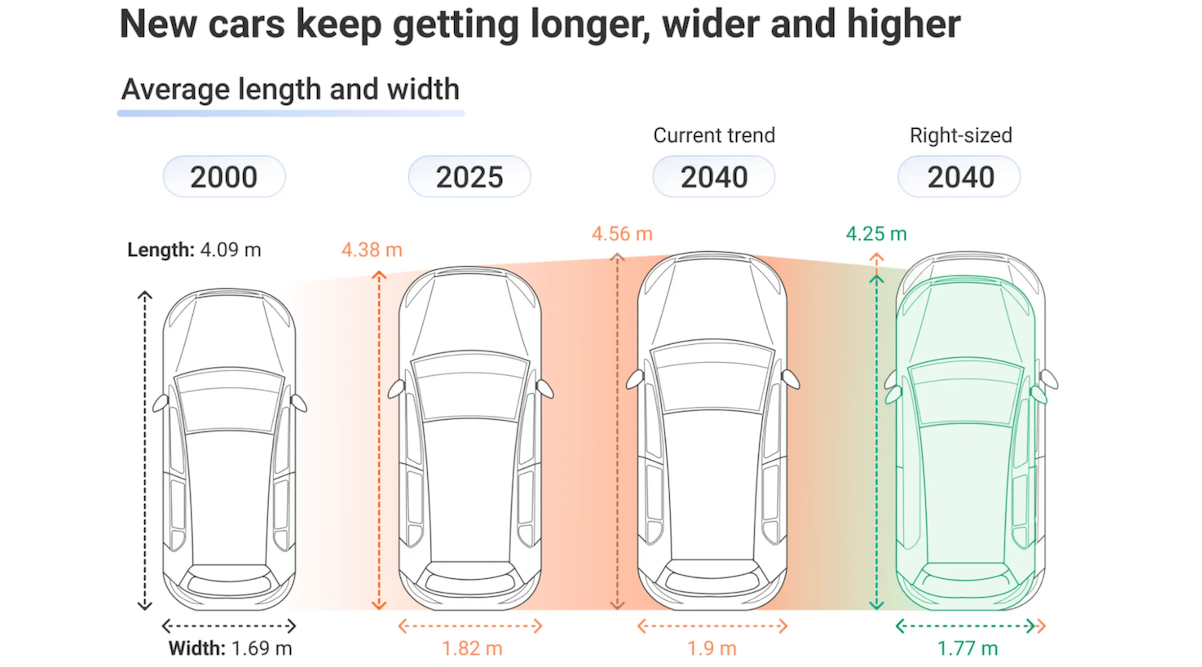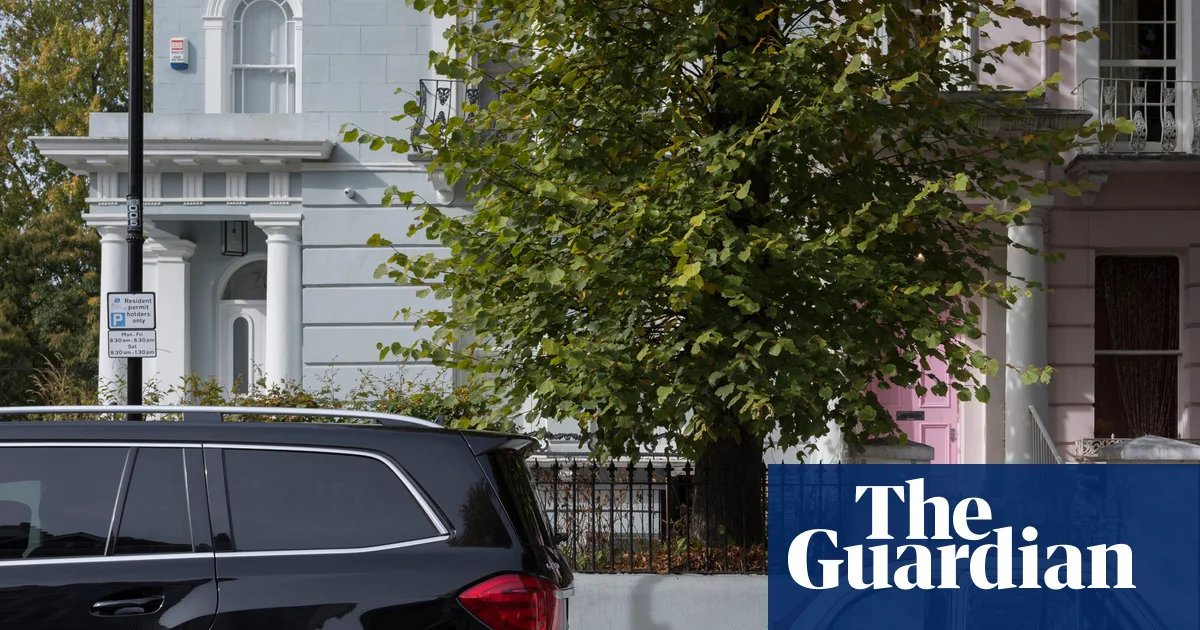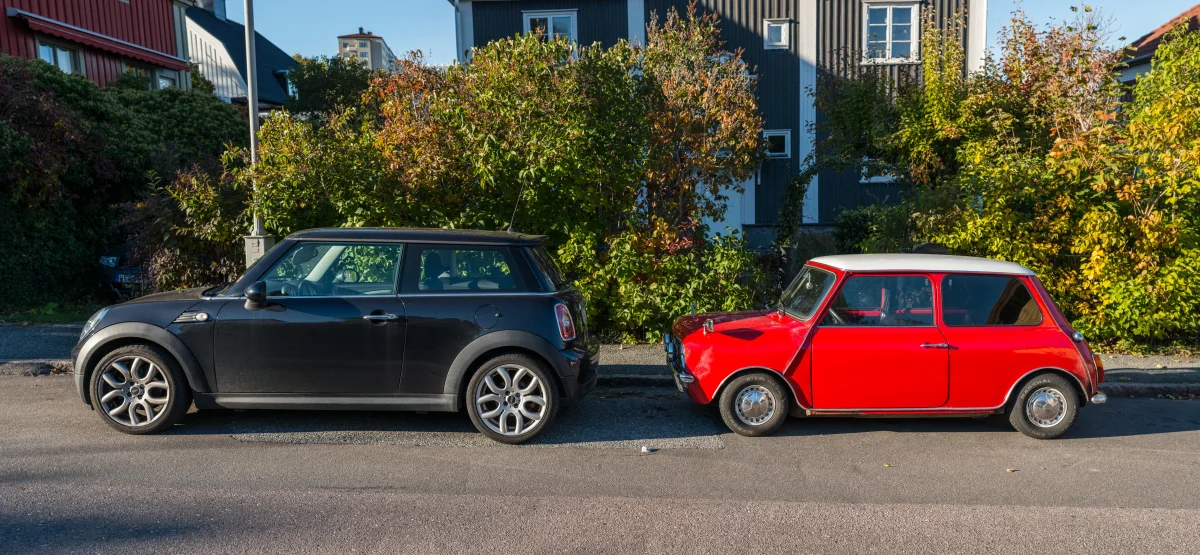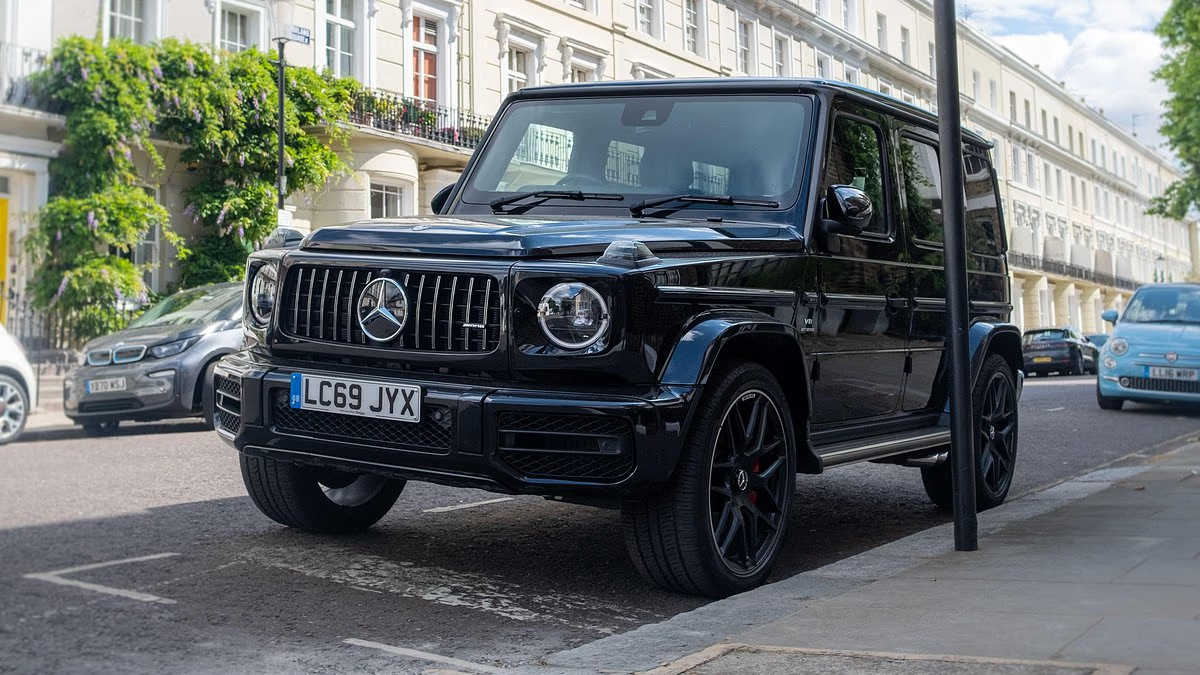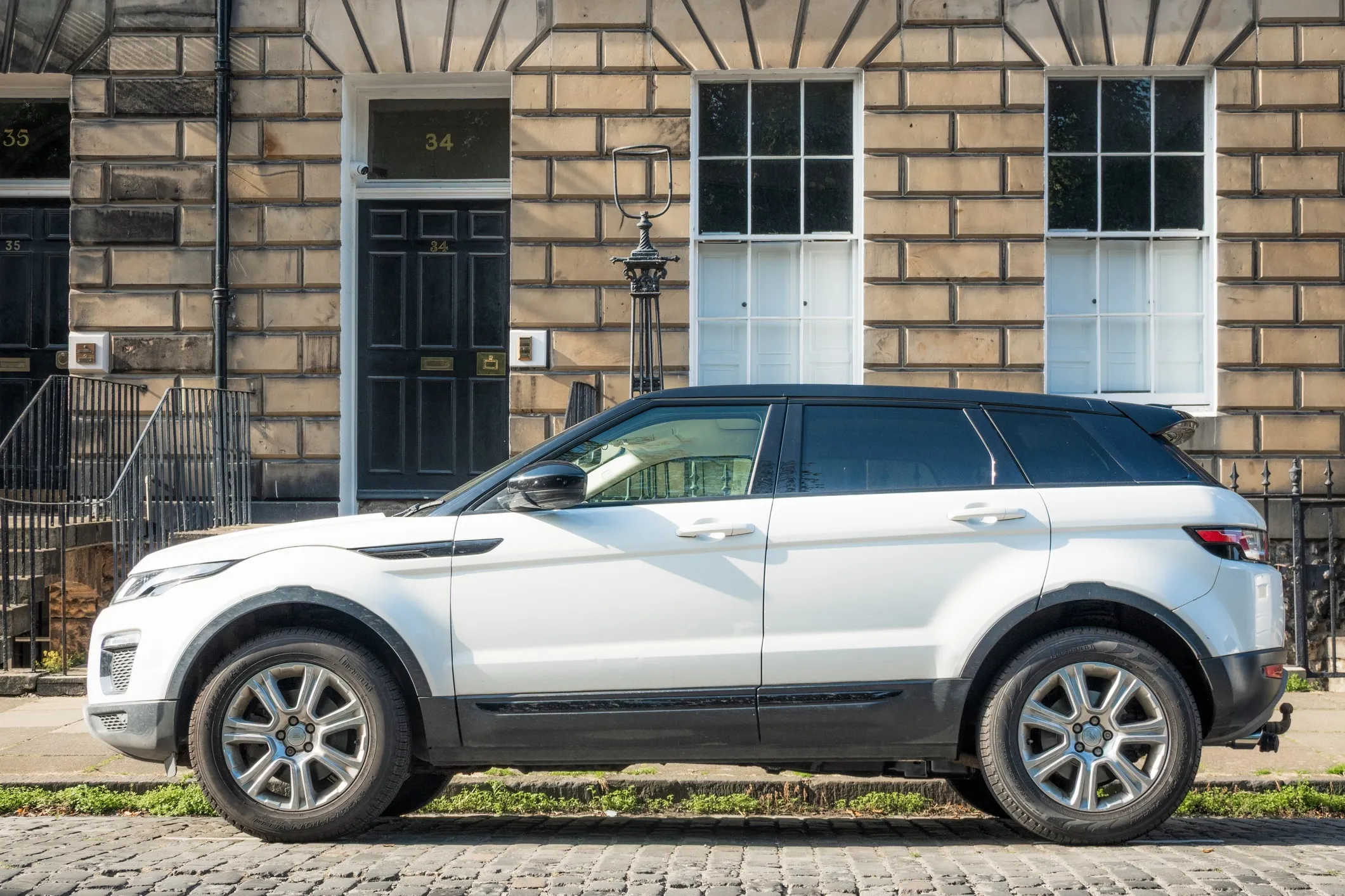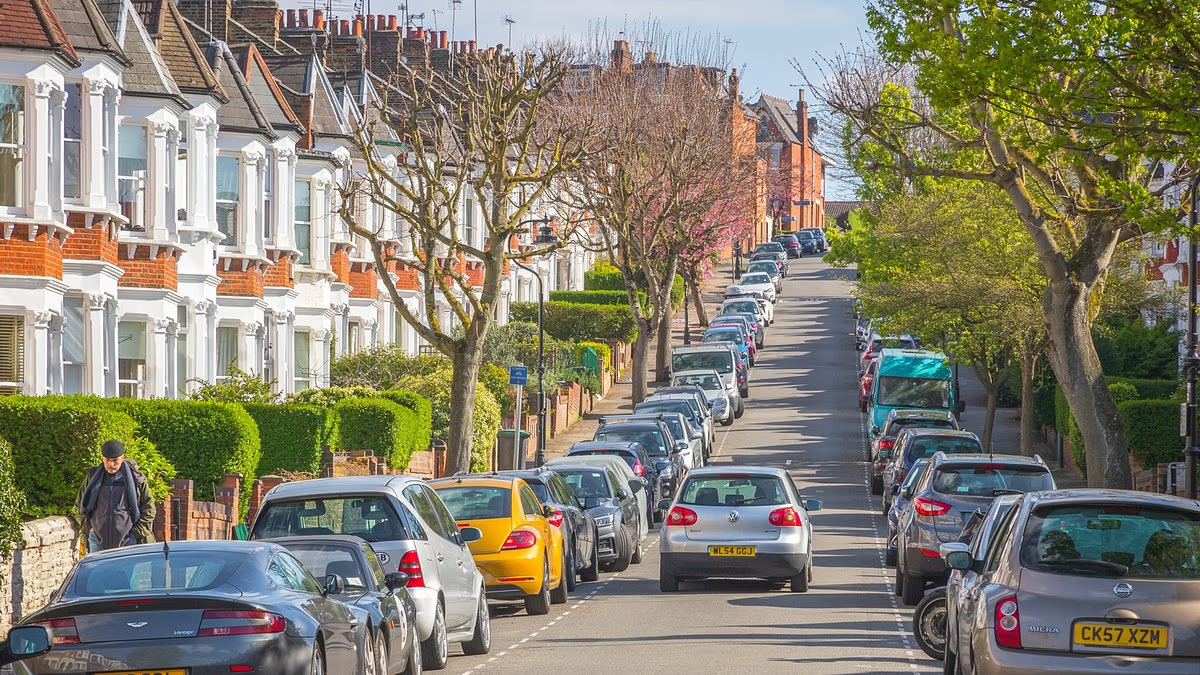
New cars are getting bigger each year - and it's blocking homeowners from parking on their own streets, says a new reportThe average car in showrooms today takes up one square metre more space than it did 20 years ago, according to market analysis.Because of this, four fewer vehicles can squeeze onto a 200–metre residential street, forcing some property owners to park on another road further away from their home in what has been dubbed a national 'parking crisis'.It comes a month after a separate study forecast that cities and large towns in the UK will have to wave goodbye to 10 per cent of their roadside parking spaces by 2040 due to growing vehicle dimensions and the increasing popularity of 'oversized SUVs'.It warned that London alone will lose 100,000 kerbside bays in the next 14 years.Carmakers have accepted that vehicle dimensions are growing, though blames stricter crash–protection requirements - including larger crumple zones to shield occupants - for increasing vehicle footprints.To transition to electric vehicles - which require longer and wider platforms to allow more batteries to be stored under the car's floor for longer ranges - is also having an impact on the size of passenger models entering the market. Four fewer cars than 20 years ago can park at the roadside of a typical 200-metre residential street due to the expanding dimensions of new vehicles, a new report claims The average car in showrooms in 2026 takes up one square metre more space than a new motor sold in 2006, according Vehicle Data GlobalThe new analysis by automotive data technology specialist Vehicle Data Global (VDG) reveals that the average car this year has a footprint of 8.61 square metres.This compares to 7.67 square metres in 2006.Looking back at historical data, VDG found that the rate of increasing car dimensions has doubled over the last decade, compared to the period from 2006 to 2016, meaning the parking squeeze has worsened more rapidly in recent years.And while the separate study by green think tank Transport & Environment (T&E) blamed rising sales of large SUVs, VDG said the 'car growth phenomenon' expands beyond these traditionally bigger vehicles.It pointed to the nation's best–selling supermini - the Vauxhall Corsa - as a prime example of 'car spreading'.The Corsa in showrooms today occupies 7.17m² of space, while the version on sale three decades earlier in 1995 was almost a fifth smaller, taking up just 6.01m².The Ford Focus family hatchback is another case in point. Its footprint has grown by 13.4 per cent from 7.07m² in 1998 to 8.02m² today.The Volkswagen Golf also expanded at a similar rate: its footprint has extended by 12.4 per cent compared to 20 years ago, increasing from 6.81m² in 1995 to 7.66m² in 2026.Separate analysis conducted last year also found that the footprint of some of the longest serving models have expanded dramatically over the generations.The current three-door Mini on sale today takes up 77 per cent more space than the 1959 original.Today's BMW 3 Series is over a fifth larger in footprint than the 1975 Mk1 model, while the VW Polo has grown by more than 25 per cent in the last half a century.It's not just bigger cars that are expanding in dimension. The current Vauxhall Corsa (right) occupies 7.17m² of space, while the version on sale in 1995 (left) was almost a fifth smaller When discussing cars sizes down the pub, it's the Mini that's usually the major reference points. 'It should be called a Biggie these days', is a typical comment made over the bar
Bigger new cars causing a 'parking crisis' on residential streets
The average new car today takes up one square metre more space than it did 20 years ago.
1,658 words~8 min read