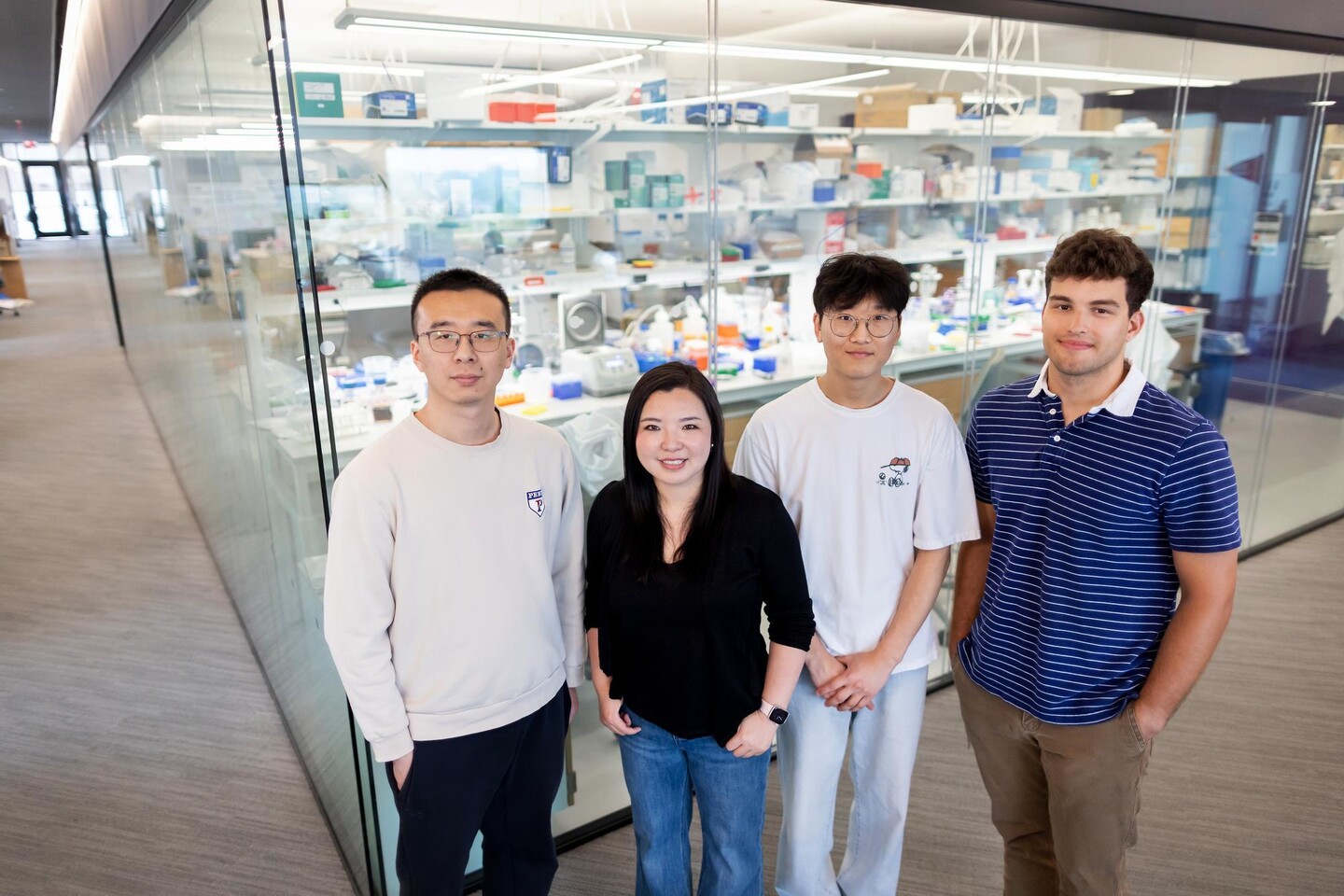
Penn Engineers led by Xue ‘Sherry’ Gao have developed a gene-editing tool built specifically for fungi, unlocking a hidden library of molecules — including some with early anti-cancer promise — from one of biology’s most overlooked kingdoms.
Researchers have spent decades — and billions of dollars — sequencing animal and crop genomes, but fungi have historically been the forgotten middle child of genomics, only noticed when they’re ruining bread or colonizing toes.
“This neglect is kind of remarkable considering how fungi have shaped modern medicine,” says chemical and biomolecular engineer Xue “Sherry” Gao. “From the serendipitous discovery of penicillin to cholesterol-lowering statins, we owe many recent breakthroughs in longevity to fungal chemistry. But despite this, the vast majority of the fungal kingdom remains a black box.”
A main driver for this mystery is that when grown in sterile lab conditions, fungi turn off the drug-producing gene pathways they synthesize in the wild to fight off bacteria.
“To turn those silent pathways back on, we needed a powerful way to precisely manipulate fungal genome, such as editing their master regulatory genes, but traditional tools weren’t up to the task,” Gao says.