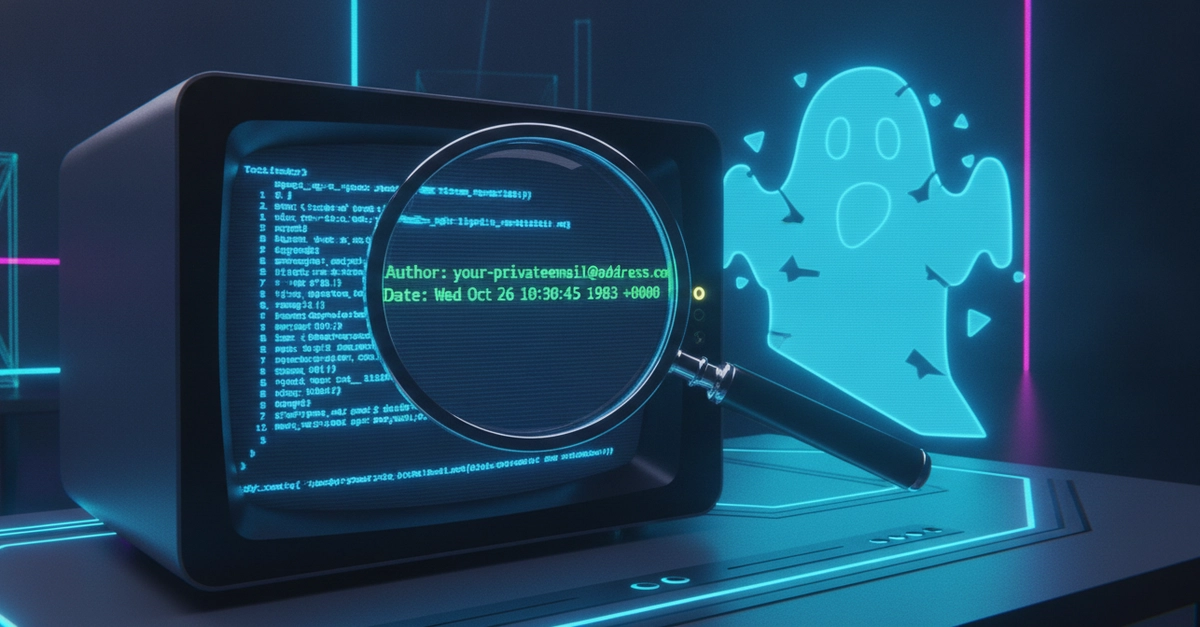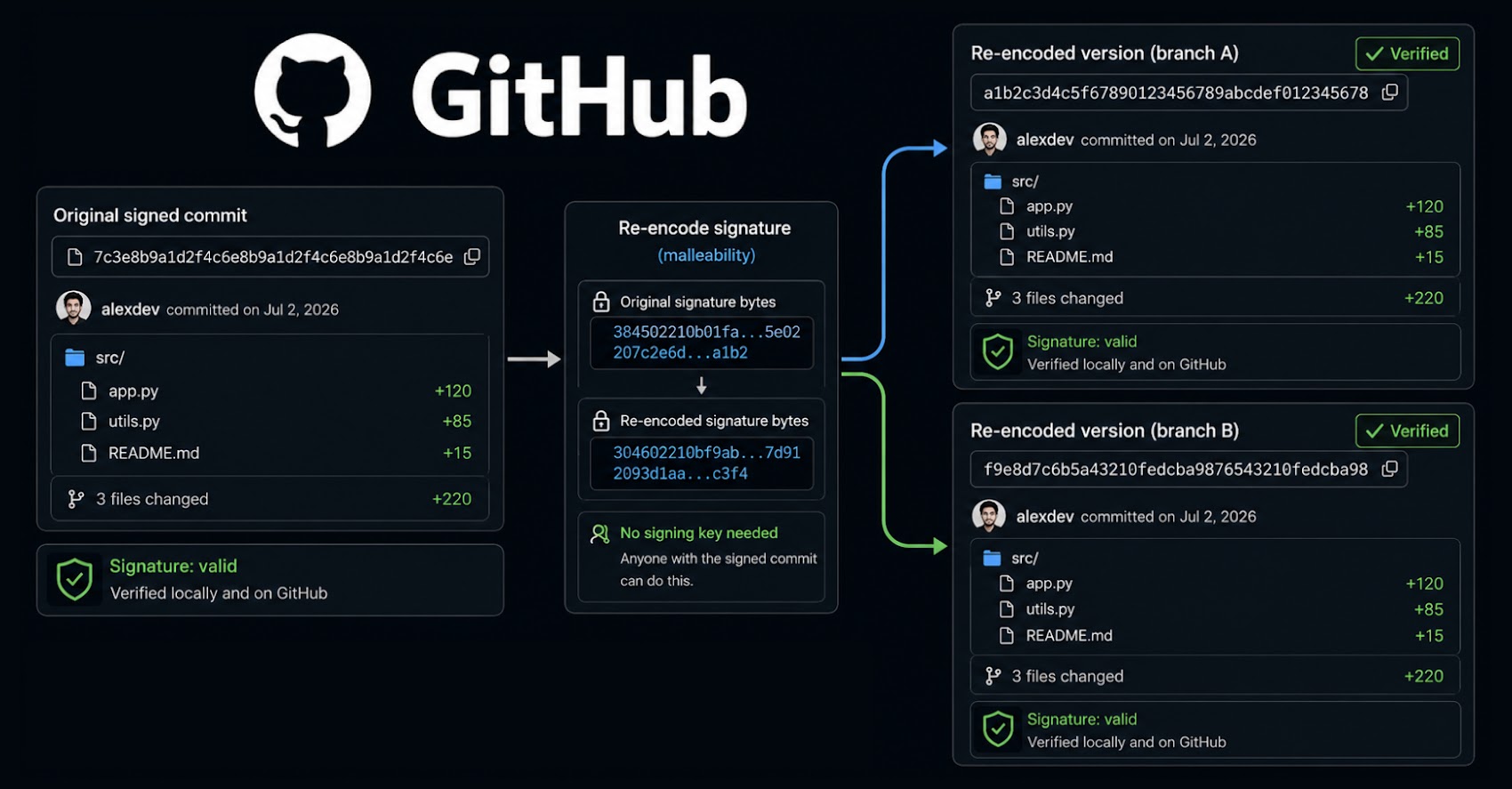
New research shows that a signed Git commit's hash is not the one-of-a-kind name that much of the software world assumes it to be. Given any signed commit, someone without the signing key can mint a second commit with the same files, author, and date, and a valid signature, GitHub still stamps "Verified."
Everything a reviewer would check matches. The commit's hash does not. That matters because so many systems treat a verified commit hash as a permanent, unique name for its contents.
Here is the concrete failure: block a bad commit by its hash, and an attacker can re-push the same content under a fresh, still-"Verified" hash your blocklist has never seen. Deduplication, provenance logs, and reproducible-build records that key on the hash inherit the same soft spot.
A compromised or hostile mirror can hand cloners validly signed commits whose hashes differ from those on the canonical forge.
What this is not is a way to slip different code past a signature check. The files are identical in every copy, so a hash you pinned still fetches exactly the content you expected, or fails.