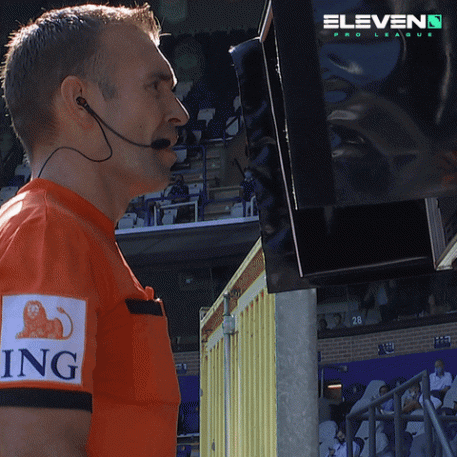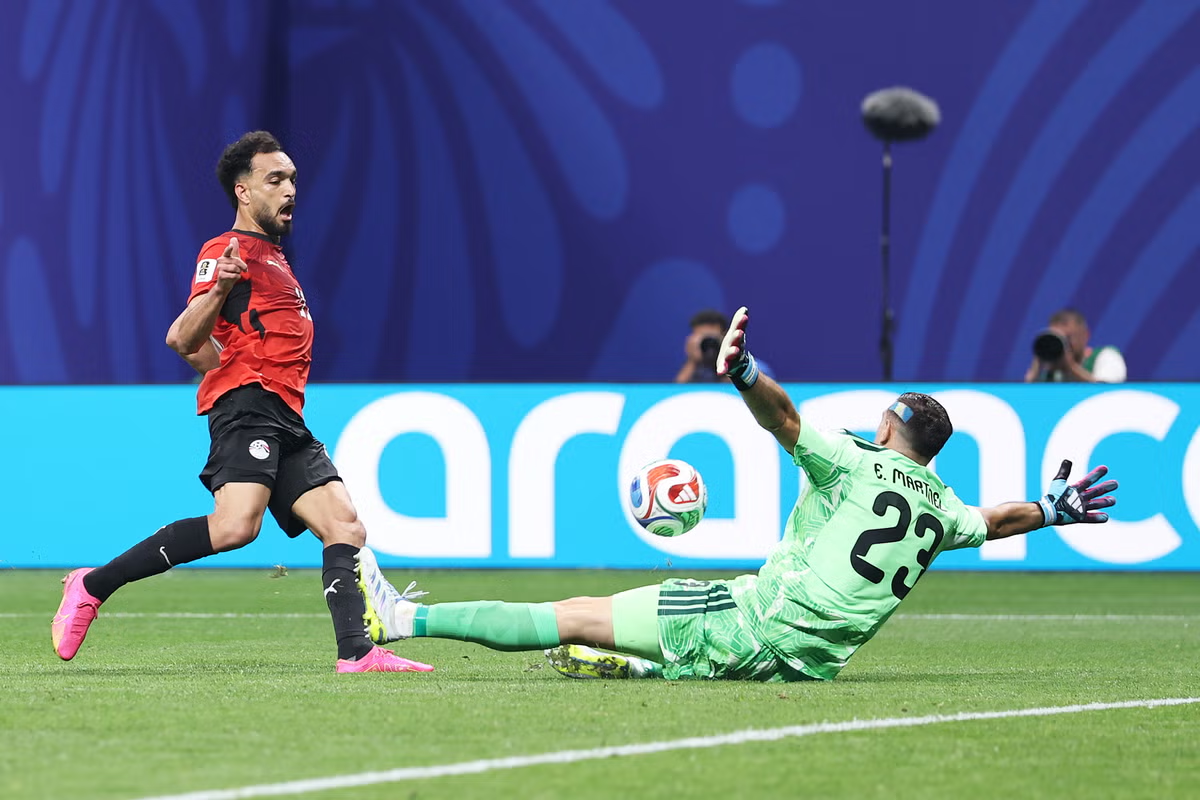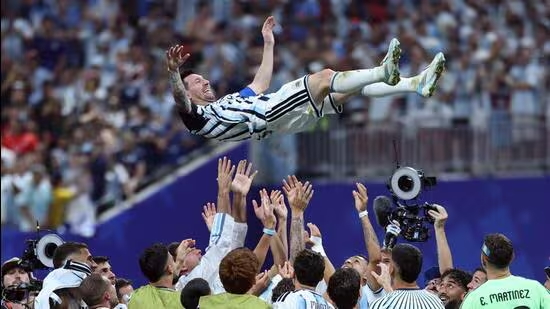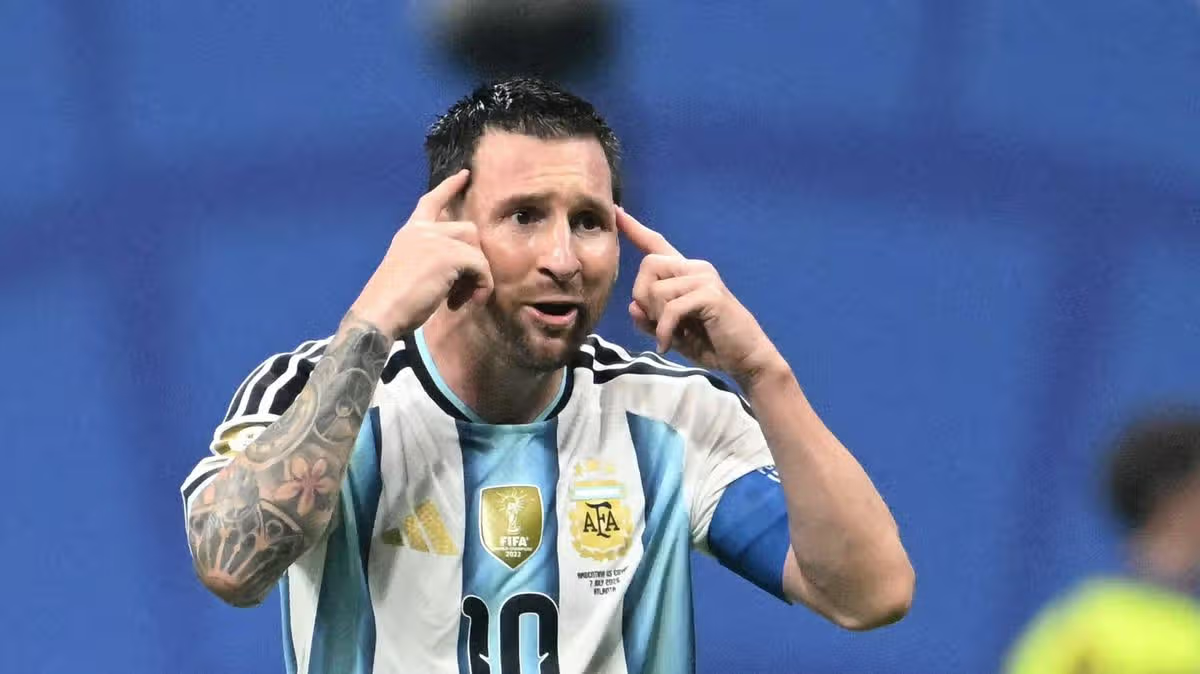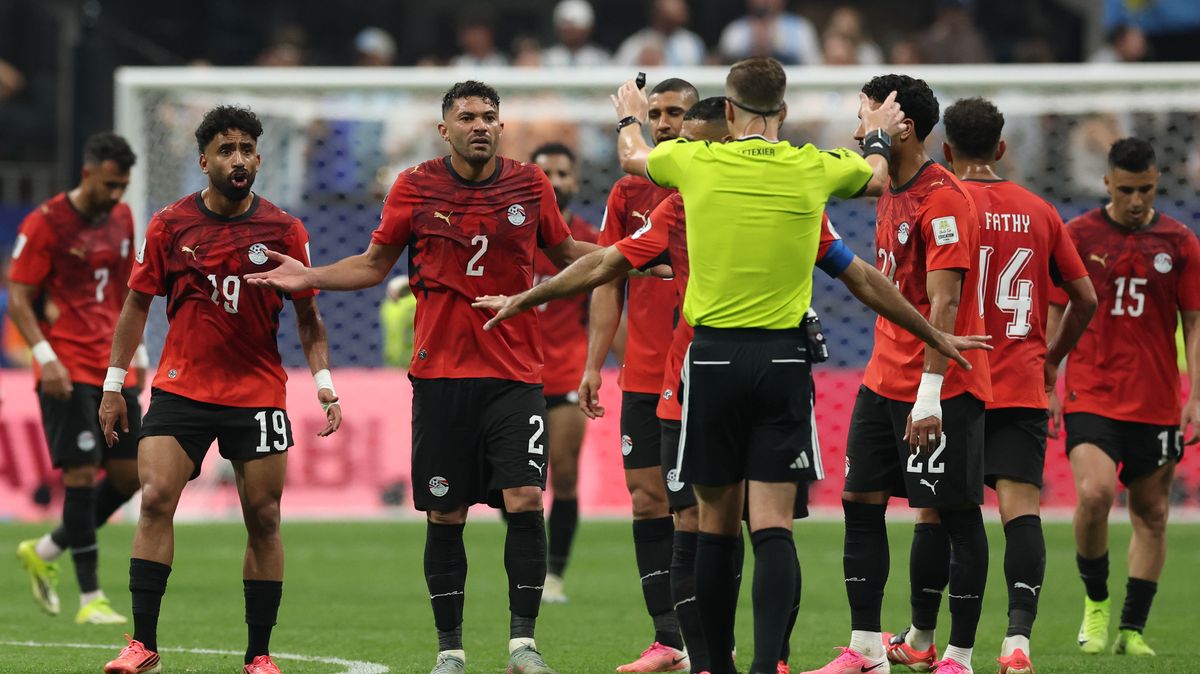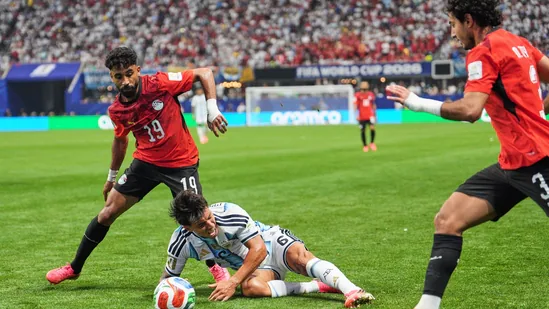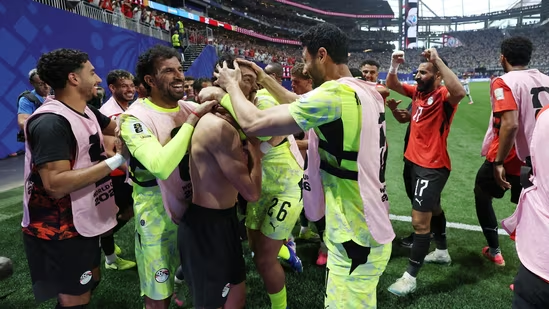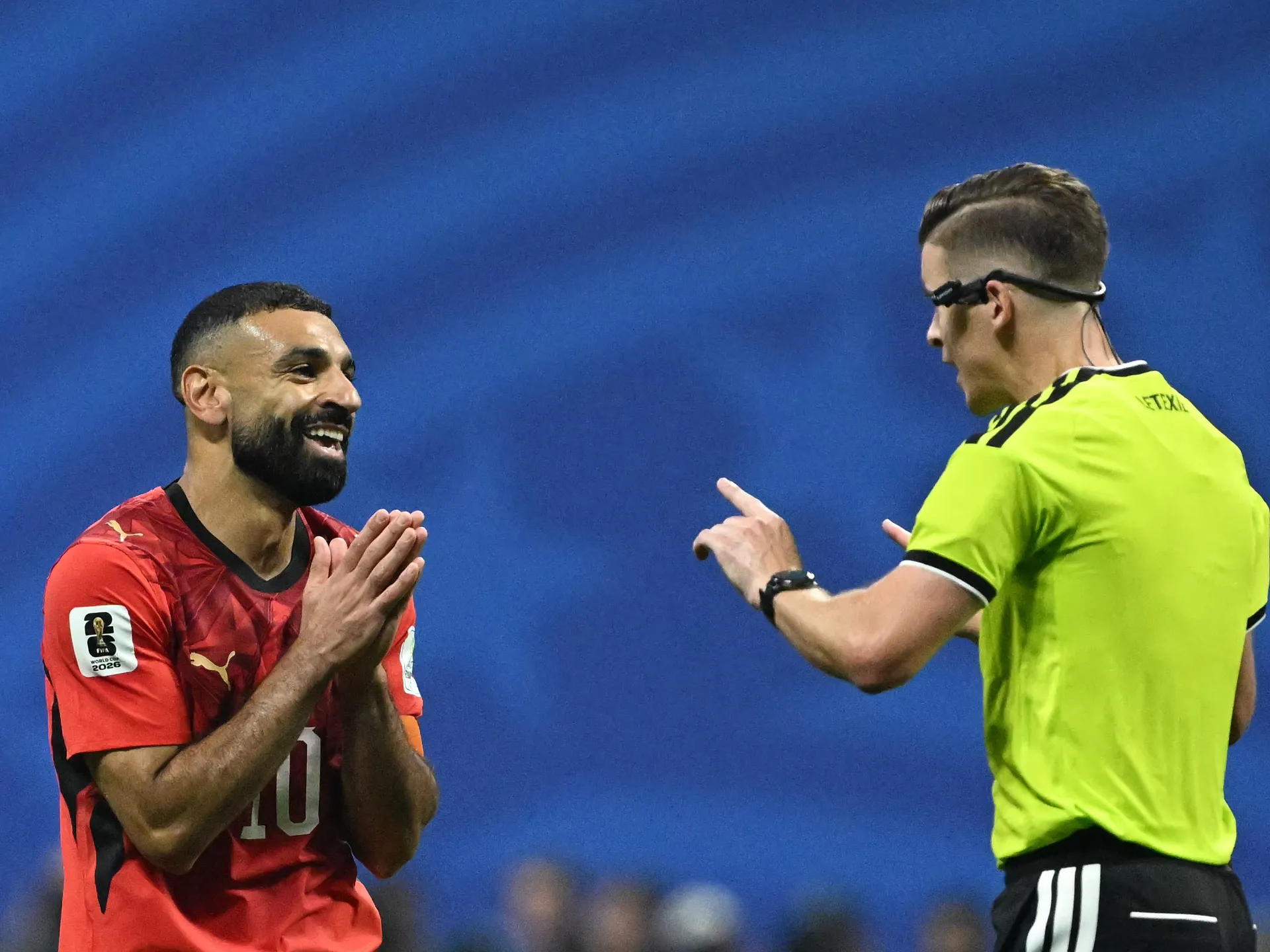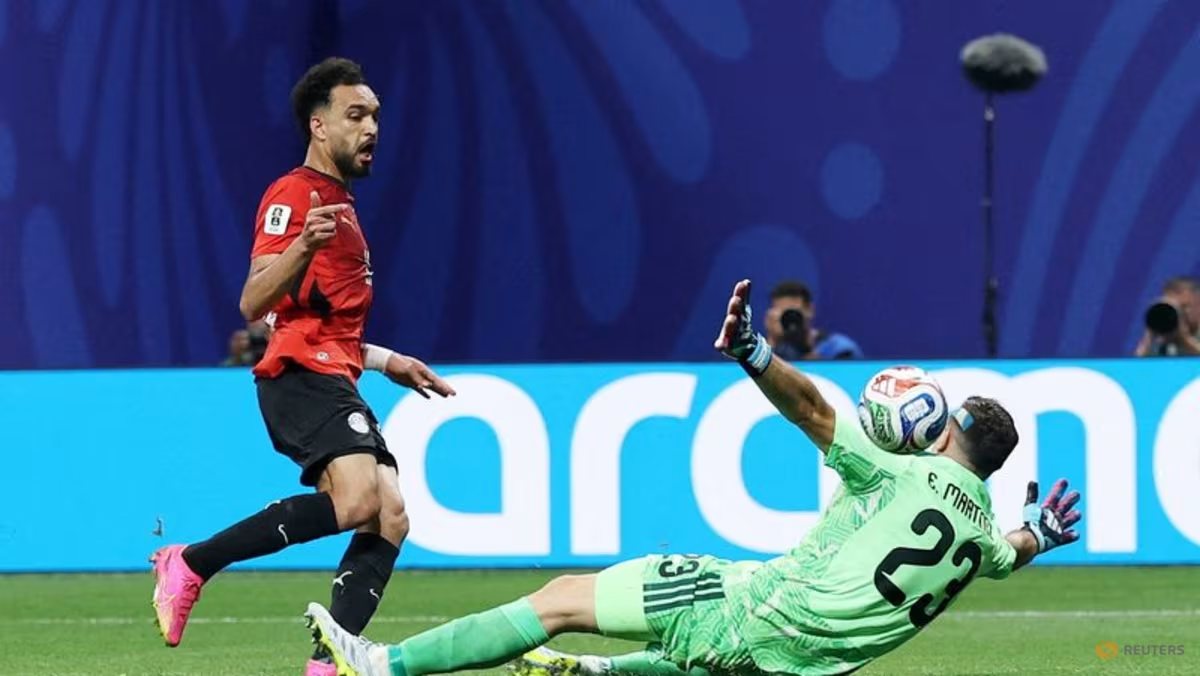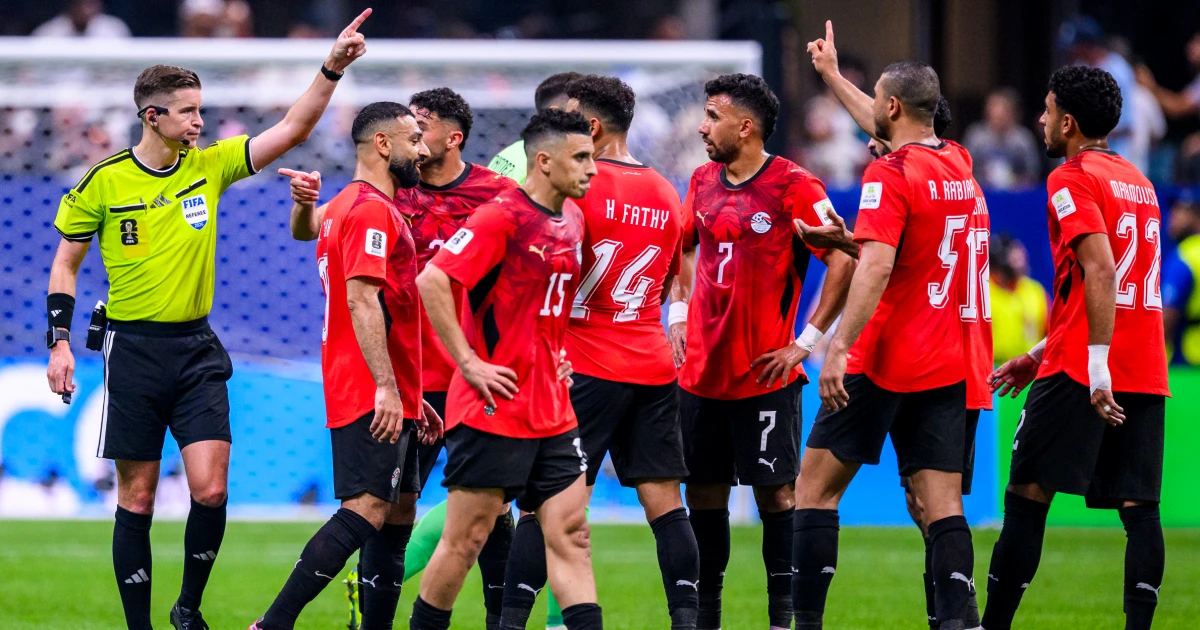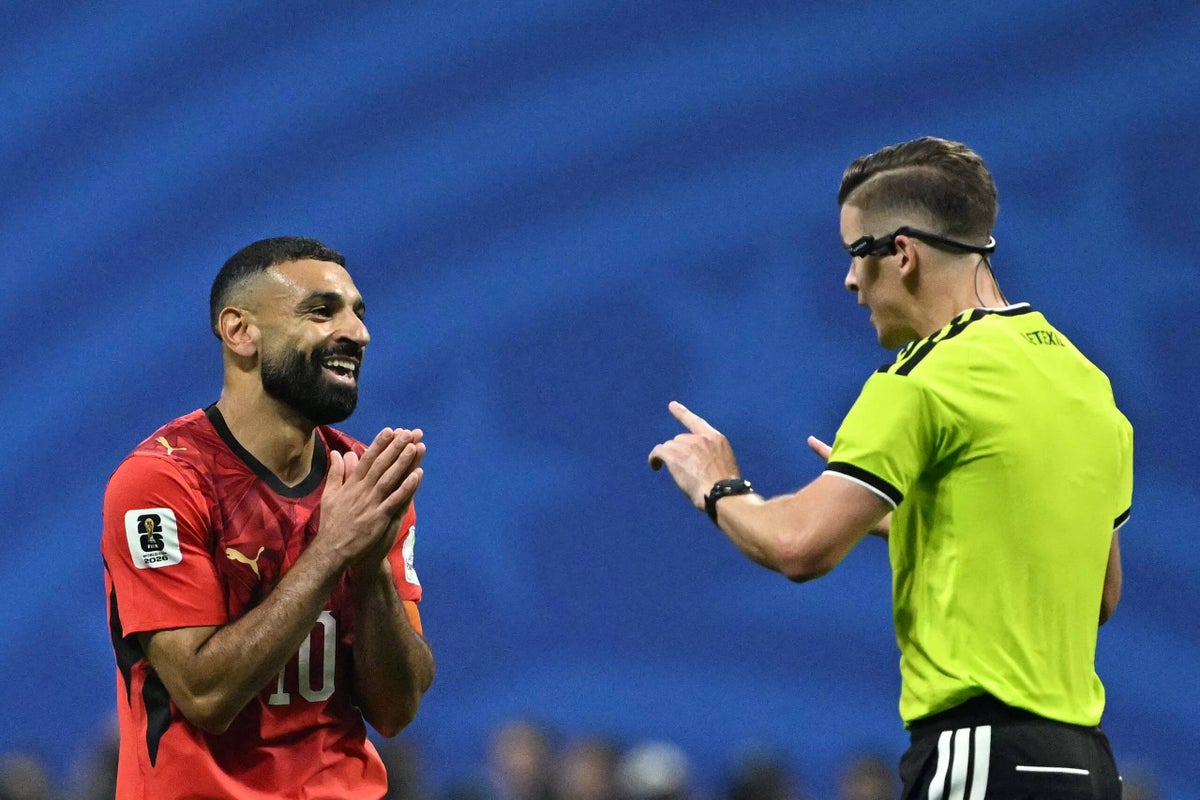
The VAR intervention that ended with an Egypt goal being disallowed for an event 100 yards from the Argentina net was the latest example of how video technology can spoil football.There is no doubt in my mind that Mostafa Ziko’s strike in Tuesday’s World Cup last-16 match should have stood, and that ruling it out was a mistake — based on the VAR protocol both in letter and in spirit.Claims that the decision was part of some corrupt plot to engineer Argentina’s passage towards the final — they won the match 3-2 after trailing 2-0 and will play Switzerland next — do not deserve to be taken seriously. But more on that later.The incident occurred in the 58th minute, when Lisandro Martinez of Manchester United was leading an Argentina attack on the left, deep in Egypt territory.Under pressure from Egypt’s Marwan Attia and Mohamed Hany, Martinez fell to ground, lost possession, and 17 seconds later the ball was lifted into the net at the other end by Ziko.As soon as French referee Francois Letexier awarded the goal, his compatriot Jerome Brisard would have started a routine check of events in the build-up. The footage would be rewound to the start of the attacking possession phase (APP), which is taken to be either the time of any turnover or when the defending team is in position to defend its goal.These are not always straightforward judgements, as there are no limits on the time that elapses or the distance between a possible offence and the goal.Last season, Brentford had a goal disallowed at Aston Villa because the ball had gone out of play at the opposite end, a few yards from the corner flag. The visitors played on, broke quickly and scored, but the VAR was right to intervene because it was a factual decision and the evidence was conclusive.With the Egypt case, we were in subjective territory: the standard of proof required is high, and any error should be clear for all to see.Brisard determined that the APP began at the turnover of possession, when Martinez lost the ball. That was understandable and reasonable, but not his only option.As Attia and Martinez fight for possession, the other 10 Argentina players are behind the ball, while Egypt’s eventual goalscorer Ziko is in his own penalty area.Argentina’s collective failure to defend their goal because they allowed Ziko to run past them is not part of the decision-making process. In 17 seconds, all but Martinez could have been goal-side of the scorer. VAR is not there to bail out their inability or unwillingness to get back and defend.In the Premier League, it is much more likely that the APP would have been set when Haissem Hassan skipped past Nicolas Tagliafico, as that is when the attack truly begins.I disagree with Brisard’s judgement, but accept it’s a tough call and that he was within his rights to consider whether Egypt had won the ball fairly. Even so, this goal should have been allowed based on the replays we have seen.Standing on an opponent’s foot is not a foul in itself. In this case, there is no doubt that Attia treads on the right boot of Martinez, but that does not make it an offence.Attia is running alongside his opponent in a natural way, which he is entitled to do, and does not challenge for the ball. Martinez is equally entitled to put his right foot on the ground to steady himself before playing the ball with his left.Unfortunately, Attia’s foot lands on top of Martinez’s, but that is normal contact that happens frequently in most matches.Fans of the Premier League may recall the furore in August last season when Fulham had a goal disallowed against Chelsea at Stamford Bridge.The visitors’ striker Rodrigo Muniz inadvertently trod on the foot of Trevoh Chalobah before emerging with the ball. After two passes, Josh King swept home for what he thought was his first Fulham goal.The furore that followed went on for days. Fulham were so aggrieved that they still gave King the club’s goal of the month prize on the grounds it should have been allowed.Howard Webb, the head of refereeing in England, made no attempt to defend the decision on his regular TV show about VAR decisions.The incidents at Chelsea and in Atlanta on Tuesday are examples of how VAR has become so forensic that officials are now seeing fouls when none have occurred. After 150 years of viewing such innocent situations as normal contact, we study a three-second loop repeatedly in slow motion and find a ‘foul’.Others in the game have also been sucked in. On UK broadcaster ITV’s coverage, former England and Manchester United defender Gary Neville said Attia was guilty of a clear foul, while still arguing that the goal should probably have stood given the distance from goal.I have made the same mistake as a VAR, and understand how it happens, but it’s got to stop for the good of the game.There was another refereeing error that would have gone unnoticed by most, as Ziko should have received a yellow card for removing his shirt, even though the goal was later disallowed.Ziko and his Egypt team-mates celebrated wildly… before the VAR intervened (Buda Mendes/Getty Images)Referee Letexier showed common sense in the circumstances by letting the incident pass and would have been criticised had he stuck to the law. It’s another example of how people in football say they want consistency — until they see what it looks like.After Argentina took the lead, the Egyptian players, coaching staff and supporters had a collective meltdown that continued post-match. It was understandable, even if some of the behaviour was unacceptable.There was widespread sympathy for the African side, and social media was awash with claims of corruption. There are plenty who, wrongly, believed that FIFA had ordained an Argentina victory, and that there is a conspiracy to have Lionel Messi end his illustrious career by lifting the World Cup on July 19.I am certain that the World Cup officials at their Florida training camp are beyond reproach.They meet daily, pore over clips, debate every nuance at length, and strive continually to be the best they can be. They put their bodies through hell to be as physically fit as possible. They would not bother with all of that if their only role was to turn up and fix the result.No justice at World Cup, says Egypt coach – as Messi scores again | Daily BriefingFelipe Cardenas and Luke BosherOfficials who reach the top of the game are a particular breed. They are much more ‘normal’ than many imagine, and there is a wide variety of personality types, but all share in their DNA a fundamental desire to see fair play and just outcomes.Refs make mistakes, of course, and sometimes these benefit the big clubs or powerful countries. When this happens, conspiracy theorists spread their poison.Such arguments fall away when the underdog benefits. At this World Cup, the beneficiaries of refereeing errors or highly dubious calls have included Scotland (against Brazil), Senegal (against France) and Paraguay (against Germany).In the Premier League, Pep Guardiola was convinced that refs had it in for him and his team, and insinuated this strongly on the record, even though his Manchester City won the Premier League in six seasons out of seven from 2017-18.Every team thinks they would be higher in the league if it weren’t for the refs, except the team at the top — which is convinced it would be further ahead. It was forever thus.But football isn’t fixed; decisions do generally even themselves out over a longer period, and the referees are genuinely doing their best, even if on occasion this is not good enough.
Egypt’s goal against Argentina should never have been ruled out. VAR got it wrong again
Lionel Messi inspired an Argentina comeback in the World Cup last 16, but the Egypt goal ruled out should have stood, writes an ex-referee
1,285 words~6 min read