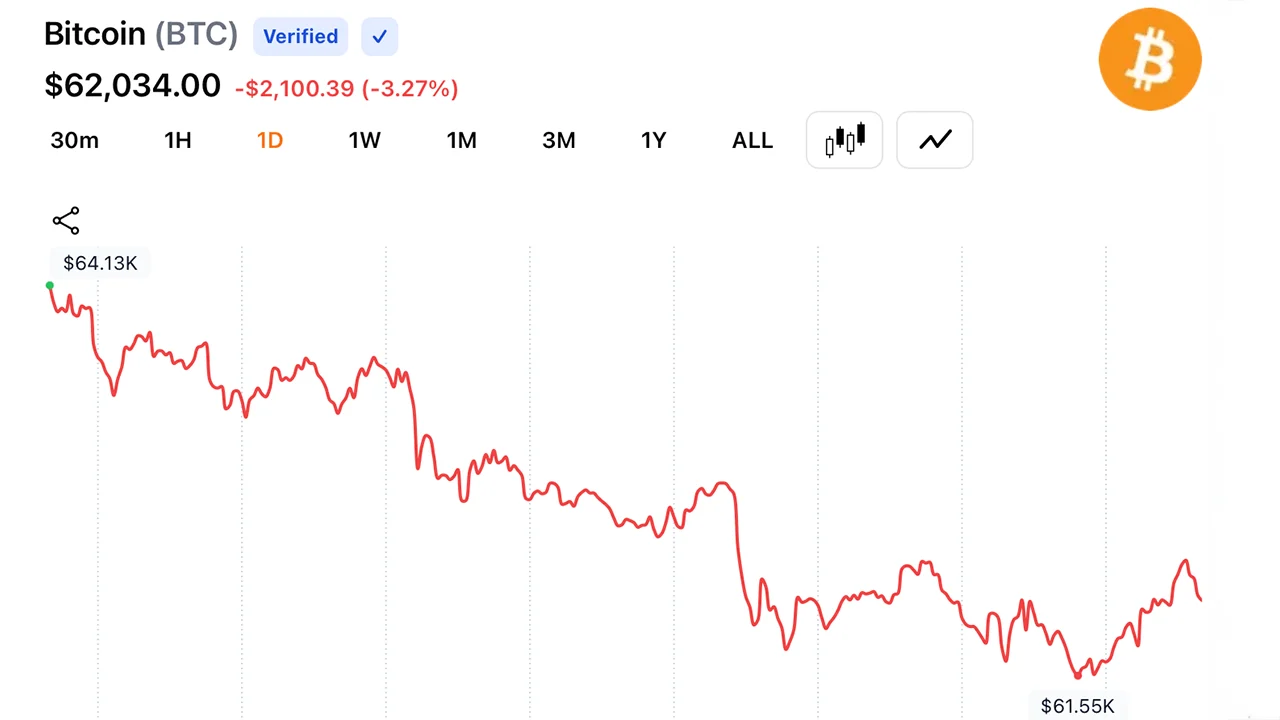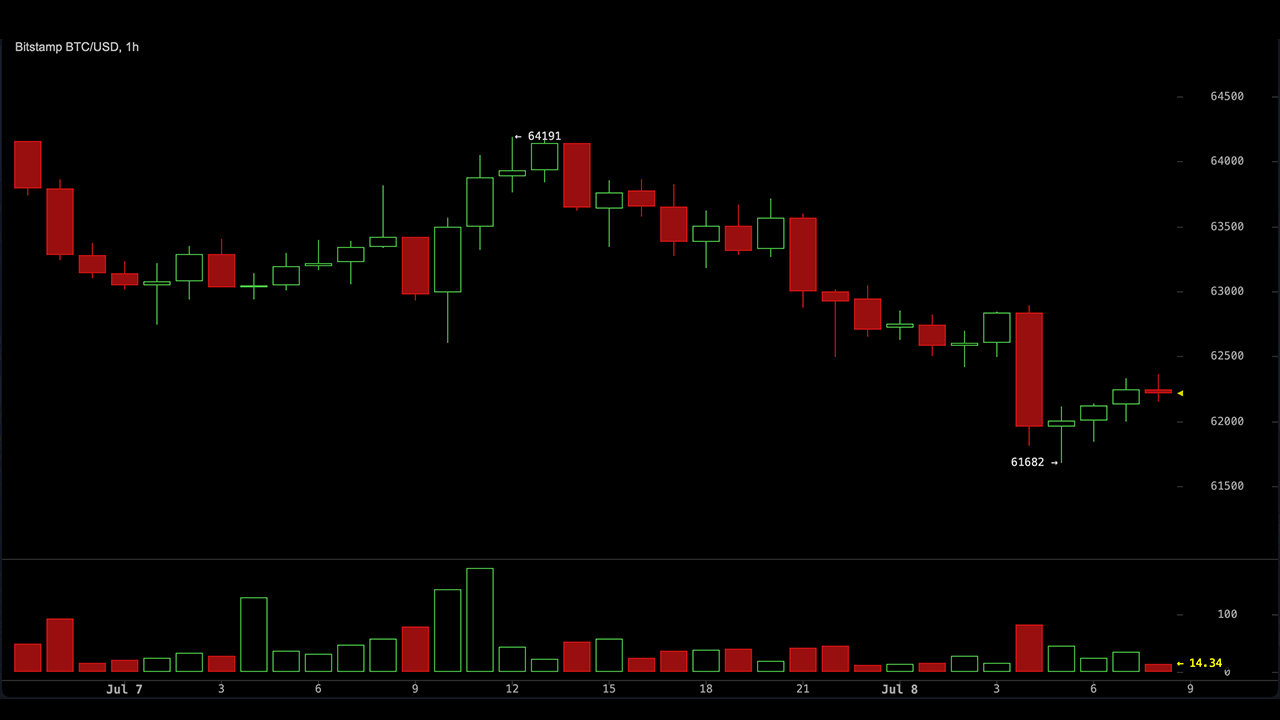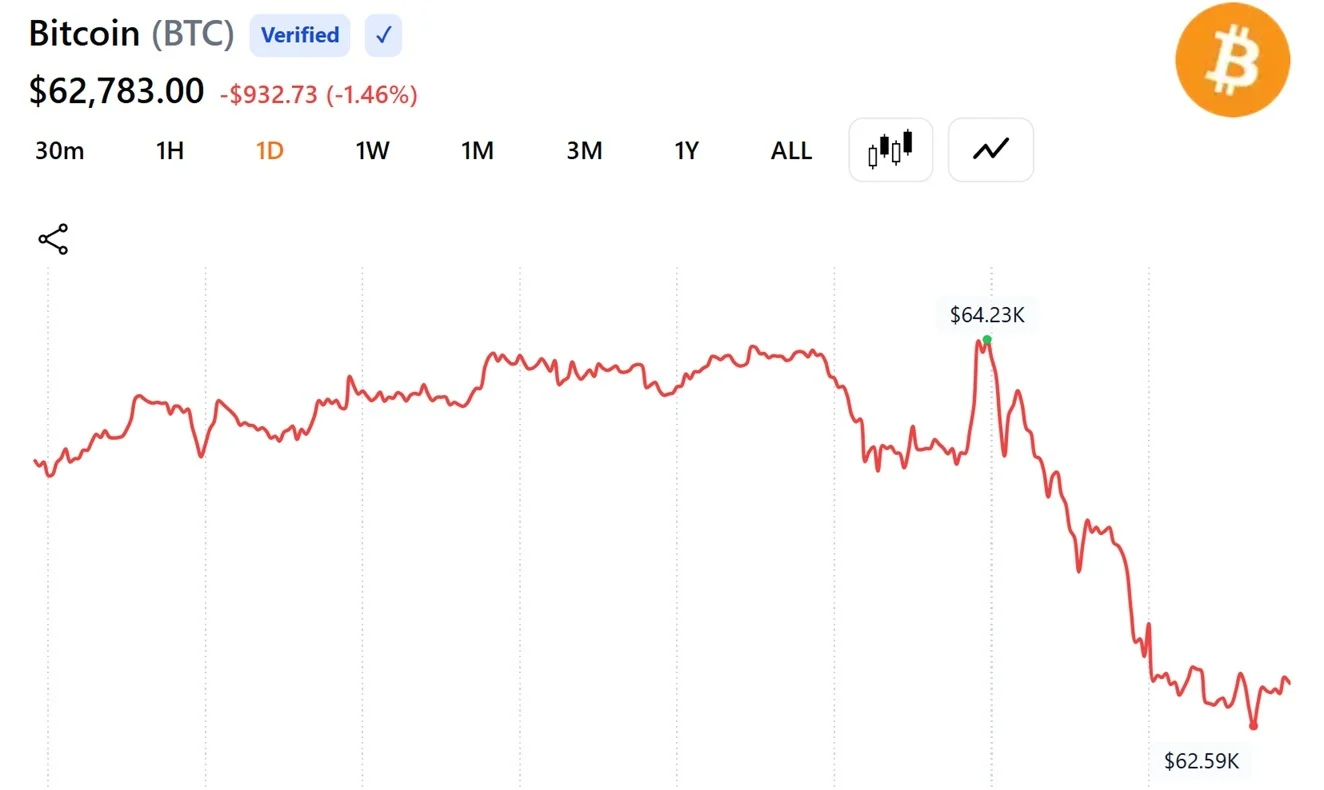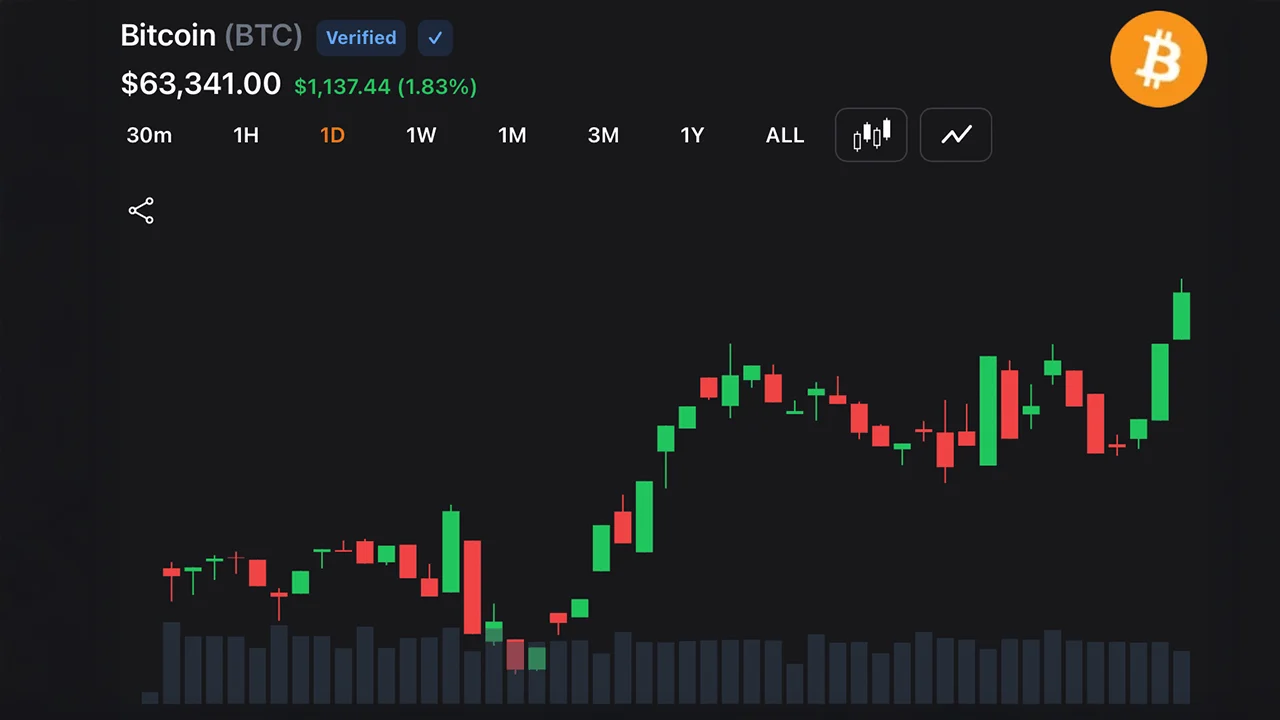
Bitcoin price fell below the important $63,000 level on Wednesday as investors became worried about rising tensions between the United States and Iran. Bitcoin was trading at around $62,553, down 1.2%, after rising above $64,500 in the previous trading session.Bitcoin fell below $63,000 as U.S.-Iran tensions (Pexel/Representative image) (Pexel)The biggest reason for the fall was the growing military conflict between the U.S. and Iran, which made investors move away from risky assets like cryptocurrencies. The U.S. carried out military strikes on Iranian military targets on Tuesday after Iran allegedly renewed attacks on commercial ships in the Strait of Hormuz.Iran responded by launching missile and drone attacks on U.S. military bases in the Gulf region. These attacks increased fears that the conflict could turn into a wider war in the Middle East.Investors also worried that fighting near the Strait of Hormuz could affect global oil supplies because the route is one of the world's busiest oil shipping lanes, according to Investing.com. As these fears grew, Brent crude oil prices moved higher because traders expected possible supply disruptions.Higher oil prices can increase inflation, and this raised concerns that the U.S. Federal Reserve may keep interest rates higher for longer. Higher interest rates usually reduce demand for risky investments like Bitcoin and other cryptocurrencies.Investors were also waiting for the minutes of the U.S. Federal Reserve's June policy meeting for fresh clues about future interest rate decisions, as noted by Investing.com. The market wanted to know how Fed officials are viewing inflation and whether they are becoming more cautious about cutting rates.Bitcoin still got some positive supportDespite the fall in Bitcoin's price, institutional investors continued buying through spot Bitcoin ETFs in the U.S. According to SoSoValue data, U.S.-listed spot Bitcoin ETFs recorded net inflows for three straight days until Tuesday.These fresh investments helped reverse an earlier period of heavy withdrawals from Bitcoin ETFs. ETF buying has supported Bitcoin's recovery from the lows seen in late June, although total weekly flows were still negative because of earlier outflows.SEC could bring new crypto rulesAnother important development was that the U.S. Securities and Exchange Commission (SEC) may introduce a major cryptocurrency rule later this month, as noted by Investing.com. The proposed rule, called 'Reg Crypto', could reduce fundraising and regulatory burdens for some crypto startups.The proposal may also create exemptions or 'safe harbours' for certain crypto activities that currently fall under U.S. securities laws. The SEC, under Chair Paul Atkins, is trying to create a clearer regulatory system for digital assets while the U.S. Congress works on broader crypto laws.Also read: Why is SpaceX joining the Nasdaq-100? Here's what it means for investors and the stock marketAltcoins witness downfall tooThe weakness was not limited to Bitcoin, as most major cryptocurrencies also declined. Ethereum fell around 1.8% to about $1,748. XRP dropped nearly 4%. Solana declined about 4.3%. Cardano recorded one of the biggest losses, falling around 7%. Among meme cryptocurrencies, Dogecoin slipped about 5%.Strategy's huge Bitcoin loss added to negative sentimentBitcoin investor sentiment was also hurt after Strategy, the company formerly known as MicroStrategy, largest publicly traded Bitcoin Treasury Company, reported a massive $8.32 billion loss on its digital assets during the second quarter. The company sold 3,588 Bitcoin for prices lower than what it originally paid for them.Between June 29 and June 30, Strategy sold 1,363 Bitcoin at an average price of $59,256 each. Between July 1 and July 5, it sold another 2,225 Bitcoin at an average price of $60,773 each, according to Wall Street Journal. Strategy's average purchase price for its remaining Bitcoin holdings is much higher at $75,476 per Bitcoin.Even after the sales, the company still owns 843,775 Bitcoin, making it one of the world's biggest corporate Bitcoin holders. After the earnings update, Strategy's shares fell around 4.5% in early trading to $96.29. The company's stock has already lost around one-third of its value this year. Bitcoin itself has fallen about 30% from its 2025 highs over the same period.Strategy said the money raised from selling Bitcoin was used to pay dividends on its preferred shares and strengthen its U.S. dollar cash reserves, as noted by Wall Street Journal. The company keeps cash reserves to pay dividends on preferred stock and interest on its outstanding debt.Here's is why Bitcoin fellRising U.S.-Iran military tensions pushed investors away from risky assets. Higher oil prices increased fears of inflation. Investors worried the Federal Reserve may keep interest rates high for longer, according to Investing.com. Traders were waiting for the Fed meeting minutes, making markets cautious.Weakness across altcoins added to the negative mood. Strategy's $8.32 billion digital asset loss and Bitcoin sales further hurt investor confidence. However, steady inflows into U.S. spot Bitcoin ETFs showed that institutional investors are still buying despite the short-term fall.
Why did Bitcoin fall below $63,000? US-Iran tensions and Fed rate fears explained
Bitcoin fell below $63,000 as U.S.-Iran tensions, rising oil prices and Fed rate worries hurt investor sentiment, while crypto markets saw broad losses.
788 words~4 min read