For over a year now most people have used LLMs the same way. Write a prompt, send it, get a response. If it is not good enough tweak the prompt and try again. If it works copy the result and move on. This works fine for one-shot tasks like Q&A, writing help, or generating code snippets. It falls apart the moment a task requires multiple steps, mid-course corrections based on intermediate results, or a review-and-revise cycle. No matter how long or carefully crafted a prompt is, it is still a static instruction. The model cannot catch itself making a mistake mid-execution and backtrack. A human has to sit there watching, waiting for something to go wrong so they can manually interrupt and start over.
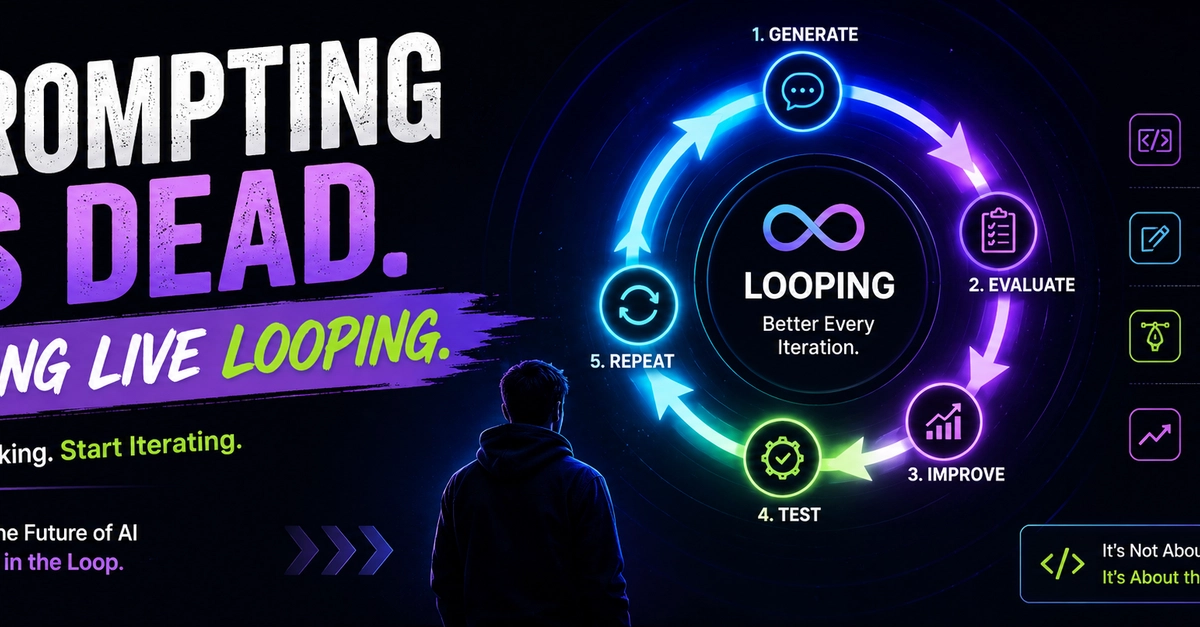
If you look at what actually ships in products today, Claude Code, OpenAI Codex, Cursor Agent, Manus, OpenHands, none of them run on single prompt calls. They all run loops. The model looks at the current state, takes an action, observes the result, decides what to do next, and keeps going until it is done or hits a stopping condition. A prompt is an RPC, fire and wait. An agent is an event loop, it keeps running, keeps responding, keeps adjusting based on feedback. This is not some speculative future architecture, it is already how the serious agent products work under the hood. Yet most teams building with LLMs are still manually driving the loop themselves, copy-pasting between chat windows, reading outputs, writing feedback, re-running prompts, acting as the glue code that should be handled by the system.