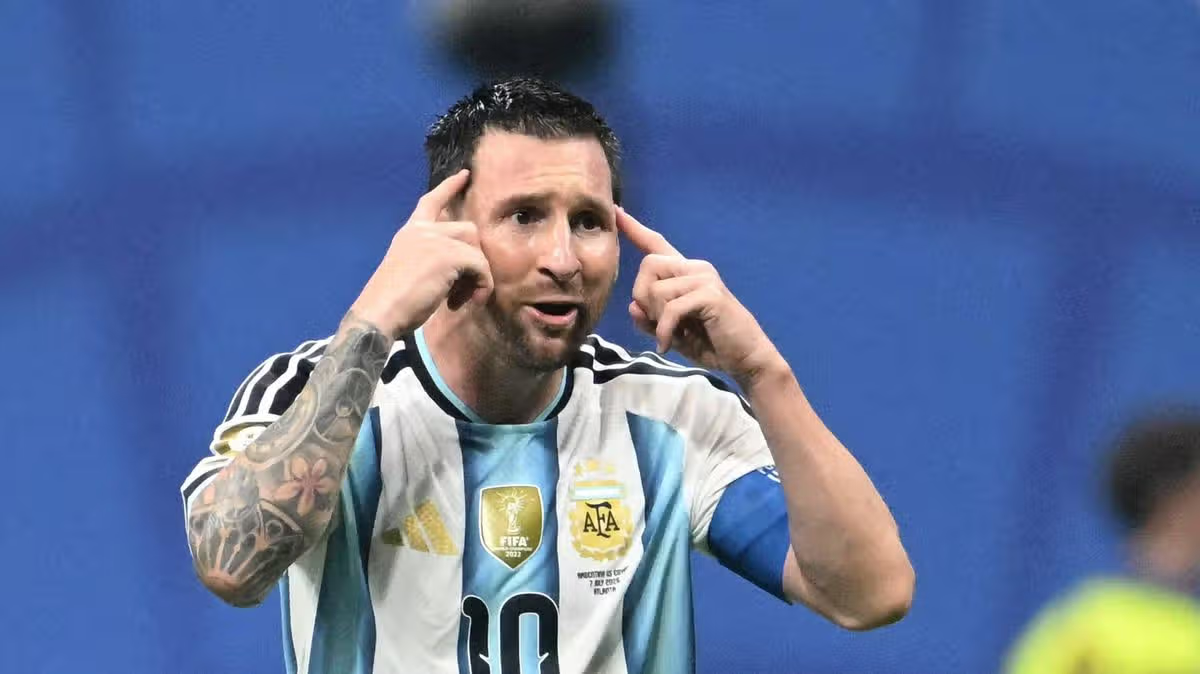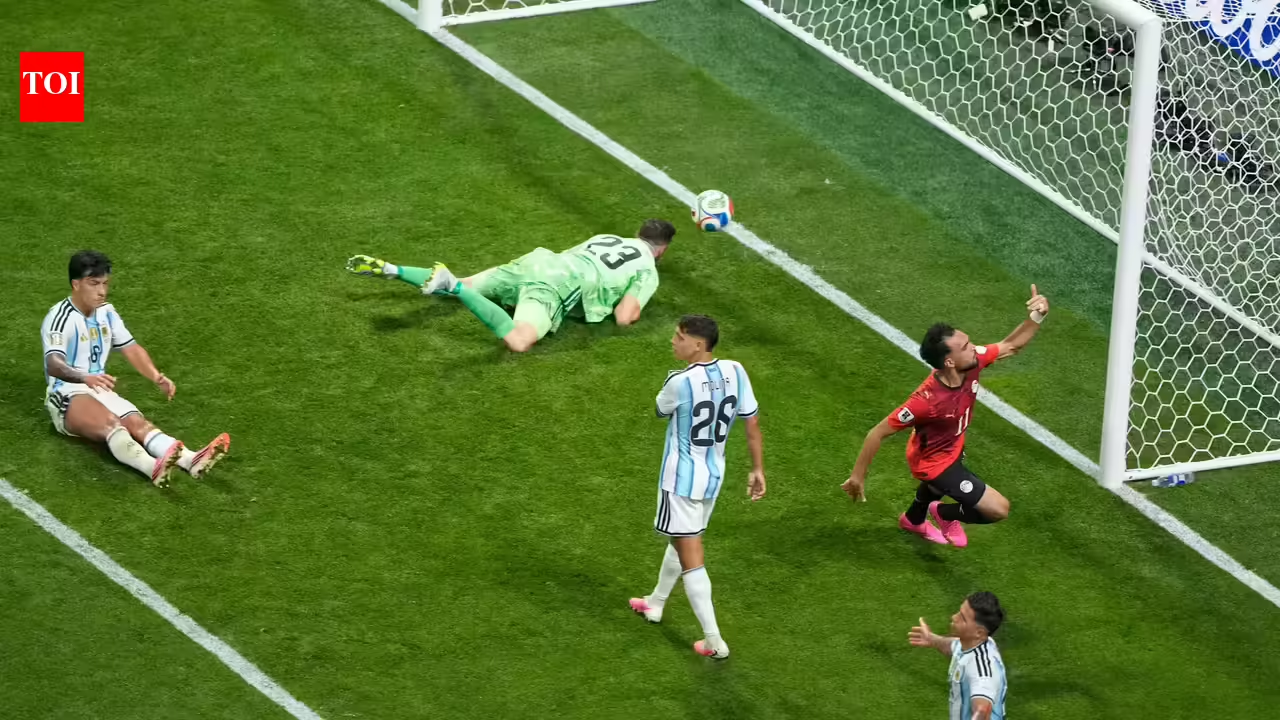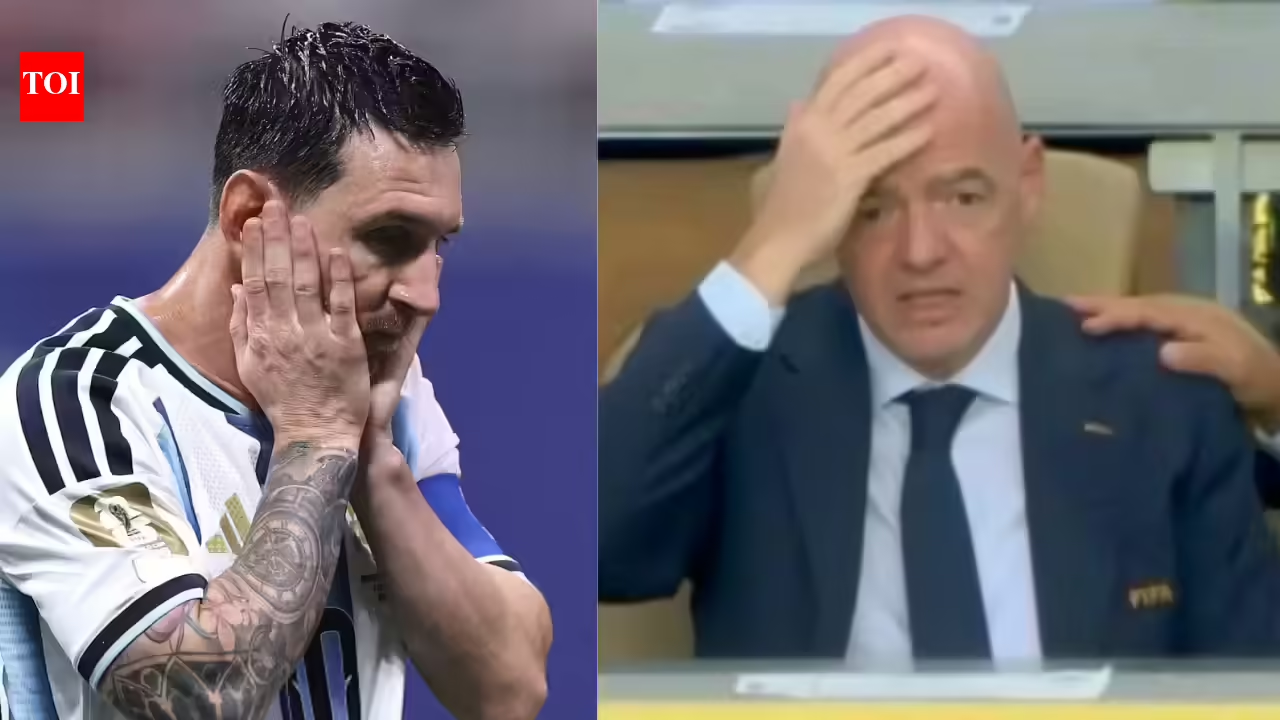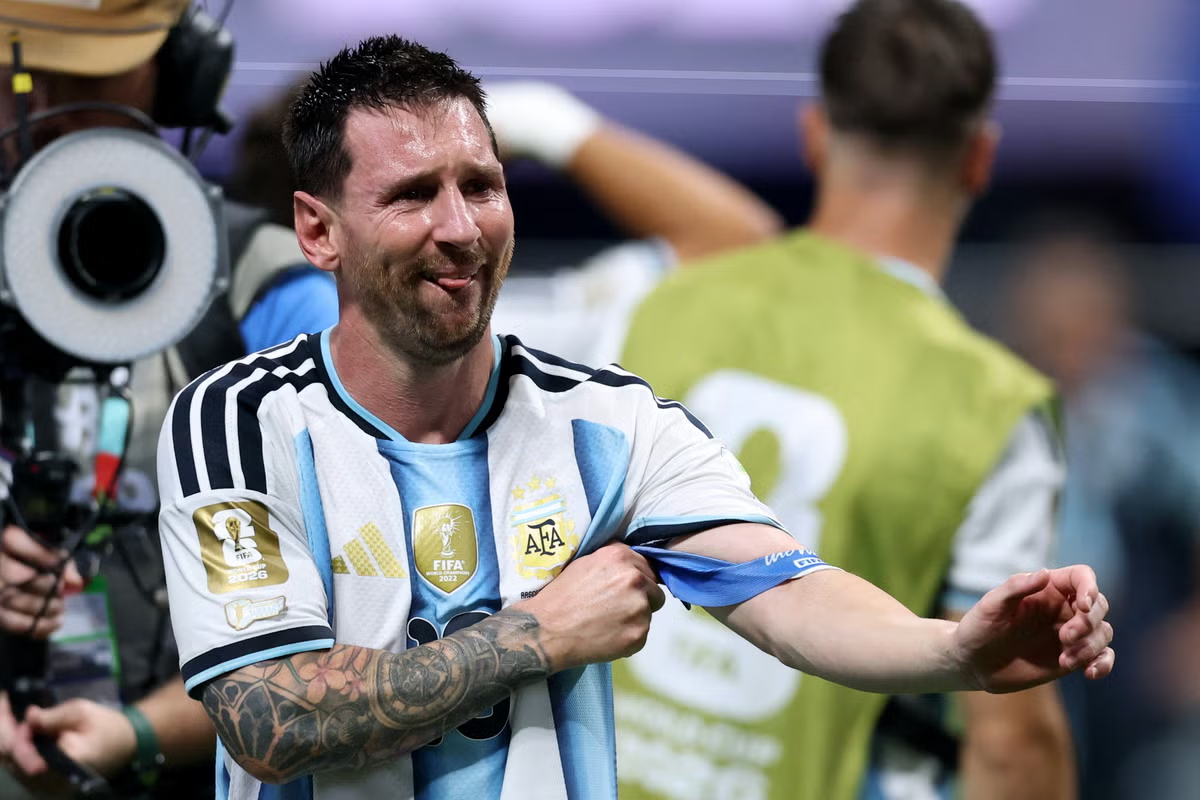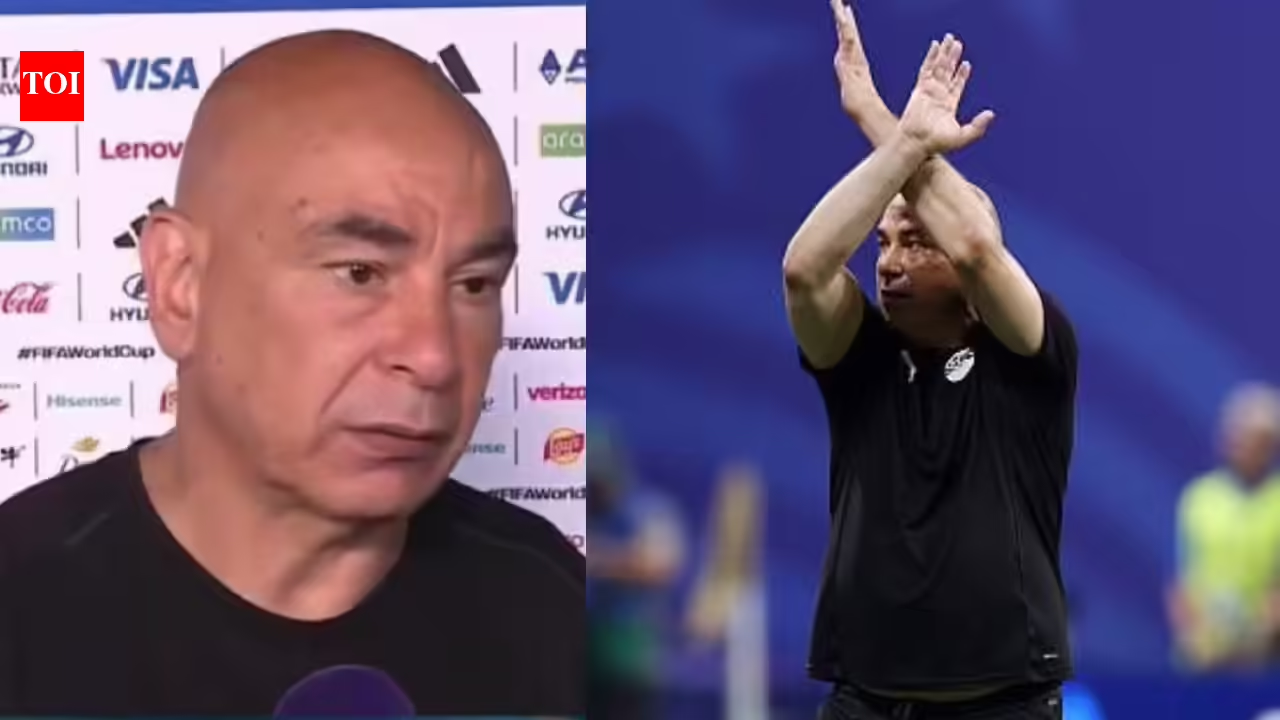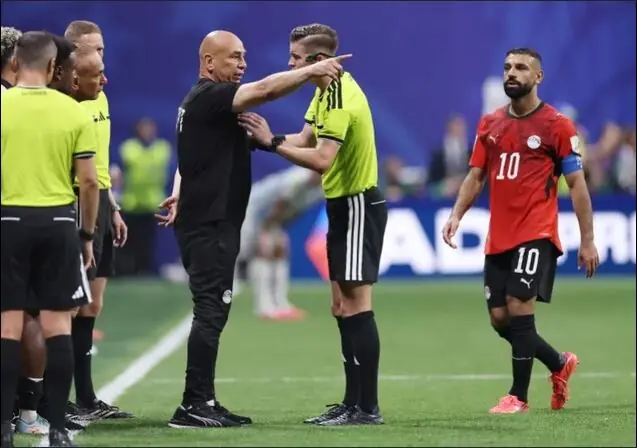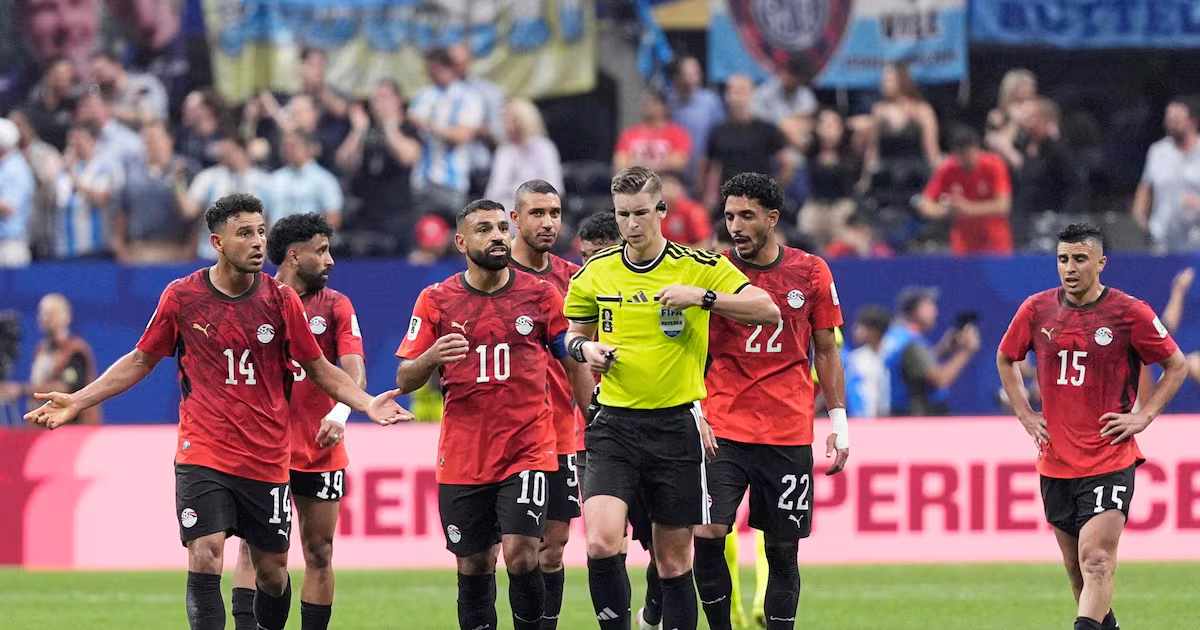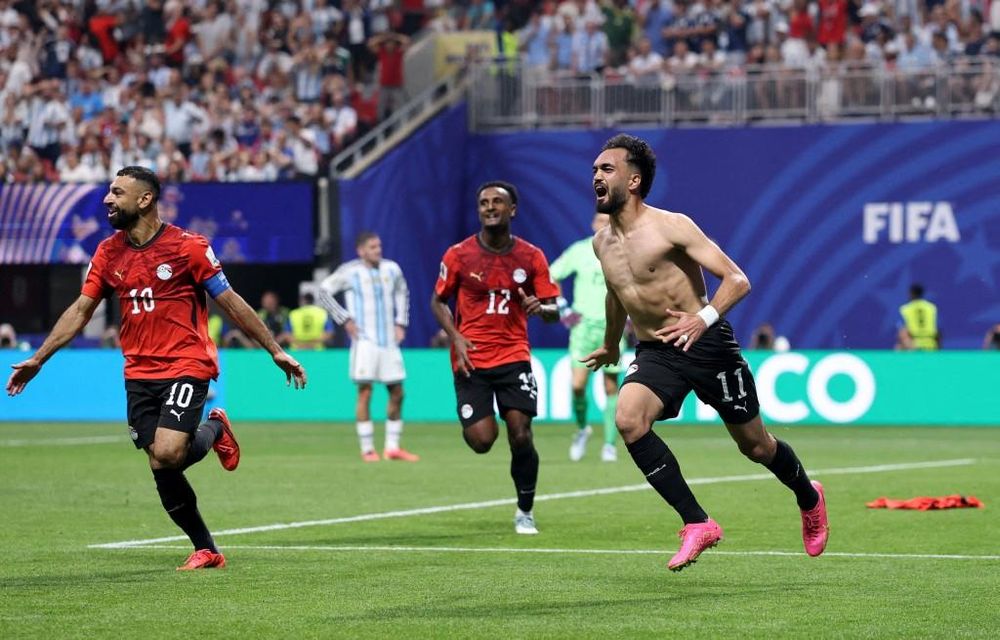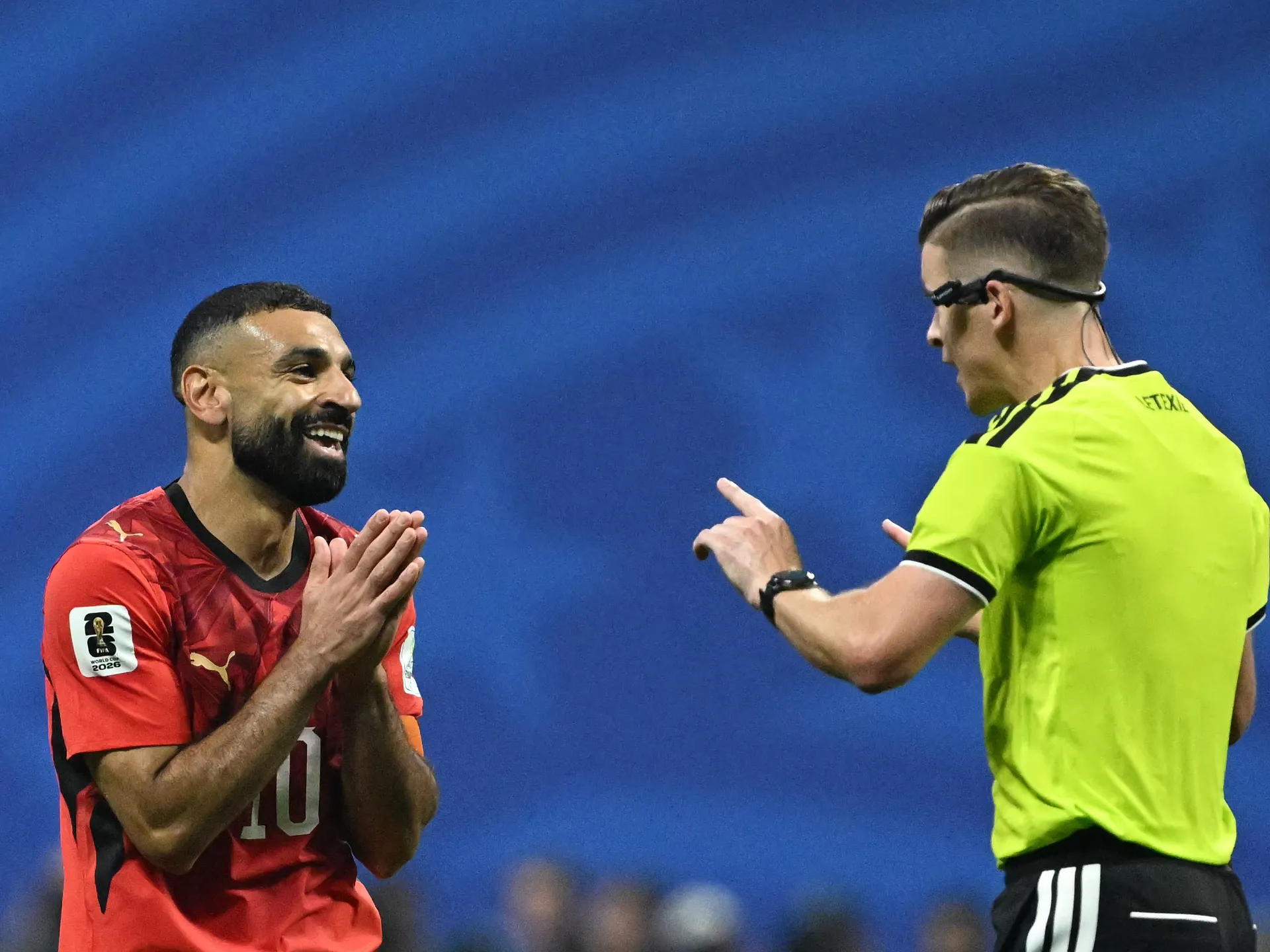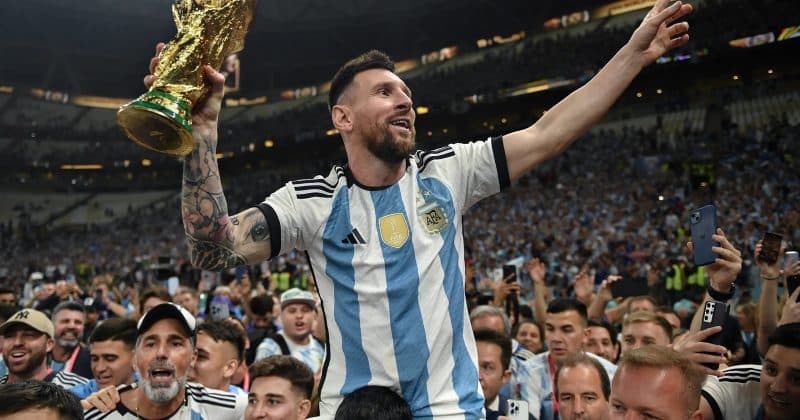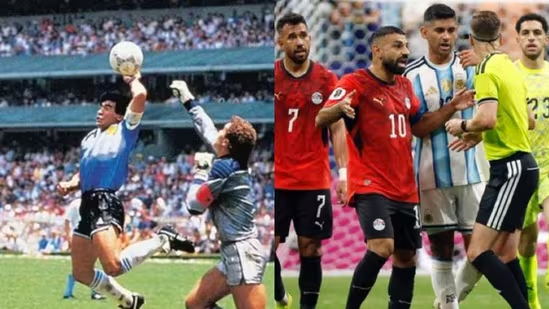
Argentina’s latest World Cup escape against Egypt did not just send the defending champions into another quarter-final. It also reopened one of football’s oldest arguments: why do Argentina’s biggest World Cup moments so often come wrapped in controversy?Hand of god and the Argentina vs Egypt match from 2026. (X images)Egypt had Argentina wobbling in the Round of 16. They led 2-0, had a Mostafa Ziko goal ruled out after VAR intervention, and later protested over penalty claims before Enzo Fernandez headed in Argentina’s stoppage-time winner. Cristian Romero had pulled one back in the 79th minute, Lionel Messi equalised four minutes later, and Argentina completed a wild 3-2 comeback. But for Egypt, the night ended not in admiration but anger. Hossam Hassan called the officiating unfair. Ziko went further, saying the injustice was clear and suggesting the tournament was “fixed”.Those are serious words, and there is no proof of a fixed match. But the anger found oxygen because Argentina already carry a long, complicated World Cup history: genius and glory on one side, suspicion and scandal on the other.1930: The ball dispute before the first finalArgentina’s first World Cup final, against Uruguay in 1930, began with an argument before a ball was even kicked. Both teams wanted to use their own ball. FIFA eventually settled the matter by allowing Argentina’s ball in the first half and Uruguay’s in the second.Argentina led 2-1 at half-time, only for Uruguay to win 4-2. The dispute now feels almost quaint, but it set an early tone: Argentina at the World Cup were never going to be surrounded by calm.1966: Rattin, England and the “Animals” remarkThe 1966 quarter-final against England became one of the ugliest chapters in the rivalry. Argentina captain Antonio Rattin was sent off by German referee Rudolf Kreitlein, reportedly amid confusion and a language barrier. Rattin refused to leave immediately, tempers rose, and England went on to win 1-0.The real poison came after the match, when England manager Alf Ramsey described Argentina’s players as “animals”. For Argentina, it became a symbol of European arrogance and refereeing injustice. For England, it was remembered as Argentine indiscipline. Either way, it deepened a football feud that would explode again 20 years later.Also Return: Lionel Messi exchange under scanner after Egypt coach's anti-racism gesture in Argentina's controversial World Cup win1978: A World Cup under dictatorshipArgentina’s first World Cup triumph came at home in 1978, but it remains politically stained. The country was under a brutal military dictatorship led by Jorge Rafael Videla. The tournament became a tool of image management, a way to project order, unity and joy while repression and disappearances haunted the country.Argentina’s win over the Netherlands in the final gave the nation its first World Cup. But the setting meant the triumph could never be viewed only as sport. It remains one of the clearest examples of football being used by power.1978: The 6-0 win over PeruIf the 1978 tournament was politically controversial, Argentina’s 6-0 win over Peru was the match that made suspicion permanent. Argentina needed a heavy victory to overtake Brazil and reach the final. They got exactly that.The scale of the win, the timing, and the presence of dictatorship politics created one of World Cup football’s great conspiracy debates. There have been claims, counter-claims, denials and decades of speculation. Nothing has ever been conclusively proven. But the match still sits in football memory as the result that many cannot accept at face value.1986: The Hand Of GodNo Argentina controversy is more famous than Diego Maradona’s first goal against England in 1986. Maradona used his hand to beat Peter Shilton, the referee missed it, and the goal stood. Minutes later, Maradona scored the “Goal of the Century”, turning the same match into both a scandal and a masterpiece.That is why the “Hand of God” remains so powerful. It was not just cheating. It was cheating followed by genius. It made Maradona immortal and infuriated England forever. Argentina won 2-1, then went on to win the World Cup. The shadow stayed.1990: The final penalty against West GermanyFour years later, Argentina were on the other side of World Cup rage. The 1990 final against West Germany was decided by a late Andreas Brehme penalty after Roberto Sensini challenged Rudi Voller. Argentina felt the decision was soft. They also had Pedro Monzon and Gustavo Dezotti sent off, becoming the first team to receive red cards in a World Cup final.To many neutrals, Argentina had spent that tournament surviving rather than shining. To Argentina, the final felt like a title taken away by the whistle. It remains one of their great grievance matches.1994: Maradona’s doping exitThe 1994 World Cup gave Argentina one of its most dramatic scandals. Maradona started the tournament looking reborn, scoring against Greece and roaring into the camera in unforgettable fashion. Then came the failed drug test.He tested positive for banned stimulants and was sent home. Argentina’s tournament collapsed soon after. Unlike many other controversies, this was not a myth or an interpretation. It was a confirmed doping case, and it ended Maradona’s World Cup story in disgrace rather than glory.1998: Beckham, Simeone, and gamesmanshipArgentina and England met again in 1998, and again controversy followed. David Beckham kicked out at Diego Simeone and was sent off. Argentina won on penalties, while Beckham returned home as England’s villain.The controversy deepened because Simeone later admitted he had tried to get Beckham dismissed. Beckham was wrong to react, but Simeone’s gamesmanship became part of Argentina’s World Cup image: clever, ruthless, provocative, always ready to play on the edge.2006: The Germany brawlArgentina’s 2006 quarter-final defeat to Germany ended in a post-match brawl after the penalty shootout. Players clashed on the pitch, accusations flew, and FIFA investigated the scenes.It was not about refereeing or fixing. It was about control. Argentina had played some of the best football of the tournament, but their exit came with fury rather than dignity. Once again, a brilliant campaign ended with drama attached.2014: Neuer, Higuain And the final debateIn the 2014 final, Manuel Neuer collided with Gonzalo Higuain while punching clear. The referee gave Germany a free-kick. Argentina wanted a penalty. Germany went on to win 1-0 in extra time.The decision is still debated because it sat in that grey zone between goalkeeper bravery and reckless force. For Argentina, it became another “what if” in a World Cup final. For others, it was simply a hard collision judged in real time.2022: The Battle Of LusailArgentina’s quarter-final against the Netherlands in Qatar became one of the most ill-tempered World Cup matches ever. There were confrontations, taunts, a ball smashed into the Dutch bench, penalty-shootout provocation and a flood of cards.Argentina survived and later won the tournament, but the match reinforced a familiar truth: they do not merely win World Cup games. They drag opponents into emotional wars.2026: Egypt and the old question returnsThat is why Egypt’s anger landed so loudly. On its own, the 3-2 defeat can be analysed as a chaotic knockout match with disputed decisions. In Argentina’s larger World Cup story, it becomes something else: another entry in a long file where triumph and controversy keep travelling together.Argentina’s greatness is not in doubt. Their World Cup history is filled with Maradona, Messi, Kempes, Batistuta, Di Maria and moments of rare beauty. But it is also filled with arguments over hands, whistles, politics, penalties, cards, VAR and power.The Egypt match did not prove a conspiracy. But it did remind the football world why, whenever Argentina survive on the biggest stage, the celebration rarely comes alone. Around them, always, comes the noise.
Argentina beat Egypt, but old questions return: Why their World Cup triumphs always carry a shadow
Argentina's comeback win over Egypt revived old World Cup controversies, from 1978 and Hand of God to Maradona's doping ban and Messi-era VAR fury. | Football News
1,258 words~6 min read