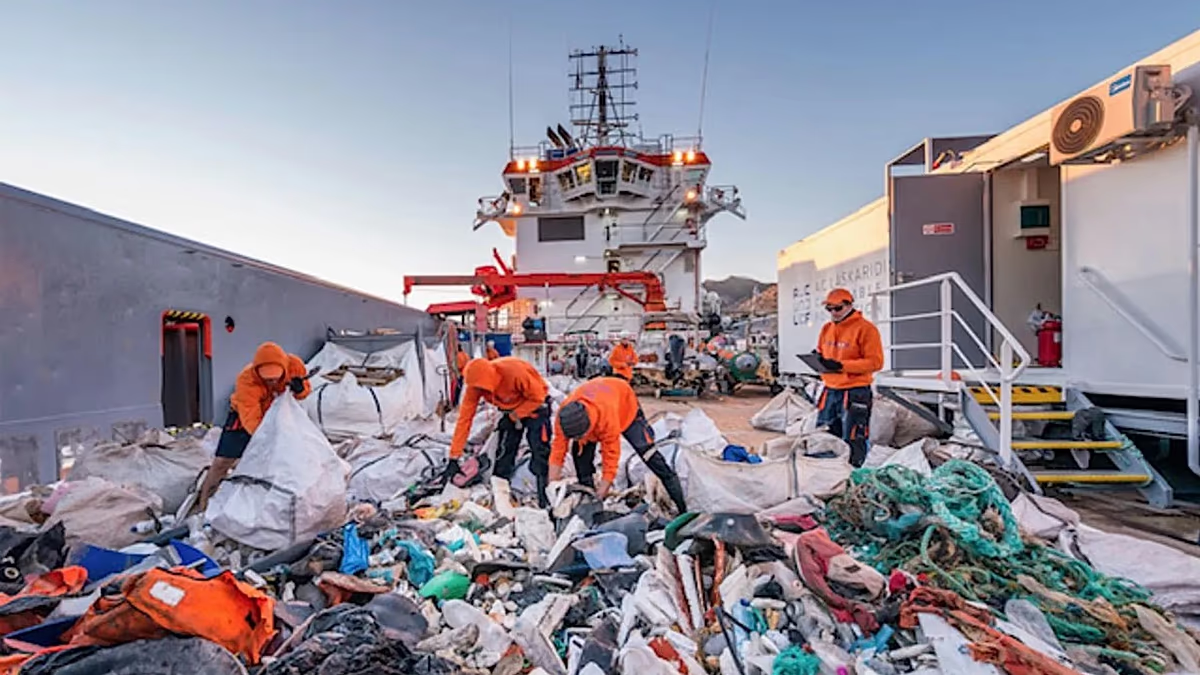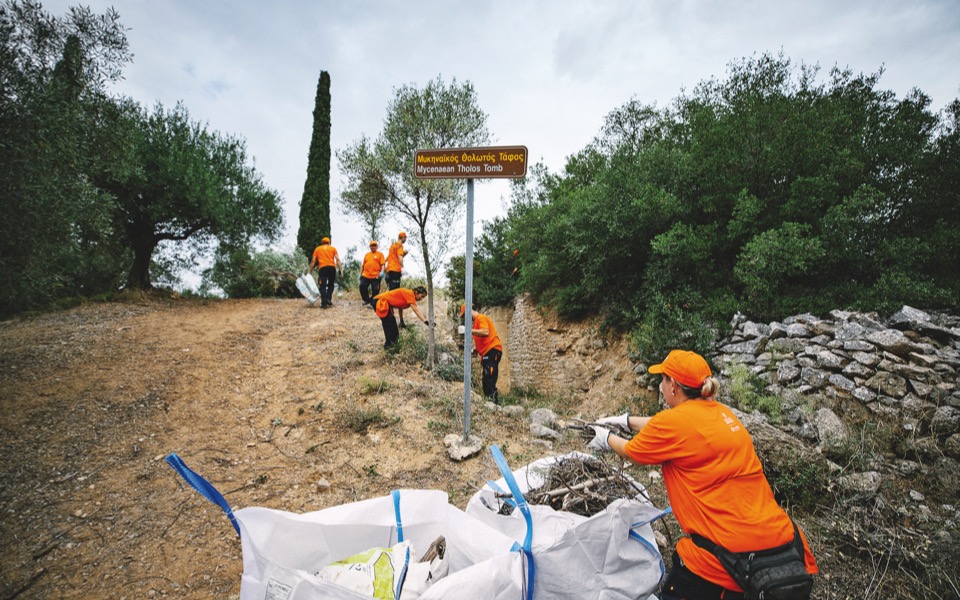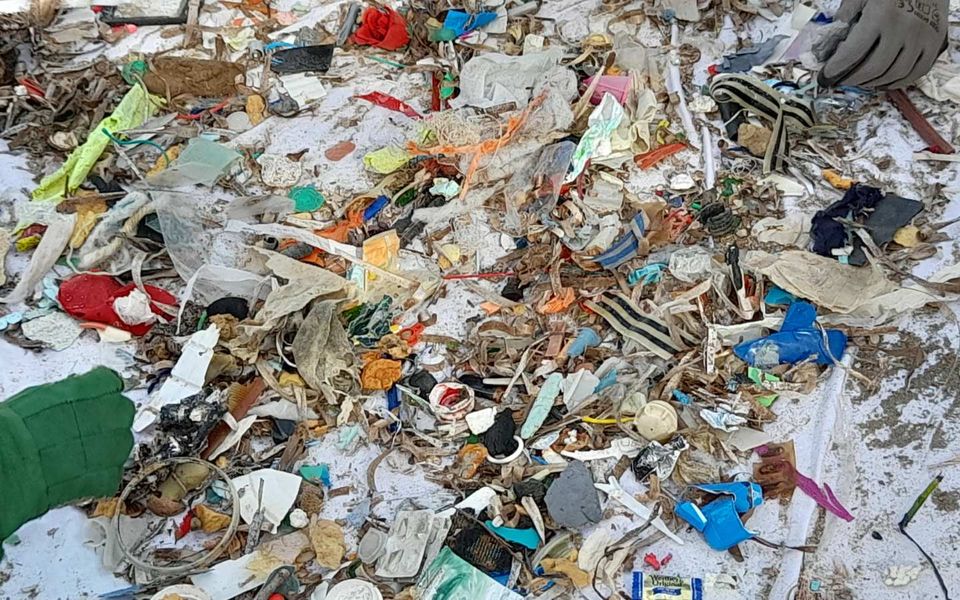
Volunteers participating in WWF Greece’s ‘Adopt a Beach’ program collect and record coastal litter as part of ongoing efforts to monitor and reduce plastic pollution along Greek shores. [WWF Greece]
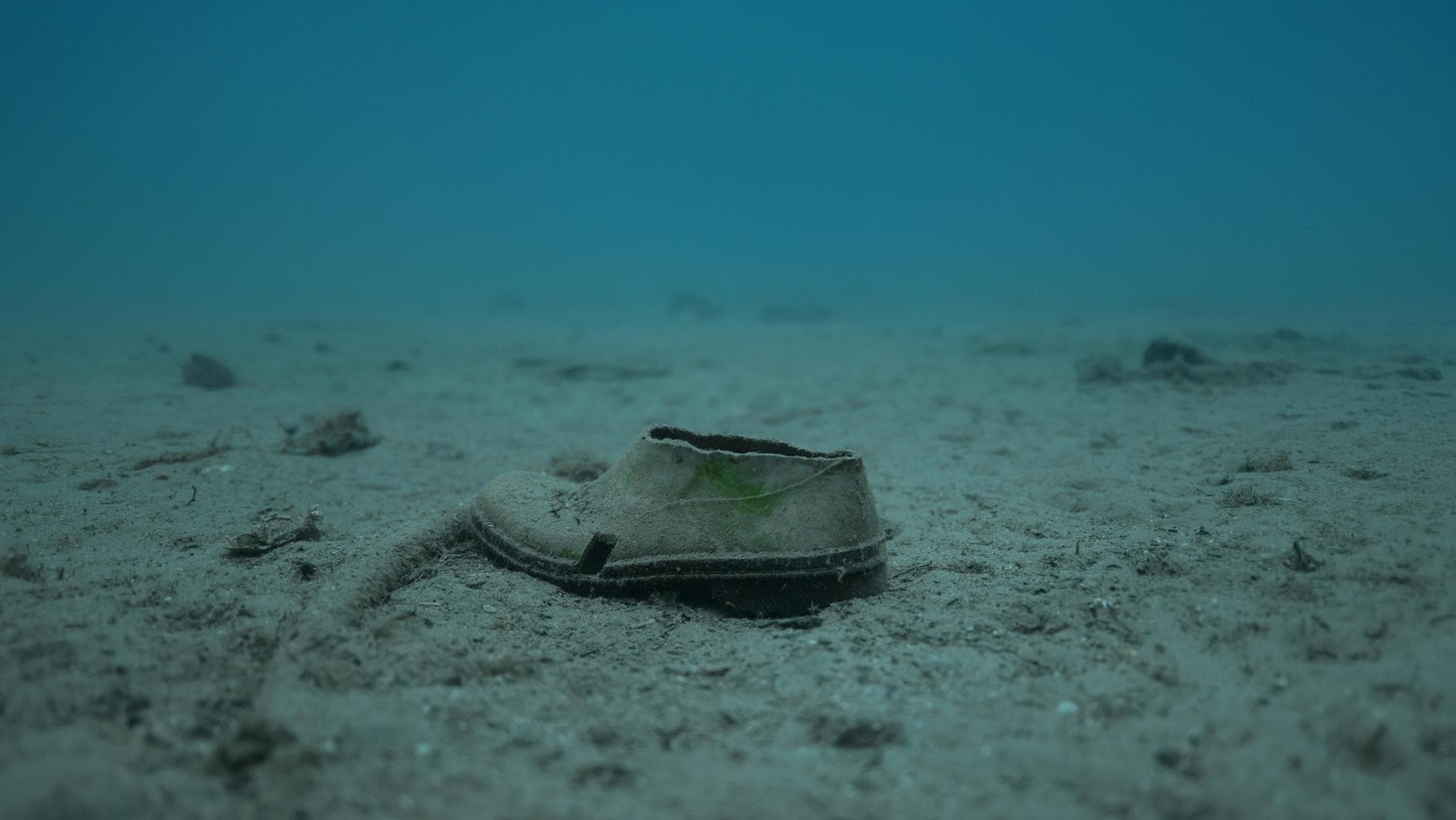
Plastic pollution continues to pose a major threat to Greece’s coastline, though new monitoring data from the World Wide Fund for Nature (WWF) show early signs of improvement in some categories of waste, including significant reductions in certain single-use plastics.
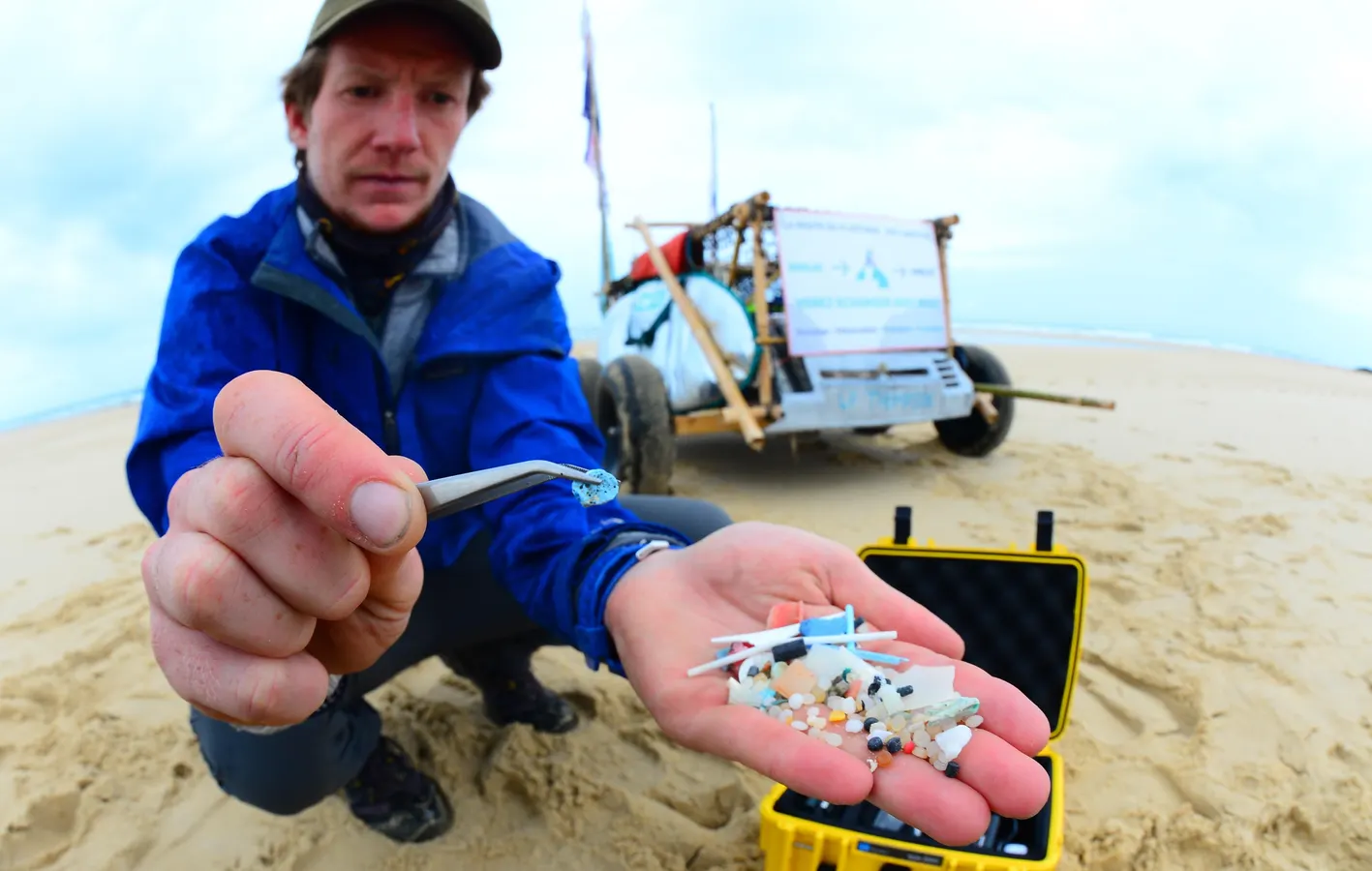
WWF Greece’s latest report from its “Adopt a Beach” marine litter monitoring program, covering the period from 2021 to 2026, found that plastic waste levels remain far above European thresholds while, for the first time, documenting the presence of microplastics on Greek beaches.
The “Adopt a Beach” program is a citizen science initiative that relies on volunteers, schools, organizations and community groups to collect qualitative and quantitative data on coastal pollution. Launched in Greece in 2021, the initiative has since expanded across the Mediterranean, with participation from WWF offices in countries including Turkey, Tunisia, Morocco, Libya, Algeria and Italy. Its long-term goal is to create a Pan-Mediterranean coastline litter monitoring platform and contribute to efforts to improve the health of the Mediterranean Sea.