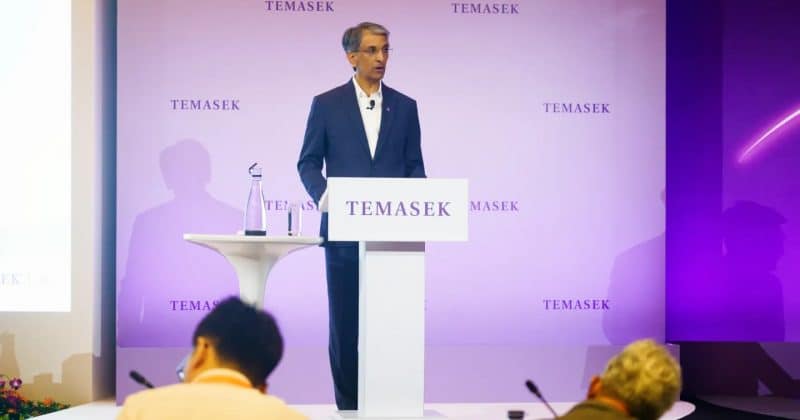
SINGAPORE – Temasek is expanding its sustainable-living portfolio after its sustainability-related investments delivered strong long-term returns, with the investor doubling down on energy infrastructure as the Middle East conflict underscores the importance of energy security.It also plans to increase its investments in artificial intelligence, including data centres that are driving higher electricity demand. While the rapid expansion of AI presents sustainability challenges because of its energy-intensive nature, Temasek sees opportunities to invest in the transition to more sustainable sources of power needed to support the growth of AI.These come despite challenges in meeting its interim emissions targets.While the concept of sustainability may be losing its appeal in some countries, the Singapore investment company is still aiming for its net-zero target by 2050 for its total portfolio emissions.2030 target likely to be missedTemasek also aims to halve its total portfolio emissions from its 2010 baseline by 2030 to about 11 million tCO2e, or tonnes of carbon dioxide equivalent, but said it is unlikely to hit this target.In its 2026 sustainability report released on July 8, Temasek’s portfolio emissions stood at 21 million tCO2e, unchanged from its 2025 report.Meanwhile, its sustainable-living trend-aligned investments grew to $49 billion in its 2026 financial year ended March 31, $3 billion higher than in the previous year.Such investments include companies with products and services that aim to fulfil environmental and social objectives, as well as those that will benefit from sustainability opportunities.Returns over rhetoricTemasek’s chief sustainability officer Park Kyung-ah told The Straits Times: “When you manage the material risk issues and when you actually look at the structural tailwinds and invest into these things, you can ensure you are building a resilient portfolio and one that generates good sustainable returns over the long term.”She added that Temasek is a commercial investor and that investments are made for returns, regardless of whether they are tagged as sustainable investments.Temasek has made $5 billion worth of sustainable-living trend-aligned investments in the past year.Every sustainable investment has to meet Temasek’s returns hurdle, Park said, and some of these investments have already generated profit.For instance, Temasek and its partner, Swedish private equity firm EQT, sold Indian renewable energy firm O2 Power to Mumbai-headquartered JSW Neo Energy in 2025 for US$1.5 billion (S$1.94 billion).That is an example of Temasek making good financial returns while helping to scale renewable energy solutions, Park said.Other investments Temasek made in the past year include those with a focus on renewable infrastructure, such as North America’s largest distributed energy generation platform Luminace and Indian renewable energy company Clean Max Enviro Energy Solutions.Also, Temasek invested in French renewable energy company Neoen two years ago, which Park says has seen significant growth.She added that Temasek is not a hedge fund that chases quick returns year on year, but seeks investments that compound over the long term and remain resilient despite geopolitical and supply chain disruptions.She noted that if Temasek does invest in companies that might be more carbon-intensive, it needs to evaluate if the firm is able to pivot and navigate geopolitical shifts.Non-linear pathway to emissions goalOn Temasek’s sustainability goals, Park said the pathway to reducing its portfolio emissions is not linear, in part because it depends on the decarbonisation efforts of its Singapore portfolio companies.Temasek portfolio companies account for 43 per cent of its net portfolio value, but contribute to 89 per cent of its portfolio emissions. Of these, Singapore Airlines (SIA) and Sembcorp Industries make up 62 per cent of its emissions.The path to cutting these emissions is not straightforward, and dependent on the corporate moves that these companies make.For instance, Sembcorp acquired Alinta Energy, an Australian company that operates a 1,200-megawatt coal power station – a move Temasek expects will drive up its portfolio emissions in the next year.But this is deemed a short-term impact, according to Temasek’s managing director for sustainability Franziska Zimmermann. She said Sembcorp acquired Alinta not to own a coal plant, but to become a renewables player in Australia, tapping its pipeline of wind and solar power assets with the potential to deliver more than 10 gigawatts.The aviation sector remains challenging too, as “net-zero planes” do not exist and sustainable aviation fuel is still the only viable near-term pathway to decarbonisation.But developing and commercialising sustainable aviation fuel remains a systems engineering challenge, said Zimmermann.“The complexity of building that market and scaling up the production of sustainable aviation fuels, making sure that the fuel can get to the airport – all of this requires very tight coordination between different players, from policy to industry and investors.”SIA already employs strategies such as flying newer, more fuel-efficient planes, and aims to have sustainable aviation fuel make up 5 per cent of its overall fuel needs by 2030.Missing the mark, but staying the courseDespite these challenges, Temasek is not changing its 2030 target – though it will be “very unlikely” to attain its goal, said Park.The target remains a directional marker, she added, and Temasek is staying the course on sustainability in the areas within its control.It is also focusing on the real-world impact of its investments, such as energy grid infrastructure and renewable solutions.Park said: “It is not just about target-setting, but really trying to do the hard work and actually executing... Because ultimately, you don’t want to divest your way just to meet your portfolio emissions target.”Zimmermann added that the mood globally is shifting towards implementation, with discussion around disclosures in places such as Europe also reflecting a shift among companies – from simply collecting data to investing in the actual work.Energy security in focusGeopolitical events have also increased the need for concrete energy solutions.Park said there has been an acceleration of electrification and renewable energy and storage due to the US-Iran war, which started in February. The conflict triggered an energy crisis when the Strait of Hormuz – the world’s most crucial energy chokepoint – was effectively blocked.But Park said there are still challenges such as grid support and integration, especially since energy generated from wind and solar sources does not always meet consumer demand load.To this end, Temasek is investing in grid solution providers like Britain-based clean energy transition company Atlantica and Singapore-headquartered Amperesand, which develops advanced transformer systems to enable power grids to support data centres and electric vehicle charging platforms.Beyond traditional renewables, Temasek is betting on nuclear energy to diversify its clean energy portfolio for land-constrained regions, including Singapore.Temasek invested in Commonwealth Fusion Systems, the world’s largest commercial fusion energy firm, as early as 2020. Park said the US-based company is still a number of years away from commercialisation of fusion technology, but recent investments are testament to its progress.Meanwhile, Westinghouse, a US-based provider of nuclear reactor technology and nuclear fuel that Temasek also invested in, entered a strategic partnership with the US government in October 2025 to deploy its technologies at new reactors across the country.Reconciling investing in AI with sustainabilityTemasek wants to increase its investments in AI, including data centres that drive up energy demand. Yet, Park and Zimmermann said AI investments are not fundamentally in opposition to sustainability goals.“We are seeing energy transition and AI trends intertwine and move together,” Zimmermann said. “There is a lot of innovation happening... If we can harness and accelerate that momentum, then it’s a positive.”She noted that some companies are leveraging this trend. For instance, Keppel announced a partnership with oil company Shell in April to test-bed an advanced immersion cooling solution at a data centre. If successful, this could increase energy efficiency by around 48 per cent.Park acknowledged that while there are meaningful developments to make the sector more sustainable, not all data centres would be green assets.In addition, no country would sacrifice energy security solely to meet decarbonisation goals, Park said.Amid the “noise”, she added, it is critical for Temasek to identify “durable, long-term structural trends” to invest in.“How do we harness those structural trends to invest into the right things and work with our partners... in a way that enables better, sustainable outcomes?”The AI genie is out of the bottle, Park said, but the question is how to harness that genie to address global issues like sustainability.
Temasek doubles down on net-zero goal, says sustainable investments make profit
Discover how Temasek is doubling down on its net-zero goal, finding profit in sustainable investments despite missed interim targets. Read more at straitstimes.com. Read more at straitstimes.com.
1,349 words~6 min read