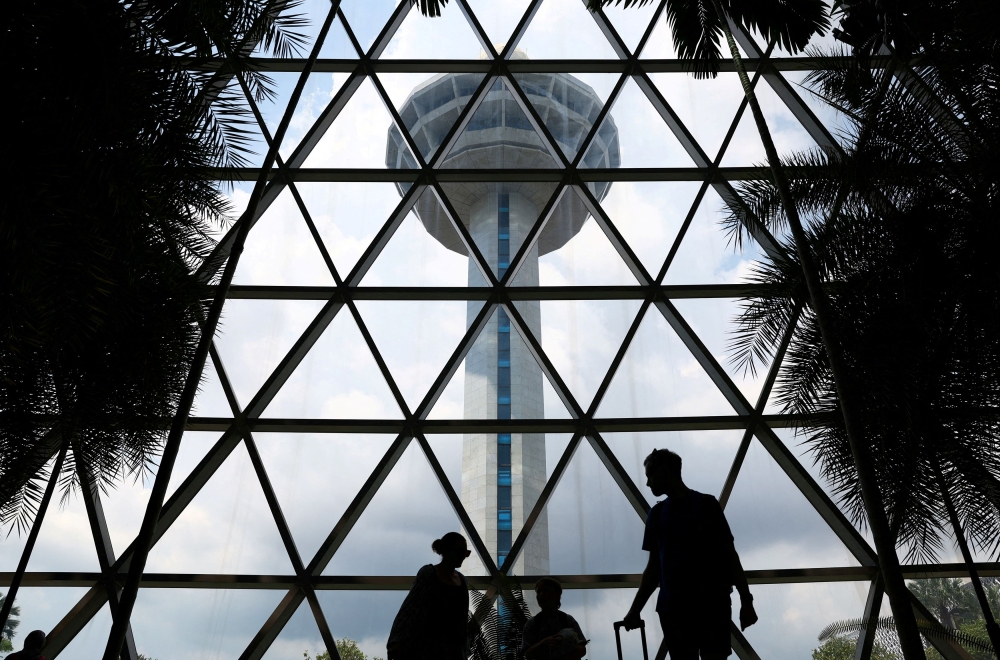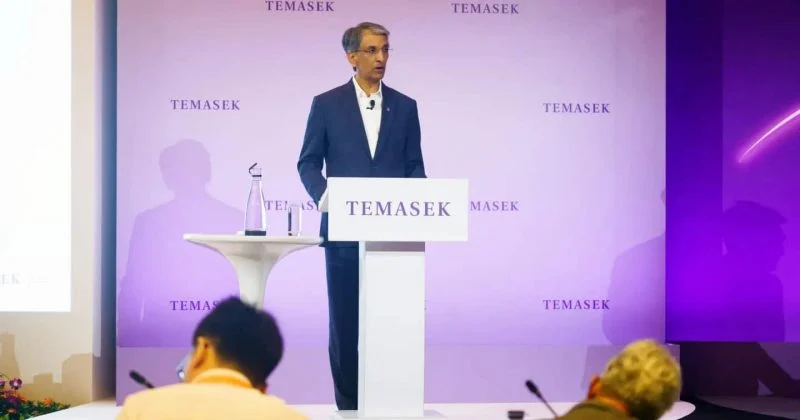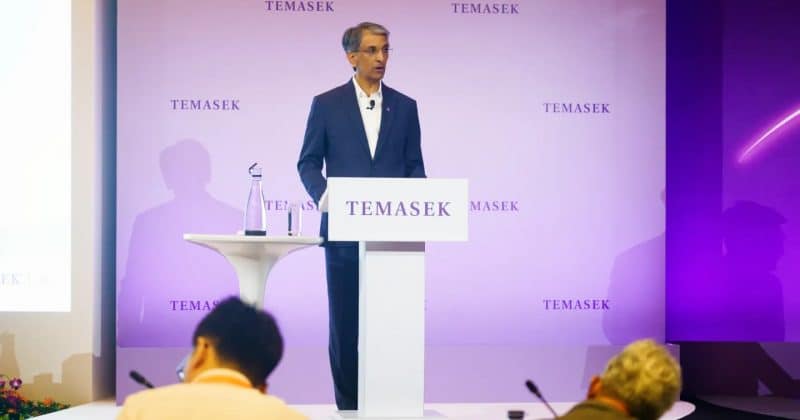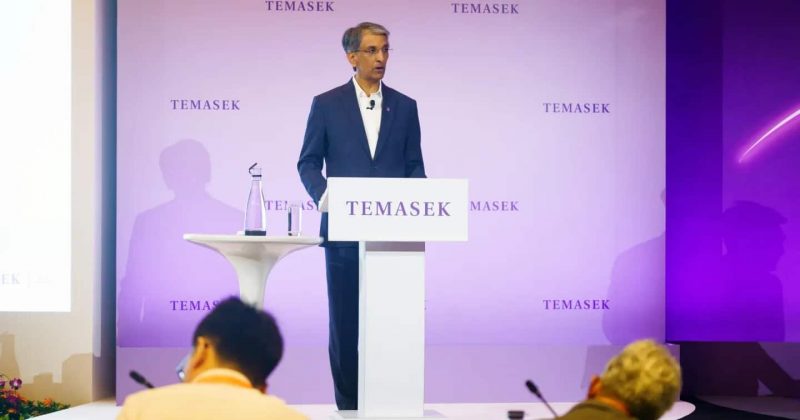
SINGAPORE: Temasek Holdings' carbon emissions are expected to increase in the near term, the state investor said on Wednesday (Jul 8), highlighting the growing challenge of reaching its long-term goal of net-zero emissions by 2050.For the past three years, the carbon output of its portfolio has remain unchanged at 21 million tonnes of carbon dioxide equivalent (tCO₂e), according to its 2026 sustainability report released as part of the annual Temasek review.The firm had previously set an interim goal of reducing portfolio emissions to 11 million tCO₂e by 2030, but that target is increasingly difficult to achieve after having cut emissions by 30 per cent since 2019.In a briefing ahead of the 2026 report's release, Temasek's chief sustainability officer Park Kyung-Ah said the global environment has changed significantly since the firm set its initial climate targets in 2019.
"The path to decarbonisation has become a lot more complex," she said, pointing to geopolitical fragmentation, policy shifts, tighter capital conditions and rapid technological disruption driven by AI.These macro factors, combined with the challenges of scaling solutions for hard-to-abate sectors, have impacted the company's interim climate targets, Ms Park said.Her comments echo what Temasek Holdings' CEO Dilhan Pillay Sandrasegara said at its flagship sustainability event Ecosperity Week earlier this year, when the company first acknowledged that it was unlikely to meet its 2030 climate target of halving net portfolio emissions from 2010 levels.Mr Pillay said then that this was due to two primary factors - the exposure to aviation and the power generation sectors.In the media briefing, the firm said that its long-term 2050 goal remained unchanged."Our net-zero ambition is clear, and it's unwavering," Ms Park said, describing Temasek's approach as one of "pragmatic ambition" – balancing long-term climate goals with the "real-world" constraints of the economy, technology and political challenges facing businesses.Looking ahead, Temasek said it would focus on implementation, portfolio engagement and investing in technologies that can drive "real-world impact" rather than simply divesting high-emitting assets.In its report, Temasek noted that decarbonisation pathways are non-linear and added that the company has started reviewing its target to ensure that its 2050 ambition remains current and practical.The state investor also altered the climate scenario it uses to assess investment risks, replacing its previous baseline assumption of a 1.8°C temperature increase pathway to a 2.4°C "fragmented world" scenario.Asked if Temasek is setting interim goals for itself given that meeting 2030 targets were no longer likely, Ms Park said the company will retain the 2030 target as it serves as a "directional marker" for the firm."We're not changing that, but what we are doing is re-looking our climate roadmap," said Ms Park in an interview with CNA, adding that the company distinguishes between short-term "noise" and long-term structural trends, while taking into account evolving frameworks and practices.S$3 BILLION GROWTH IN SUSTAINABLE LIVING PORTFOLIOMs Park said that Temasek will be "sharpening" its emissions approach to its three portfolio segments: Singapore-based portfolio companies, global direct investments, as well as its partnerships, funds and asset management companies.It will continue engaging the Singapore-based portfolio companies on climate transition, adaptation and workforce readiness.For global direct investments, it will direct capital into sustainable living trend-aligned investments with a focus on environmental, social and governance (ESG) risks.The state investor said it would focus on a few priorities, including accelerating the energy transition through investments in renewable energy and storage, and strengthening efforts towards adaptation and resilience by exploring investments in nature-based solutions and water resilience.Despite the more challenging operating environment, Temasek continued to increase investments aligned with its sustainable living strategy.The value of its sustainable living portfolio rose to S$49 billion (US$37.9 billion), up S$3 billion from last year.The total comprises S$42 billion in sustainability-focused investments - companies whose products and services contribute directly towards the long-term goal of net zero - and S$7 billion in climate transition investments in companies in high-emitting sectors that are shifting towards lower-carbon products and services.Temasek's climate transition investment grew from S$6 billion in 2024, when its inaugural sustainability report was published, to S$7 billion in 2025, where it has since remained.Asked why this segment has not grown more quickly, Ms Park said Temasek applies a rigorous climate transition investing framework, so that certain portfolio companies that may appear to be transitioning may not qualify. "We are always open to going towards where the emissions are, but the bar is very high. We need to have confidence if we go to where the emissions are, that those companies really have the wherewithal to execute, and we can hold them accountable."So that's why that number is not growing as fast as the sustainable investment pipe," Ms Park said.INCREASE IN EMISSIONS EXPECTED IN NEAR TERMAs the two largest emitters in Temasek's entire portfolio, Singapore Airlines and Sembcorp Industries together account for nearly two-thirds of the firm's total emissions.Overall, Temasek's Singapore-based portfolio companies - including Singapore Airlines and Sembcorp - account for 89 per cent of total portfolio emissions despite representing just 43 per cent of the portfolio's value.Temasek said the expected increase in portfolio emissions next year would be driven largely by Sembcorp's acquisition of Australian energy company Alinta Energy, a leading player with a pipeline of renewable energy projects.The acquisition gives Sembcorp access to more than 10 gigawatts of renewable energy and storage projects, but also includes a brown coal-fired power station that is expected to increase its emissions in the near term."(SembCorp) will work constructively with the government, industry, and communities to support a balanced and inclusive transition that meets national and stakeholder needs," the report stated."This will be achieved through the execution of Alinta’s 10.4 gigawatts pipeline of renewables and firming technological pipeline." As for Singapore Airlines, emissions rose 3.8 per cent during the financial year, corresponding to a 3.8 per cent increase in total fuel consumption for airline flight operations.Temasek's report stated that the increase was largely driven by resilient demand for air travel as overall passenger and cargo operations grew by 3.3 per cent.Longer routings due to airspace restrictions also contributed.While the airline continues to renew its fleet, improve operational efficiency and increase its use of sustainable aviation fuel, Temasek acknowledged that aviation remains one of the most difficult sectors to decarbonise.Referring to past research, Ms Park noted that there had been "some optimism" that sustainable aviation fuel would be able to scale to as high as 10 per cent of the global fuel consumption by 2030.Today, however, sustainable aviation fuel accounts for less than 1 per cent of global fuel consumption. Sustainable aviation fuel is jet fuel made from organic or waste-derived material known as feedstock, instead of petroleum. It currently costs between two and five times more than conventional jet fuel."We know the margins of airlines are incredibly thin, so expecting aviation companies to actually uptake something that is two to five times more expensive at scale, when it's not readily available, it's not something that we can ... say with a straight face," she told CNA.She said carbon markets and carbon credits can play a complementary role alongside direct emissions reductions by helping finance climate projects, while clearer government policies could help make low-carbon aviation solutions more commercially viable.Ultimately, the pace of SIA's decarbonisation would depend not just on its own climate commitments, but on broader factors across the aviation sector, such as the availability of low-carbon fuels, infrastructure, policy, market mechanisms and technology readiness, Temasek's report stated.Ms Park said: "We are very clear-eyed that the emissions are going to come up before it goes down, but we are okay, because what we don't want to do is, just to put it bluntly, we're not managing for emissions."The target is to make sure that ... we are making the right decisions and doing the right behaviour changes both within the firm as well as within our ecosystem."Reflecting a more uncertain global outlook, Temasek on Wednesday also updated the climate scenario it uses to assess investment risks.It replaced its previous baseline assumption of a 1.8°C warming pathway with a 2.4°C "fragmented world" scenario, which Temasek said reflects an outlook driven by uneven policy ambition and weaker global policy coordination than previously anticipated."Some jurisdictions are advancing their decarbonisation goals through carbon pricing, deployment of renewable energy and the setting of sector standards."Others, however, have moderated their approach in response to domestic political pressures, energy security imperatives and affordability constraints," the report said.