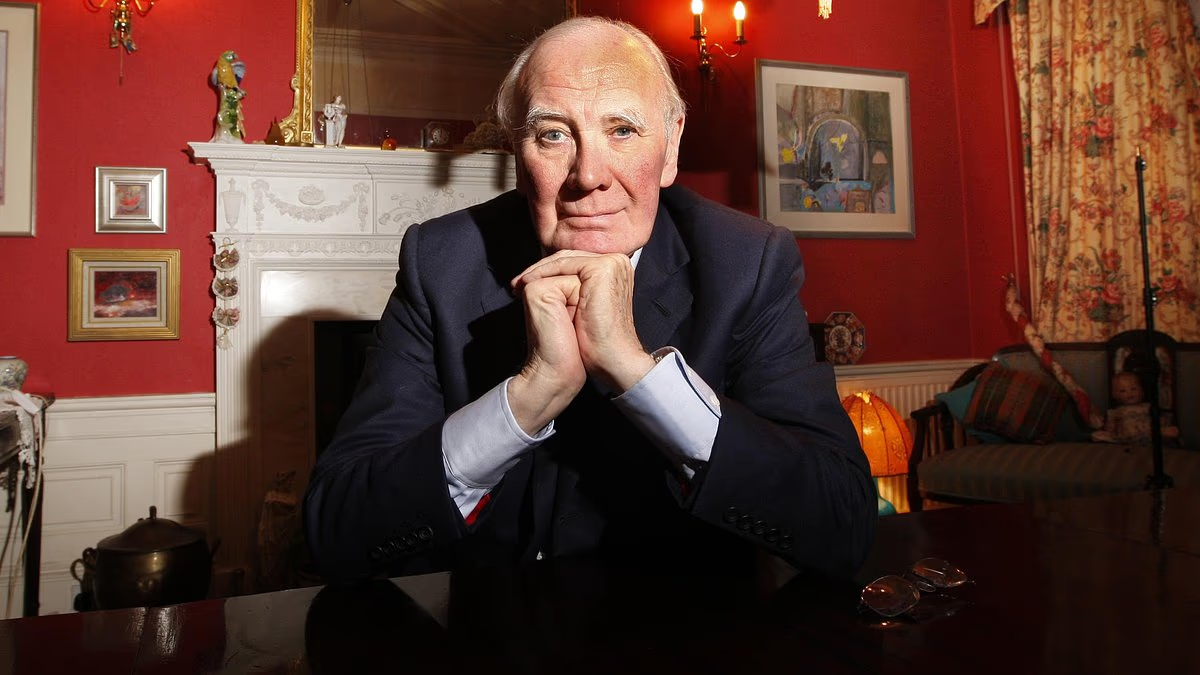
In late 1954, the proprietor of these august pages, Sir Angus Watson of Skippers Sardines fame, thought he was selling his magazine to the son of Sir John Gilmour, a Baldwin-era Home Secretary. He was not. It was another Gilmour baronet who, as luck would have it, at the age of twenty-eight became the new owner of The Spectator: Ian Gilmour, born on 8 July a century ago.
Under his unusually combined authority as editor and proprietor, the somnolent Spectator of the 1950s became a magazine with bite. The credo of Gilmourian spectatoralism was to entertain the reader, but also to serve those who ‘believe that the future of the world depends largely on individuals acting freely.’
As editor and proprietor, the somnolent Spectator of the 1950s became a magazine with bite
His tone was libertarian on social issues, iconoclastic, pro-European and vehemently anti-Suez. Although not a friend of Labour, Gilmour was sympathetic towards Hugh Gaitskell’s modernising efforts and targeted Macmillan’s government for its Edwardian pomposity and complacency. The editor’s close friend, Roy Jenkins, thought the magazine more interesting to the moderate left than the New Statesman.
In the late 50s, The Spectator crusaded in favour of the abolition of capital punishment, the decriminalisation of homosexuality and the end to theatre censorship. Gilmour also popularised Henry Fairlie’s coinage, “The Establishment”, ran the first cartoons (the inaugural one at Macmillan’s expense), and kept the literary front bright with inter alios Iris Murdoch, John Betjeman, Ted Hughes, and Patrick Leigh Fermor writing for the magazine. In 1959 he stepped down from the editorship, occupying himself with writing lengthier articles, including – according to the magazine’s magisterial official history penned by David Butterfield – the longest single piece in its history: 12,500 words on Franco’s Spain of all things (now that is a record to be broken).