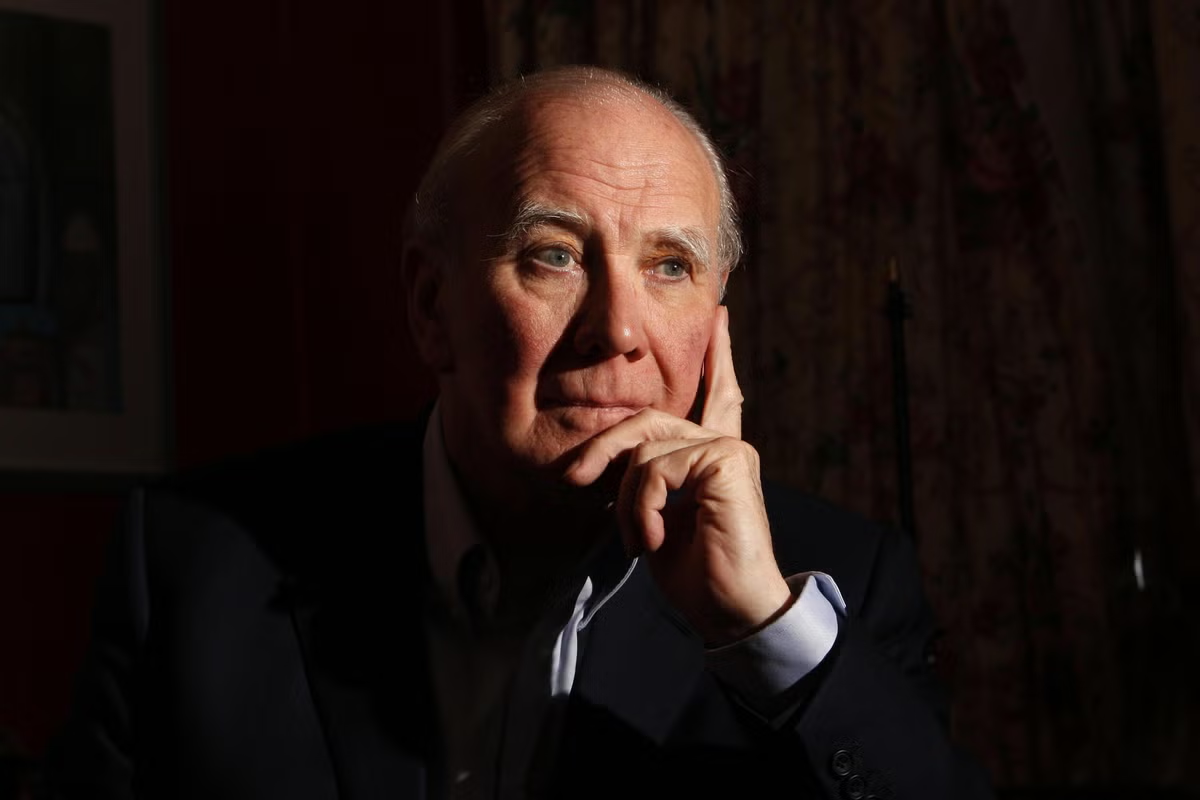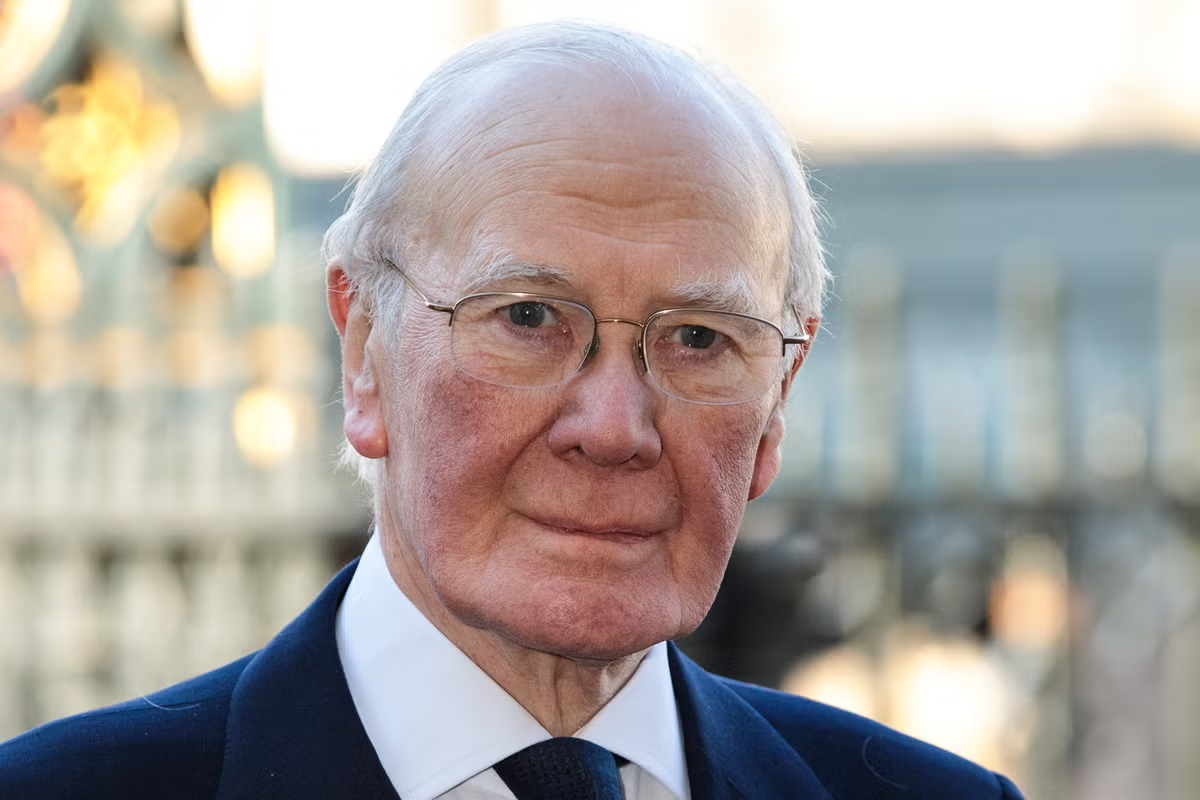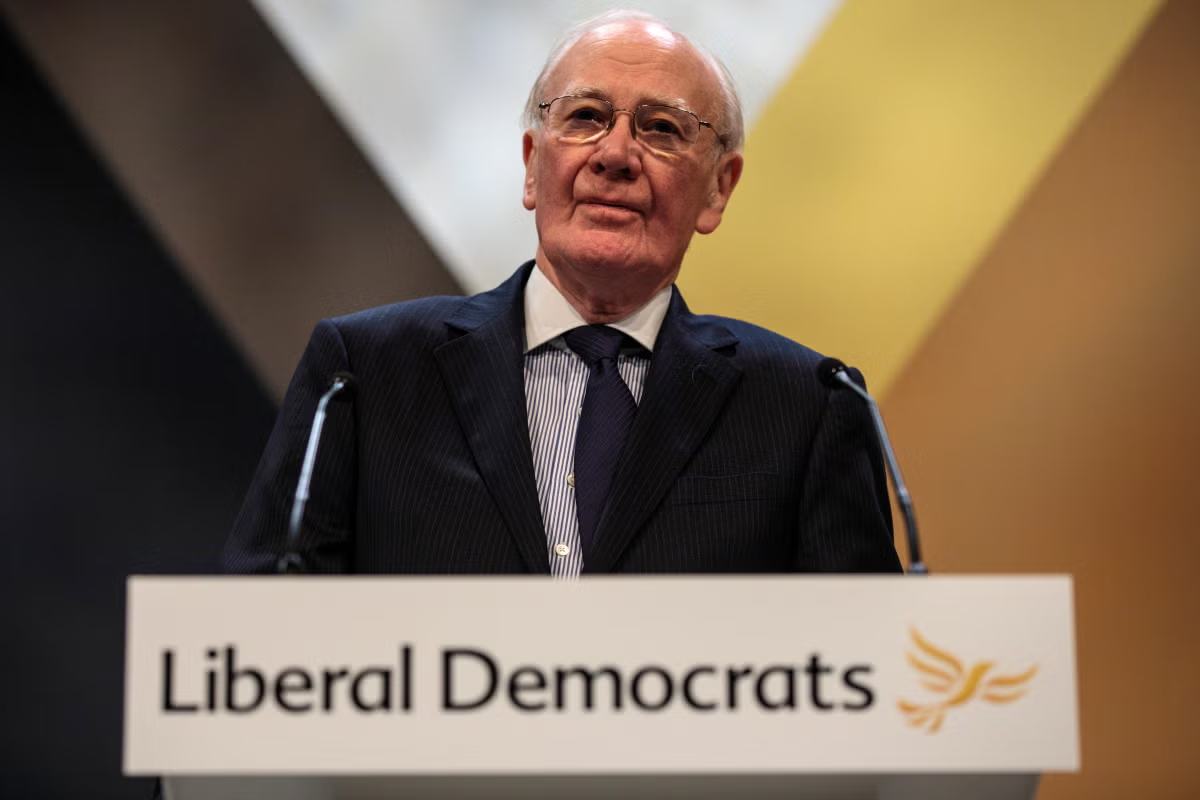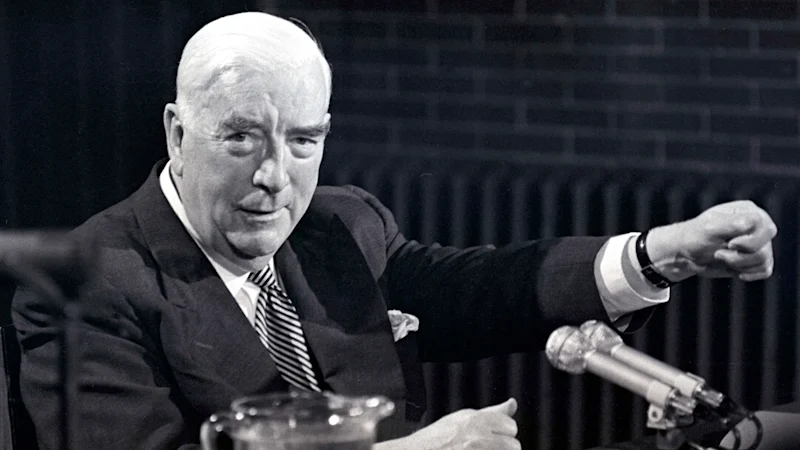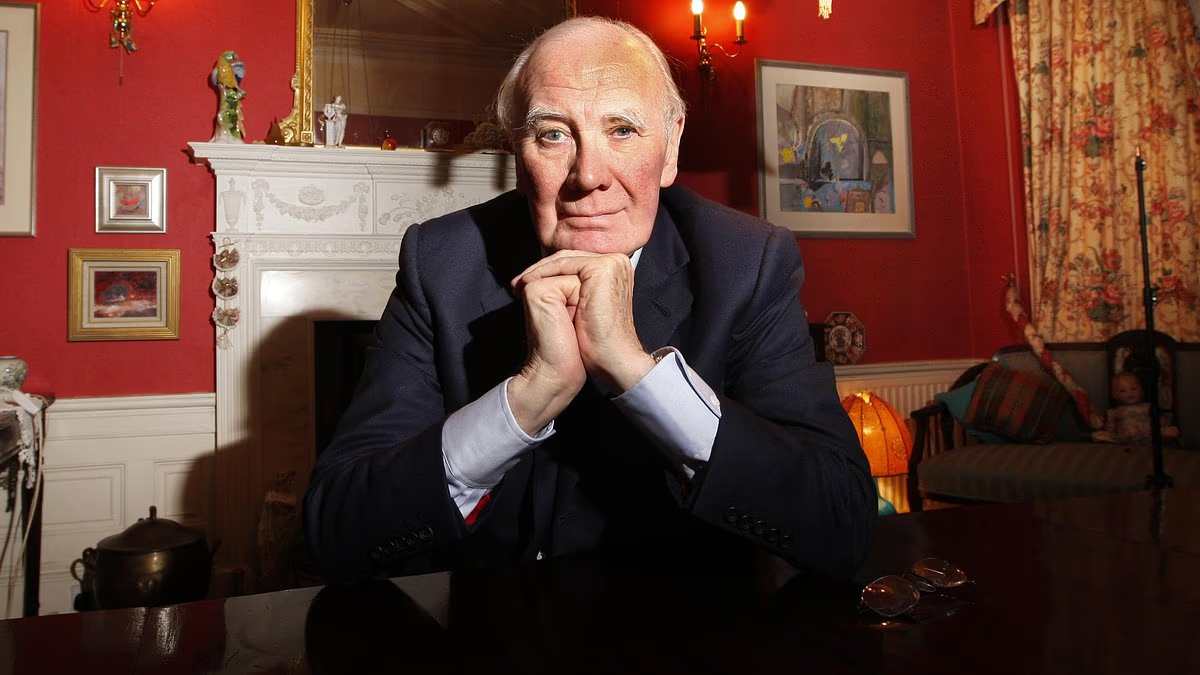
Menzies ‘Ming’ Campbell was in the noble tradition of gentlemanly Scottish Liberalism. In tone and temperament, he belonged to an earlier political age, one in which principles were held fiercely but expressed with courtesy, grace and good humour.Tolerance was not weakness but civility, and an open mind the hallmark of a working mind. Campbell enjoyed the esteem of his opponents and the public at large for his convictions and the manner in which he pursued them. Those who disagreed with him were rarely disagreeable about him.He was a man of character and character matters, even if it seems to matter much less today. His contributions to Parliament and public life were considerable, especially in the area of foreign policy, but in these times of rancour and extremism, of fake news and rabble-rousers Left and Right, his legacy is one of integrity and, to use an old-fashioned word, honour.Many will remember him as a cogent opponent of the Iraq war and a forensic analyst of the Blair government’s claims about weapons of mass destruction, as well as the prosecution of the war. Less well remembered is that his opposition was nuanced and predicated on international legal norms rather than kneejerk anti-war or anti-Blair sentiment.Six months before coalition planes entered Iraqi airspace, Campbell urged the Labour government to seek another UN resolution, one with strict obligations on Saddam Hussein. He warned that, if the Ba’athist dictator ‘fails to meet deadlines or thwarts or obstructs inspections, military action may be necessary’.That was not to be and Campbell considered the US-UK invasion precipitous and ill-judged. In the early days of the war, he was already decrying the government’s ‘failure to comprehend the complexity of the reconstruction of Iraq’, and he would go on to be a thorn in the side of Tony Blair’s government.This he did not with the headline-grabbing rhetoric of the political opportunist but with rigorous questioning that revealed his background in law. There were many anti-war figures who had never voiced any concern for Iraq until faced with the prospect of its brutal dictator being ousted — and, worse, by American and British firepower.Campbell was not one of them. Over the years, he had pressed ministers both Labour and Tory on the situation there. He was uncommonly well-informed and well-read even by the standards of his day, and would tower above most occupiers of the Commons benches today without even trying. Sir Menzies Campbell became MP for North East Fife in 1987, held frontbench roles in foreign affairs and defence before becoming Lib Dem leader in 2006His foreign policy views were what one might expect of someone who came of age in the Sixties: suspicious of American power, enamoured of the UN, sympathetic to the Palestinians, and guilt-ridden over the sins of the developed nations in the developing world.Like so many liberal multilateralists, he believed unquestioningly in the doctrine of universal human rights but presented with the opportunity to depose tyrannical and oppressive governments, he erred on the side of regional stability and legal proceduralism. He was sometimes a liberal in spite of himself, which is close to the definition of a liberal.For 18 unhappy months, he led his party in the wake of Charles Kennedy’s forced resignation. Those who had gained a taste for disloyalty during the Kennedy years feasted on Campbell’s low-key performances at Prime Minister’s Questions and began briefing furiously against him.Anyone wishing to make a study of ageism in British politics would do well to set the archives to 2006-07, where they would find a nasty campaign against Campbell centred on his advanced years. That he was only in his sixties, and routinely displayed the sharpest of minds, was immaterial to his detractors. His crime was one of the gravest in politics: standing in the way of ambitious colleagues.Although educated at Glasgow and Stanford universities, he had a great affinity for St Andrews, which sits in his former constituency of North East Fife and whose funding troubles were the subject of his maiden speech to the Commons in 1987. Decades later, he would become chancellor of the university, a post he held for 19 years until his death.His early years were given not only to student politics but to athletics. Famously, he broke a half-century 300m sprint record set by Wyndham Halswelle and competed in the 1964 Tokyo Olympics and the 1966 Kingston Commonwealth Games. He was a two-time winner of the Amateur Athletic Association championship. Sir Menzies with his wife at his party's conference in North Yorkshire in 2006The Press dubbed him the ‘Flying Scotsman’ and, these being less politically correct times, ‘the fastest white man on the planet’. During his time in the United States he raced and triumphed over a then unknown OJ Simpson, who would later become famous as an American footballer and, later still, notorious for other reasons.Instead of professional athletics, he opted for a career in the law and it would be another two decades before he made it to the Commons, ousting the Tories’ Barry Henderson in 1987, the election that saw Mrs Thatcher lose half of her Scottish MPs. He became a fixture on the frontbench of what was now known as the Liberal Democrats and spent 14 years as the party’s foreign affairs spokesman.There were also stints as deputy leader and spokesman on defence, before he was raised to the peerage in 2015, as Baron Campbell of Pittenweem. He was still peppering the government with written questions as recently as March but his spoken contributions to the Lords came to an end in 2023. Unsurprisingly for a foreign policy maven, his final interventions focused on the humanitarian situation in Gaza.Unsurprisingly for a foreign policy maven, his final interventions focused on the humanitarian situation in Gaza.It is impossible to reflect on Campbell without recalling his beloved Elspeth, to whom he was devoted. Elspeth, who predeceased her husband in 2023, was the daughter of Major General Roy Urquhart, who was played by Sean Connery in A Bridge Too Far, Richard Attenborough’s 1977 retelling of Operation Market Garden, a daring but unsuccessful World War II mission to secure an Allied stronghold in Arnhem.Profiles tended to portray her as nothing more than a politician’s wife, known for her epic dinner parties, love of Coronation Street, and the prodigious number of cigarettes she smoked. In fact, she had keen political instincts of her own and was arguably her husband’s most important adviser.Death is a painful parting for the living but for the departed it is a reunion. Ming and Elspeth Campbell were married for 53 years, separated by the grave for two, and now they are together again. Love lives a long life.Menzies Campbell never attained ministerial office. No policy bears his name or his fingerprints. The global liberal order in which he put his faith is imploding all around us. These are not indicators of failure but of the temporary nature of political settlements. What seemed inevitable one day becomes unsustainable the next. The only consistency is in a man’s principles, his character, and the dignity and decency with which he comports himself in an arena of cynicism and skullduggery. Menzies Campbell was faithful to his conscience and lived a life of public service with integrity at its heart. It was his longest and final race and he won it by a mile.
STEPHEN DAISLEY: Menzies 'Ming' Campbell belonged to a principled age
Menzies Campbell was in the noble tradition of Scottish Liberalism. In tone, he belonged to an earlier political age, one in which principles were held fiercely.
1,221 words~6 min read