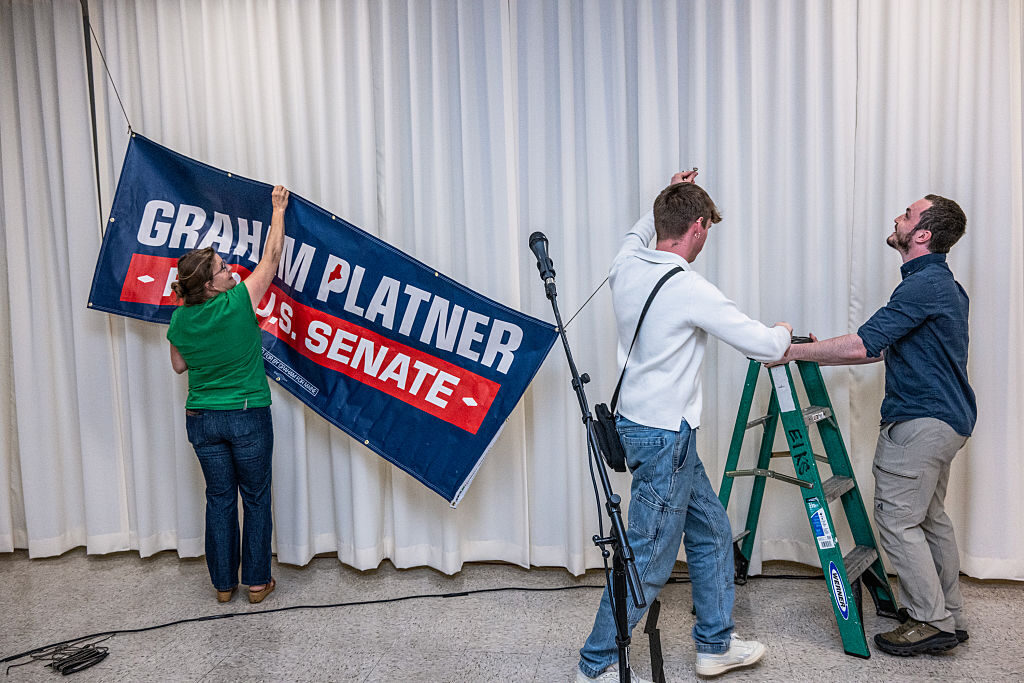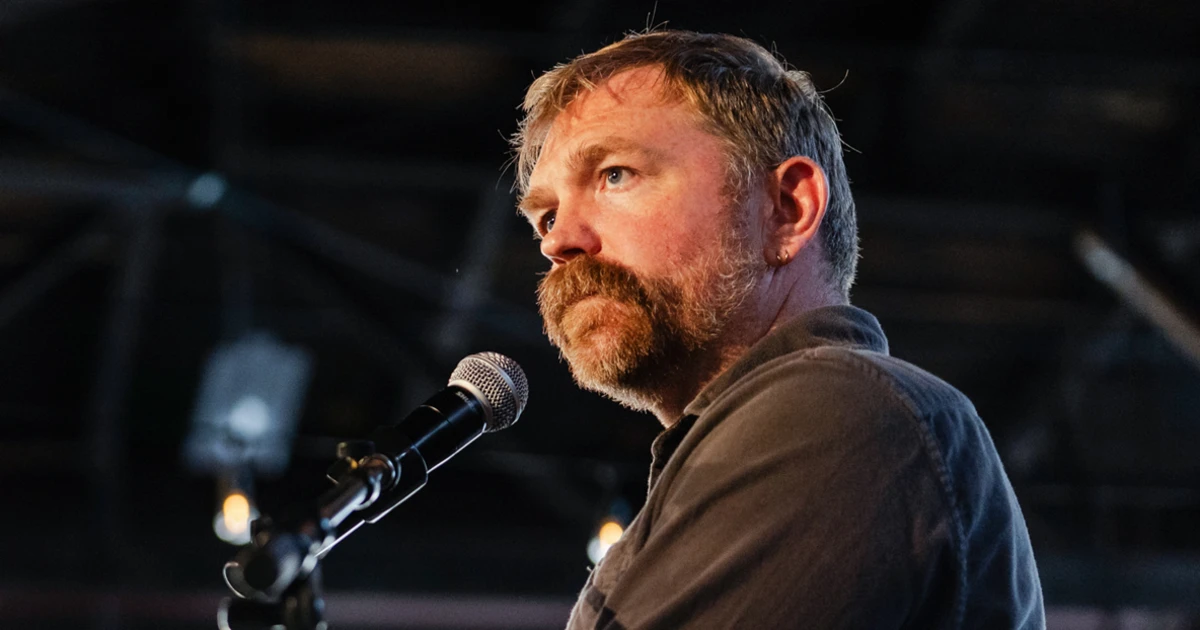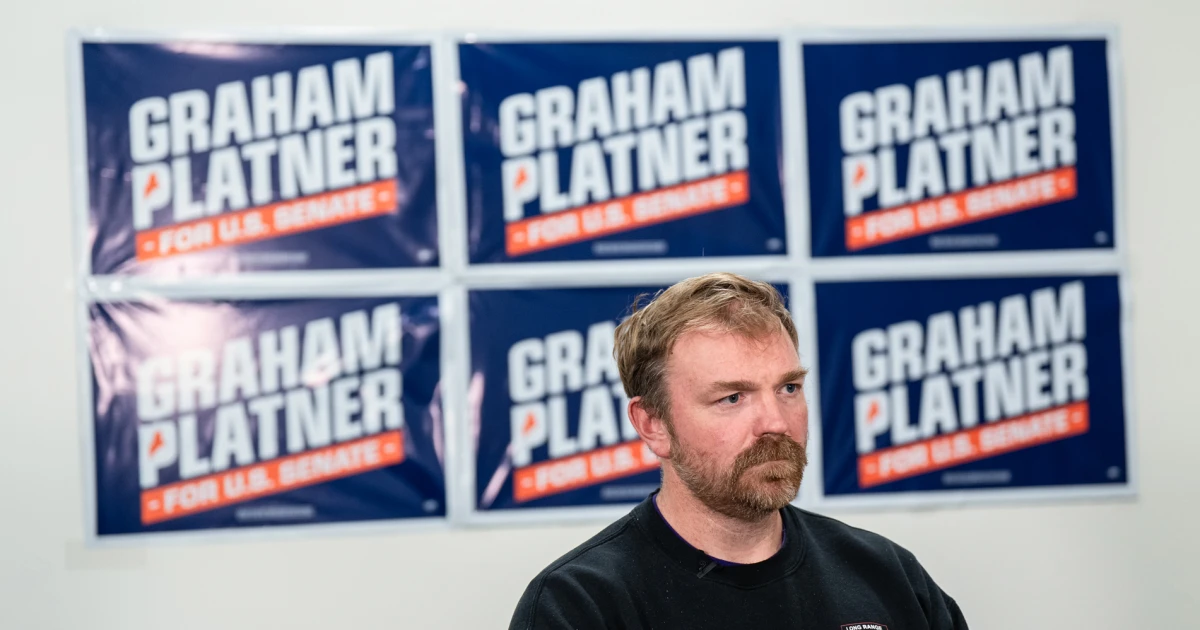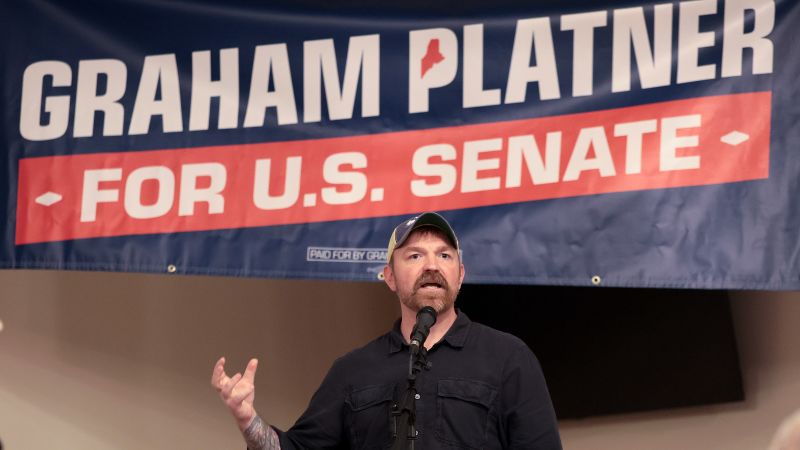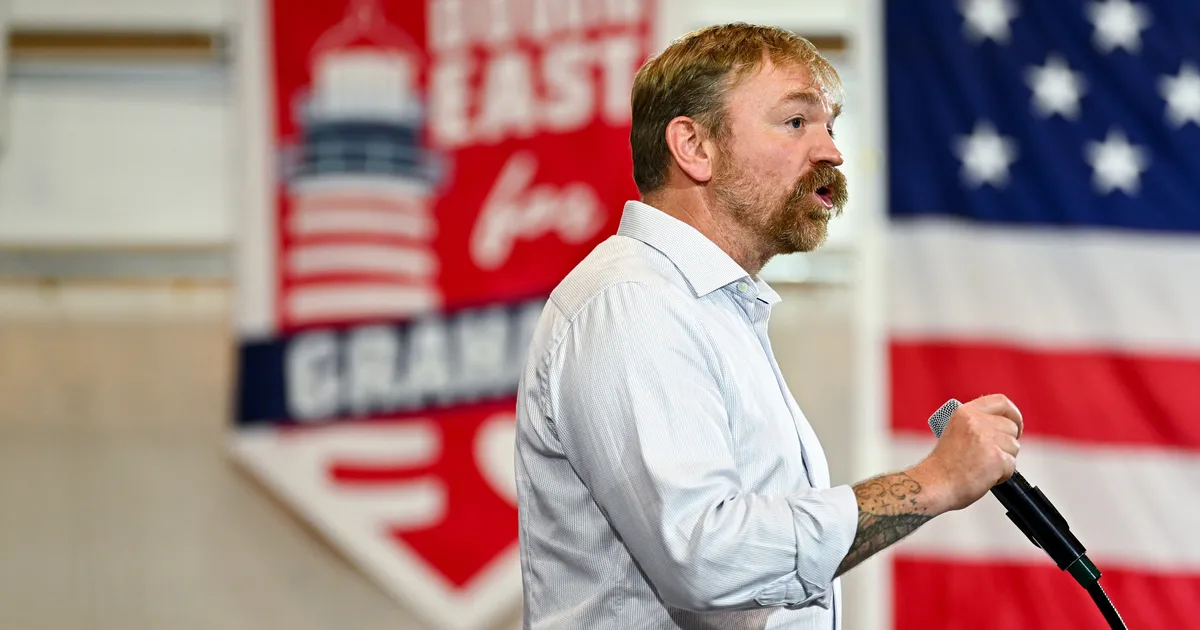
The Maine Democratic Party said on Tuesday night that progressive oysterman Graham Platner’s campaign team is trying to shape how the party would choose its replacement nominee in the state’s U.S. Senate contest, a demand it said was unacceptable considering the accusations of sexual assault leveled at the candidate.“The Maine Democratic Party has been working around the clock to develop a process to replace our U.S. Senate nominee that is open, inclusive, transparent, and fair,” the party’s executive director, Devon Murphy-Anderson, said in a video posted to social media, adding: “Unfortunately, Graham Platner’s team has repeatedly reached out to us in an attempt to put their thumb on the scale of what this process looks like.”Murphy-Anderson said the party has told Platner’s team they won’t play a role in determining who the next nominee will be, and said he needs to drop out of the race as soon as possible. The blunt nature of the statement underscores the extent of anger at Platner and his immediate allies in Maine and D.C. politics, with many believing they continued to push a candidate with glaring red flags, wasting millions of campaign dollars and putting the party’s chance of winning the Senate at risk.Platner’s team, however, insists they are just trying to respect the voters who overwhelmingly backed him in a primary and were simply trying to figure out the logistics behind what ending the campaign would look like. “The Platner campaign has reached out to the party to try and understand what this process would look like. At no point has the campaign tried to ‘put its finger on the scale,’” a campaign spokesman said. “Over 150,000 Mainers voted for this movement, and over 15,000 Mainers volunteered their time and energy to it. While Graham wouldn’t want to be a part of the process, he would want to make sure the voters and volunteers make this decision — not the political establishment.”The spat comes as the larger party bickers over the root causes of Platner’s failures, both to determine the political blast radius of his implosion and to shape the likely contest to replace him, in which political figures from across the party’s ideological spectrum are expected to run.One Democrat with knowledge of the discussions said Platner’s team is trying to make it as likely as possible that a candidate who shares his progressive ideology ends up as the nominee, leading to clashes with other Democrats’ political desire to keep the replacement candidate as far away from the damaged candidate as possible and moral insistence that a candidate accused of sexual assault should not get to wield power. “He does not have the right to shape the field anymore,” said the Democrat, who requested anonymity to speak frankly about sensitive discussions. “And if he did, it would only hurt the party in November. Everyone understands that but them.” While there are clear steps being taken to wind down the campaign — Platner’s team has stopped all fundraising and social media advertising — there is yet to be a clear promise to drop out of the race, the Democrat said. Even as Platner dragged his feet, potential candidates to replace him rushed to establish their campaigns. Former state Senate President Troy Jackson filed with the Federal Election Commission, while former public health official Nirav Shah and Secretary of State Shenna Bellows both made their intent to run clear. Additionally, Maine Beer Company owner Dan Kleban, state Rep. Valli Geiger and former Senate candidate Jordan Wood are also considering bids. If Platner’s demands are ideological, most of the potential candidates should fit: Jackson, Geiger and Wood all endorsed him over Gov. Janet Mills during the primary, and Bellows is also seen as a progressive. While Shah was considered the leading moderate in the race during his gubernatorial run, he has shown a more progressive streak on federal issues since throwing his hat into the ring for Senate, endorsing Medicare for All and cutting aid to Israel. Democrats in the state remain unsure how a new nominee would be selected, but two advisors to prospective candidates said that discussions have increasingly focused on holding a statewide convention later in July. In a statement Tuesday, Shah indicated he would favor holding a debate and mini-primary.“Anyone running for this nomination should agree to at least one televised debate and hold multiple public town halls across every corner of the state. I am committed to doing that, if I run,” he said, continuing a theme from his accessibility-focused gubernatorial campaign, which ended in a second-place finish. “Defeating Collins means showing up everywhere and speaking with everyone.”The other candidates were also developing their pitches. Jackson, while steadfastly insisting that Platner drop out, indicated that he was the best choice to continue the movement Platner started. Kleban is likely to play up his close ties to Hannah Pingree, the Democratic nominee for governor, and to argue he can make a generational change argument against Collins. Bellows will argue she can best unite the party.“I believe I am uniquely fit to unite Mainers and defeat Susan Collins in just over 100 days,” Bellows said.The collapse of a high-profile progressive campaign immediately led to a predictable round of ideological infighting on social media, with many on the left arguing the party should continue running in the spirit of a candidate who overwhelmingly won the primary, while centrists argued Platner’s failings were indicative of progressives’ rash and reckless approach to picking candidates.For many Democrats outside of Maine, however, the story of Platner’s failure can be traced to one consulting firm in particular: Fight Agency, the ad-making firm behind the rise of New York City Mayor Zohran Mamdani that is working for a number of progressive candidates this cycle, including Platner, Michigan’s Abdul El-Sayed and Randy Villegas in California. While they work with other types of candidates — they were the ad firm for Micah Lasher, a Michael Bloomberg protege who won a House primary in Manhattan, and for billionaire Tom Steyer’s California gubernatorial run — they have become closely associated with campaigns like Platner’s: insurgent, left-wing, sometimes featuring working-class candidates. They have also irritated the Democratic establishment to no end, and many in the party are not-so-quietly hoping the end of Platner’s campaign discredits them as well, pointing the finger at them for Platner’s refusal to immediately end his campaign.“Morris Katz and Rebecca Katz are throwing a tantrum and holding the Maine Senate race hostage in collusion with a credibly accused rapist,” said one Democratic strategist, referring to the two operatives seen as the faces of the firm. “No serious campaign should ever hire them again.”The anger at Fight Agency, however, does distract from other party-wide failures, including the Democratic Senatorial Campaign Committee’s fixation on 78-year-old Gov. Janet Mills as a potential challenger to Collins, which ended with the governor running out of money before the primary. And a failure to spot potentially fatal scandals is not unique to the left: Rep. Eric Swalwell, a favorite of House Democratic leadership, saw his career implode earlier this year after multiple women, including former staffers, accused him of rape and sexual assault.RelatedDemocratic PoliticsMainegraham platner
Bickering Democrats Work To Push Platner Out Of Senate Race
Candidates in Maine are preparing for a mini-primary, even as Platner drags his feet and ideological sparring rages.
1,189 words~5 min read