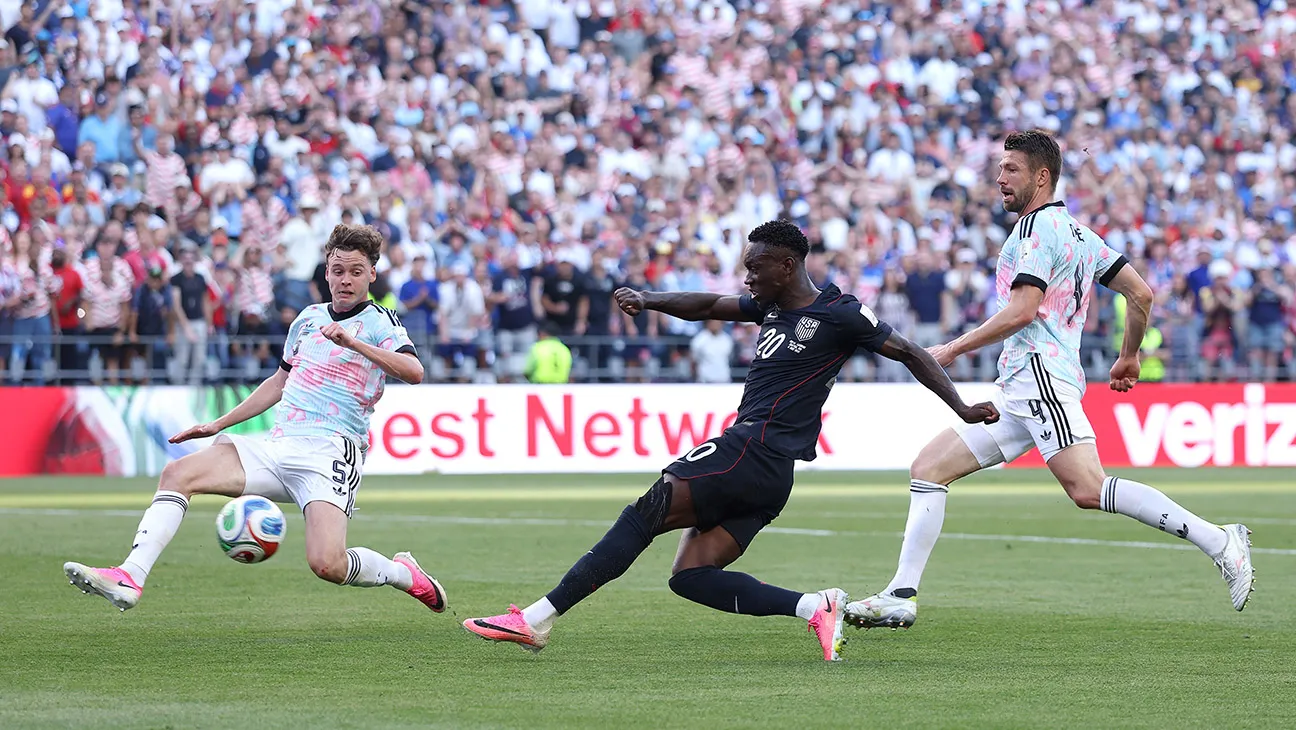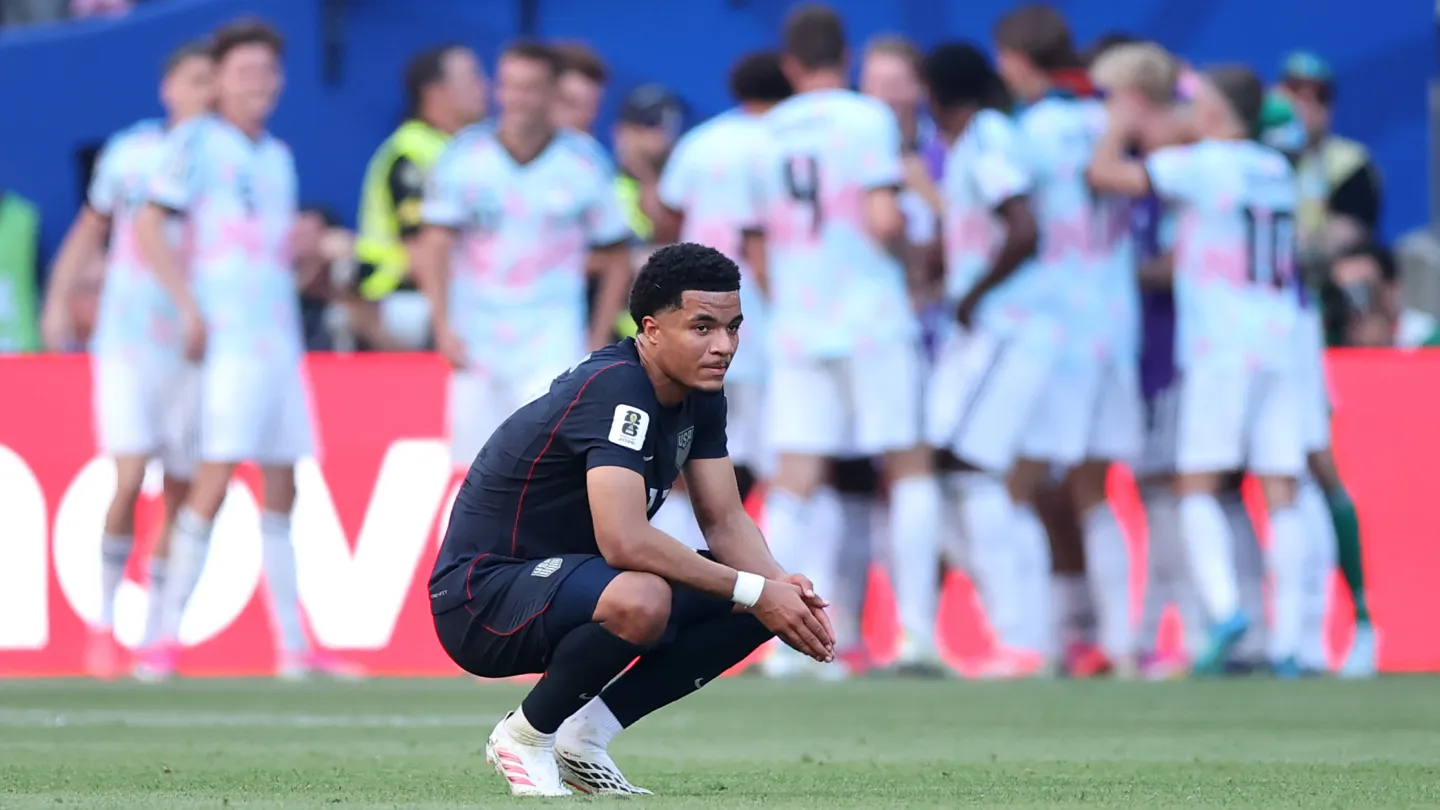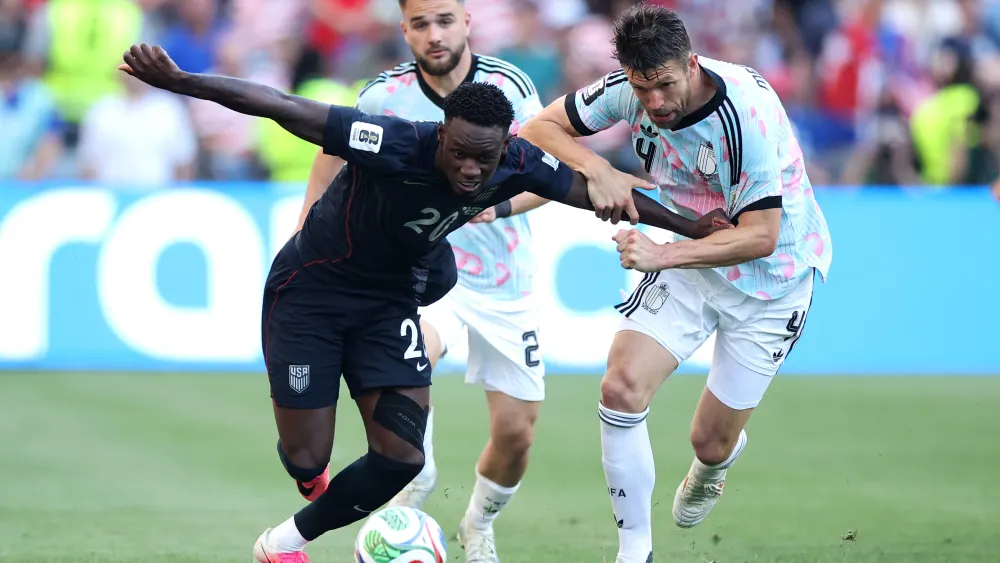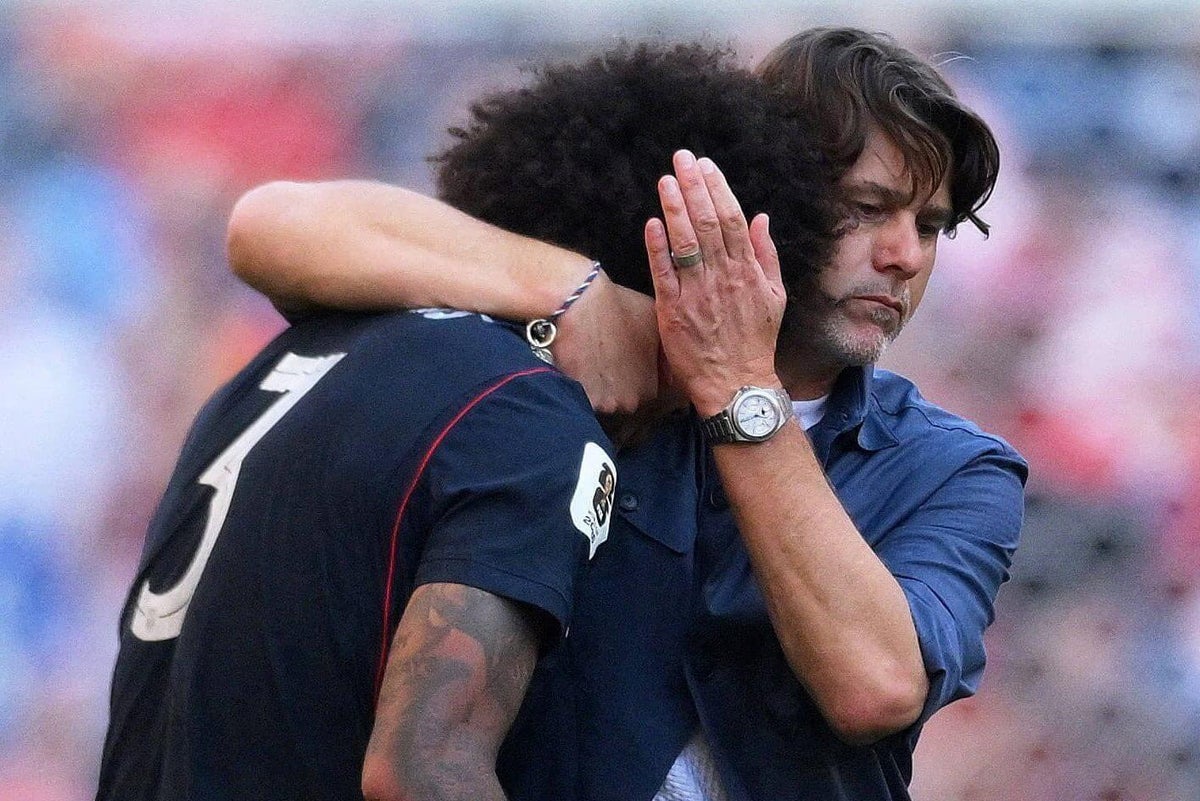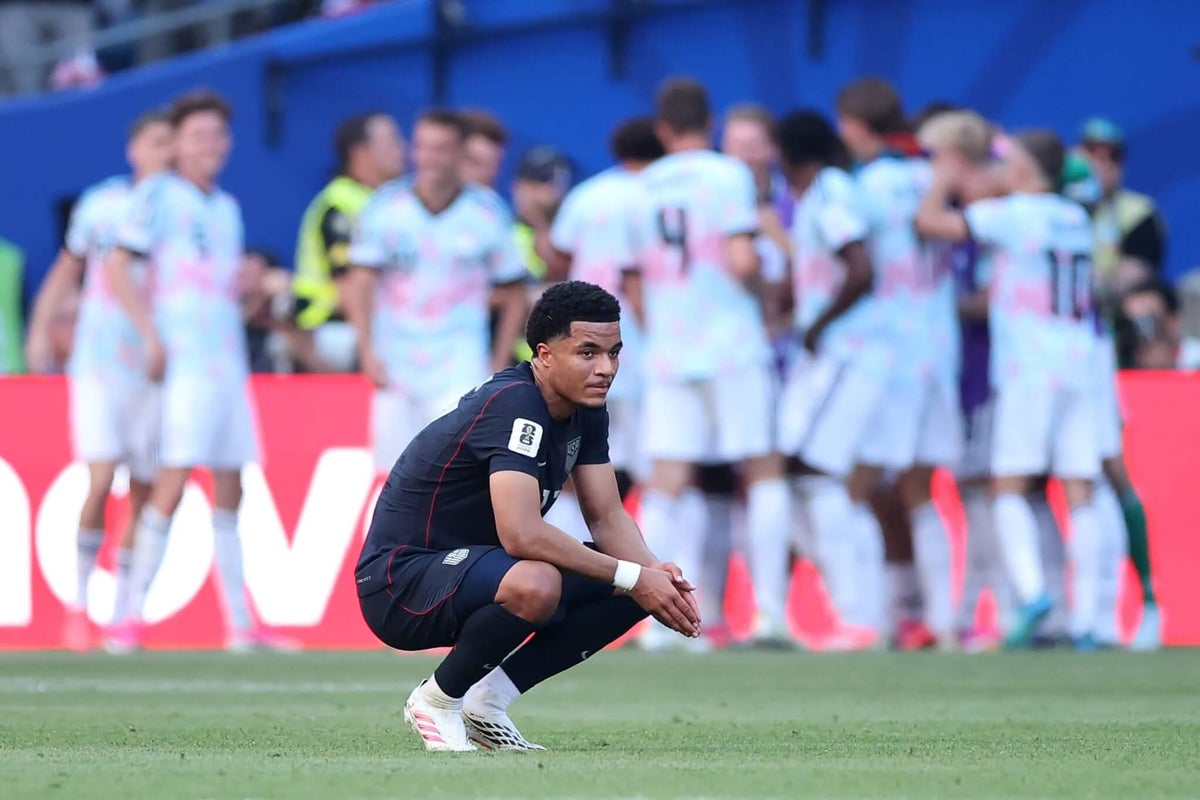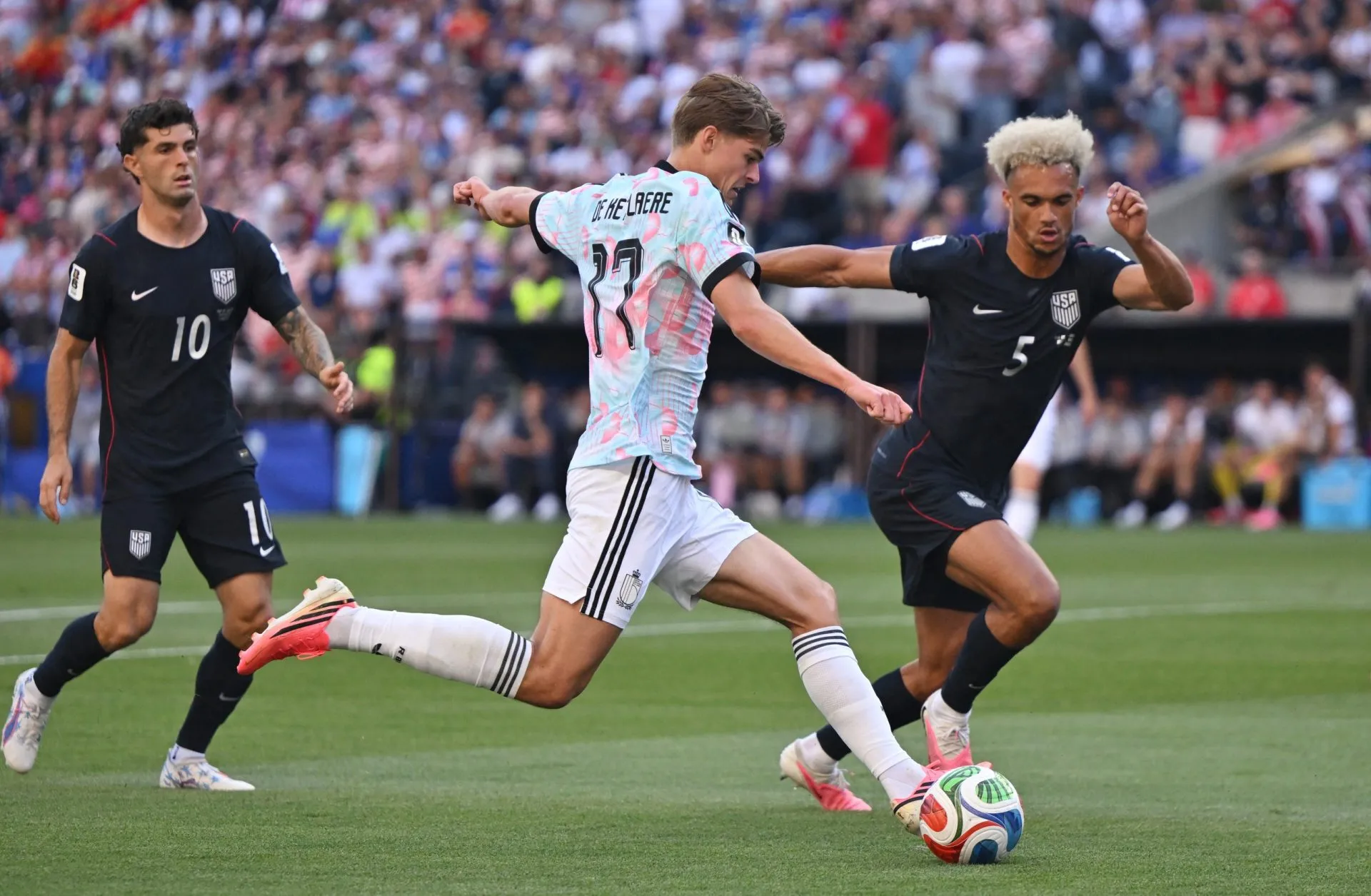
As much as it’s safe to say that executives at Fox Sports and NBCUniversal’s Telemundo were pulling for a far less abrupt end to the USMNT’s World Cup run, the team’s 4-1 crash-out against Belgium on Monday night will in no way diminish the remainder of the tournament.And while a few million recent converts and bandwagon hoppers are likely to peel away from the action in the wake of the U.S. team’s humbling exit, the elimination of the last of the three host nations will do little to undermine the rollicking success of this year’s spectacle.The hydration breaks alone will ensure that Fox will walk away from this year’s World Cup with a tidy profit—especially since the cost of entry ($485 million) was so low. (The bargain-basement buy-in was necessitated by FIFA’s insistence on staging the 2022 event in Qatar, where the summer temperatures regularly reach 106ºF—thereby necessitating a November-December staging.) With approximately 260 additional seconds of ad time to sell per match, Fox booked nearly $200 million in bonus sales during the group stage alone, and is on pace to realize a total of some $450 million worth of glug-glug revenue when all is said and done.All things being equal, the hydration breaks alone will have covered Fox’s rights fee. And even though Telemundo has elected against capitalizing on the new broadcast arrangement—it hasn’t aired a single ad during the breaks—the company is making bank in pregame and across its shoulder programming.Nobody at Fox or Telemundo expected the U.S. (or Mexico, for that matter) to punch their way into the quarterfinals. Immaculate or otherwise, “vibes” are not a viable benchmark for gaming out ad sales strategy, and both teams are more or less strangers to that stage of the tourney. Discounting a third-place finish in the radically condensed 13-team inaugural in 1930, the only time the U.S. managed to push through to the quarters was in 2002; El Tri made its most recent visit 40 years ago.Irrational exuberance is a hell of a drug, but its capacity to unleash delirium makes it unsuitable for consumption by rights-holders, who are among the most sober-minded individuals in media. While the early successes in the group stage had casual fans buzzing about a trip to the July 19 final—which, come on already—the sales teams at Fox and Telemundo weren’t gaming out long-range strategies for either the USMNT or Mexico.From an advertising perspective, the obvious analogy is with a best-of-seven MLB or NBA or NHL series, which is to say: You plan for five games and everything past that point is pure gravy. In World Cup terms, that translates to gearing up for advancement beyond the first three matches and then sort of taking things as they come.This isn’t to say that Fox isn’t aware of the challenges that lay ahead now that the U.S. has been sidelined. As time wound down on Monday night’s broadcast, Fox play-by-play announcer John Strong entreated viewers to stick with the World Cup, saying, “This doesn’t have to be the last soccer you watch for the next four years.”Only time will tell how many new soccer fans were forged from the crucible of this World Cup, but the TV and streaming deliveries have never been higher. The USMNT’s 2-0 victory over Bosnia and Herzegovina in the round of 32 averaged a staggering 26.4 million viewers on Fox, making it the most-watched soccer match on an English-language network in history. The July 1 broadcast peaked at 34.8 million viewers, which—calling it now—is very likely to be where the average turnout for the Belgium rout lands when Nielsen releases its final ratings data on Wednesday afternoon.To better put the U.S.-Bosnia deliveries in context, Fox’s coverage of Game 7 of the 2025 World Series averaged just 487,000 more viewers than the July 1 World Cup match. The USMNT victory also outperformed eight of Fox’s 13 national NFL windows, while easily surpassing ABC’s deliveries for the concluding game of the Knicks-Spurs title bout (24.5 million viewers).If nothing else, we can now probably stop asking when soccer is finally going to break through here in the U.S. It unequivocally has, even if our pro league isn’t in the same phylum as the overseas giants. As Fox analyst Stu Holden said as Monday’s broadcast was wrapping up, “The future of American soccer is very bright.”For its part, preliminary data pegs Telemundo’s audience for Saturday’s England-Mexico match at 23.1 million viewers, of whom more than half (13 million) accessed the action via Peacock. While the official deliveries are still being processed, the early numbers point to an all-time high turnout for a soccer match on a Spanish-language outlet.The TV and streaming numbers have soared across the board, with Telemundo’s group stage coverage averaging 4.6 million viewers per match, up more than double (+120%) from where things stood after the analogous phase of the 2022 World Cup. Fox averaged 5.05 million viewers through its first 72 matches, good for a 92% improvement. Both FIFA partners have reaped the benefits of friendly time zones, thundering hype and a comprehensive upgrade of Nielsen’s ratings methodology, which includes a more robust out-of-home measurement protocol.If fantasies about a U.S. quarterfinals matchup with Spain came to naught, and while Mexico won’t be tasked with trying to neutralize Norway’s Erling Haaland, the numbers are overwhelmingly on Fox and Telemundo’s side. The U.S. loss marked the 94th match of the 104-match tournament, which translates to a 90% completion rate. In other words, the vast bulk of the ad sales dollars and retransmission-consent fees have already been collected. Both networks are sitting on more World Cup revenues than have ever before been realized here in the U.S., and there’s still a really good chance that this whole thing ends with a rematch of Lionel Messi vs. Kylian Mbappé.As disappointed as U.S. and Mexico supporters may be in the wake of their respective eliminations, the hits should just keep on coming for Fox and Telemundo. Momentum alone should see both networks continue to put up big ratings numbers, even if the Impossible Dream has been shattered, and a rematch of Argentina-France in the final would all but certainly eclipse the combined audience of 25.8 million viewers who tuned in for their shootout four years ago. There’s still a lot of soccer to be played, and all of it should be pretty nifty; if nothing else, expect an NFL-size turnout for Saturday’s Norway-England match.Delirium about a scuppered U.S./Mexico title run aside—and again, neither of these things was ever going to happen in the realm of consensus reality—there’s no way to interpret this year’s World Cup as anything but a smash success for FIFA’s stateside media partners.
U.S. World Cup Exit Isn’t So Bad for Fox—Thanks to Hydration Breaks
Preliminary Nielsen data suggests that more than 30 million people tuned in for Fox's coverage of Belgium's 4-1 rout of the USMNT.
1,111 words~5 min read