The DSO may free up premium frequency bands, but can it compete? asks SONNY ARAGBA-AKPORE
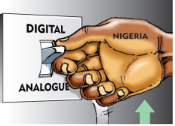
With an ambitious move to generate nearly N600bn in revenue yearly, the Digital Switch Over (DSO) programme launched recently by the Federal Government may not be as smooth as envisioned despite its promise of free-to-air broadcast systems. The government also anticipates nearly $1bn from Spectrum sales alone, and other speculated income streams. The Information and National Orientation Minister, Mr Idris Mohammed, and his Communications, Innovation and Digital Economy counterpart, Mr Bosun Tijani, are very enthusiastic that DSO will certainly be a game changer.
Nigeria is about 20 years behind the schedule announced by the International Telecommunications Union (ITU). With a wobbling analogue television broadcasting believed to be inefficient and massive misuse of radio frequency bands, the government feels that the transition to DSO, no matter how late, will boost government revenues. “Turning off analogue transmitters frees up high-value frequencies in the 700MHz and 800MHz bands,” it said.
Government intends to sell this freed-up space—known as the “Digital Dividend”—to telecommunications companies for 4G and 5G rollout and mobile broadband expansion to boost internet connectivity, and this single process is projected to generate over $1 billion in direct auction revenue. 40 million homes are expected to pay minimal yearly fees to keep their converter boxes active, thus creating a recurring, high-volume pool of capital, and the government takes a regulatory cut of these administrative fees.