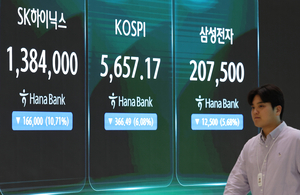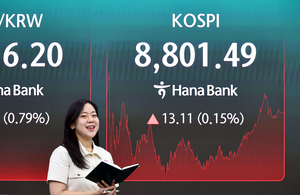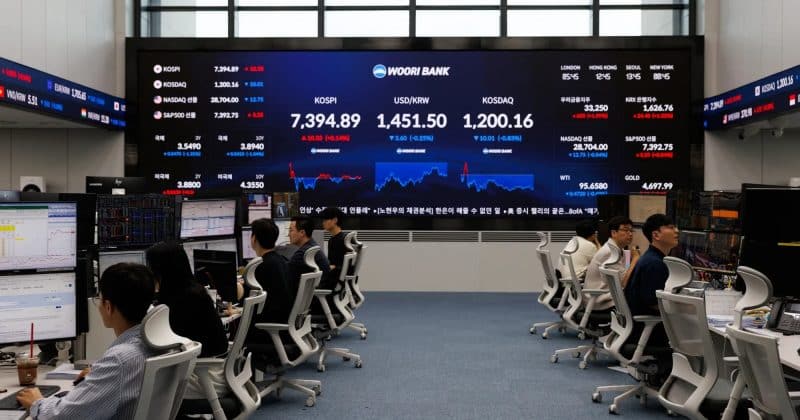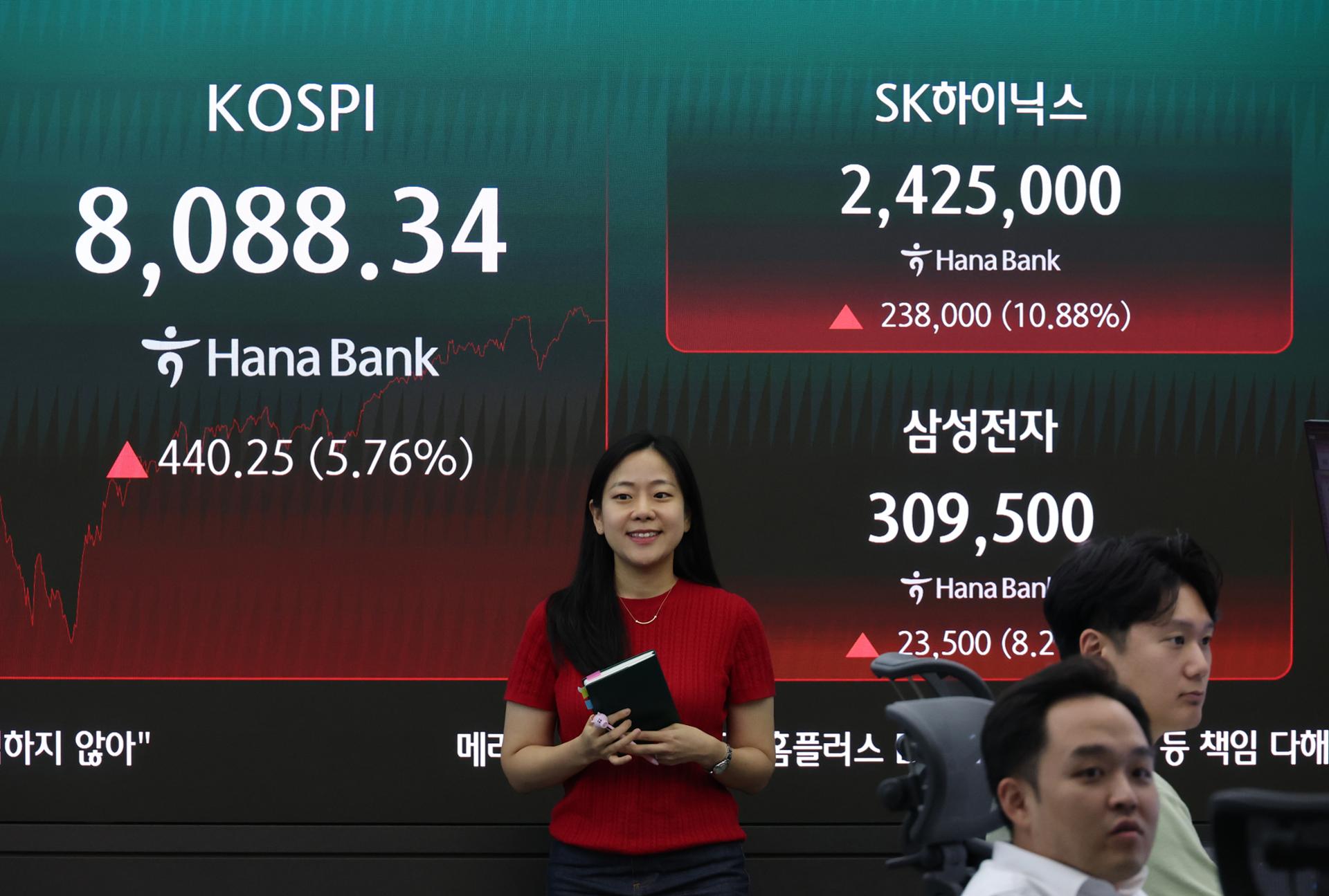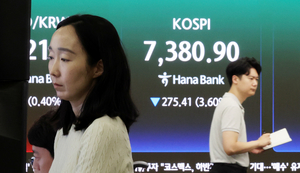
Samsung, SK hynix-linked ETFs draw scrutiny after W212tr in first-month trading A financial data screen at Hana Bank's dealing room in central Seoul shows the benchmark Kospi at 7,380.9 during intraday trading on Wednesday. (Newsis) South Korea's ruling party has begun reviewing possible curbs on single-stock leveraged exchange-traded funds tied to Samsung Electronics and SK hynix, as regulators step up scrutiny of products that critics say are fueling market concentration and volatility.Asset managers expect no further listings of the products, while some industry officials have begun calling for existing funds to be delisted to cool what they describe as an overheated market.The products have grown rapidly since their debut on May 27. As of Wednesday, the combined market capitalization of the 14 single-stock leveraged ETFs tied to Samsung Electronics and SK hynix stood at 13.88 trillion won ($9.19 billion). Cumulative trading value reached 212 trillion won during their first month of trading.Regulators weigh tighter oversightAccording to industry officials, the ruling party's K Capital Market Special Committee met Monday to discuss key capital market issues and received a briefing on single-stock leveraged ETFs linked to Samsung Electronics and SK hynix.Oh Gi-hyung, chairman of the committee, said authorities were closely monitoring the products because leveraged ETFs could amplify market volatility."If policy measures become necessary, we will communicate with market participants and present a direction," Oh said.The Financial Services Commission, the financial regulator responsible for policy and rulemaking, said it is reviewing possible regulatory measures. The Financial Supervisory Service, which supervises financial institutions, will meet asset management CEOs next week to discuss measures to address overheating in the single-stock leveraged ETF market.The regulatory discussions come as concerns grow over market concentration.The Bank of Korea recently warned that single-stock leveraged ETFs could deepen concentration in underlying stocks and increase market volatility through their daily rebalancing of spot and futures positions.Against that backdrop, additional listings of single-stock leveraged ETFs were "effectively off the table," a regulatory official said, adding, "The priority now is to cool the overheated market."Delisting debate gains tractionSome asset management executives argued regulators should go further by delisting the existing products."If the products have done little to stabilize the foreign exchange market or calm market sentiment while creating greater side effects, authorities should move quickly to begin delisting procedures rather than prolong discussions," one industry official said."Simple but strong regulations are needed to curb excessive participation by retail investors and ease the current abnormal market concentration."The official added that the products should be scrapped if they fail to achieve their original goals of attracting domestic investors back to the market and easing pressure on the foreign exchange market.Legal hurdles remainWhether regulators could actually delist the products, however, remains uncertain.ETFs are investment funds, meaning delisting is governed by Korea Exchange listing rules. Grounds for delisting include failure to maintain the required correlation between net asset value and the underlying asset, the absence of a liquidity provider or termination of the investment trust.A revision to the Enforcement Decree of the Capital Markets Act that took effect in April, allowing single-stock leveraged ETFs, also requires ETFs to be delisted if the underlying stock itself is delisted.Despite their massive trading activity and assets under management, the Samsung Electronics and SK hynix leveraged ETFs are " unlikely to satisfy conventional delisting requirements because they remain highly liquid and actively traded," a Korea Exchange official said."Most ETF delistings occur because of weak trading activity or insufficient assets, not excessive trading."The official added that it remains unclear whether investor protection alone would provide sufficient legal grounds for delisting the products.Even if the ETFs were delisted, industry officials said the impact on investors would likely be limited. Unlike individual stocks, delisted ETFs are liquidated, with investors receiving redemption proceeds based on the fund's net asset value, minus applicable fees.Asset managers, however, would bear the bigger financial hit through lower management fee income. Mirae Asset Global Investments and Samsung Asset Management, which operate the largest single-stock leveraged ETFs by assets and trading volume, would likely be the most affected.
No more single-stock leveraged ETFs? Korea weighs curbs
South Korea's ruling party has begun reviewing possible curbs on single-stock leveraged exchange-traded funds tied to Samsung Electronics and SK hynix, as regul
669 words~3 min read