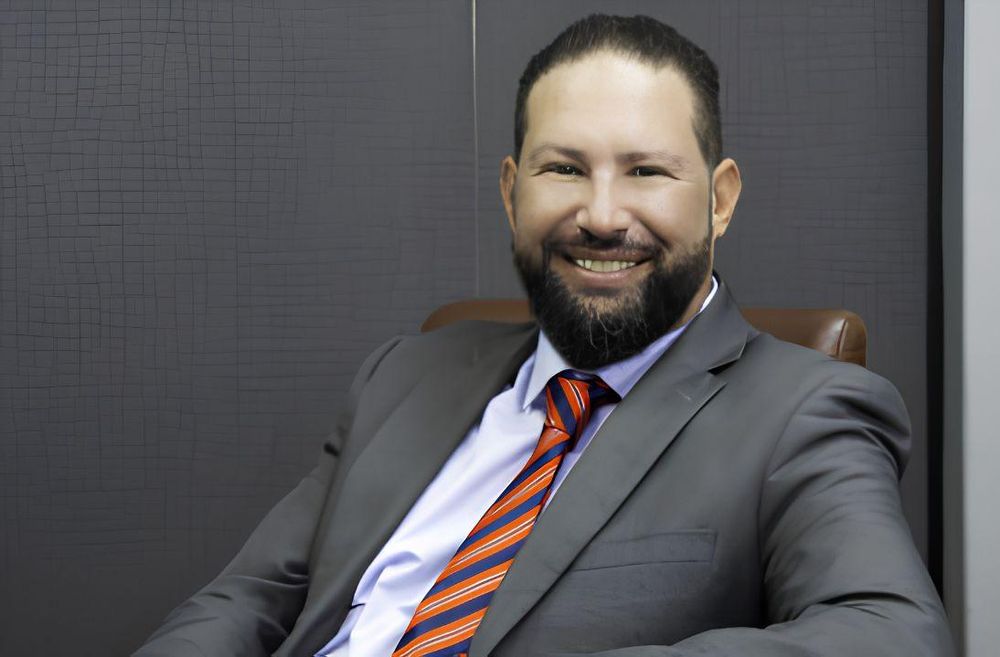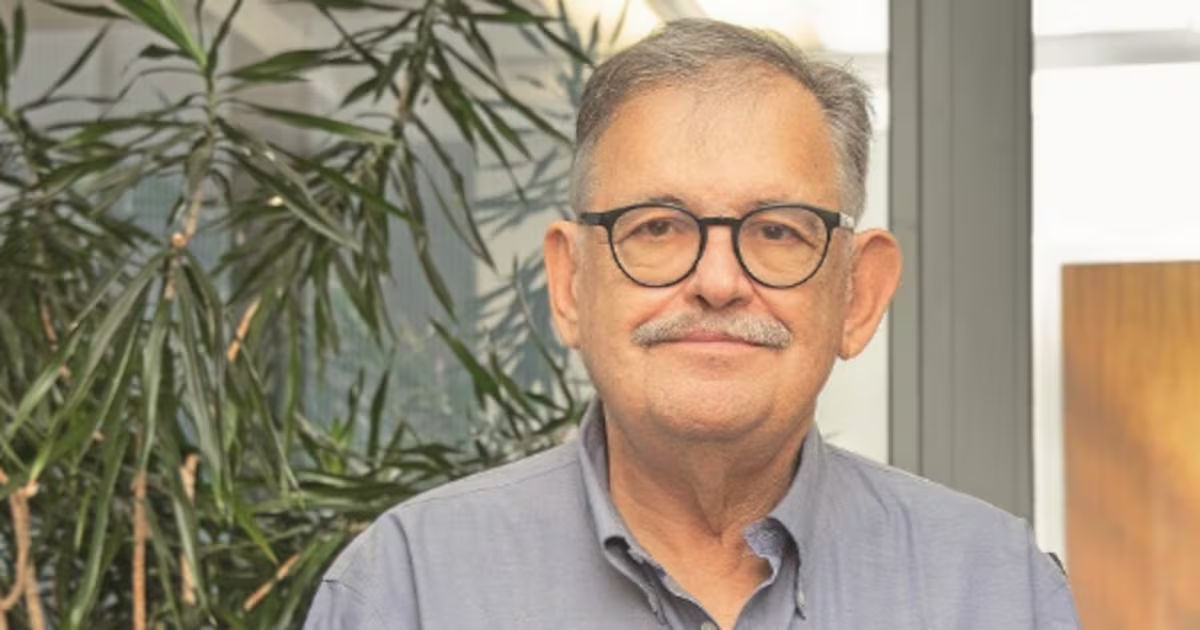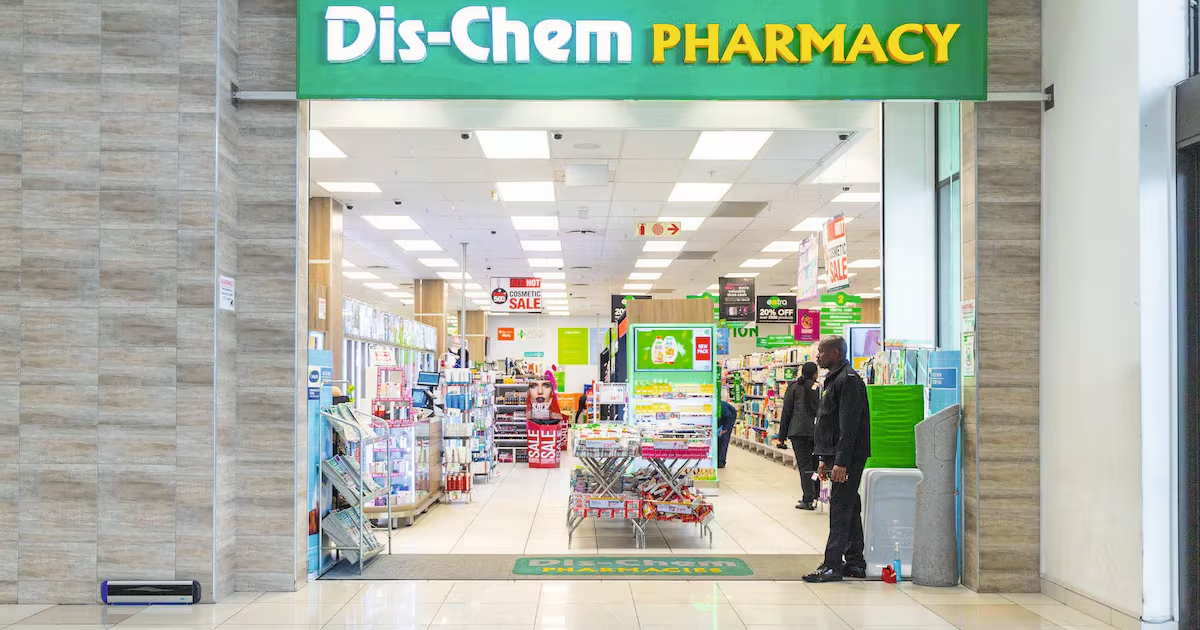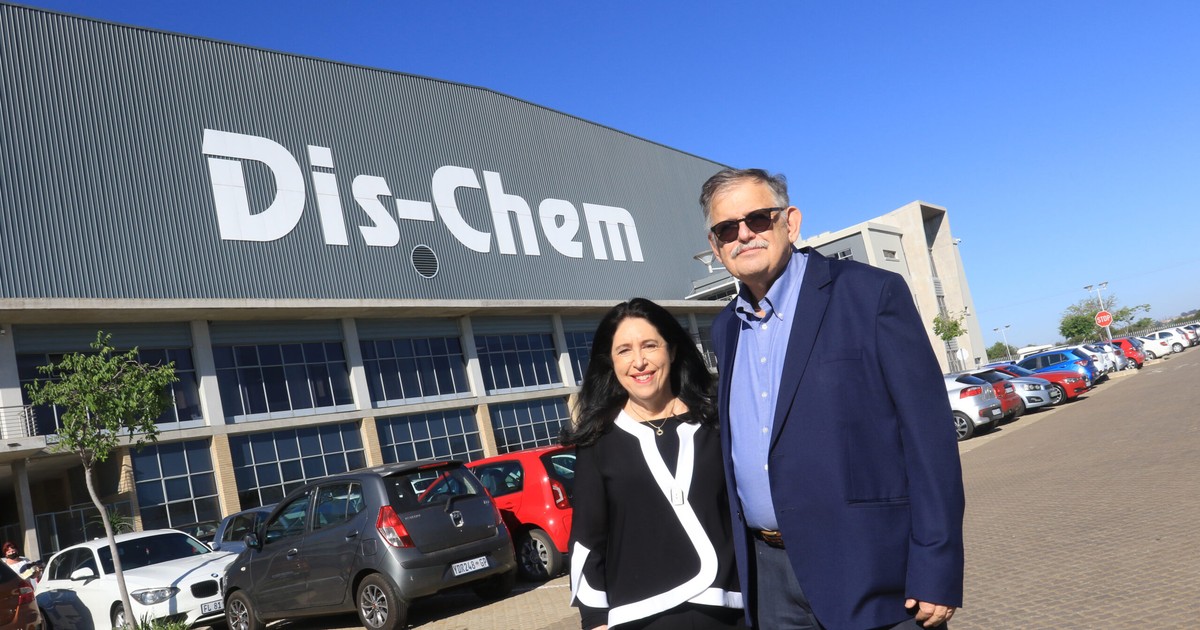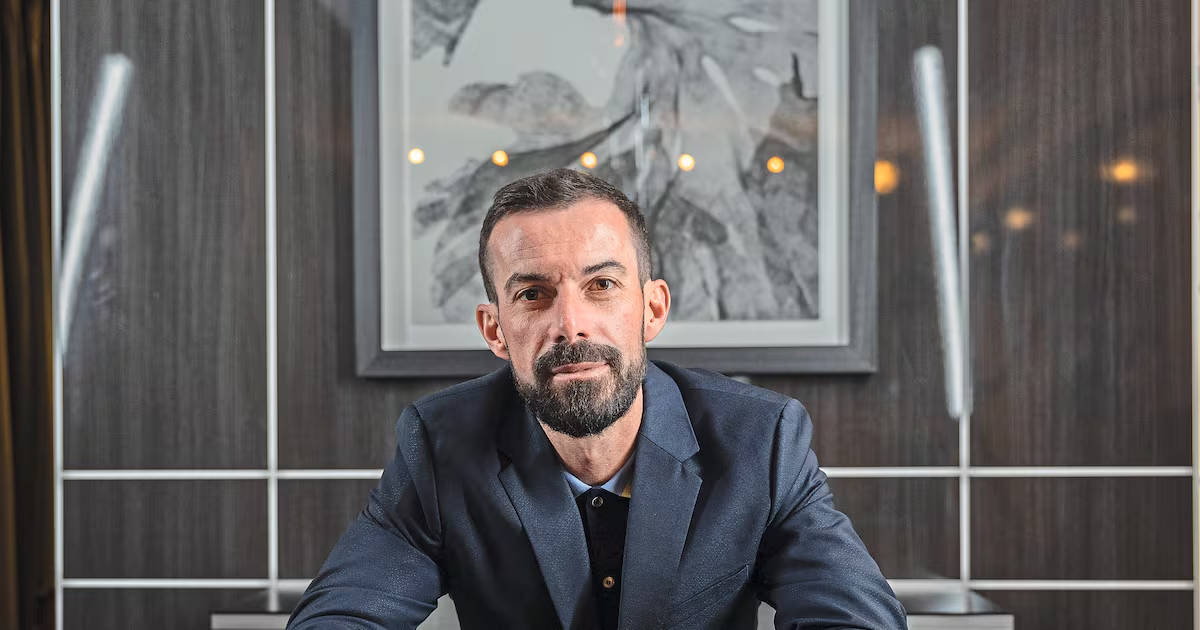
When Dis-Chem founder Ivan Saltzman took the company public a decade ago, a moment he describes as a highlight of his nearly 50-year career, he had a young turk by his side, Rui Morais, the then group CFO.Morais, 33 years old and a Saltzman junior, has been with Dis-Chem since his early 30s. As Saltzman stepped down from his executive role, the first time he did not occupy the corner office in 48 years, Morais is looking to grow the businesses and not merely live in the shadow of the success forged by Saltzman and his family, who remain a key shareholder in the group.Before joining Dis‑Chem, Morais held senior managerial roles in the audit retail sector at EY, with Dis‑Chem included in his portfolio.When the group listed on the JSE in November 2016, CEO succession was already top of mind, with Saltzman being 66 at the time. (Dorothy Kgosi) Morais was first identified as Saltzman’s successor in 2021 and took up the role of CEO two years later.Morais used his annual letter to shareholders in his role as CEO to hail the effect Saltzman has had on the group he founded in Mondeor, south of Johannesburg, in 1978.“Ivan’s vision, tenacity and commitment to making healthcare accessible to South Africans are the foundations of everything we are building. He will continue to serve the group as a non-executive director and I look forward to benefiting from his counsel. On behalf of the entire Dis-Chem team, I thank Ivan from the bottom of my heart,” Morais wrote.The success of Dis-Chem over the past two decades in its chosen market has been helped by the growth of South Africa’s middle class, which is growing steadily in tandem with a process of increasing urbanisation. With middle-class consumers increasingly adopting healthier lifestyles and seeking convenient access to a wide choice of healthcare and complementary products, Dis-Chem and Clicks have cashed in on this pivot in consumer behaviour.Read: Dis-Chem bets on integrated health hubsMorais, faced with the technological shifts, is leading the evolution of the group into a more integrated healthcare entity, capable of taking the opportunities that lie ahead.In this regard, the group launched Better Rewards — its most significant customer-facing initiative in the company’s recent history.The initiative has since grown to include 180 brands, benefiting also from its partnership with Capitec and its 26-million army of customers.The success of this partnership is demonstrated by the increased engagement among Capitec cardholders at the Dis-Chem point of sale.Another initiative Dis-Chem has invested heavily in is improving its digital capabilities. This finds expression in the board-approved R300m investment in the 2026 financial year to establish and operationalise X, bigly labs.In this regard, the company said progress during the year included significant improvements in digital platform performance and stability and strengthened cybersecurity and system resilience. The development of the group’s reimagined mobile app will launch in the 2027 financial year.“As Dis-Chem evolves into a more integrated healthcare organisation, leadership and culture are increasingly important differentiators,” Morais said in the group’s annual report.“A business of this complexity and ambition requires people who lead with accountability, customer-centricity, innovation, ethical conduct, and operational discipline—and we are investing meaningfully to develop these qualities across the organisation.“FY2026 was a year of investment, transformation, and meaningful strategic progress. We strengthened the foundations of our integrated healthcare ecosystem, enhanced our customer value proposition and built capabilities.”The long-term commitment of Saltzman has also been in question as the family’s patriarch hands over the group’s shares to his heirs.Ivan and his wife, Lynette, a year ago distributed about 217-million shares worth R6.8bn at the time to Dan and Mark Saltzman, through Ivlyn Local Investment Holdings (Ivlyn). After the distribution, Ivlyn was left with a 4.06% interest in the group, substantially down from the 29.31% it held before the transaction.Dan and Mark individually owned a beneficial interest in the company of 12.62% after the transaction, an exposure they have now reduced. Dan and Mark do not sit on the group’s board, nor do they serve in any executive positions. The brothers in March sold shares worth more than R640m.
Rui Morais: the Dis-Chem prince who became king
CEO pays tribute to founder Ivan Saltzman in his annual letter to shareholders
682 words~3 min read