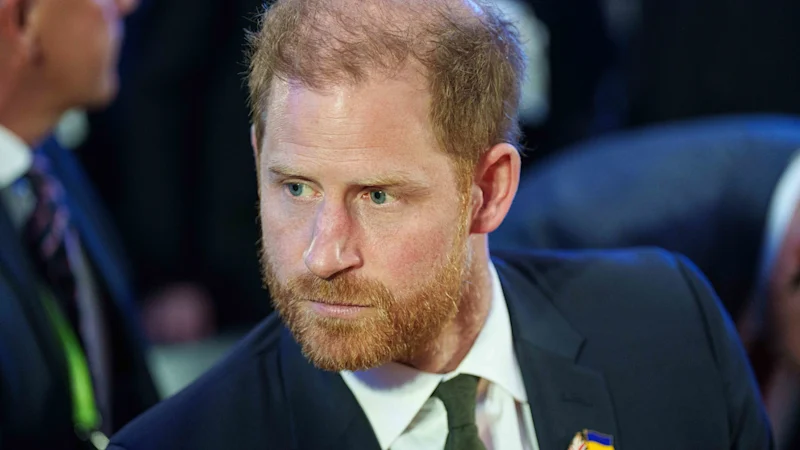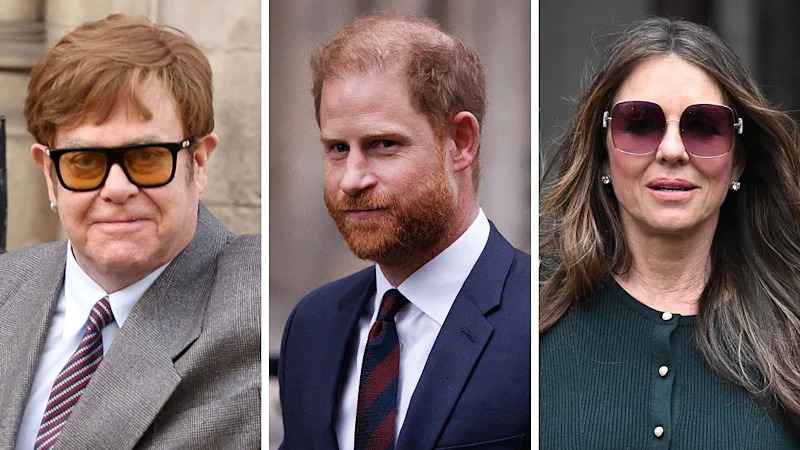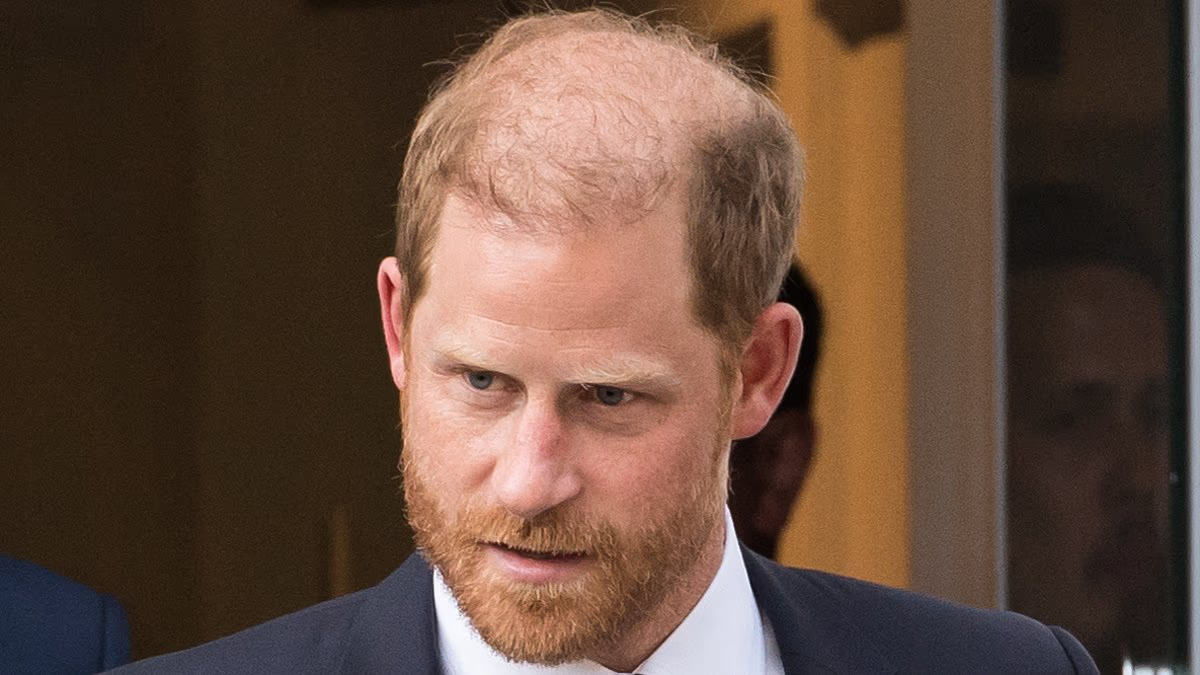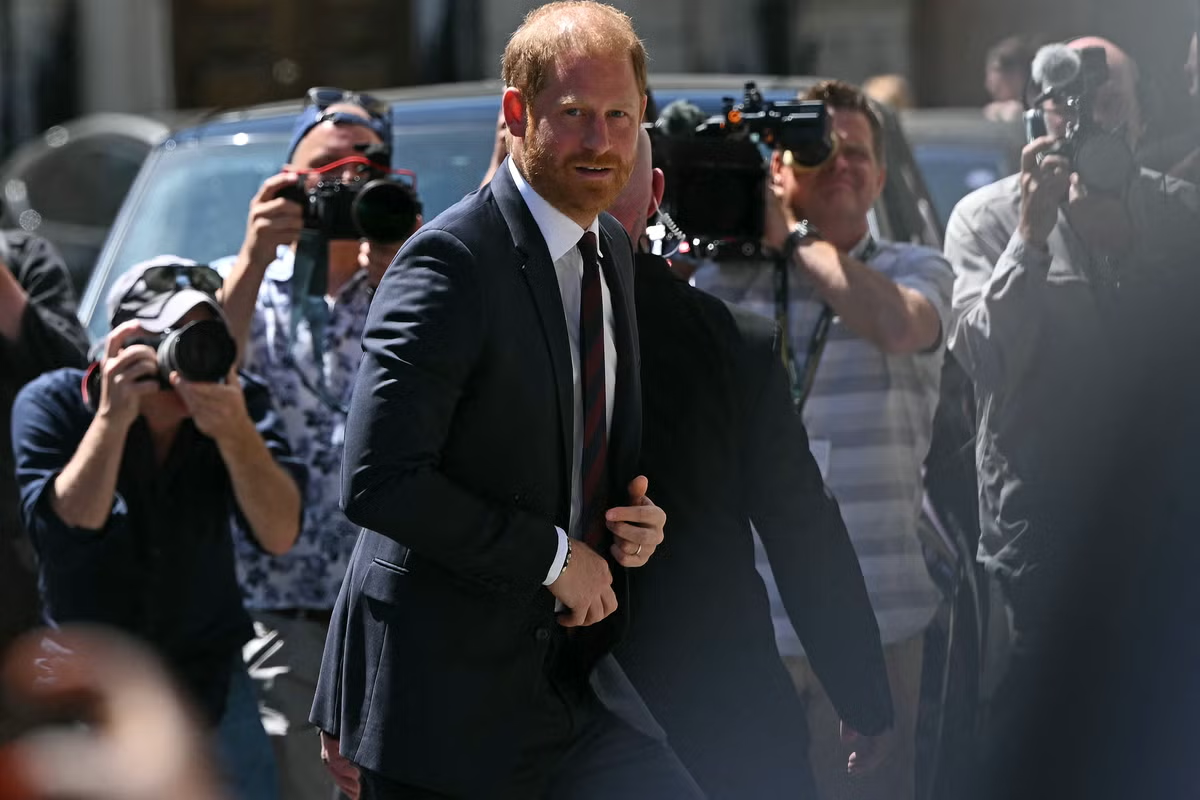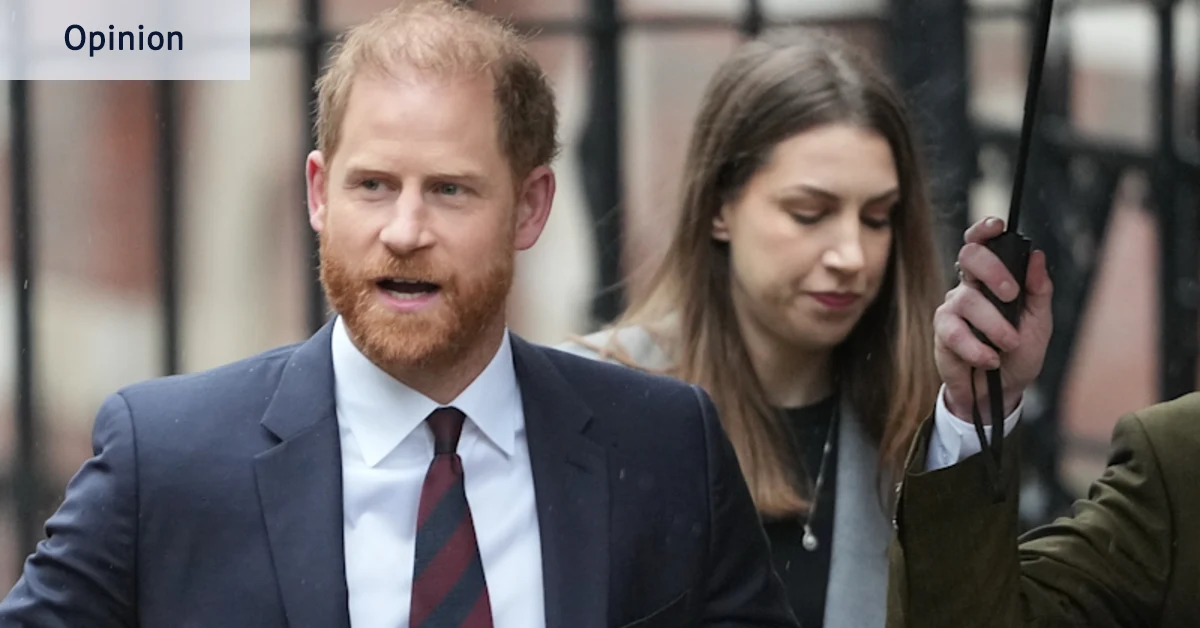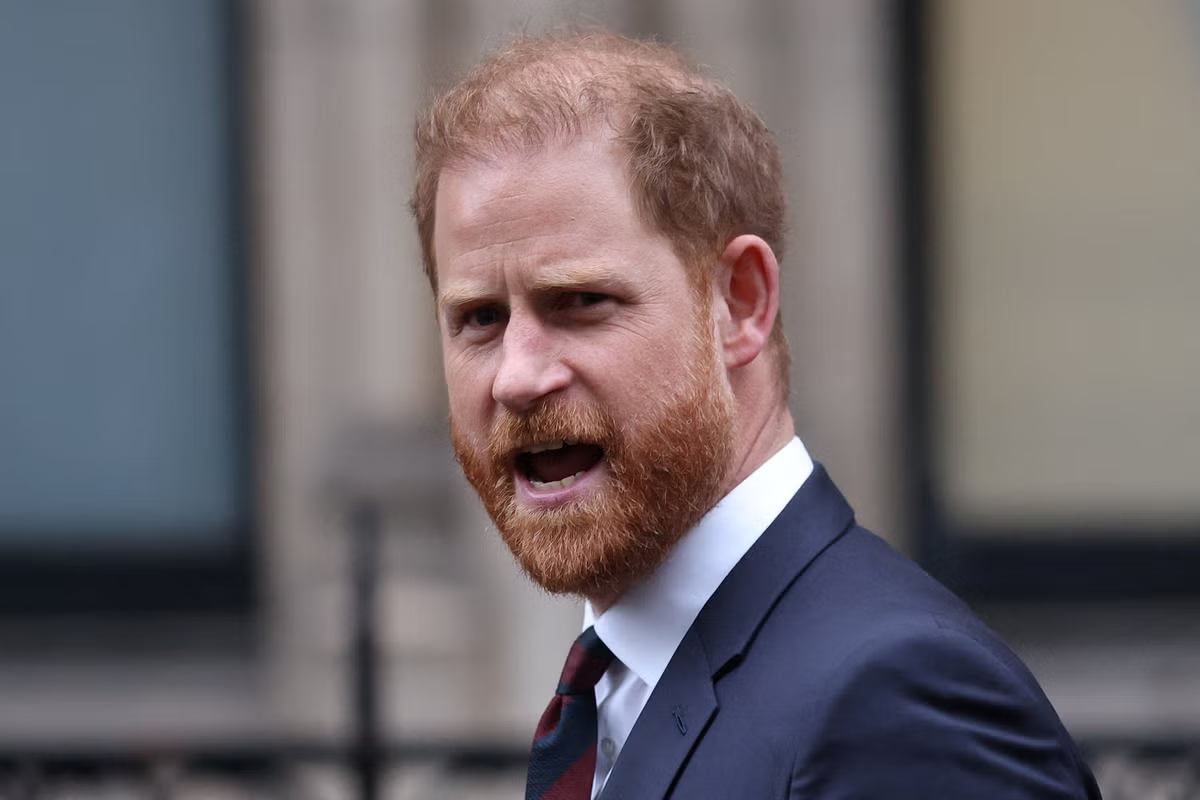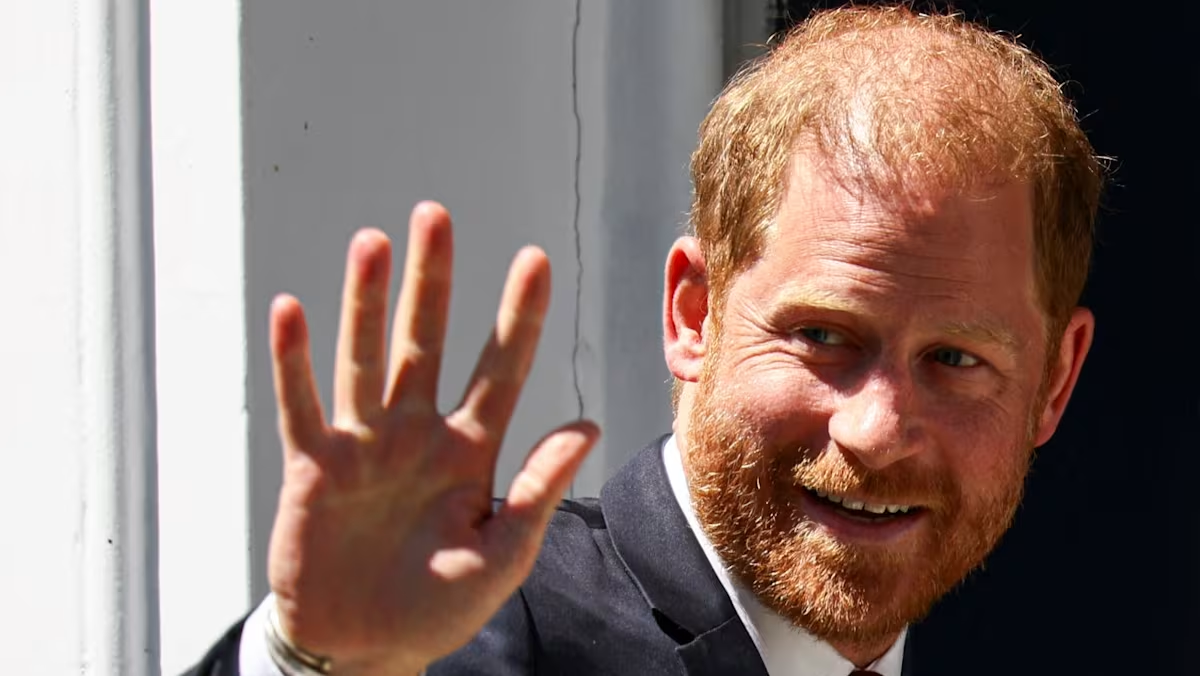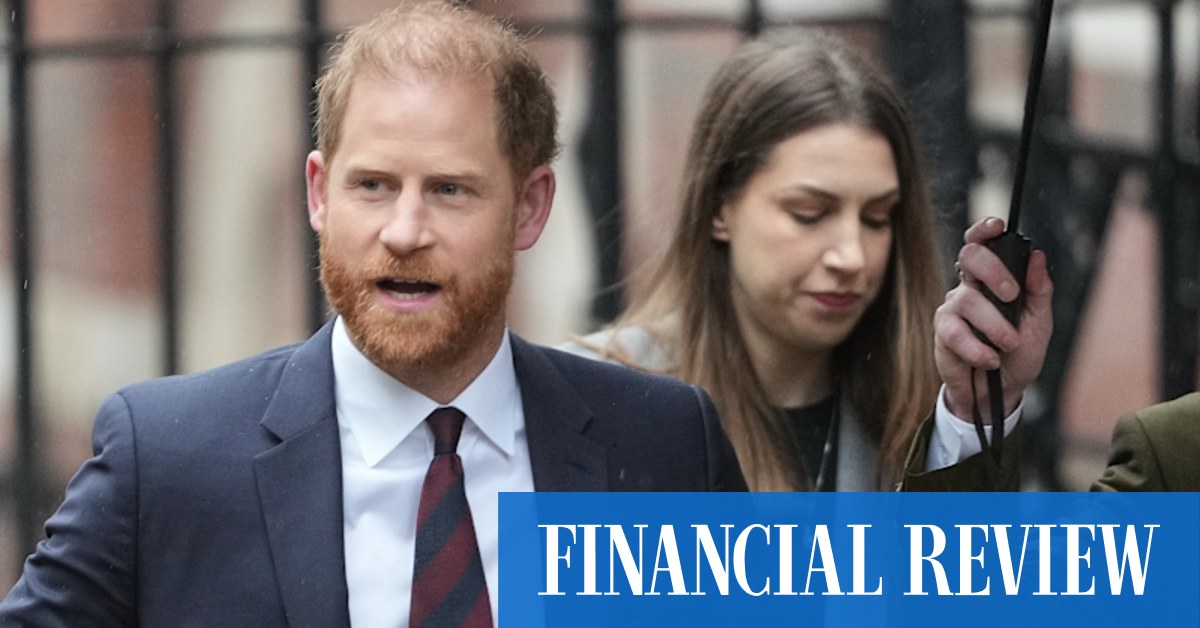
July 8, 2026 — 11:54amLondon: There was no hiding the anger from Prince Harry in his direct attack on a High Court judge for dismissing his claims about unlawful conduct by one of Britain’s biggest publishers.The Duke of Sussex did not merely disagree with Justice Matthew Nicklin after the court found in favour of the Daily Mail on the civil claim that it used phone hacking and other unlawful means to report on the royals. He went personal.Prince Harry is visiting the UK this week.APHarry pointed out that Nicklin was the barrister who had acted for another publisher, the Daily Mirror, in a similar court case just over a decade ago.This is true. Nicklin was the QC who stood in court in 2015 on behalf of his client, the Daily Mirror, to apologise for phone hacking and promise “full, fair and proper” compensation to victims, including Harry.When that case was settled, Mirror Group Newspapers paid all of Harry’s legal costs as well as £300,000 ($577,000) in damages. A separate settlement came later when Harry claimed victory against News Corp.But the personal attack on Nicklin is a sign of the prince’s fury over the outcome in his third and final big case against the media. It is not a reliable guide to the proven facts of the case.Harry is obviously passionate about holding the media to account for its excesses in its coverage of him as a member of the royal family, even if that means taking the kind of legal action King Charles and Prince William always avoid.Some of the British media rejoiced in Harry’s defeat. He is not a popular member of the royal family: only 30 per cent of British voters have a favourable view of him, compared to 76 per cent for William. His marriage to Meghan and his exile to California have not helped him. For some critics, Harry got what he deserved in the High Court.Even so, he did not invent the excesses of the media. The phone-hacking scandal was real, and it was a disgrace. News Corp patriarch Rupert Murdoch apologised for it in July 2011 in advertisements placed in all the major UK newspapers.Granular focusIn his case against the Daily Mail, however, Harry and his lawyers struck trouble. Nicklin took a forensic approach to the accusations. Rather than make a ruling on the broad sweep of claims about unlawful conduct by journalists and the private investigators they sometimes used, he looked into each and every news story and feature article.One by one, he found that Harry and his fellow claimants did not have enough evidence to prove phone hacking or “blagging” – the ploy of using lies and deception to trick people into divulging information.In one example of this, the judge looked at a report in the Mail on Sunday in December 2002 that claimed Harry had “set his sights” on TV presenter Natalie Pinkham, who is several years older than him, and was trying to woo her. It was written by Katie Nicholl, who remains a royal correspondent.The prince’s legal team argued that only a few people knew the pair were close, and that the newspaper must have used unlawful means to get Pinkham’s mobile phone number and call records. Nicholl denied this on the witness stand in court.The Daily Mail in 2002 wrote that Harry was “besotted” with TV presenter Natalie Pinkham (pictured this year).Getty ImagesPinkham had said in an email that she had “never once sold a story, been in any way indiscreet or ever disloyal”, but she was not called to give evidence. The judge treated her email as hearsay.Crucially, the burden was on the prince and his team to prove, on the balance of probabilities, that the information about the phone calls was obtained by unlawful means. And the judge found they failed this test.The judge found that the journalist could readily have obtained Pinkham’s phone number from Pinkham or mutual friends. This seems a commonsense view of how journalism works. He went further: “I accept Ms Nicholl’s evidence that she did not use voicemail interception, whether specifically on this occasion or generally. Her denial was clear and emphatic.”In another example, the judge looked closely at a story in the Mail on Sunday in November 2004 that said Harry was “besotted” with a South African student, Chelsy Davy. The prince claimed that some of the information was obtained unlawfully, including precise details about Davy catching a British Airways flight.The case revealed emails that showed how the journalists worked on the story, starting with finding the young woman’s name. “I should be getting the surname and more details from a contact later tonight to whom I have agreed to pay $1000 for the info,” wrote one of the journalists a few days before publication.Harry and former flame Chelsy Davy attend a rugby match at Twickenham in 2008.APIn another email, one of the journalists noted: “Have spoken to contact at British Airways here half an hour ago and offered $$ in return for [a] name. He’s gone off to investigate”. This did not appear to produce results.Again, the judge faulted the prince’s lawyers for not having enough proof. “The question is not whether the information was private. The question is whether the Claimants have proved unlawful acquisition,” he wrote. He could not conclude, on the balance of probabilities, that the journalists had used unlawful means.Same flaws emergeThe same flaws emerged in the claims about a story about another former girlfriend, Cressida Bonas. The story in December 2013, by Rebecca English, who is the Daily Mail’s royal editor, said Harry faced a “lonely New Year’s Eve” because Bonas was flying to a private island without him. The island happened to be billionaire Richard Branson’s getaway in the Caribbean.Harry said this was “creepy” and he could not understand how the newspaper knew his friend was on Branson’s island. He said it was a “horrible existence for a young girl to be stalked like this” by the media.When the evidence emerged in court, it turned out that a palace press officer had told the reporter that Bonas would not be at the royal estate of Sandringham, as claimed earlier. A confidential source then told the journalist, by email, that the young woman was going to be on Necker Island with the Branson family.Harry dated Cressida Bonas for about two years from 2012.UK PressThe judge found that English, the editor at the Daily Mail, had gained her information from lawful sources.“I accept that Prince Harry’s concerns about how the information in this Article had been obtained were genuinely held,” the judge wrote.“In particular, I accept that he feared that Ms Bonas had been tracked, placed under surveillance, or that information about her flight had been blagged. But the contemporaneous documents provide a lawful explanation for the information published and do not support those fears.”The full judgment, at 436 pages, is a remarkable insight into the murky business of reporting on the royal family. Even readers who do not like Harry might still sympathise with him when he objects to “creepy” news stories.The judge, however, was not looking at whether personal privacy was being breached. He was not interested in moral questions about who suffered when the press pursued a prince.The judge was focusing purely on whether behaviour was unlawful. And he was weighing up the “balance of probabilities” with the evidence many years after most of the stories appeared. Over time, some of the evidence could not be found.In some cases, Harry’s suspicions were unfounded. In others, his claims fell into a grey zone: they were neither proven right nor wrong. And that is how the prince was denied vindication. No wonder he is angry.Get a note directly from our foreign correspondents on what’s making headlines around the world. Sign up for our weekly What in the World newsletter.David Crowe is Europe correspondent for The Sydney Morning Herald and The Age.Connect via X or email.From our partners
Here’s how it all went wrong in Harry’s ‘creepy’ hacking case. No wonder he’s furious
Prince Harry’s personal attack on presiding judge Matthew Nicklin can’t mask a legal strategy riddled with flaws that led to bitter defeat at the High Court in London.
1,323 words~6 min read