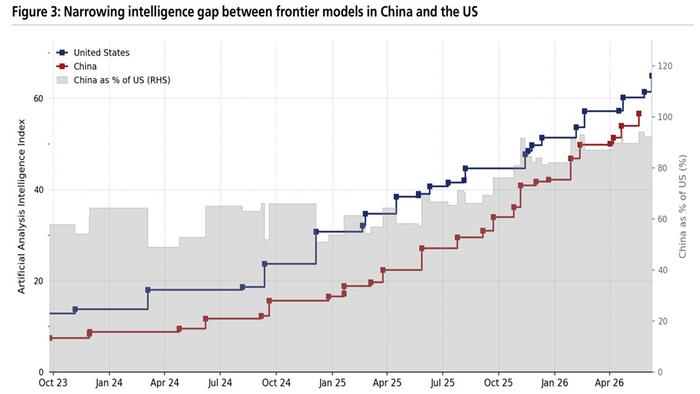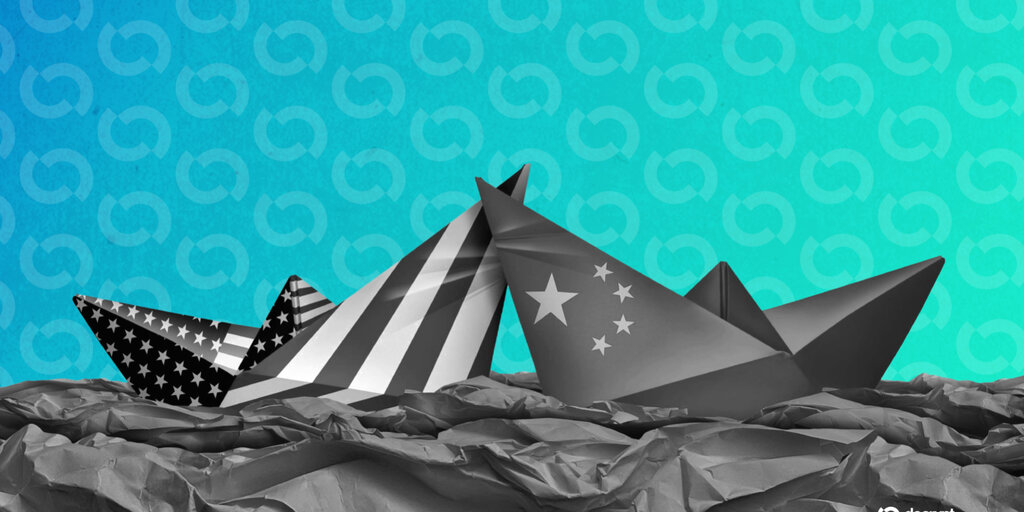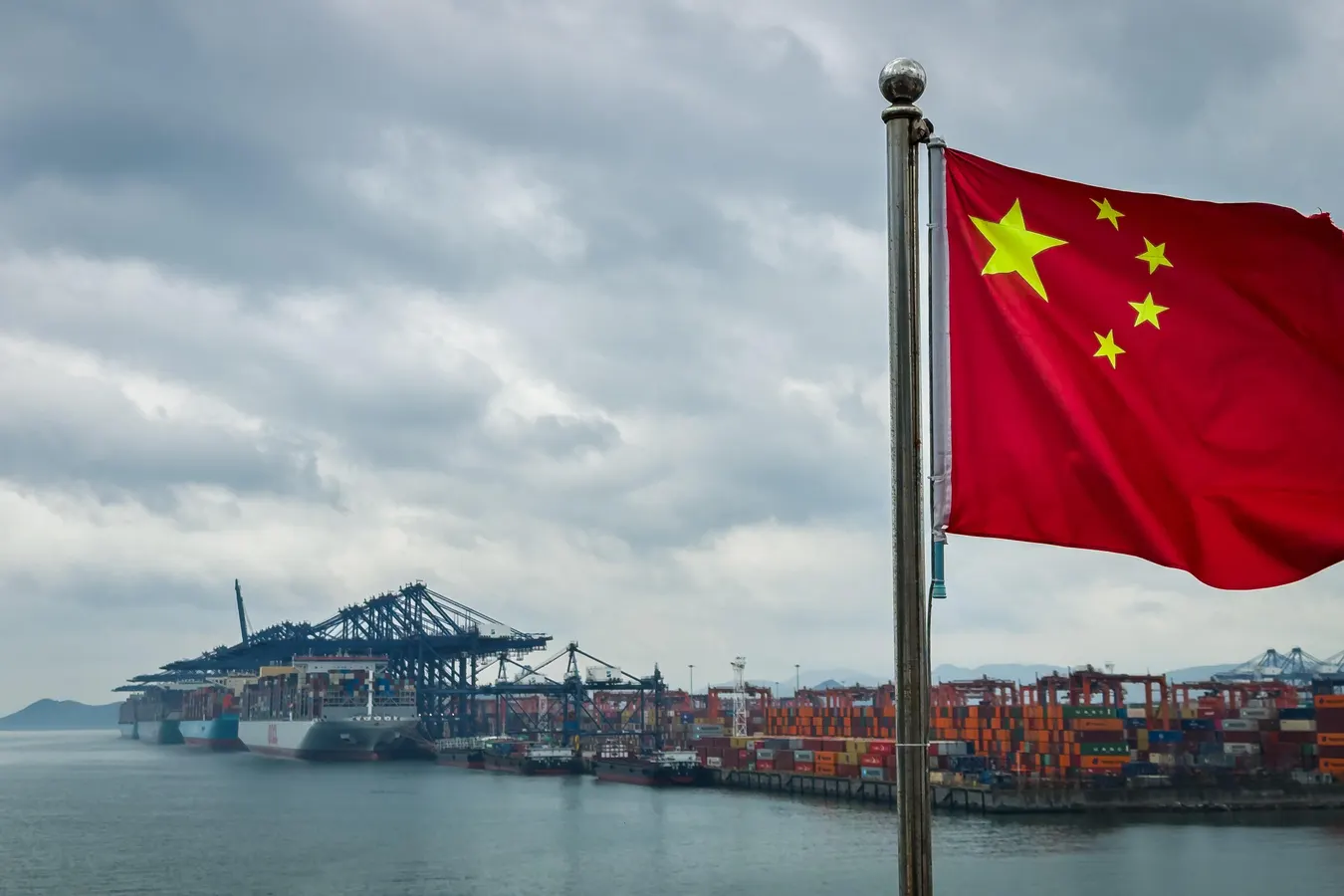
American AI firms are increasingly adopting open source Chinese models, which can be significantly cheaper than leading models from OpenAI and Anthropic.Getty ImagesChinese authorities are in talks to potentially curb overseas access to the country’s leading AI models, many of which are open source, Reuters reported. Beijing has made a slew of moves in recent months to gatekeep its cutting edge and cost-efficient models, talent and startups— including ordering Meta to unwind its $2 billion acquisition of AI startup Manus and blocking foreign investment in Chinese-linked entities. Paradoxically, such strict rules are contributing to some Chinese founders relocating to the U.S., Forbes reported earlier this year. But American AI firms are increasingly adopting open source Chinese models, which can be 60 to 90 percent cheaper than leading models from OpenAI and Anthropic, CNBC reported. Plus, they allow developers to have more control over how the models work. OpenRouter, a startup that lets U.S. companies use different AI models to answer queries, said the amount of work routed to Chinese models has been steadily rising, sitting at about 30 percent, per the report. Some early-stage startups have switched all of their traffic to models developed by Chinese companies like DeepSeek. That could spell trouble for those businesses if China cuts off access. Joseph Spisak, VP of product and head of open source at Reflection, an AI startup that’s developing open-source foundational models, says some firms risk getting “locked into” the Chinese AI ecosystem, especially if they grow accustomed to using a Chinese AI model or have already built applications on top of it. “Once you’re …hooked on the technology I think there's a certain amount of inertia that gets created. And it's harder and harder to move away,” he says. China’s potential export controls on its models could provide strong tailwinds for Reflection, which was founded in 2024 by Google DeepMind researchers Misha Laskin and and Ioannis Antonoglou to become an American open source alternative to China (it’s backed by 1789 Capital, where Donald Trump Jr. is a partner). The company, which is valued at $25 billion, has not yet released an open source model to the public. Now let’s get into the headlines. BIG PLAYS OpenAI has discussed giving the Trump administration a 5 percent stake in the $852 billion valued AI behemoth, the Financial Times reported. The ownership stake could help the company stay in the government’s good graces while giving Americans a potential way to benefit from wealth generated by AI companies. The talks, which are in an early, “conceptual” stage, would also entail other AI giants granting the government a 5 percent stake, but it’s not clear if those companies will be included in the discussions. CEO Sam Altman has proposed setting up a sovereign wealth fund similar to the Alaska Permanent Fund, which invests the state’s oil wealth in stocks and pays dividends to residents and the state’s government services. Giving the Trump administration an ownership stake could raise alarm bells for companies abroad that rely on OpenAI’s models to power their systems. CHIPS + COMPUTE As Anthropic, OpenAI and SpaceX-owned Cursor compete to win over enterprise customers, they’re doling out millions of dollars worth of free credits and compute to grab market share, the Wall Street Journal reported. Cursor even offered a 75 percent discount on its software. The bounty has allowed some nascent startups to start building without raising seed funding at all. Also notable: Chinese AI darling DeepSeek is developing its own chip, according to Reuters. Other top Chinese AI players like Alibaba and ByteDance also have their own chip initiatives to reduce their dependence on Nvidia and Huawei. HUMANS OF AI A little known Georgia-based company called Southwire produces half of the electrical wires and cable used to distribute electricity across the U.S., with its wiring reaching about half of American homes. Now it’s gunning for the booming AI data center market. With $9.7 billion in 2025 revenue, the business is owned by the Richards, one of the richest families in the country with a net worth of about $13.1 billion, Forbes estimates. SHOW ME THE MONEY Mercor, a startup that recruits experts in fields like physics, finance and law to label AI training data, has crossed more than $2 billion in annual recurring revenue, four months after it hit $1 billion in ARR, CEO Brendan Foody posted on LinkedIn. “The civilization-scale effort to collect data is underway,” wrote Foody, one of the world’s youngest billionaires.DEEP DIVEWhen OpenAI wants to sell the country’s biggest health systems on its healthcare ambitions, it often brings in one person a hospital CEO won’t ignore: Sam Altman.Altman, 41, is OpenAI’s billionaire cofounder, CEO and chief converter of skepticism into purchase orders. He has sold investors, boards of directors and governments on the idea that OpenAI is the engine of the next computing era. Now he is personally making that case to hospitals.Altman's involvement in these sales calls underscores just how central healthcare is to OpenAI’s ambitions. In January, the AI behemoth announced eight major health systems, including Cedars-Sinai Medical Center and HCA Healthcare, are now customers of its enterprise-grade healthcare tools.OpenAI has also tapped hundreds of doctors to make its health answers better for the more than 230 million people globally who turn to ChatGPT for advice every week. It’s rolling out a new version of ChatGPT for clinicians, as well as “ChatGPT Health,” a tab within the main app that allows consumers to securely connect their medical records and their wellness apps, such as Apple Health and MyFitnessPal (it’s waitlist-only currently). And its models power other health companies’ tools to create clinical notes and help consumers understand their lab results. OpenAI has rolled out three new products focused on healthcare in the past six months alone.“It is one of our most important verticals at OpenAI,” says Nate Gross, who leads OpenAI’s healthcare strategy. Gross, who joined OpenAI in 2025, has an MD from the Emory University School of Medicine and an MBA from Harvard and previously cofounded $4 billion (market cap) healthcare network Doximity. While the company is also making a play for other big markets like education and finance, Gross says, “everyone experiences health issues and this is an opportunity to help everyone.”Healthcare, after all, represents some 18% of the entire U.S. economy. And AI has huge potential to help consumers make better decisions about their health, aid doctors in providing better care and assist health systems in running their operations more efficiently—if it’s done right.Read the full story on Forbes. MODEL BEHAVIORTents aren’t just for camping. Meta has built data centers inside dozens of massive tents in Ohio, TechCrunch reported. The weatherproof structures, which can store hundreds of power-hungry AI chips, can cut construction time in half and dramatically reduce costs. “The AI race has officially entered its Mad Max phase,” wrote Michael Thomas, founder of Clearview, a company that tracks the data center buildout.
The Chinese AI Blockade Is Coming
Beijing has made a slew of moves in recent months to gatekeep its cutting edge and cost-efficient models.
1,152 words~5 min read