In brief
China's Ministry of Commerce has held talks with Alibaba, ByteDance, and Z.ai about restricting overseas access to China's most advanced AI models—including unreleased ones—per Reuters.
The proposed framework: a tiered system from simple filing for basic tools to domestic-only restrictions on the most sensitive frontier models.
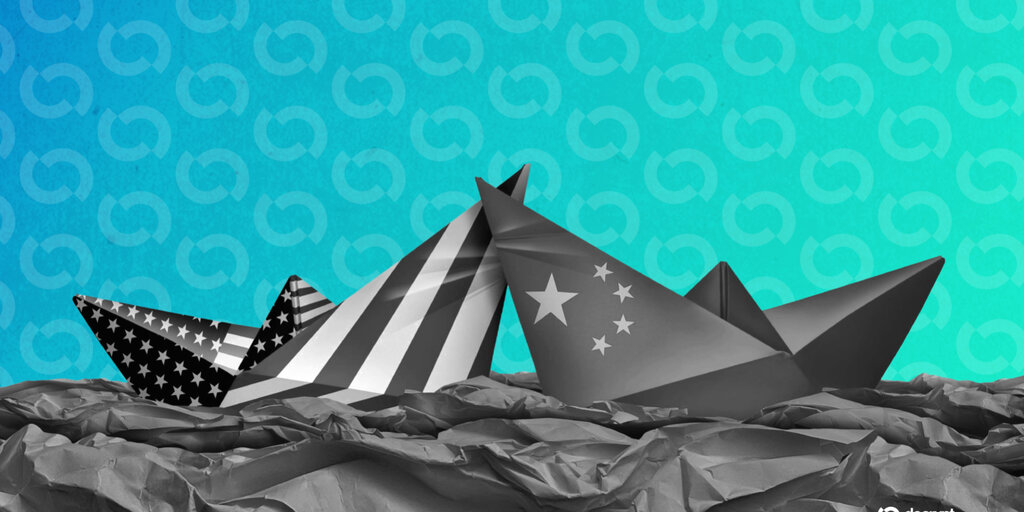
If China restricts its own open-weight models, the alternative businesses reached for when the U.S. cut off Anthropic and gated GPT-5.6 in June disappears with them.
The U.S. used its AI kill switch in June. China appears to be building one for July.Beijing has spent the past month in quiet talks with its biggest AI companies about restricting who gets to use them, according to Reuters.Chinese authorities held meetings with Alibaba, ByteDance, and startup Z.ai about potentially limiting overseas access to China's most advanced AI models—including those not yet released—per Reuters, which cited three people familiar with the discussions.The sessions were convened by China's Ministry of Commerce, Reuters reported, citing three sources who spoke on condition of anonymity.Participants discussed putting limits on both closed-source models and open-weight ones—the kind developers can download, run locally, and modify. Officials also raised making any unauthorized disclosure or theft of proprietary AI technology an offense under China's national security law, according to Reuters. Separately, participants floated new measures to restrict which investors can fund domestic AI startups.The scope of any potential restrictions is still being debated. Two sources told Reuters the measures may only apply to future models, not existing ones. No timeline has been set, and it's not certain anything will come into force.The AI PyramidHow any restrictions would work in practice is unclear, but hints surfaced in a summary published in a Supreme People's Court journal from a May roundtable of Chinese legal experts on open-source AI regulation. Participants proposed a three-tier structure: basic open-source tools would require a simple government filing; more advanced technologies would face security reviews before release; the most sensitive frontier models would be barred from public release or restricted to domestic use only.That structure would mark a sharp reversal for Chinese AI companies, whose global gains have come almost entirely from openness. Alibaba's Qwen series has built a large following on Hugging Face, the world’s largest repository of open-source AI models. ByteDance's Doubao is one of the dominant AI products inside China. Z.ai's GLM-5.2 has attracted attention from U.S. researchers for matching top American models on some benchmarks while pricing API access at a fraction of the cost.Any decision to restrict overseas access would likely raise costs for businesses that have come to rely on Chinese models as cheaper, less restricted alternatives to U.S. frontier systems. Officials also grew alarmed that Anthropic's Mythos—the cybersecurity model the Donald Trump administration restricted in June—could be reverse-engineered and turned against Chinese systems, adding a defensive urgency to the discussions.The U.S. went firstIn the late afternoon hours of June 12, Anthropic received a letter from the Commerce Department's Bureau of Industry and Security ordering the company to suspend all access to Claude Fable 5 and Mythos 5 for any foreign national—including Anthropic's own non-citizen employees. Because there's no clean way to fence a live API endpoint by passport, Anthropic pulled both models globally within hours. It was the first time the U.S. applied export controls to a deployed AI model rather than the chips that train it.The models came back online June 30, after Anthropic retrained its safety classifiers and the Commerce Department lifted the restrictions. Four days earlier, the same pattern had already played out with Anthropic’s chief competitor, OpenAI. The company released GPT-5.6 Sol, Terra, and Luna, disclosing it had previewed the models with the U.S. government and, at Washington's request, was initially releasing them to roughly 20 trusted partners individually vetted by federal officials.OpenAI said government-gated access "shouldn't become the long-term default." President Trump’s June 2 executive order on AI had already asked developers to voluntarily submit frontier models for a federal cybersecurity review before public release. A framework defining what counts as a "covered frontier model"—and when government pre-release access applies—is due August 1.Beijing has been watchingBeijing had reasons to pay close attention. Officials grew alarmed that Anthropic's Mythos—the cybersecurity model the Trump administration restricted in June—could be weaponized against Chinese infrastructure to exploit software vulnerabilities, per reporting from Quartz. Adding to that, the concern that Anthropic may be employing spyware-like tactics to track Chinese users also raised concerns in China.