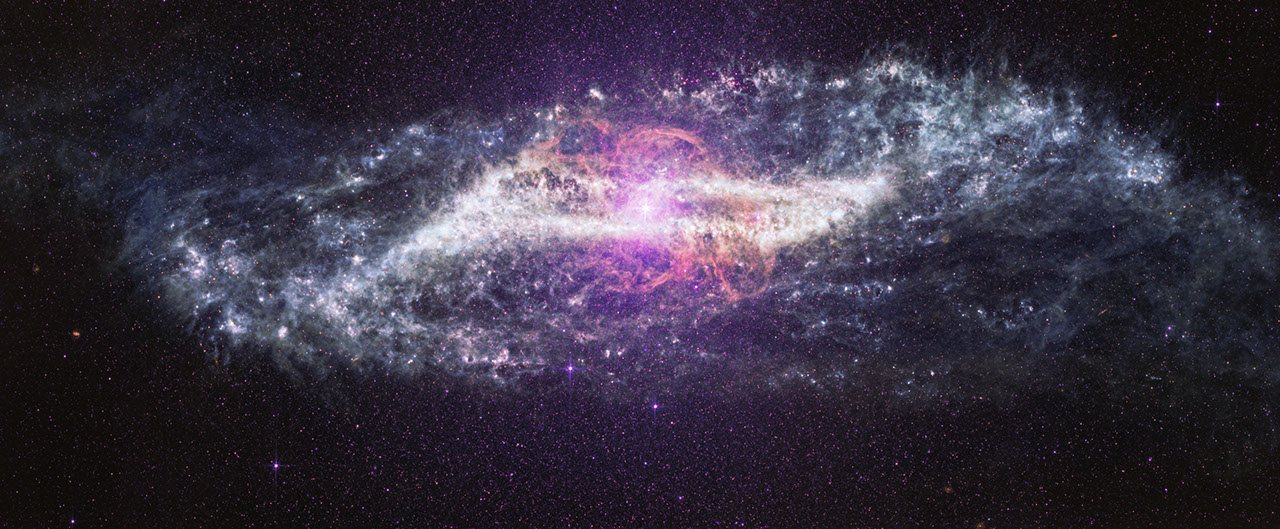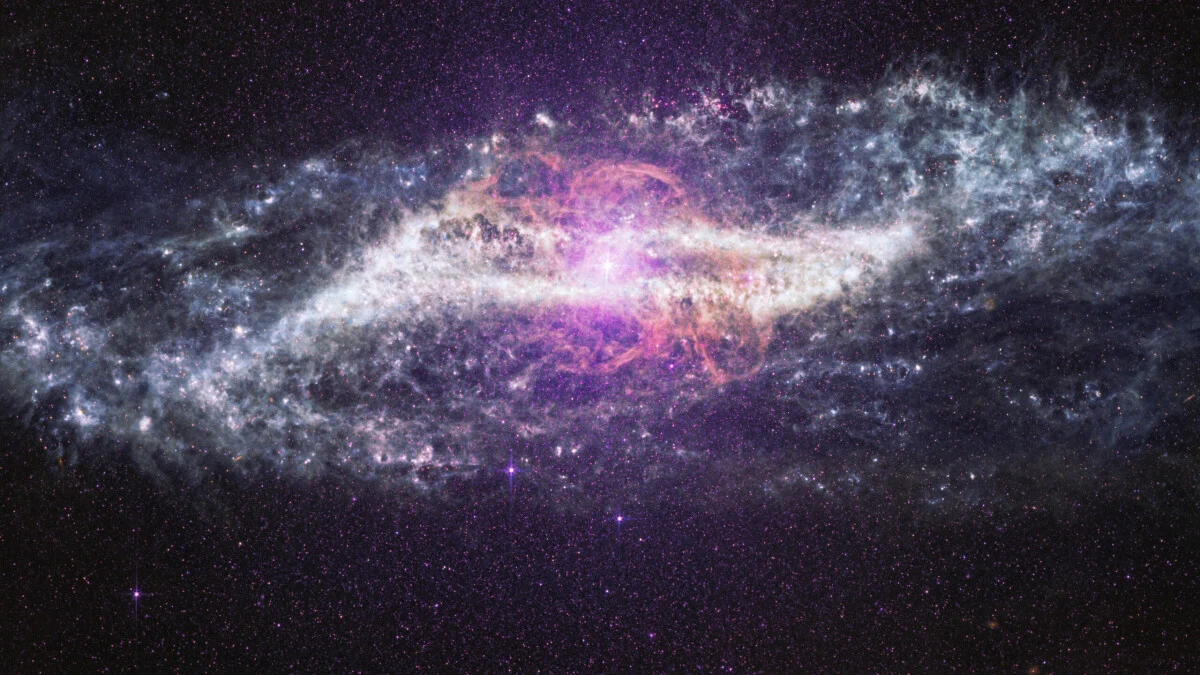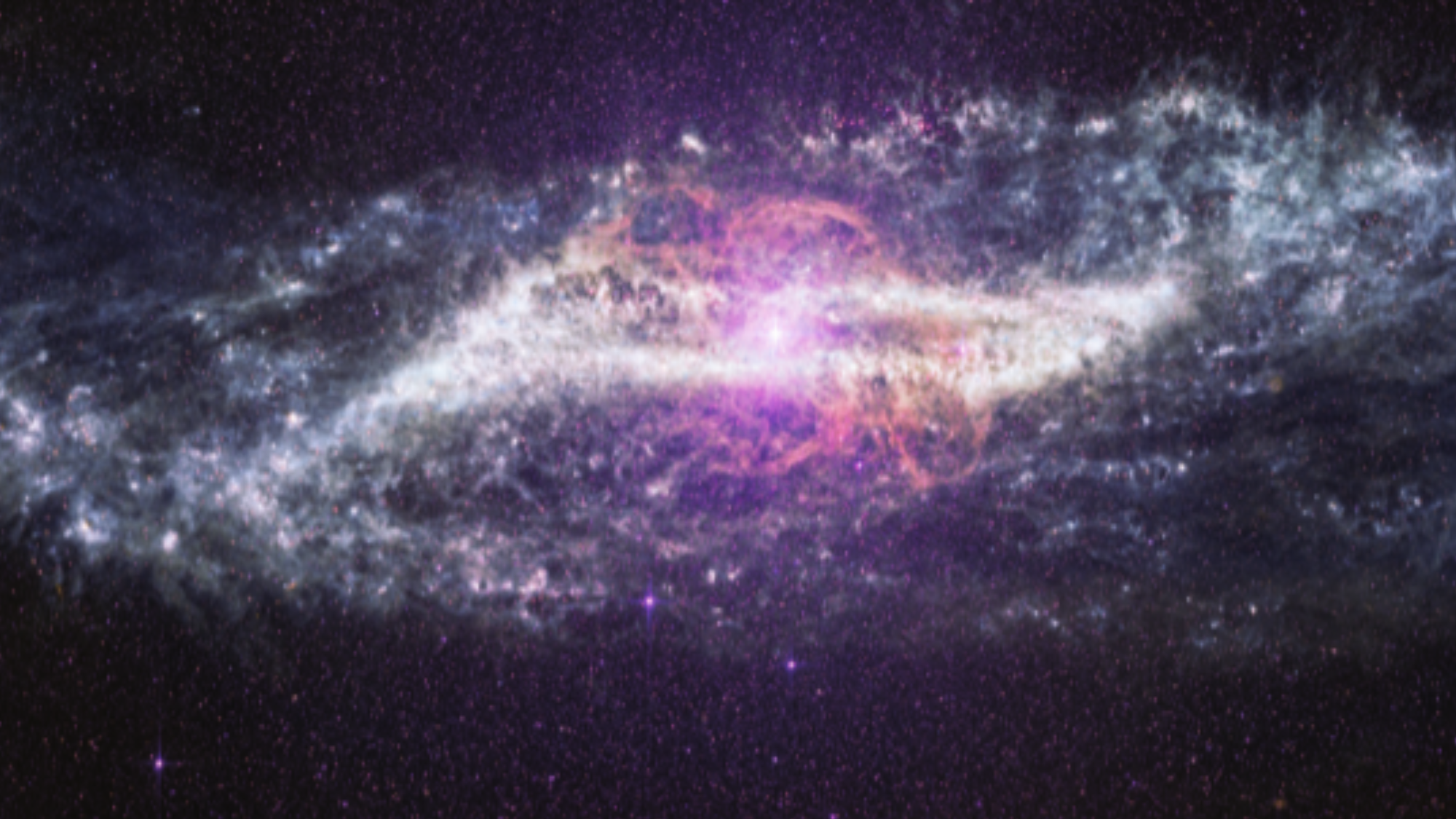
Centaurus A as seen by the JWST.
(Image credit: NASA, ESA, CSA, STScI; Image Processing: Alyssa Pagan (STScI), Joseph DePasquale (STScI), Macarena Garcia Marin (ESA Office at STScI))
July 2026 marks four years since NASA's James Webb Space Telescope (JWST) images were first revealed to the general public, marking a new era for astronomy. To celebrate this anniversary of the most powerful space telescope ever launched, NASA has released a stunning image of the strangely shaped galaxy called Centaurus A.Located around 11 million light-years away, Centaurus A owes its unusual structure to a collision between two galaxies around 2 billion years ago. This merger provided the galaxy with an abundance of gas and dust, the raw material for intense star formation. It also supplied the supermassive black hole at the heart of this galaxy with an abundant supply of the same matter to feed upon and power a bright and violent central region, or active galactic nucleus (AGN), as that central area blasts out powerful, high-speed jets of plasma.Though this galaxy is much closer to us than many of the early galaxies that the JWST has studied in its four years of operations, that doesn't mean it's any less useful. In fact, with its ultra-sensitive infrared vision, the JWST has been able to peer into the heart and inner workings of Centaurus A like no telescope that has gone before."No single telescope tells the whole story," Shawn Domagal-Goldman, division director of Astrophysics at NASA Headquarters in Washington, said in a statement. "Discoveries build over time, and new observatories expand on the foundations laid by earlier missions. The JWST represents the most powerful step forward yet, opening a window into wavelengths and details never before accessible. "This allows astronomers to examine structures and processes that other telescopes could not see."Building upon the legacy of Spitzer and HubbleThe key to the new view of Centaurus A that the JWST has been able to provide is the space telescope's powerful infrared vision. The thick dust that crowds the heart of this galaxy blocks visible light the Hubble Space Telescope previously relied on to study it. Infrared light is able to slip through these dense sheets of gas and dust.The now-retired Spitzer Space Telescope had previously studied Centaurus A in infrared, but while it could resolve larger structures in the galaxy, it lacked the observational power to resolve individual stars and finer details.